Summary
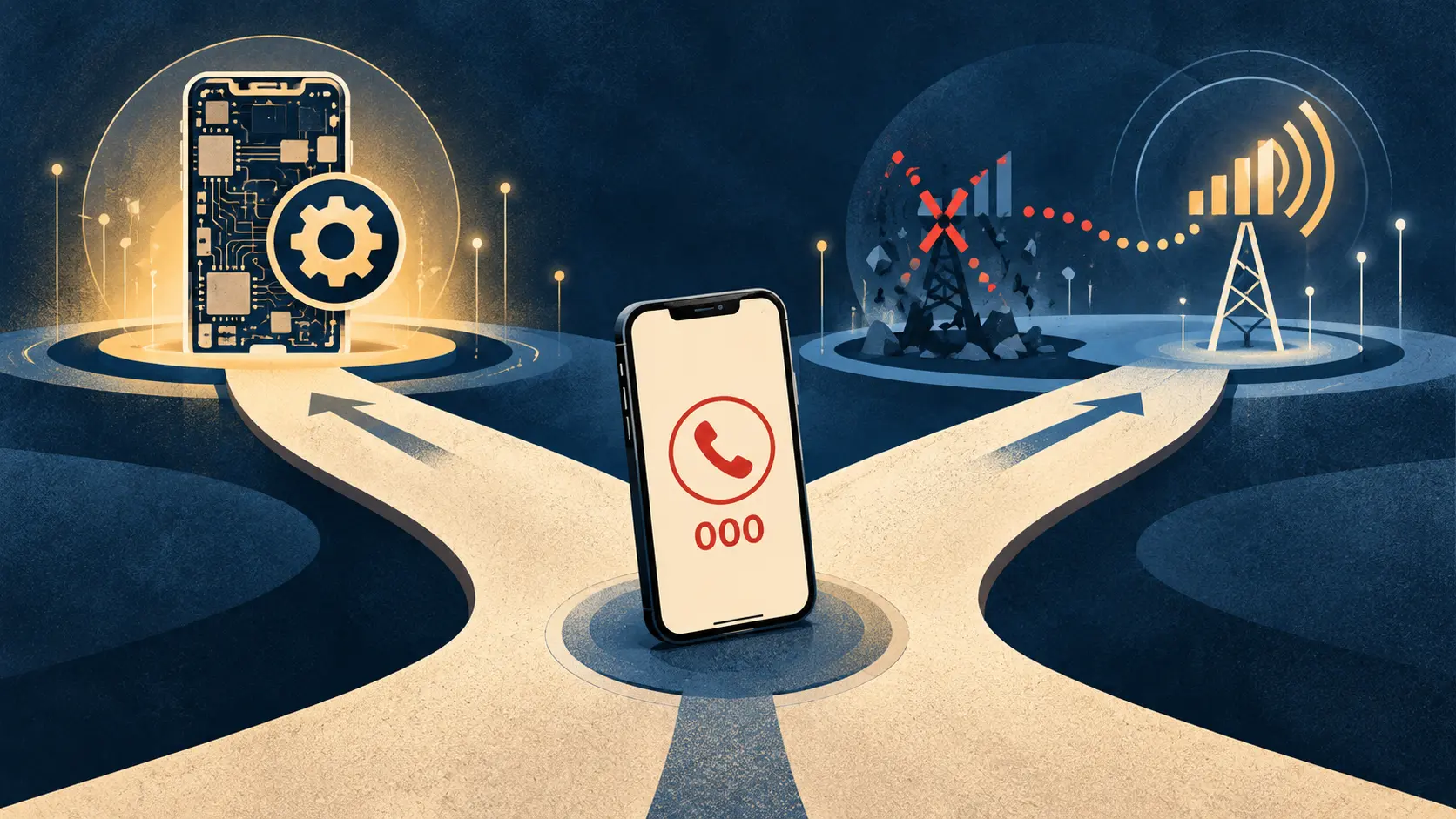
- ACMA’s proposal separates a temporary network incident from a device fault that prevents a 000 call.
- For a fixable phone, the proposal gives providers up to 25 days to identify a remedy and sets day 35 as the possible service-block date.
A phone can make an ordinary call, carry data and look perfectly healthy—then fail the one call nobody wants to test in public. Australia’s communications regulator now wants providers to distinguish a handset that cannot reach Triple Zero from one caught in a temporary network failure. That sounds obvious. The interesting part is what happens after the distinction is made.
The Australian Communications and Media Authority (ACMA) opened its consultation on 21 August 2026. It closed on 14 September; submissions appeared on 2 October, and ACMA says they are now under review. The proposal amends the Telecommunications (Emergency Call Service) Determination 2019. It is a proposal, not the rule currently in force.
The present framework grew out of the 3G shutdown. Since 2024, providers have had to identify and block phones that cannot call 000, including phones unable to camp on another available mobile network when their own network is unavailable. The safety objective is clear: a phone that cannot reach emergency services should not quietly remain in service as if nothing were wrong. Operational experience has exposed a clumsy edge. A core-network failure or signalling fault can interrupt a device’s emergency call access even when the handset itself works and will recover once the incident ends.
ACMA proposes a temporary-incident exception. If the cause sits in the network, does not directly relate to the device, and resolving it restores 000 access without changing the handset, the device-blocking rules would not apply to that incident. That is a useful distinction between a sick phone and a sick network. It also makes the diagnosis consequential: classify the cause incorrectly and the remedy can be a network repair—or a consumer’s phone losing service.
For a device that may be fixed by software, firmware, an operating-system update or a network setting, the proposal creates a timetable. The provider would notify the customer within five business days of identifying the issue. If no one yet knows whether a fix exists, the provider can assess the problem for up to 25 calendar days. If no remedy is found, the device would be blocked 35 calendar days after the first notice. If a fix is available, the customer gets instructions and reminders every three calendar days; an unfinished update still reaches the same day-35 block.
The sharper edge is buried in the plumbing. ACMA proposes making some obligations independent of earlier notification steps. A phone could therefore be blocked even if its user has not received a notice. “We sent it” and “the customer received it” become two different operational facts, while the service outcome can arrive on schedule regardless.
The proposal also asks carriers to share information when they identify a device that cannot reach 000. That could stop one network from declaring a handset unsafe while another reaches the opposite answer. It turns device classification into shared infrastructure: one provider’s test may shape another provider’s decision.
Primary records: ACMA consultation and status · August 2026 consultation paper · Current determination, compilation in force from 1 November 2025 · ACMA explainer on 000 after the 3G shutdown
Member Briefing
Deeper Profile Context
Sign in with the right membership level to unlock the full briefing and source notes.
Only for Strategic Circle
Strategic Circle
Open to all readers. Unlock profile briefings after joining and signing in.
Join Strategic CircleOnly for Leadership Alliance
Leadership Alliance
For qualified IP-asset owners and management; sign in to unlock alliance briefings.
Join Leadership Alliance