
Summary
- NuRAN reported more than 5,000 sites under contract, while describing an operating network of about 300 sites and a goal of 1,650 operating sites by mid-2028, subject to financing.
- Its US$15–20 million 2027 telecom-revenue scenario depends on funding, rollout timing, revenue-generating months and operating performance; it is not reported revenue.
A backlog measures commitments, not coverage
NuRAN's October 16 update adds a new monthly marker: 29 additional tower activations in October. Because the release appeared on October 16, that is an interim count, not the completed month's total. The company also reported more than 5,000 sites under contract with Orange and MTN across eight African countries, against a longer-term objective of 10,000 contracted sites. Those figures describe commercial reach and ambition. They do not mean that thousands of towers are already transmitting traffic or billing customers. NuRAN's October 16 release
The operating comparison is more revealing. NuRAN put its network at approximately 300 operating sites and said it aimed for 1,650 by mid-2028, conditional on financing. Management framed a network of that scale as potentially generating US$15–20 million in telecom revenue during 2027. The company names the dependencies: financing availability, the pace of deployment, how many months each site earns revenue, and operating performance. A site activated late in a year contributes fewer revenue months than one operating from January; a target reached later than planned also changes the revenue window.
The forecast is therefore a scenario built on a conversion schedule, not a present run rate or an unconditional commitment.
Capital is the first bridge, not the finish line
NuRAN's June 30 interim statements show why funding belongs at the front of that schedule. At that date, cash was C$388,724, compared with C$4,665,392 at the end of 2025. The company used C$3,041,239 in operating cash over six months, reported a C$4,625,938 net loss and a C$10,835,917 working-capital deficiency. Its note identified material uncertainty casting significant doubt on its ability to continue as a going concern. These are June historical figures; they should not be read as October liquidity or as the current status after subsequent transactions. June interim statements
On August 14, NuRAN announced a C$7.6 million Series A convertible preferred financing. The disclosed allocation matters more than the headline: C$3,862,143 extinguished a convertible debenture, C$518,704 settled accrued management salaries, C$219,153 settled other debt and payables, and C$3 million was cash. The company said the net cash would support business development and working capital. That transaction eased some obligations and added cash, but the full C$7.6 million cannot be treated as tower construction capital. August financing release
A September 15 supplement registered an at-the-market offering of up to US$50 million in common shares. Registration creates a possible financing channel; it does not establish that shares were sold or proceeds received. The deployment question remains how much cash becomes available, when it arrives and what it can fund. ATM prospectus supplement
Procurement and commissioning impose a clock
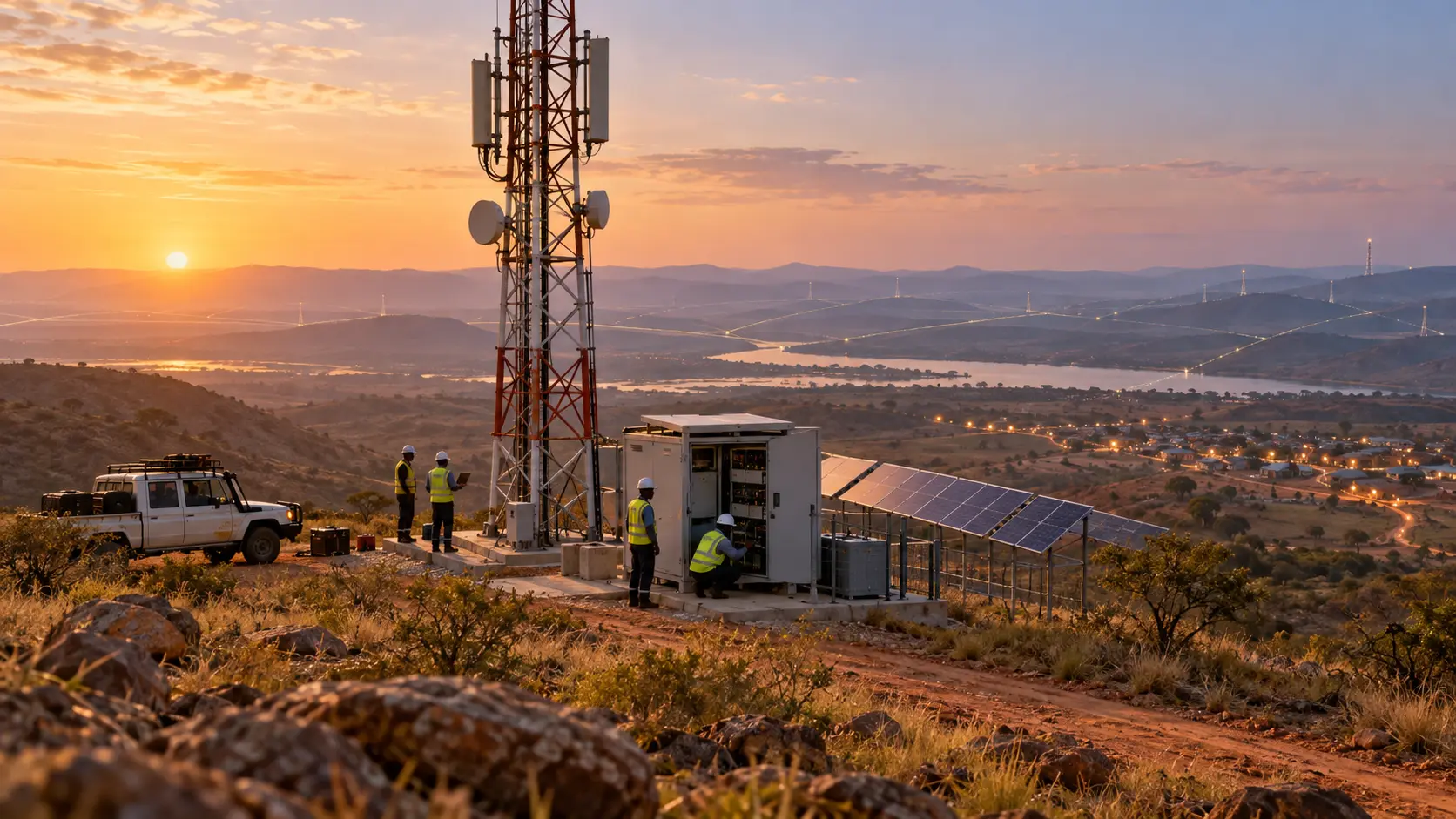
Money alone does not produce a live site. In its June management discussion, NuRAN said site rollouts require at least six months of working capital, procurement and logistics take time, and power systems can be especially difficult because lithium batteries are hazardous materials. It also said delayed funding had delayed deployment and that fewer than five per cent of contracted sites were operating at the June reporting date. Those statements explain an earlier bottleneck; they are not a measurement of October operating status. June management discussion
That sequence makes commissioning the practical test of the backlog: capital must be available early enough to order equipment, move it to sites, install power and radio systems, complete integration and begin service. Contracts with Orange and MTN identify counterparties for the sites, but the cited material does not say that either partner guarantees NuRAN's construction financing. Counting contracted sites as secured operating capacity would collapse distinct stages of execution.
Energy plans may alter unit economics
On October 14, NuRAN described NuEnergy Africa, its wholly owned energy subsidiary, as being developed around solar, battery storage and hybrid systems for NuRAN sites. The company said the work could support site economics and explore other revenue. That is a strategic plan, not evidence of realized third-party service sales or a current earnings stream. If delivered, reliable power could affect operating cost and uptime, while also adding procurement and integration work. The commercial value depends on equipment deployment and performance at actual sites, not the subsidiary's stated ambition. NuEnergy update
For investors and network partners, the useful scorecard is consequently a conversion ladder: new cash available for deployment, equipment ordered and delivered, sites commissioned, sites carrying traffic, and revenue earned per operating month. The October activation count is an early operational signal. The 5,000-site backlog is a much larger future opportunity, but only sustained progress through each stage can connect it to the 2027 revenue scenario.
Sources
Member Briefing
Deeper Profile Context
Sign in with the right membership level to unlock the full briefing and source notes.
Only for Strategic Circle
Strategic Circle
Open to all readers. Unlock profile briefings after joining and signing in.
Join Strategic CircleOnly for Leadership Alliance
Leadership Alliance
For qualified IP-asset owners and management; sign in to unlock alliance briefings.
Join Leadership Alliance