
Nokia and Latvian operator strike tactical 5G deal in the Baltics is profiled by BTW Media because published evidence links it to internet infrastructure, governance, operational dependencies, or market visibility.
Nokia and Latvian operator strike tactical 5G deal in the Baltics is tracked as a internet infrastructure institution within the internet infrastructure ecosystem.
Nokia and Latvian operator strike tactical 5G deal in the Baltics has public-source relevance to network operations, governance, dependency mapping, or market structure.
Nokia and Latvian operator strike tactical 5G deal in the Baltics is tracked as a internet infrastructure institution within the internet infrastructure ecosystem.
Public-source signals support medium-impact monitoring for infrastructure visibility and dependency analysis.
Nokia and Latvian operator strike tactical 5G deal in the Baltics is profiled by BTW Media because published evidence links it to internet infrastructure, governance, operational dependencies, or market visibility.
Public-source signals support medium-impact monitoring for infrastructure visibility and dependency analysis.
| 0.90–1.00 | A | High — direct sources |
| 0.75–0.89 | A/B | Strong |
| 0.55–0.74 | B/C | Medium |
| 0.35–0.54 | C/D | Weak–medium |
| 0.10–0.34 | D | Weak signal |
| 0.00–0.09 | D | Internal monitoring |
Several public sources
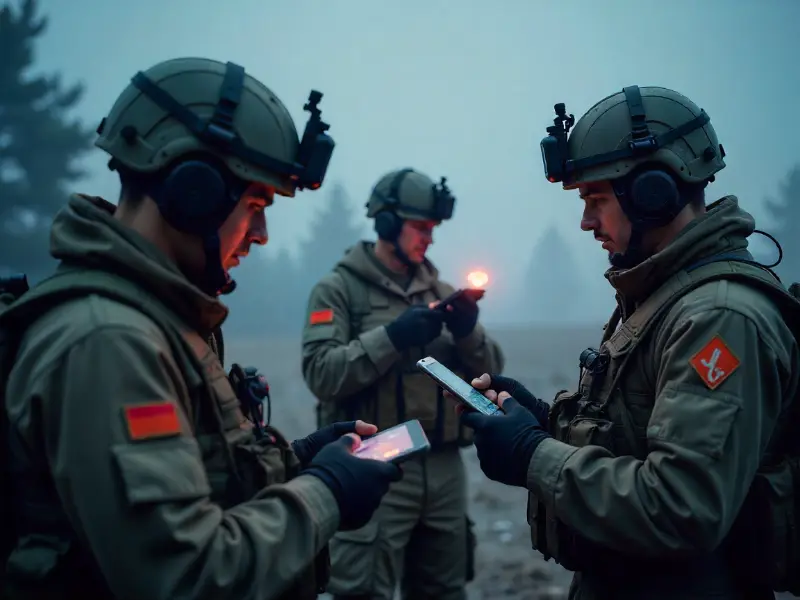
- The collaboration will produce a bespoke 5G tactical communications platform aimed at military and allied forces in the Baltics.
- The deal builds on LMT’s experience operating Europe’s first 5G military testbed at the Ādaži base in Latvia.
What happened: Nokia and LMT launched a 5G tactical project for Baltic defence
Nokia and Latvijas Mobilais Telefons announced a strategic agreement to jointly develop a 5G tactical communications system targeted at defence use in the Baltic states. The solution will combine Nokia’s 5G radio technology with LMT’s field experience in defence-oriented connectivity solutions. The partnership underscores the broader trend of telecom operators moving into the defence sector, leveraging 5G’s low latency and high capacity for military and mission-critical communications.
LMT, which already runs a 5G military testbed at Latvia’s Ādaži NATO-affiliated base, brings regional operational expertise to the collaboration. The announcement positions both firms to address security and resilience requirements in a region facing heightened geopolitical tensions.
Also Read: Telia strengthens RAN capabilities with new Ericsson and Nokia contracts
Also Read: Huawei pushes F5G-A vision to power Europe’s intelligent future
Why it’s important
This initiative suggests telecom and network vendors are increasingly aligning with defence imperatives. The shift raises questions about how civilian-grade 5G infrastructure is adapted for tactical use, where secure, mobile, robust and even portable communications are essential. The Baltic region, given its proximity to Russia and security sensitivities within NATO, may act as a test ground for such systems — potentially influencing broader European defence-telecom strategies.
Yet, one might ask whether the existing commercial 5G networks and standards are sufficiently hardened for tactical deployment — especially under adversarial conditions, jamming threats or in highly mobile environments. While NOKIA and LMT emphasise “secure, high-capacity communication” for military operations, details on cybersecurity safeguards, interoperability with allied systems or cost-effectiveness remain limited.
In short, this deal is a notable step in the convergence of telecom and defence sectors in Europe. But the real challenge will be delivering a system that meets the rigours of tactical use, not just commercial connectivity benchmarks.
At A Glance
- Name: Nokia and Latvian operator strike tactical 5G deal in the Baltics
- Type: Internet infrastructure institution
- Base: Europe and Middle East
- Profile focus: Institution
What It Does
- Public records support monitoring of its role, services, and key relationships.
Why It Matters
- Public-source signals support medium-impact monitoring for infrastructure visibility and dependency analysis.
- Operational criticality: Medium
- Time horizon: Next quarter
What To Watch
- Monitoring focuses on verified service continuity, governance changes, and relationship signals.
Track verified source updates, role changes, and current public evidence.
Public-source signals support medium-impact monitoring for infrastructure visibility and dependency analysis.
Longer-term relevance depends on verified operating, policy, and relationship changes.
Member Briefing
Deeper Profile Context
Login is required to unlock the full profile briefing and source notes.
Only for Strategy Circle
Strategic Circle Access
Open to all readers. Unlock profile briefings after joining and logging in.
Join Strategic CircleOnly for Leadership Alliance
Leadership Alliance Access
For owners and management of IP-holding companies. Login required to unlock.
Join Leadership Alliance


