
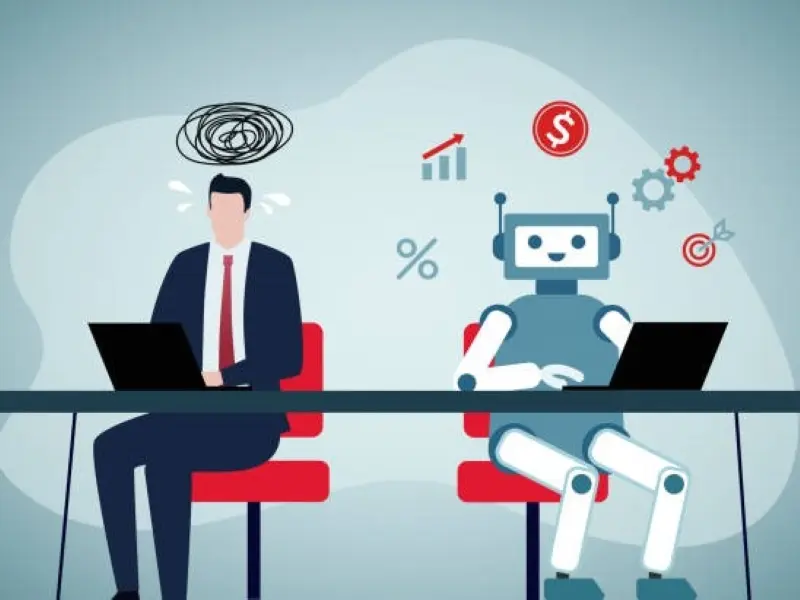
Narrow AI vs.
- Narrow AI and general AI represent two different stages of AI development, with the former being the current mainstream application and the latter being the ideal goal for the future.
- Understanding the differences between the two is crucial to understanding the current state and future development of AI.
Artificial Intelligence (AI) has become a cornerstone of modern technology, influencing everything from healthcare to entertainment. However, not all AI systems are created equal. Broadly, AI can be classified into two categories: narrow AI and general AI. While both fall under the same umbrella of artificial intelligence, they are fundamentally different in their capabilities and applications. So, what’s the real difference between narrow AI and general AI, and why does it matter?
Also read: The path to achieving general AI
Also read: Understanding narrow AI: Specialised intelligence in focus
What is narrow AI?
Narrow AI, also known as weak AI, is designed to perform a specific task or a set of tasks. These systems are highly specialized and excel at the jobs they are programmed to do. However, they lack the versatility and adaptive learning capabilities of human intelligence. Think of narrow AI as a highly skilled specialist, who is incredibly good at one thing but unable to do anything outside of that specialty.
Examples of narrow AI include:
- Virtual Assistants like Siri, Alexa, or Google Assistant
- Recommendation Systems on platforms like Netflix and Amazon
- Autonomous Vehicles that use AI to navigate specific environments
- Fraud Detection Systems used in banking and finance
Narrow AI excels because it’s focused. It’s programmed to process data and perform tasks with high precision within a defined scope. However, once you step outside of that scope, narrow AI lacks the flexibility to adapt or generalize.
Also read: What is narrow AI?
What is general AI?
General AI, or strong AI, refers to systems that possess the ability to understand, learn, and apply intelligence across a broad range of tasks, similar to human capabilities. While narrow AI is confined to specific functions, general AI aims to mimic human-like cognitive abilities, meaning it could theoretically perform any intellectual task that a human being can do.
Unlike narrow AI, general AI would be able to:
- Understand context and nuances across various domains
- Learn and adapt to new situations without human intervention
- Apply logic and reasoning to solve problems outside predefined parameters
As of now, general AI remains more of a theoretical concept than a reality. Researchers have yet to build systems with the same level of versatility, creativity, and reasoning that humans possess. We are still in the early stages of exploring the potential of general AI, and creating a machine with this kind of capability presents monumental challenges.
Key differences between narrow AI and general AI
Here are some of the key differences between narrow AI and general AI:
| Aspect | Narrow AI | General AI |
|---|---|---|
| Scope | Focused on specific tasks or problems. | Capable of handling a wide range of tasks. |
| Adaptability | Does not adapt to tasks outside its scope. | Able to learn and adapt to new tasks and environments. |
| Complexity | Less complex, optimized for one function. | Extremely complex, designed to mimic human-like intelligence. |
| Current Reality | Commonplace in today’s technology. | Still a theoretical goal, not yet realized. |
| Examples | Virtual assistants, autonomous vehicles, facial recognition. | Human-like cognitive systems, universal robots. |
The road ahead: Narrow AI, general AI, and ethical Implications
While we continue to advance Narrow AI, researchers are working toward the eventual goal of general AI. However, this journey is filled with challenges—not just technical, but also ethical. As we move toward more autonomous systems with human-like capabilities, we must consider issues like:
- AI decision-making in critical situations
- The ethical treatment of AI systems
- The potential for job displacement due to automation
Ensuring that AI systems align with human values, legal frameworks, and ethical standards will be crucial as we progress toward the realization of General AI.
Member Briefing
Deeper Profile Context
Sign in with the right membership level to unlock the full briefing and source notes.
Only for Strategic Circle
Strategic Circle
Open to all readers. Unlock profile briefings after joining and signing in.
Join Strategic CircleOnly for Leadership Alliance
Leadership Alliance
For qualified IP-asset owners and management; sign in to unlock alliance briefings.
Join Leadership AllianceSnapshot
Category
InstitutionRegion
GlobalSignal Focus
MarketContent Type
ProfilePrimary Domain
TechnologyTopic
MarketImpact
MediumConfidence
Limited confidence (72%)Confidence score guide
Several public sources