
Institution Profiling / Internet infrastructure institution

Mobile edge computing: Definition, examples and future

Mobile edge computing: Definition, examples and future is tracked as a internet infrastructure institution within the internet infrastructure ecosystem.

Mobile edge computing: Definition, examples and future
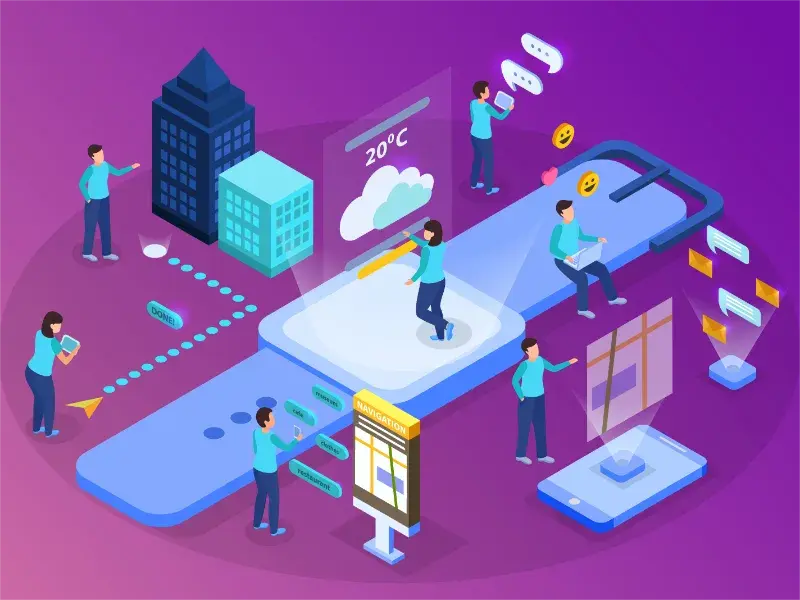
Caption: Mobile edge computing: Definition, examples and future visual context for BTW intelligence coverage. · Source context: Existing article media was retained or restored as the subject-specific visual basis. · Relevance reason: Mobile edge computing: Definition, examples and future is the primary subject or event subject; the image supports the article's market reading. · Image provenance: Existing curated article image retained because it is subject- or event-specific and not a generic pool placeholder.

Sources

Public references used for this article.

External references will appear here after editorial citation review.

CategoryInstitution

Mobile edge computing: Definition, examples and future is tracked as a internet infrastructure institution within the internet infrastructure ecosystem.

RegionGlobal

Mobile edge computing: Definition, examples and future has public-source relevance to network operations, governance, dependency mapping, or market structure.

Signal FocusInternet infrastructure institution

Mobile edge computing: Definition, examples and future has public-source relevance to network operations, governance, dependency mapping, or market structure.

Content TypeProfile

Mobile edge computing: Definition, examples and future is tracked as a internet infrastructure institution within the internet infrastructure ecosystem.

Primary DomainSecurity

Public-source signals support medium-impact monitoring for infrastructure visibility and dependency analysis.

TopicInternet infrastructure institution

Mobile edge computing: Definition, examples and future is profiled by BTW Media because published evidence links it to internet infrastructure, governance, operational dependencies, or market visibility.

ImpactMedium

Public-source signals support medium-impact monitoring for infrastructure visibility and dependency analysis.

Confidence?Confidence Grade
0.90–1.00AHigh — direct sources
0.75–0.89A/BStrong
0.55–0.74B/CMedium
0.35–0.54C/DWeak–medium
0.10–0.34DWeak signal
0.00–0.09DInternal monitoring
Limited confidence (82%)

Several public sources

Mobile edge computing: Definition, examples and future is profiled by BTW Media because published evidence links it to internet infrastructure, governance, operational dependencies, or market visibility.

  • Mobile edge computing is a type of edge computing that extends the capabilities of cloud computing by bringing it to the edge of the network.
  • To capitalise on future growth in MEC, telecommunications companies must develop offerings across multiple domains to leverage synergies.

This article will introduce the definition, examples and future of mobile edge computing.

What is mobile edge computing?

Multi-access Edge Computing (MEC), formerly known as mobile edge computing, is a type of edge computing that extends the capabilities of cloud computing by bringing it to the edge of the network. Initially focused on mobile networks under the ETSI initiative, MEC now extends to include fixed and converged networks.

Unlike traditional cloud computing centralised on remote servers distant from users, MEC distributes processing to edge nodes such as base stations and central offices. This approach alleviates mobile network congestion, lowers latency, and improves end user Quality of Experience (QoE) by localising cloud computing tasks onto nearby servers.

Also read: Fundamentals of cloud computing: Security and beyond (btw.media)

Also read: 3 key impacts of cloud computing on security operations (btw.media)

What are examples of MEC use cases?

1. Connected and autonomous vehicle functions

MEC can enable autonomous vehicles to receive real-time updates on road conditions, pedestrian, vehicle, and animal positions, and weather conditions directly from local edge nodes instead of relying on central cloud servers. Integrating MEC with AI/ML enhances the vehicles’ ability to continuously monitor their surroundings. The low latency provided by MEC is crucial for ensuring safe operations of autonomous vehicles, as delays in information processing from the cloud could jeopardise real-time decision-making.

2. Enterprise Mixed Reality (MR), Augmented Reality (AR), and Virtual Reality (VR) applications

MEC integrated into AR/VR supports remote workers in conducting maintenance and repair tasks in the field. This solution overlays detailed information related to specific assets being repaired onto the displays of field workers’ headsets or mobile devices. Current 3D models are too complex to render on end-devices and face latency issues when processed in the cloud. MEC facilitates data processing and potential 3D model rendering off-device, enabling digital twin models to augment the worker’s view. Additionally, remote experts can annotate images or videos streamed from headsets or mobile devices in real-time.

3. Video analytics

The adoption of video surveillance is rising in cities and enterprises, resulting in increased data volumes from both the growing number of cameras and higher-quality footage. MEC facilitates local processing and analysis of video traffic at the network edge instead of sending it to central control for analysis. This approach enables the consolidation of video streams from diverse camera types and supports various video analytics applications such as real-time facial recognition, asset monitoring, and footfall analysis.

MEC lowers costs, reduces data transport volumes, and speeds up response times by allowing real-time triggers based on local analysis, rather than relying on cloud or central server processing.

The future of MEC

Mobile edge computing (MEC) remains an emerging market. Its alignment with 5G and telecommunications providers’ capability to facilitate mobility, along with the substantial potential scale of applications like AR/VR and drone control, position MEC as strategically significant for Telcos.

To capitalise on future growth in MEC, telecommunications companies must develop offerings across multiple domains to leverage synergies and achieve incremental benefits. This involves engaging with actual customers across various edge computing sectors, identifying shared needs across different use cases, and collaborating with customers to define effective business models.

At A Glance

  • Name: Mobile edge computing: Definition, examples and future
  • Type: Internet infrastructure institution
  • Base: Global
  • Profile focus: Institution

What It Does

  • Public records support monitoring of its role, services, and key relationships.

Why It Matters

  • Public-source signals support medium-impact monitoring for infrastructure visibility and dependency analysis.
  • Operational criticality: Medium
  • Time horizon: Next quarter

What To Watch

  • Monitoring focuses on verified service continuity, governance changes, and relationship signals.
NowMedium priority

Track verified source updates, role changes, and current public evidence.

QuarterMedium policy sensitivity

Public-source signals support medium-impact monitoring for infrastructure visibility and dependency analysis.

YearNext quarter outlook

Longer-term relevance depends on verified operating, policy, and relationship changes.

Member Briefing

Deeper Profile Context

Login is required to unlock the full profile briefing and source notes.

Only for Strategy Circle

Strategic Circle Access

Open to all readers. Unlock profile briefings after joining and logging in.

Join Strategic Circle

Only for Leadership Alliance

Leadership Alliance Access

For owners and management of IP-holding companies. Login required to unlock.

Join Leadership Alliance
← BackAll Companies