
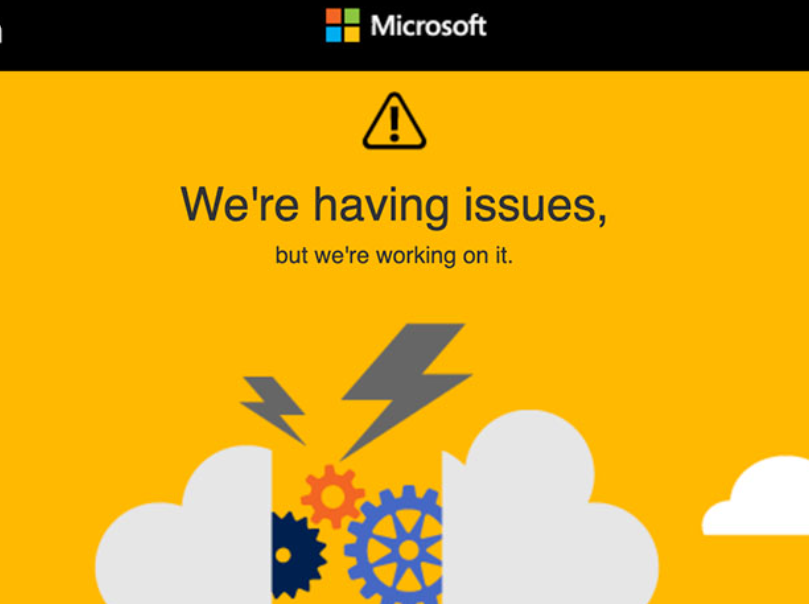
- Microsoft confirmed a disruption affecting multiple Microsoft 365 services after a spike in reports on outage tracking website Downdetector.
- The incident underscores how cloud service outages can impact workflows and raises questions about resilience and over-reliance on a small set of platforms.
What happened: Microsoft 365 outage affects thousands
On 22 January 2026, Microsoft’s suite of productivity and collaboration tools known as Microsoft 365 experienced a significant outage affecting thousands of users, according to outage tracker Downdetector.
At the peak of the disruption, more than 15,880 incident reports were logged on Downdetector, although this number later fell to around 3,960 as the situation improved. Reports came primarily from users in North America, where some parts of Microsoft’s cloud infrastructure were not processing service traffic as expected.
Services impacted included Microsoft Outlook, which many users rely on for email, as well as elements of the 365 suite used for document collaboration, file storage, and meeting coordination. In similar incidents, infrastructure-linked tools such as Microsoft Defender, Microsoft Purview, and Exchange Online have also shown disruptions, indicating that the outage affected both consumer-facing and enterprise systems.
Microsoft acknowledged the issue publicly via its X (formerly Twitter) account, stating it was rerouting traffic “to ensure the environment enters a balanced state” and actively working on remediation. The company traced much of the problem to a portion of service infrastructure that was not operating correctly, and users reported intermittent access, slow responses, or errors when interacting with services.
Outage reports are based on user-submitted error logs rather than official metrics, so the exact number of affected customers may vary.
Also Read: https://btw.media/en/allit-infrastructure/microsoft-cloud-downtime-halts-flights-in-the-u-s/?utm_
Why it’s important: cloud reliance and resilience
The Microsoft 365 outage highlights the broader challenge of dependence on cloud-hosted productivity platforms in modern work environments. Many businesses, educational institutions, and government offices have shifted core workflows to cloud services such as Microsoft 365, meaning outages can have cascading operational impacts—from missed emails to disrupted virtual meetings and halted workflows.
Similar events have occurred before: large spikes in outage reports for Microsoft services—including past disruptions of Azure, Xbox, and Microsoft Cloud services—have shown that even major cloud providers are vulnerable to service interruptions.
Such incidents raise questions about how enterprise customers should approach redundancy and resilience planning when critical tools are concentrated within a small number of cloud ecosystems. Over-reliance on a single provider can create systemic risk, particularly for organizations that lack robust offline alternatives or failover options.
There is also a governance and service-level agreement (SLA) dimension: customers increasingly expect transparency and compensation mechanisms when outages occur, but the scope and enforceability of such guarantees vary widely across contracts and regions.
Finally, as more workflows move to integrated platforms like Microsoft 365, outage events serve as a reminder that digital continuity is not guaranteed, and enterprises must balance efficiency gains with risk management in cloud adoption strategies.