
Each trend page maps macro region signals into industry-level execution intelligence.
Market / Trends
Trends
Market trend intelligence tracks cloud service, regional ISP, national telecom, data centre, and institutional infrastructure signals across global internet infrastructure markets. BTW.MEDIA connects published reports with regional context, public evidence, company actions, governance pressure, capital deployment, and operating constraints so readers can follow market demand, network expansion, competitive change…
GlobalNorth AmericaEurope and Middle EastAsia-PacificLatin America and CaribbeanAfrica

Global plus five geographic routes aligned to the market taxonomy.
Cloud Service, Regional ISP, National Telecom, Datacenter, and Institutional.
Pages compare regional market movement, industry pressure, public evidence, and operating consequences over time.
Latest Coverage
Latest from Trends
12,157 articles

North America Institutional Trends
NECK turns AI scarcity into a manager’s moving target
The new xETFs AI Bottlenecks ETF packages memory, optics, power and compute shortages into one actively managed security. Yet the binding product is not a permanent basket of scarce inputs. It is a continuing decision about which constraint matters, when it has begun to ease and…

North America Cloud Services Trends
Barrick’s mine-wide AI needs a boundary between advice and action
The promise of one intelligence layer across a mine is not merely better analysis. It is faster passage from a signal to a decision and from a decision to work in the field. That passage is also the product risk. Barrick and Avathon can make a broad operating platform credible by…

Asia-Pacific Datacenter Trends
SOS’s 500MW memorandum needs a 50MW closing table
SOS Limited has put 500MW of ambition, 180MW of tenant interest, at least 60MW of power effort and a 50MW first phase into one announcement. None of those figures has the same legal or operating status. The investable asset begins where the four numbers stop blending.

Global National Telecom Trends
Vodafone's network AI turns a phone call into a managed transformation
A carrier that translates speech or removes noise inside its network is no longer moving an untouched conversation from one handset to another. It is operating on the meaning and evidence of the call. Vodafone and Ericsson have demonstrated that capability in a test network; the…

Global Datacenter Trends
Delos Data’s $100m must buy an acceptance matrix, not a bigger network claim
Funding can pay engineers to turn an architecture into a product. It cannot make cluster software, a server sample and interface silicon arrive on the same clock—or make a bandwidth target equal a verified cost per token.

Asia-Pacific National Telecom Trends
U Mobile's three-day 5G site starts a longer continuity test
A portable mast can shorten the wait for first coverage. It cannot shorten every obligation that begins when people rely on it. U Mobile and ZTE have shown how to start one kind of rural site in three days; the market question is how the site behaves through the weeks, weather…

North America Datacenter Trends
USD.AI’s $128.9m GPU loan needs a collateral receipt, not a rack count
Thirty-two GB200 NVL72 systems describe a substantial fleet. They do not disclose who owns it, whether it has been installed, which customer receipts repay the debt or who can remove the machines after a default. Those joins—not the headline—turn compute into collateral.

Global National Telecom Trends
Airties makes every security block a broadband decision
Putting protection in the router can reach devices that will never run security software. It also means that when the router gets a decision wrong, the security product has changed the broadband service. Airties' new offer will be judged as much by the route back from a block as…

Global Cloud Services Trends
Bird’s $450 million debt finances shareholder liquidity, not proof of agent demand
Bird has paired a dividend recapitalisation with an ambitious communications layer for AI agents. The first transaction can be completed by banks and shareholders; the second becomes valuable only when authorised machine actions survive consent, delivery, carrier charges, abuse…
Global Datacenter Trends
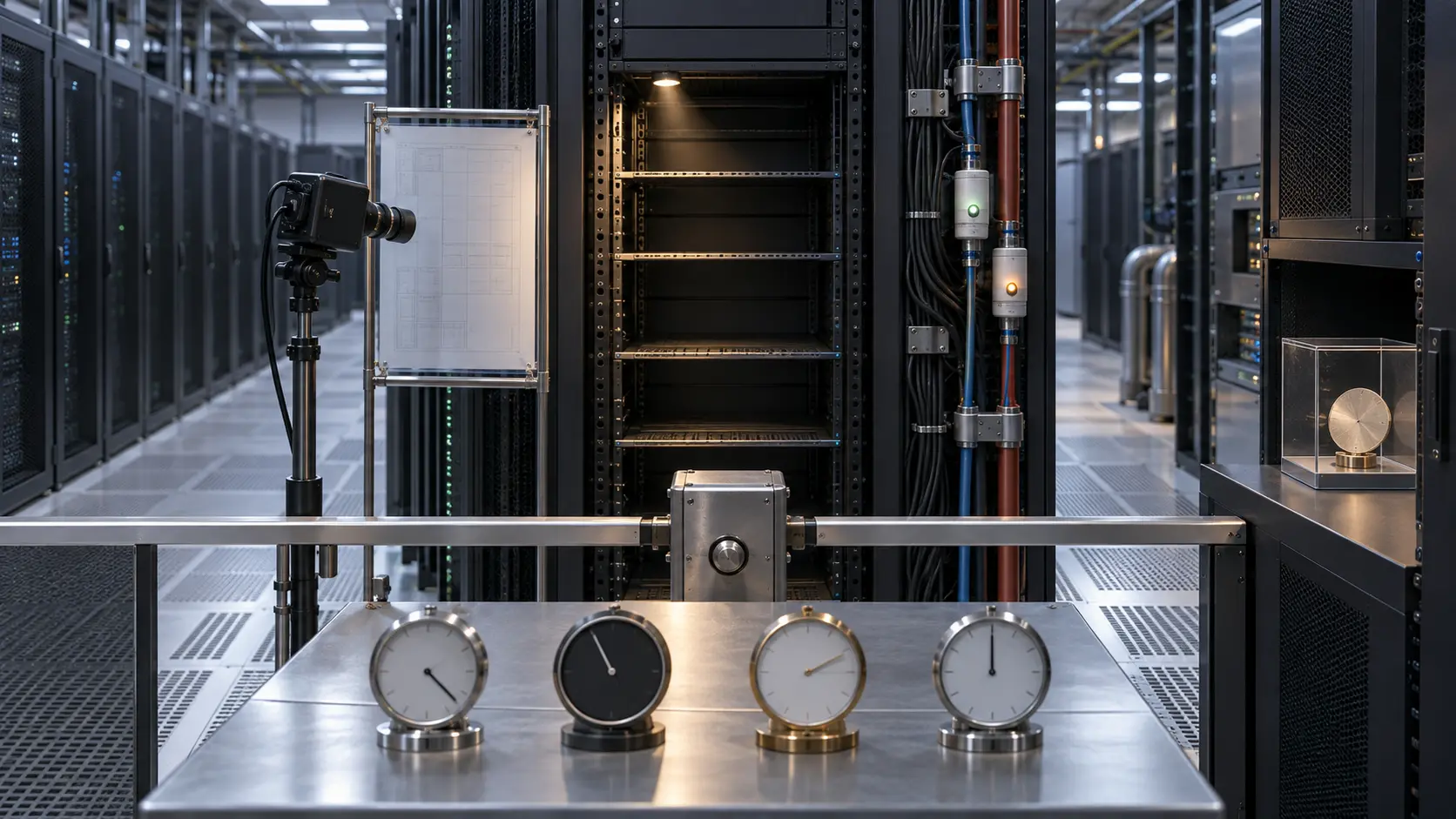
vHive's data-centre twin needs a clock and a referee
A camera can show an empty rack unit. It cannot decide whether that space has power, cooling, connectivity or a tenant's rights attached to it. vHive's new data-centre offer will be valuable to the extent that its shared view preserves those differences instead of flattening…

Europe and Middle East Cloud Services Trends
NetCloud Private turns Gulf sovereignty into two operating models
Ericsson is moving its router-management platform into locally controlled environments. The Gulf deployments reveal that “local” can mean a customer running its own system or a domestic service provider running one for several enterprises. Those structures produce different…

North America Institutional Trends
EigenQ’s $45 million headline buys a conditional commercialisation clock
The quantum-security company has not received a $45 million operating cheque. Its filed financing is a two-stage, discounted and secured bridge in which cash, closing risk, dilution and collateral must be reconciled before the valuation story can be judged.

Africa National Telecom Trends
Airtel Money’s 80% dividend target depends on thirteen cash routes
A London quotation can put a public price on Airtel Money. It cannot by itself turn customer trust balances or cash held in 13 regulated markets into a dividend at the Dutch parent. The route between profit and payment is the more useful listing test.

North America Datacenter Trends
Sunrun and SPAN still need to price the home as a data-centre lease
Their residential compute partnership adds financing and field service to SPAN’s XFRA concept. It still leaves the decisive market unit undisclosed: a contract that allocates energy, compute, grid-service, maintenance and exit rights around each home.

Global Institutional Trends
Lightera’s Subsea Fiber Expansion Still Needs a Demand Bridge
Lightera plans to nearly triple submarine optical-fiber manufacturing capacity by 2029. The commercial test is whether early demand visibility becomes qualified programmes, contracted volume, plant utilisation and durable cash returns.

Europe and Middle East Institutional Trends
Microlise's richer ARR mix still needs a second-half revenue rebound
Microlise left the first half with a better revenue mix and a smaller income statement. Recurring revenue rose only slightly, yet it became 76% of group revenue because hardware, installation and project activity fell much faster. The investment case now turns on whether…

Europe and Middle East Institutional Trends
Transense's 25% target needs more than 25% growth from its operating businesses
Transense Technologies enters FY27 with a headline growth target and a quieter arithmetic problem. Its iTrack royalty still supplies almost half of revenue and much more than half of segment profit, while SAWsense is funding the difficult passage from engineering work to…

Global Datacenter Trends
Coherent’s PhotonLink Engagements Need a Revenue Trail
Treating PhotonLink’s launch pipeline as a revenue ledger would credit Coherent with sales before their scope, timing and accounting basis are established. The commercial question is how its integrated optics offer moves from customer discussions and agreements to attributable…

Europe and Middle East Institutional Trends
Oxford Biomedica’s £168 Million Revenue Cover Faces a Cash Test
Contracted orders cover about £168 million of Oxford Biomedica’s forecast 2026 revenue, subject to performance obligations. A 37% first-half gross margin and £34.3 million company-defined net cash outflow put the emphasis on the economics of delivery ahead of Durham’s expected…

North America Datacenter Trends
New Era’s 207 MW Deal Starts a Credit Clock, Not a Data Centre
The first hard deadline in New Era’s Odessa power package is a $116 million letter of credit. Electricity, a 20-year term and Vistra’s 5% project stake all sit behind later conditions and delivery events.
Taxonomy
Trend Regions
Region
Global
Cross-region intelligence baseline and macro structural signals.
Region
North America
Execution speed, policy enforcement, and platform operating leverage.
Region
Europe and Middle East
Compliance-driven market adjustment and governance coupling pressure.
Region
Asia-Pacific
IPv4 scarcity economics, scaling demand, and operational modernization.
Region
Latin America and Caribbean
Connectivity expansion, regulatory transition, and asset-efficiency pressure.
Region
Africa
Governance normalization, infrastructure financing, and growth asymmetry.