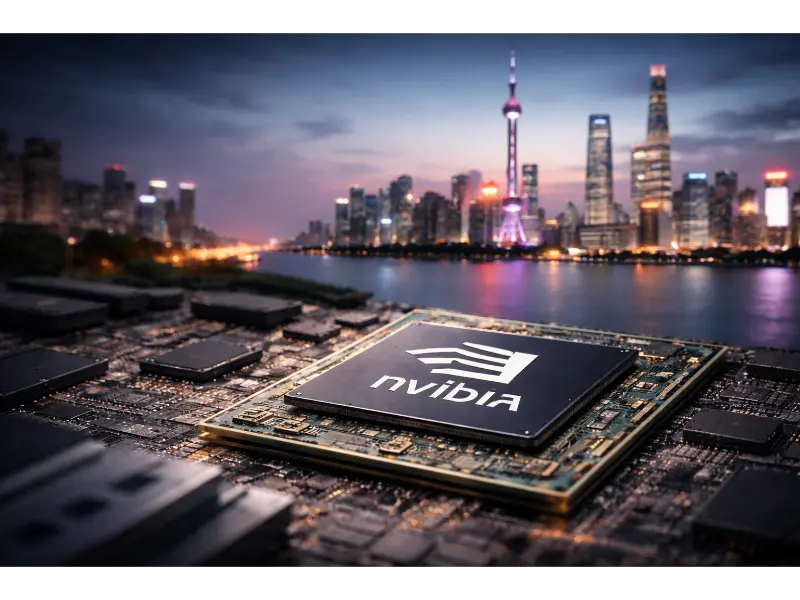
Nvidia boss visits china amid regulatory headwinds and AI demand is a public record based on article evidence, entity context, event links, and relationship context.
Nvidia CEO Jensen Huang visited Shanghai as the company awaits China’s decision on allowing H200 AI chip sales. The visit underscores how China’s vast demand for AI technology persists despite regulatory scrutiny and competition. What happened: Nvidia CEO in Shanghai amid china regulatory pressure Nvidia’s founder and chief executive, Jensen Huang, is in Shanghai, according to people familiar with his plans, as the U.S. chipmaker contends with regulatory headwinds and competition within the world’s second‑largest technology market.
The trip—partly to celebrate annual events with Nvidia’s China employees—signals an ongoing effort to maintain ties in a market that has grown strategically crucial for artificial intelligence hardware. Huang is also expected to visit Beijing, Shenzhen, and Taiwan during this journey. Nvidia is awaiting a Chinese government decision on whether its powerful H200 AI chips can be sold to local customers, despite the U.S. government’s clearance for export. Reuters reported Chinese customs agents have been instructed not to permit the H200’s entry, although it is unclear if this amounts to a formal ban or a temporary restriction.
The H200, Nvidia’s second‑most powerful AI processor, has become a flashpoint in broader trade and technology tensions between Washington and Beijing. China’s position could reflect both efforts to support domestic semiconductor development and geopolitical negotiation leverage. Nvidia declined to comment on the matter. The company has visited China multiple times in recent years, including meetings between Huang and senior officials such as China’s commerce minister.
Also Read: Nvidia asks TSMC to boost H200 chip output as Chinese demand surges Also Read: China blocks Nvidia H200 AI chips despite US export clearance Why it’s important Despite regulatory caution, China continues to represent a massive demand pool for AI infrastructure, making it difficult for global technology firms to simply abandon the market. The H200 decision illustrates how technology companies confront contradictory pressures: the commercial imperative to serve China’s fast‑growing AI ecosystem versus political concerns about control over advanced chip technology.
China’s regulatory stance also reflects a broader strategy to nurture its own semiconductor industry, which has ramped up competition in AI hardware and chip design. This follows a pattern of Chinese authorities imposing conditions or limits on foreign‑made technology while seeking domestic alternatives. For Nvidia, securing access—even under conditions or phased approvals—is critical to sustaining revenue growth and economies of scale.
Analysts argue that continued restrictions could slow the adoption of cutting‑edge AI hardware in one of the world’s largest computing markets and force Nvidia to rely on less powerful chips or alternative sales strategies. Yet, pulling out entirely is not an economically attractive option given the size and sophistication of Chinese AI consumers. The episode highlights a broader reality in global tech: nations are trying to balance economic opportunity with national and industrial policy, and firms must navigate shifting regulatory landscapes while maintaining innovation and market presence.
China’s AI demand remains too significant to ignore, even as geopolitical friction persists.
Member Briefing
Read the full trend briefing
Members read the full briefing with the source notes behind every finding.
Strategic Circle
A daily briefing in your language, built from changes we have verified.
Join for USD 20/monthCancel anytime.
Members also get the full research library, a daily briefing on the networks they follow and the private forum.
Snapshot
Category
Global Cloud Services TrendsNvidia boss visits china amid regulatory headwinds and AI demand is covered for governance relevance.
Region
ASIA PacificSignal Focus
GovernanceContent Type
EventPrimary Domain
MarketTopic
GovernanceImpact
MediumConfidence
Good confidence (80%)Confidence score guide
Published reporting