
Intelligence
Latest Articles
Latest intelligence on infrastructure operators, policy decisions, market moves, and digital power shifts.
CASE FILE
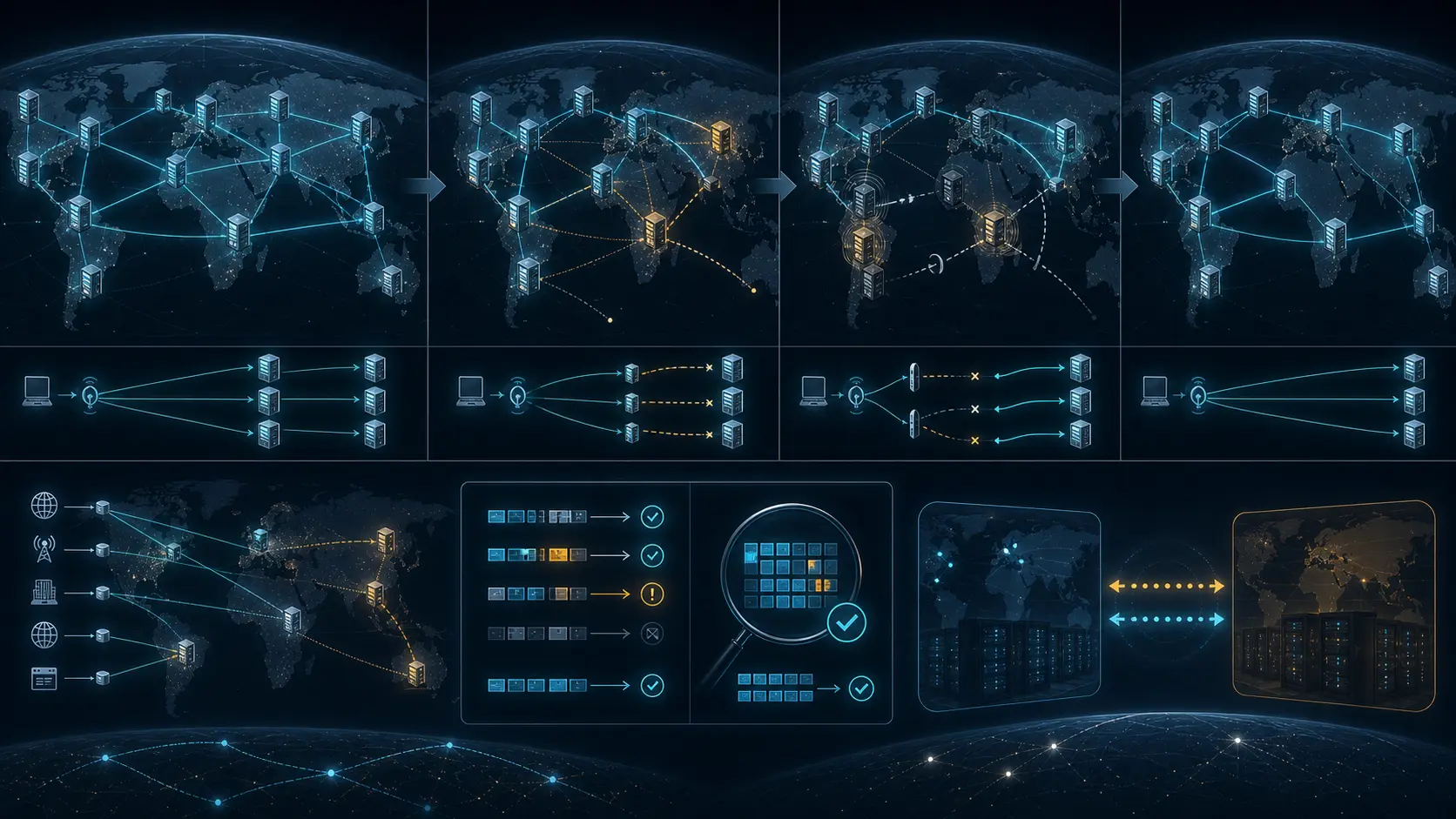
The F-Root outage that showed why redundancy is not the same as readiness
A January 2020 DNS incident exposed a narrow but consequential weakness in distributed infrastructure: many nodes can exist, yet recovery can still depend on whether separate organisations can detect a semantic fault, agree on its cause and exercise emergency routing authority…

Europe and Middle East Cloud Services Trends
The regional boundary behind Genesis Cloud’s GPU capacity
Genesis Cloud’s accelerator inventory becomes useful capacity only when networking, data placement, images, security controls and recovery procedures can support the intended workload. Its documented regional boundaries therefore turn a catalogue question into an architectural…

History
The Identifier That Could Survive a Session but Not a Rebirth: Why IMAP Needed UIDVALIDITY
An email client can remember a message for months, reconnect, and find it again by number. The difficult part is not making that number stable. It is admitting when the number has stopped meaning what the client remembers. IMAP solved that problem by pairing a persistent UID with…

IETF
David Meyer and the Address That Had to Ask Where It Lived
LISP lets an endpoint keep one identifier while its network attachment is described separately. That does not make location disappear. It moves forwarding into a chain of registered, resolved, cached, selected and reachable EID-to-RLOC state—and turns each link in that chain into…

History
A Detour Could Not Also Be a Destination: The Design of DNS CNAME
DNS could let an old name lead to a new destination, but only by making the old node surrender every ordinary answer of its own. CNAME turned that apparent limitation into a reliable instruction: cache the detour, restart the question, and keep authority over the alias separate…

Story
ARIN Published a 15-Seat Fellowship Ceiling. Its Roster Has 19
ARIN’s Fellowship timeline and its selected-Fellows announcement describe the same ARIN 58 cohort with different capacities. The planning page stops at 10 in-person and five virtual places. The announcement keeps the 10 in-person places and raises the virtual count to nine. A…

CASE FILE
The Answer Had Expired. The Failure Had Not: DNS Serve-Stale and the Authority Beyond TTL
A DNS answer can outlive its ordinary freshness without becoming current again. Serve-stale is the resolver's narrow authority to prefer a known old answer over a fresh failure, but only after the source has been consulted, the failure has been bounded and the age of the…

CASE FILE
At PP-26, a Sole Candidate Still Needs a Majority
The live PP-26 page currently shows one candidate for Secretary-General and one for Director of the Telecommunication Standardization Bureau. That is not an election result, or even a final single-candidate slate: nominations remain open until 12 October. If either field still…

Story
APNIC’s NRO Ballot Has Two Electorates. Its Result Needs the Mix
At 14:00 in Brisbane on 27 August, APNIC opened one electronic ballot for one regional seat on the NRO Number Council. It did not open that ballot to one electorate. Member organizations and qualified conference regulars enter through different doors, vote on different clocks and…

IETF
Alan DeKok and the RADIUS Variant That Moved Trust into TLS
RFC 9765 is unusual not because it promises a clean break, but because it records a protocol author revisiting a choice he helped make: Alan DeKok's RADIUS/1.1 removes old packet-security machinery only where two peers explicitly negotiate a protected transport profile. The…

History
The Bit That Refused to Make Half an Answer True: How DNS Changed Transport
A DNS server in 1987 had a small envelope for an ordinary reply: 512 bytes over UDP. The consequential invention was not merely a larger route. It was one bit that admitted when the envelope had failed, so a resolver would not mistake the records that happened to fit for the…

History
The Six Bits That Could Ask but Not Command: How DiffServ Bounded Quality of Service
A packet can arrive wearing the mark for expedited treatment and still enter an ordinary queue. DiffServ made that outcome legitimate by design: six header bits could select a behavior, but only the network that owned the queue could decide whether the request was trusted…

Story
RIPE NCC's One-Tier Board Needs an Authority Migration Table
RIPE NCC wants its legal structure to catch up with the way it says the organisation already works. The proposed one-tier Board would put the Managing Director on the Board as an executive director and recast the elected Executive Board members as non-executive directors. That…
Story
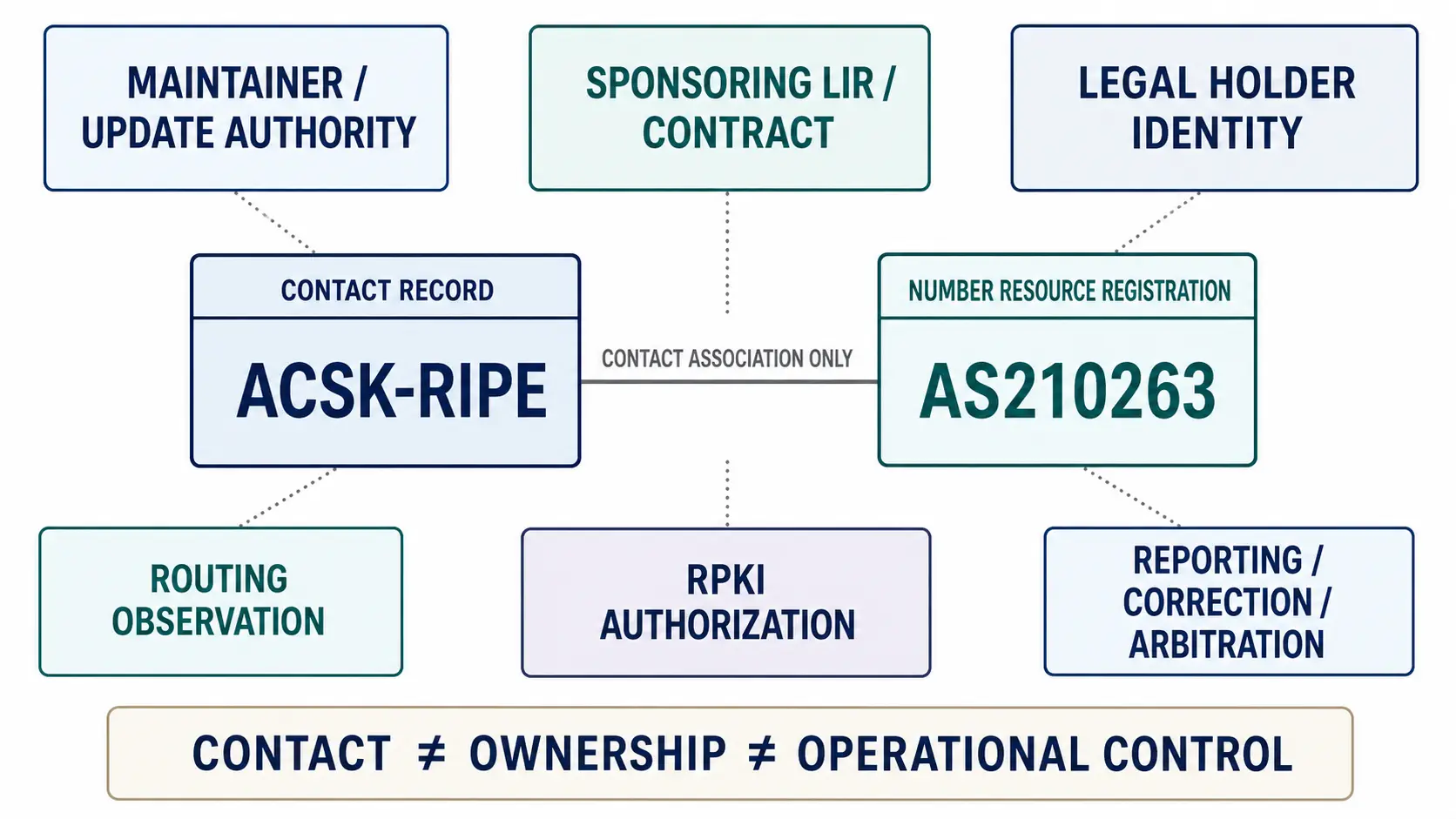
ACSK-RIPE and AS210263: A Contact Handle Is Not a Control Title
ACSK-RIPE and AS210263: A Contact Handle Is Not a Control Title intelligence summary explains the development, the public evidence available to readers, the organisations involved, the regional context, market exposure, and the infrastructure consequences that may follow. The…

Story
APNIC's Leadership Consultation Needs a Participation Receipt
APNIC has designed a careful consultation on barriers to community leadership: three online listening sessions, a mailing list, a hybrid conference session and de-identified reporting. That protects candour, but it also removes the visible trail by which readers could judge…

Story
AFRINIC’s Trust Anchor Still Runs to 2030. The NRO Roadmap Said “Short-Lived” by the End of 2025
A roadmap can name a destination and a date. It cannot prove that a live trust anchor has crossed the line. AFRINIC’s retrievable certificate shows why RPKI commitments need an implementation receipt rather than a silently ageing table.

History
Mark Andrews and the DNS Server That Outlived Its Replacement
A replacement can be announced years before it becomes a migration. Mark Andrews's stewardship of BIND 9 during the BIND 10 programme shows why running infrastructure keeps imposing duties—security fixes, releases, tests and operator support—even while an institution invests in…

Story
RIPE's Appointed NRO Seat Needs a Decision Receipt
RIPE NCC has opened a public door into one of its three NRO Number Council seats: nominations, eligibility checks and support statements are visible. The final passage is different. The Executive Board will appoint the member without a community vote, while the published election…

Story
RIPE NCC's 708 Extra Accounts Need a Migration Ledger
RIPE NCC has identified a rare simplification window. Only 410 members now operate more than one Local Internet Registry account, yet their 708 additional accounts keep complexity embedded across registry, billing, compliance and portal systems. Closing an exception is not the…

IETF
Joe Abley and the Trust Anchor That Had to Declare Where Trust Began
DNSSEC can prove a chain only after a resolver has decided where the chain starts. Joe Abley's work on the root trust-anchor publication format makes that first decision unusually legible: a signed file can prove where data came from, but it cannot order an operator to believe…