
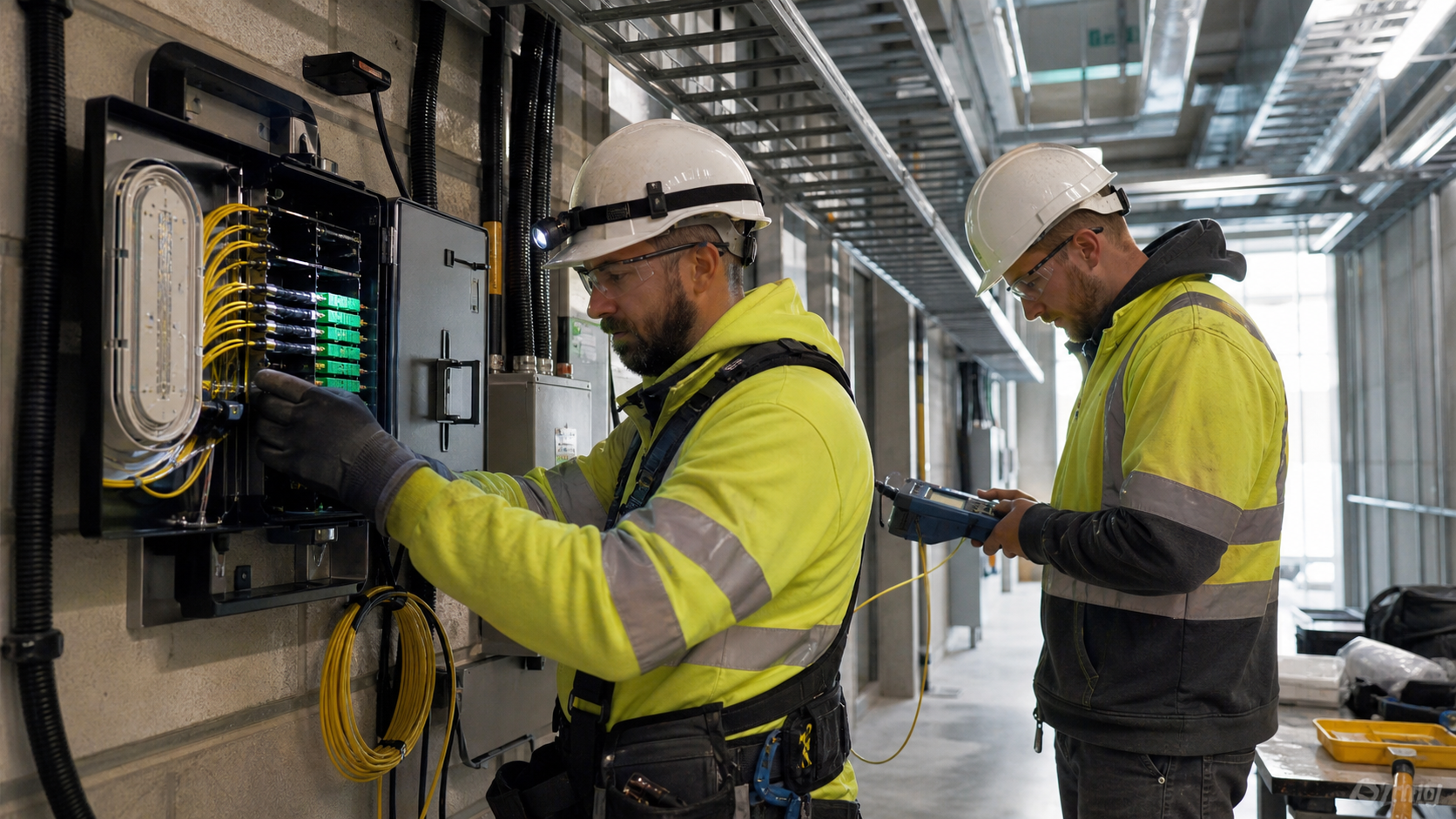
Summary
- Korporatsia STS LLC should be judged as a local infrastructure-accountability business with a modest routing footprint, not as a pure telecom capacity seller. The public routing evidence shows AS41460 as an active, IPv4-only, Russia-based network with upstream dependence on large national carriers and related SUENCO infrastructure, while the corporate evidence shows a wider utilities holding that sells reliability, construction, repair, and operating continuity.
- The economic question is whether the company can price field work, installation decisions, outage responsibility, regulatory coordination, and customer service above the cost of carrier transit and equipment pass-through. The answer is conditionally yes inside group-controlled or municipally embedded utility work, and much less clearly yes in open telecom markets where Rostelecom, MTS, contractors, and customer self-provision can make capacity look like a commodity.
- The strongest signal is not a glamorous internet business. It is the company group claiming 85.1 billion rubles of utility-sector investment over five years, 4,400 built or reconstructed objects, 6.1 million service consumers, and a workforce story around 17,000 people across more than 20 enterprises in six Ural Federal District regions. The weakest signal is the standalone legal entity's 2025 financial picture, registry ownership disruption, and the absence of evidence that AS41460 carries meaningful third-party downstream wholesale demand.
- The investment judgment is therefore severe: Korporatsia STS can be valuable where it is paid for being accountable when a site fails, but it has little defensible telecom value if it is merely reselling national-carrier capacity under a regional label. The post-2025 state-control and legal overhang make continuity more likely than entrepreneurial upside, and they make governance evidence as important as routing evidence.
Start with one managed site, because the economics of Korporatsia STS are clearer from a site than from a holding-company slogan. A customer asks for reliable service at an object outside the easiest urban core: a municipal facility, a recreation site, a transformer-fed public venue, a utility dispatch point, a heating node, or a building whose power, metering, communications, and service-desk expectations collide. The customer does not really want "capacity." It wants the location to work when weather, local grid conditions, contractors, municipal schedules, and consumer complaints make the last mile expensive.
Somebody must design the route, choose equipment, arrange crews, handle permissions, connect the object, maintain it, answer when it fails, and absorb the reputational cost if the failure becomes public.
That is the frame in which Korporatsia STS has a plausible premium. The group's own public material emphasizes electric power transmission and distribution, heat supply, water and wastewater systems, and waste handling. Its company pages describe subsidiaries repairing lines, building substations, preparing for winter periods, investing in urban utility networks, and serving many towns across the Urals. Its career site is not selling a cloud platform. It is selling the identity of a labor-heavy infrastructure employer. Its corporate site gives the language of heat, light, settlements, social responsibility, and regional presence.
Even its web agency case study describes a corporate and career site for an energy holding, not for a national internet carrier.
The routing record adds a second layer. AS41460 is registered to Korporatsia STS LLC and is visible as an active Russian network. Public ASN sources show a small originated IPv4 footprint and no IPv6 footprint in their displayed data. They show upstream relationships with Rostelecom and MTS, and one routing source also lists SUENCO as a related upstream or peer. IPinfo presents the network as business type, with a weekday-heavy activity rhythm and important routers in Tyumen and Khanty-Mansiysk. bgp.tools shows eight originated IPv4 prefixes and no IPv6 prefixes.
IPIP and CIDR Report show a similar small routing role while differing on address-count arithmetic because they count aggregates, specifics, and observed address space differently. The common conclusion is still robust: this is not a high-scale transit or hosting platform. It is a narrow, regionally embedded network resource attached to a utility group.
The crucial control boundary is therefore not "does Korporatsia STS have an ASN?" Many companies have an ASN without having pricing power. The control boundary is whether the company controls the difficult work around a location. If a customer can buy fiber, wireless backup, installation, monitoring, power work, and outage response from separate vendors at commodity prices, Korporatsia STS has little margin protection.
If, instead, the company is already the party that knows the local grid, owns or operates adjacent utility assets, manages permits, has crews near the site, and can combine electrical and network work into one accountable contract, then the ASN becomes one tool in a much larger service promise.
This distinction matters because wholesale access economics punish weak intermediaries. Rostelecom and MTS are named upstreams in the routing evidence. They are national-scale operators with purchasing power, existing network density, and established enterprise channels. A regional company buying from them and reselling unmodified capacity cannot defend much gross margin. Equipment vendors and construction subcontractors also capture value if the regional company is only a procurement conduit.
Customers can self-provision where the job is simple: buy a carrier circuit, add a router, hire a local electrician, and rely on standard service terms. The only reason to pay Korporatsia STS more is that the customer believes the integrated operator reduces failure probability, time-to-restore, coordination cost, or regulatory friction.
The official group evidence makes that premium believable in some settings. The homepage states that the corporation has invested 85.1 billion rubles in utility-sector development over five years, built or reconstructed 4,400 objects, and serves 6.1 million consumers. The about page says the holding combines companies in six Ural Federal District regions and has worked for more than 20 years in utility services, reliability, and energy security.
Subsidiary pages add operational texture: UTEK-Regionalnye Seti is described as a large electric-grid company in Khanty-Mansi Autonomous Okrug-Yugra, operating in 15 municipalities, with 92,246 powered objects, 2,287 transformer substations, and 6,875 kilometers of overhead and cable lines. RES-Vostok is described as serving transmission, distribution, and technical connection needs in Megion, Langepas, Pokachi, and Kogalym, with investment programs and more than 1,000 kilometers of lines.
USTEK and USTEK-Chelyabinsk show the heat-supply side, including hundreds of thousands of subscribers, hundreds of kilometers of heat networks, boiler assets, and modernization spending.
These facts do not prove that Korporatsia STS sells a significant telecom product to external customers. They do show why a telecom-only reading is too small. A utility group with crews, dispatch centers, municipal contracts, and technical-connection work can use communications as part of a bundle: SCADA links, office connectivity, customer-service systems, payment systems, remote meters, dispatch communications, protected corporate networks, site cameras, telemetry, and enterprise internet. In such use cases, the buyer's willingness to pay is tied to the cost of failure.
A substation, heating point, or water facility does not evaluate connectivity like a household buying a cheap broadband tariff. It asks what happens if the connection fails during a winter incident, a billing deadline, a public-service disruption, or a regulatory inspection.
The strongest public example of site economics comes from the group's own news about UTEK-Regionalnye Seti's work around Kogalym. The report describes a power-supply job for a public recreation location, including a transformer substation, 10 kV overhead and cable lines, kilometers of route, high-technology wire, and dozens of new poles. That is electricity, not broadband. But it is precisely the kind of field reality that makes regional infrastructure different from an armchair bandwidth trade. The marginal cost of a customer is not just an upstream Mbps fee.
It is survey work, route decisions, poles, protection, voltage drop, crews, outages, safety, documentation, and the consequences of a bad design. If Korporatsia STS can bring that discipline to managed communications and site services, it can price responsibility. If it cannot, it is exposed to every carrier and contractor that can quote a line item cheaper.
Pricing power, then, should be measured against four layers of cost. The first layer is carrier access: transit, leased lines, wholesale last-mile access, or mobile backup purchased from national operators. This layer is easiest for customers to benchmark, so it carries weak margin. The second is equipment: routers, power gear, cabinets, protection devices, monitoring tools, and meters. Customers can compare equipment prices too, and sanctions or import restrictions can raise replacement cost without giving the regional operator much pricing freedom.
The third layer is field labor: survey, installation, splicing, electrical work, dispatch, winter repair, and maintenance. This is where local density matters. A company with technicians already moving around Tyumen, Khanty-Mansiysk, Kurgan, Sverdlovsk, Yamal, and Chelyabinsk can spread travel and standby cost across several utility functions. The fourth layer is failure liability: the service desk, escalation path, regulatory reporting, customer anger, penalties, and the operational habit of taking responsibility. This is the layer most likely to create durable pricing power because it is hard to buy as a standalone commodity.
The 2025 financial evidence warns against romanticizing that story. Registry and counterparty services show Korporatsia STS LLC with a large charter capital of about 1.337 billion rubles and continuing legal existence, but the same sources show weak standalone revenue and a very large 2025 loss at the legal-entity level. RBC's company profile lists 2025 revenue of 137.143 million rubles and a net loss of roughly 8.194 billion rubles. Tbank reports a similar revenue figure and a large negative profit movement.
Egrul.org presents a different income framing, with 2025 income around 3.211 billion rubles, expenses around 11.882 billion rubles, and net profit around negative 8.671 billion rubles. Those figures are not clean operating economics for the whole utility group; they are registry and reporting views of the parent legal entity during a period of ownership and legal disruption. But they do make one point unavoidable: the parent company cannot be valued as if every public group metric drops through to a simple, high-margin operating P&L.
The legal and ownership record is the next break in the story. Public registry mirrors show the Russian Federation as the 100 percent participant from late October 2025, and several sources describe a management change in January 2026. Press coverage from RIA Novosti, Kommersant, DK, FederalPress, and Neftegaz describes the General Prosecutor's claims, the October 2025 court decision on state seizure, later asset litigation, and criminal allegations against former beneficiaries and executives. Korporatsia STS publicly contested accusations and published statements about its asset history, investment activity, and legal position.
An article cannot resolve the litigation. It can identify the economic consequence: after a state seizure, the firm may retain operating continuity in politically important utilities, but private commercial freedom, capital allocation, procurement discretion, and reputation with outside customers all become harder to underwrite.
The state-control shift cuts both ways. For critical infrastructure, state ownership can reduce sudden operating failure. Municipalities and regulators have an interest in keeping power, heat, water, waste, and related support systems running. That can protect volume. It can also make collection, tariff review, and emergency coordination more predictable. But it reduces the case for entrepreneurial telecom expansion. A state-controlled utility holding is less likely to take aggressive pricing risk in open broadband or enterprise connectivity markets unless such services support regulated assets or public-service continuity.
The buyer should expect the company to favor resilience, compliance, and continuity over high-growth internet margins.
The unit economics are therefore attractive only where the company owns the hard part of the customer problem. Consider a managed site with power infrastructure, telemetry, office connectivity, and customer-facing service obligations. A national carrier may provide backbone access. A contractor may install cable. A customer may buy routers. Korporatsia STS earns a premium only if it can be the party that designs the service as one accountable operating system. The bill must include project management, local crews, monitoring, spare parts, and restoration commitments.
The margin is not "capacity minus transit." It is "avoided outage cost minus credible substitute cost." That is a much better business when the avoided outage has high political, safety, or municipal cost.
The public routing evidence supports this conservative model. IPinfo shows no downstreams for AS41460 in its displayed data. CIDR Report similarly frames the network with upstream adjacency and no downstream adjacency. bgp.tools lists upstreams and peers, not a visible third-party customer cone. The prefix footprint is small. There is no displayed IPv6 footprint. The hosted-domain count is limited. This does not mean the network is unimportant. It means the network is likely an internal or specialized business network rather than a platform with independent wholesale gravity.
If Korporatsia STS tells the market that the internet business is high-value, the market should ask for downstream customer evidence, paid enterprise circuits, service-level terms, churn, realized ARPU, and route diversity, not just an ASN.
Suppliers and upstream concentration are material risks. Rostelecom and MTS appear as upstreams across routing sources. These are credible suppliers, but they also bound Korporatsia STS's bargaining power. If upstream prices rise, if routing policy changes, or if national operators pursue the same municipal enterprise customers directly, Korporatsia STS cannot pretend it controls the full connectivity stack. The company can mitigate this by being indispensable on site: owning documentation, customer relationships, energy-network context, and restoration process. It cannot mitigate it by claiming that a small prefix set creates a moat.
The SUENCO relationship is more interesting than the national-carrier relationship. RIPE membership information lists Korporatsia STS LLC with Tyumen contact details and an email domain tied to id-suenco.ru. IPinfo shows id-suenco.ru as the ASN domain. bgp.tools lists SUENCO as a related upstream or peer. Several official STS pages describe SUENCO and group electric, water, and municipal-service activities. This suggests that the network footprint is attached to a broader utility environment. Economically, that matters because related utility operations can supply anchor demand.
Anchor demand is useful: it lets the company maintain a NOC, addresses, routers, staff, and contracts even when external demand is thin. But anchor demand also limits the evidence of market pricing. Intra-group work can keep the network alive without proving that independent customers would pay a premium.
Customer concentration follows naturally. Companium's public counterparty summary describes 223-FZ procurement participation and lists top customers including Obkommunenergo, SUENCO, TEO, SGES, and SEVENKO. Those are related utility-world names, not a diversified portfolio of independent telecom customers. Tender records around audit, construction, and technical-connection work also point toward a group-services and infrastructure-procurement pattern. This is neither inherently bad nor inherently good. It is good if the company is the trusted internal service arm of a large, durable utility perimeter.
It is bad if reported revenue depends on related-party cycles, emergency projects, legal restructuring, or one-off reimbursements rather than repeatable external demand.
The regulatory economy is as important as the customer economy. In electric grids, heat, water, and waste, price is not just what a customer will pay. It is shaped by tariffs, technical-connection rules, regional commissions, antimonopoly supervision, and municipal obligations. The Garant-published tariff and antimonopoly materials around SUENCO show the practical problem: technical decisions such as line length, voltage, transformer requirements, and "last mile" cost allocation can determine whether a project is feasible and who pays for it.
A telecom analyst who ignores that environment will miss the main source of Korporatsia STS's value. The company is not selling a generic software subscription. It operates where engineering choices become tariff consequences and where a bad cost allocation can be challenged by regulators.
That regulated setting also caps upside. A company can earn respect and durability by executing under regulation, but it cannot always translate quality into price. If a tariff process or procurement rule says a cost should be recovered over time or bid competitively, premium service becomes harder to monetize immediately. If the customer is a public or quasi-public utility, procurement scrutiny can push prices down. If the service is bundled into regulated operations, margins may be seen as a public burden rather than an enterprise convenience.
The company must therefore prove that its integrated approach lowers total system cost, not merely that it provides a convenient vendor bundle.
Competition appears in four forms. The first is national carriers, especially Rostelecom and MTS, which can sell circuits and enterprise connectivity directly. The second is local contractors that can perform installation and maintenance without owning an ASN. The third is customer self-provision, especially for simpler sites where an IT department can combine a carrier line, cellular backup, and a service contract. The fourth is internal substitution by state or municipal entities after nationalization, where functions can be reorganized under another state-controlled vehicle.
Korporatsia STS's defense against all four is field context: knowing where the assets are, how the municipality works, which equipment fails, which crews can respond, and what technical choice will survive both weather and regulatory review.
The group's labor base is a real asset if it is well managed. The career site says 17,000 employees support energy for cities and settlements, with more than 20 enterprises in six regions. Those figures are group claims, not parent-company headcount; registry mirrors show the parent legal entity with dozens of employees, not 17,000. But the difference itself is informative. Korporatsia STS LLC appears to be the holding and management center around a much larger operating perimeter. The economic premium belongs to the operating perimeter, not necessarily to the parent company's own payroll.
If the parent can coordinate that perimeter, it has leverage. If legal restructuring separates the operating companies from the parent, the parent-level thesis weakens sharply.
Unofficial market signals are consistent with a specialized infrastructure network. IPinfo's activity pattern looks weekday-heavy and business-hour oriented. PeeringDB search did not surface an obvious public interconnection profile for AS41460 in the search result available during review. bgp.tools and CIDR Report do not show a downstream customer cone. These signals should be treated carefully because third-party internet datasets are incomplete and use different methodologies.
Still, they align with the harder evidence: AS41460 looks like a support network for business and utility operations, not a public internet platform seeking broad peering or wholesale scale.
The corporate communications signal points in the same direction. The official site emphasizes social responsibility, reliability, investment, regional infrastructure, and utility sectors. The Uplab case study says the 2025 corporate and career sites were built to present an innovative, technological leader in an energy sector and to support an HR brand. That is not neutral decoration. It tells the market where the company wants the premium to sit: on professionalization, scale, and responsibility in essential services.
A skeptical reader should ask whether those communications reflect real operating quality or merely brand repair after legal pressure. But even brand repair has an economic implication: the company understands that trust is the product.
The main contradiction is between scale language and exposed parent-company accounts. The group claims millions of consumers and tens of billions of rubles in investment. Parent-company registry profiles show a medium-size legal entity, a large 2025 loss, management change, and state ownership after seizure. Both can be true if the parent coordinates a group whose assets, liabilities, and revenues sit across subsidiaries. But an investor, lender, supplier, or customer should not blend them casually.
The parent is not the whole operating system; the group website is not a consolidated audited financial model; the ASN is not proof of telecom revenue; and the public legal coverage is not proof that every operating unit is impaired.
The right underwriting question is not "is Korporatsia STS big?" It is "where does Korporatsia STS have accountable control?" If it has contract control, crew control, asset documentation, monitoring, escalation authority, and regulatory credibility for a site, it can earn above commodity economics. If it only supplies a pass-through service bought from Rostelecom or MTS, it should be priced as an intermediary. If it is only a brand over legally separated subsidiaries after state seizure, its economics belong to those subsidiaries, not to the parent.
If it retains group coordination under state ownership, the upside is less glamorous but still valuable: fewer outages, faster restoration, better capex prioritization, and lower political cost for municipalities.
For customers, the practical buying rule is simple. Pay Korporatsia STS a premium only when it accepts measurable responsibility for the whole site outcome. The contract should define installation scope, monitoring, response time, spare equipment, route diversity, power dependencies, maintenance windows, documentation handover, and who pays when a design choice fails. If the company cannot define those obligations, the customer should buy carrier access and field work separately. If it can define and meet them, the premium is rational because the customer is buying reduced coordination risk, not merely bandwidth.
For suppliers, the firm is a useful but tough counterparty. A holding connected to utilities across several regions can aggregate demand for equipment, software, construction, audit, and service work. But the legal overhang, state ownership, and related-party procurement pattern mean suppliers should watch payment terms, approval chains, and public-procurement constraints. The best supplier position is not to sell generic routers or labor hours. It is to help Korporatsia STS reduce measurable outage risk or field cost in a way that can survive tariff, audit, and procurement scrutiny.
For regulators and municipalities, the judgment is different again. Korporatsia STS should not be allowed to turn essential-service complexity into opaque rent extraction. If a technical connection requires a costly transformer or line route, the basis should be documented. If tariff recovery shifts cost from one applicant to all consumers, the engineering necessity should be clear. If a related company wins work, the price and scope should be benchmarked. But regulators should also recognize that cheap procurement can create expensive failures.
In winter utilities and local infrastructure, the lowest visible bid is not always the lowest social cost.
The working-capital problem is another reason to avoid a simple ISP label. A carrier reseller can often bill monthly and match upstream cost to customer revenue with manageable lag. A field-heavy utility-support operator has a rougher cash cycle. It may survey a site before billing, buy equipment before acceptance, reserve crews before a permit is complete, carry spare parts that may sit unused, and then wait for a procurement or regulated customer to approve payment. If the project is linked to technical connection, tariff recovery, or public infrastructure, the cash cycle can be longer than the engineering cycle.
That is why the parent company's weak 2025 financial profile matters even if it is distorted by legal events: accountability businesses consume cash before they prove margin.
Good economics would show up as repeatable recovery of those pre-service costs. The company would have standard scopes for site survey, design, installation, testing, monitoring, dispatch, and restoration. It would know which work belongs in a fixed installation charge, which belongs in monthly service, and which belongs in separately billable change orders. It would protect itself against customers who ask for a low installation price and then expect unlimited repair responsibility. The public material does not show that contract architecture.
It shows the ingredients: crews, group scale, regulated-utility context, routing resources, and procurement activity. The missing evidence is the price book that turns those ingredients into margin.
A strong operator would also separate risk by failure type. If a national upstream fails, Korporatsia STS should not absorb unlimited liability unless it sold route diversity and bought backup accordingly. If a local power condition damages equipment, the contract should say whether the site owner, utility operator, or managed-service provider pays. If a pole route, transformer location, or last-mile design is later challenged by a regulator or municipality, the file should contain the engineering basis. These distinctions sound legalistic, but they are economics.
Ambiguous responsibility is free to the customer at signing and expensive to the operator during failure.
The company has one possible advantage that national carriers often lack: it can see adjacent infrastructure risk. A carrier sales team may know whether fiber is available. A utility-linked field organization may know that the road will be opened for another repair, that a transformer is near capacity, that a settlement has winter access problems, that a municipal facility has chronic payment delays, or that a local contractor repeatedly underestimates civil works. That knowledge is valuable only if it changes pricing and design.
If the company uses it to avoid bad jobs, require realistic service terms, and quote restoration commitments honestly, it can outperform a national carrier selling from a tariff sheet. If it gives the knowledge away in the sales process and then matches the carrier's price, it destroys its own advantage.
There is also a reputational compounding effect in essential infrastructure. A small internet outage at an office may be annoying; an outage at a utility-facing site during a public-service problem becomes political. A company that repeatedly restores service under pressure can build trust with administrations, utilities, and industrial customers. That trust can lower customer-acquisition cost and make renewal easier. But the same compounding works in reverse. A few visible failures, a disputed tariff allocation, or a procurement controversy can make every later quote look like a rent-seeking attempt.
Korporatsia STS's post-2025 legal history makes this especially sensitive. It has to sell competence in a market already primed to ask who controls the assets and who benefits from the price.
The best comparison is a regional systems integrator that happens to understand utility assets, not a broadband carrier that happens to own field trucks. The integrator model asks how much complexity the customer can safely outsource. It earns money when it reduces coordination cost across power, network, civil works, monitoring, and service response. The broadband-carrier model asks how much traffic moves and what the customer pays per line. Public evidence favors the integrator model. The ASN is small. The group infrastructure story is large. The procurement and tariff context is dense.
The customer problem is not "more bandwidth"; it is "fewer failures in hard places."
This is why the article's opening economic question is unforgiving. Installation, operating accountability, and service continuity are valuable only if they are visible in the contract and measurable after installation. Otherwise they become sales language wrapped around pass-through inputs. Korporatsia STS should want customers to see the difference between a cheap line and an accountable site. It should define what it monitors, what it stocks, what it repairs, how fast it responds, what it escalates, and what it refuses to promise. A company confident in its field advantage can be precise.
A company relying on opacity will keep the bundle vague.
The supplier market will test this precision. Equipment suppliers will try to sell higher-spec gear. Contractors will try to shift uncertainty into change orders. National carriers will quote standard access. Related utilities will expect internal familiarity to lower price. Public customers will expect documentation and auditability. In that pressure field, margin comes from saying no as much as from saying yes. A disciplined Korporatsia STS would reject underpriced obligations, specify designs that reduce truck rolls, and use group purchasing where it genuinely lowers total cost.
An undisciplined version would win work by absorbing every ambiguity, then discover that the margin disappeared into labor, travel, spares, and blame.
Capital allocation after state control is the final operating test. A private owner might chase adjacent telecom revenue to diversify. A state-influenced owner may prioritize service continuity, political stability, and visible infrastructure repair. Neither approach is automatically better. The disciplined answer is to fund communications investments that lower utility failure cost and avoid speculative expansion where the company lacks a customer wedge. IPv6 deployment, additional upstream diversity, monitoring systems, and better documentation can be justified if they improve resilience for real sites.
A consumer-facing broadband push or broad hosting strategy would need evidence that the company has a route to customers beyond its utility perimeter. Public evidence does not yet show that route.
Management should therefore be evaluated by how it narrows the business, not by how loudly it claims breadth. The company has enough adjacent activities to create a confused conglomerate story: power, heat, water, waste, pension references, social projects, trademarks, procurement, routing, and legal dispute. The economically useful story is narrower: local infrastructure responsibility in the Urals, with communications as one component of operating reliability. A focused management team would publish clearer service obligations, clean governance after the ownership change, and evidence that group companies pay market-like prices for work.
A weak team would lean on old scale claims while leaving customers and suppliers to guess which legal entity controls which asset.
There is a practical reason for this narrowness. In infrastructure services, the cost of a bad promise is asymmetric. Underpricing a simple broadband line loses a small margin. Underpricing a managed utility site can create emergency truck rolls, customer claims, public complaints, regulatory attention, and internal disputes over who authorized the design. The upside of a vague promise is a signed contract; the downside is years of operational drag. Korporatsia STS's economic quality will be determined by whether it prices that asymmetry before the contract is signed. A company that prices it after the failure has already lost.
The facts that would change the judgment are concrete. Evidence of a diversified external enterprise customer base for AS41460 would improve the telecom thesis. Published service-level contracts, route-diversity designs, independent customer references, NOC performance, churn data, and revenue split between captive and external customers would show whether the company sells responsibility or merely consumes it internally. Evidence of IPv6 deployment, additional independent upstreams, public peering, or downstream customers would strengthen the network-resource case.
Conversely, evidence that the ASN exists mainly for internal email, telemetry, and office systems would confirm the conservative view that telecom is a support function.
Financial disclosure would also change the view. Consolidated group accounts by operating segment would let readers distinguish utility revenue, management fees, telecom services, construction, and related-party flows. Without that disclosure, the safest interpretation is that the parent company's standalone 2025 loss reflects extraordinary disruption, impairment, or restructuring rather than normal economics, while the group website reflects operating scale but not parent-level profitability. That gap is too large to ignore. It is exactly the kind of gap that separates a strong infrastructure story from a bankable company valuation.
The final economic judgment is deliberately narrow. Korporatsia STS has a credible basis to charge for infrastructure responsibility where its utility footprint, field labor, local knowledge, and operating accountability are real. It does not have a credible basis, on public evidence alone, to claim high-value regional ISP economics from AS41460 itself. The network resource supports the company; it does not define it. The moat is not the prefix table. The moat is whether, when a managed site fails, Korporatsia STS is the party with the people, permits, spares, maps, contracts, and authority to make the site work again.
That is a useful business, but only if priced honestly. The company should make responsibility more valuable than commodity capacity by selling outcomes: fewer outages, faster restoration, lower coordination cost, defensible engineering, and clean accountability. If it cannot do that, Rostelecom, MTS, contractors, and customer self-provision will compress the margin. If it can do that, the post-2025 state-control environment may turn the company from a contested private holding into a less exciting but still important regional infrastructure operator. In essential infrastructure, less exciting can still be economically powerful.
It is just not the same thing as a high-growth internet carrier.
Sources
- https://sts-corporation.ru/
- https://sts-corporation.ru/about/
- https://sts-corporation.ru/sectors/
- https://sts-corporation.ru/contacts/
- https://team.sts-corporation.ru/
- https://www.uplab.ru/works/korporatsiya-sts/
- https://sts-corporation.ru/companies/korporatsiya-sts/
- https://sts-corporation.ru/news/ofitsialnoe-zayavlenie-ooo-korporatsiya-sts/
- https://sts-corporation.ru/news/korporatsiya-sts-publikuet-otzyv-oblkommunenergo-i-klyuchevye-dokumenty-v-oproverzhenie-pretenziy-ge/
- https://sts-corporation.ru/news/gruppa-kompaniy-korporatsiya-sts-publikuet-podrobnosti-o-svoey-investitsionnoy-deyatelnosti/
- https://sts-corporation.ru/news/korporatsiya-sts-vysoko-tsenit-kompetentnuyu-rabotu-suda-i-prokuratury-po-delu-ob-aktivakh/
- https://sts-corporation.ru/companies/utek-rs/
- https://sts-corporation.ru/companies/res-vostok/
- https://sts-corporation.ru/companies/ustek/
- https://sts-corporation.ru/companies/ustekchel/
- https://sts-corporation.ru/news/yutek-regionalnye-seti-vnesla-svoyu-leptu-v-razvitie-kogalyma/
- https://www.tbank.ru/business/contractor/legal/1026604935939/
- https://egrul.org/6660153847
- https://companium.ru/id/1026604935939-korporaciya-sts
- https://companies.rbc.ru/amp/ogrn/1026604935939/
- https://spark-interfax.ru/moskva-basmanny/ooo-korporatsiya-sts-inn-6660153847-ogrn-1026604935939-a00203e4772f4839a1cdbe6eaf270c18
- https://reputation.ru/ogrn/1026604935939
- https://casebook.ru/public/company/1026604935939
- https://checkspot.ru/company/1026604935939
- https://companies.rbc.ru/trademark/1144290/sts-korporatsiya-sts-sila-tepla-i-sveta/
- https://www.ripe.net/membership/member-support/list-of-members/ru/sts-corp/
- https://ipinfo.io/AS41460
- https://bgp.tools/as/41460
- https://whois.ipip.net/AS41460
- https://www.cidr-report.org/cgi-bin/as-report?as=AS41460&view=2.0
- https://ipinfo.io/AS41460/89.249.113.0/24
- https://www.ip2location.com/89.249.116.172
- https://www.ip2location.com/89.249.125.144
- https://bgp.he.net/net/195.191.192.0/23
- https://www.peeringdb.com/advanced_search
- https://base.garant.ru/413439522/
- https://base.garant.ru/483641077/
- https://tendermedia.ru/lot/show/61068694
- https://www.tenderguru.ru/tender/24960698
- https://ria.ru/20251010/sud-2047501047.html
- https://www.kommersant.ru/doc/8040544
- https://www.kommersant.ru/doc/8060533
- https://ria.ru/20251210/sud-2061188453.html
- https://www.dk.ru/news/237238675
- https://fedpress.ru/news/66/economy/3441220
- https://neftegaz.ru/news/arbitrage/899992-genprokuratura-obratilas-v-sud-s-iskom-ob-obrashchenii-v-dokhod-rf-aktivov-a-bobrova-i-a-bikova-v-t-/
Member Briefing
Deeper Profile Context
Sign in with the right membership level to unlock the full briefing and source notes.
Only for Strategic Circle
Strategic Circle
Open to all readers. Unlock profile briefings after joining and signing in.
Join Strategic CircleOnly for Leadership Alliance
Leadership Alliance
For qualified IP-asset owners and management; sign in to unlock alliance briefings.
Join Leadership Alliance