
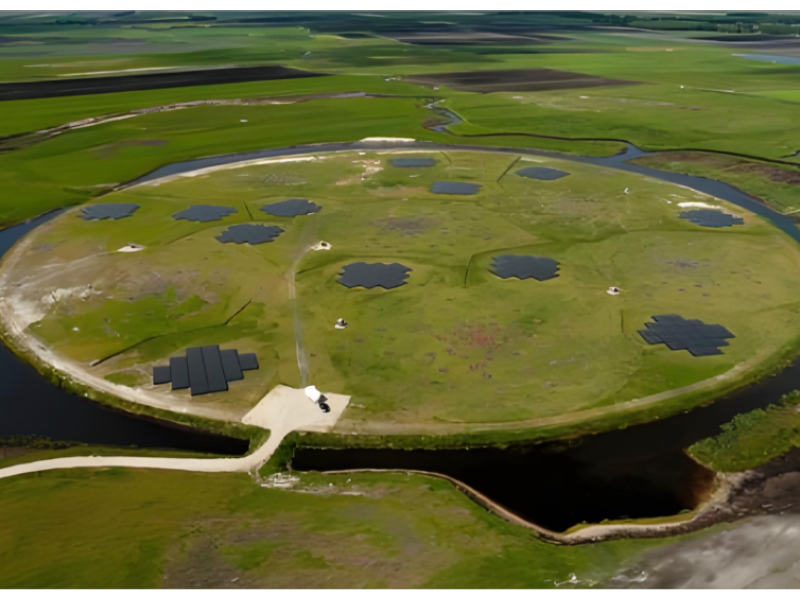
Juniper Networks upgrades ASTRON’s LOFAR 2.
- Juniper Networks partners with ASTRON to enhance the LOFAR 2.0 telescope’s network capabilities.
- The upgrades will increase network bandwidth by a factor of 10, improving data processing, accuracy, and reliability.
What happened: Juniper enhances LOFAR 2.0 telescope network
Juniper Networks has been selected by the Netherlands Institute for Radio Astronomy (ASTRON) to upgrade the network infrastructure of its LOFAR 2.0 telescope. LOFAR (Low Frequency Array) is the world’s largest radio telescope operating at the lowest frequencies observable from Earth. Its network, which handles sensor data and computing, will be upgraded to 800G capabilities.
The upgrade will boost data throughput, processing speed, and network reliability across ASTRON’s nine countries. It will increase bandwidth tenfold at each LOFAR station, allowing 24/7 access to all antennas and doubling simultaneous bandwidth for more efficient surveys. The upgrade will also improve antenna synchronization to nanosecond precision. These changes will enhance the telescope’s sensitivity and accuracy, aiding research into exoplanets, galaxy evolution, and space weather.
Also read: Neuraspace boosts tracking precision with new optical telescope
Also read: Juniper Networks assists the NRK in its digital transformation
Why it’s important
The partnership between Juniper Networks and ASTRON marks a major step forward in boosting the capabilities of the LOFAR 2.0 telescope. By increasing network bandwidth and enhancing the telescope’s data processing power, this upgrade promises to drive significant advancements in radio astronomy. LOFAR plays a key role in studying phenomena such as exoplanets and the early stages of galaxy formation, making this upgrade essential for advancing scientific research in these areas.
Juniper’s AI-Native Networking portfolio fits perfectly with ASTRON’s needs, offering scalable and reliable solutions to support its ambitious research objectives. This collaboration highlights the growing importance of advanced networking technologies in scientific research, particularly for fields that require handling vast data volumes. As the project progresses, the improved infrastructure will enable more precise and efficient astronomical observations, paving the way for groundbreaking discoveries.
Additionally, this project aligns with broader trends in space-related telecom innovation, as seen in other recent advancements such as Nokia’s Lunar Surface Communication System, highlighting the increasing convergence of space exploration and telecommunications.
Member Briefing
Deeper Trend Context
Sign in with the right membership level to unlock the full briefing and source notes.
Only for Strategic Circle
Strategic Circle
Open to all readers. Unlock trend briefings after joining and signing in.
Join Strategic CircleOnly for Leadership Alliance
Leadership Alliance
For operators, investors, and policy teams that need relationship evidence, failure paths, and source notes. Sign in to unlock.
Join Leadership AllianceSnapshot
Category
Europe and Middle East Cloud Services TrendsRegion
Europe & Middle EastSignal Focus
MarketContent Type
EventPrimary Domain
MarketTopic
MarketImpact
MediumConfidence
Limited confidence (82%)Confidence score guide
Several public sources