Summary
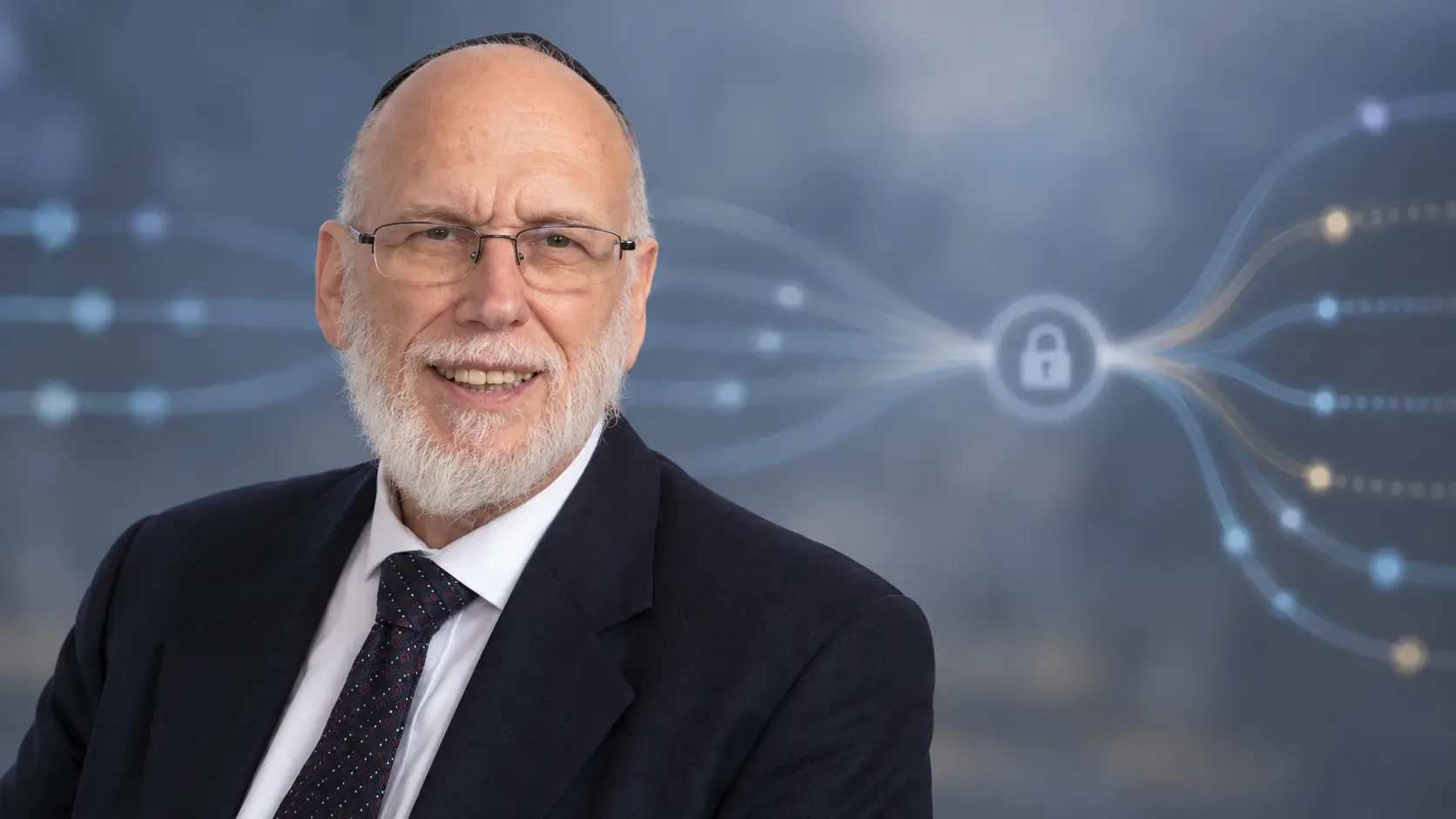
- Jakub Kicinski is a current maintainer of general Linux networking and networking drivers, with listed responsibilities in areas including ethtool, netdevsim and the NFP driver. His influence over integration is substantial but shared with co-maintainers, specialist reviewers, mainline maintainers and downstream distributors.
- His earlier work on Netronome's programmable NFP devices and hardware eBPF offload placed him inside a difficult design problem: how to use accelerator hardware without allowing one vendor's pipeline to define the common Linux interface.
- Kicinski's later work has helped turn review decisions into reusable machinery. Modern ethtool netlink interfaces, machine-readable netlink specifications, netdevsim, kernel selftests and pre-merge CI make parts of the acceptance process more observable and repeatable.
- A 2023 retrospective reported 7,243 patches applied collectively by David S. Miller, Kicinski and Paolo Abeni, along with roughly 200 networking fixes associated with syzbot reports. Those figures show subsystem scale rather than a personal contribution count.
- Kicinski's broader significance lies in governing future maintenance cost. A request for a generic API, a selftest or clearer documentation can delay a feature today while preventing a product-specific shortcut from becoming a permanent obligation for drivers, tools, distributions and operators.
A patch becomes infrastructure only when someone accepts its future cost
A networking patch often enters public view as a compact technical proposal. It may add a statistic, expose a queue, change a driver's reset sequence, programme an offload or introduce a new way for user space to ask the kernel for information. The code can be small. The obligation it creates is not.
Once an interface reaches a released kernel, monitoring tools may depend on it, vendors may implement it, distributions may backport it and operators may build procedures around its behaviour. Removing or changing it later can become harder than writing the original patch.
That gap between the size of a contribution and the lifetime of its consequences is the proper setting for a profile of Jakub Kicinski. Current Linux records list him among the maintainers of general networking and networking drivers. They also place his name beside narrower areas including ethtool, netdevsim and the NFP driver. These entries do not make him the owner of a stack. They identify areas where the project expects him to review, coordinate and help carry responsibility for what becomes supportable.
The distinction matters because the popular image of an open-source maintainer is usually too simple. A maintainer is sometimes imagined as a senior programmer who approves good code and rejects bad code. In a mature kernel subsystem, the harder question is often whether a proposed behaviour belongs in a common interface at all.
The answer has to account for hardware variation, old user-space programmes, future backports, failure reporting, testability and the ability of another maintainer to understand the decision years later. Kicinski's public record is particularly useful because it connects direct hardware work with the machinery of review. He has worked where programmable network devices meet the kernel, then helped develop specifications, simulated devices, tests and process guidance that make future decisions less dependent on private memory.
His importance is therefore not captured by a list of commits. It lies in the attempt to convert judgement into an institution that code, documentation and automated checks can partly preserve.
Programmable NICs taught Kicinski that acceleration is also an API problem
The origin story begins with hardware that could do more than receive and transmit packets. Netronome's Network Flow Processor, or NFP, belonged to a class of programmable network devices capable of performing work that a conventional host CPU might otherwise handle.
Such devices promised performance and flexibility, but they also created a difficult boundary. Linux needed to communicate with firmware and hardware pipelines whose internal design did not look like the generic kernel abstractions used by every other driver.
A vendor can solve that problem privately. It can expose a bespoke control utility, encode assumptions in firmware and teach customers to use a product-specific interface. That may be enough to ship. It is less attractive to an upstream kernel that has to coexist with many vendors and preserve user-space compatibility across hardware generations.
The public project has to decide which capability is genuinely general, how software discovers it, what happens when a device lacks it and which part of the system reports failure. Kicinski's NFP work placed him on both sides of that negotiation. He was not commenting from a distance on what vendors ought to do. The driver had to manage firmware, queues, representors, statistics and offload state while fitting those functions into Linux networking.
A feature that looked natural inside one programmable pipeline could be awkward or misleading when presented as a common kernel contract. The engineering task was therefore inseparable from an institutional one: persuade the public project that the abstraction could survive beyond the product that first needed it.
This experience helps explain the later emphasis visible in his maintenance work. Generic interfaces are not simply an aesthetic preference. They are a way to prevent one device from imposing private semantics on every tool and operator above it.
Capability reporting is not administrative detail. It is how software avoids assuming that hardware can perform work it cannot. A fallback path matters because it marks the line between a feature that degrades visibly and one that silently changes meaning.
NFP turned one vendor's hardware into a test of generic Linux semantics
A network driver sits between physical equipment and a large body of shared software. Below it are firmware, DMA engines, queues, memory, interrupts and device-specific recovery rules. Above it are kernel subsystems and user-space programmes that expect familiar behaviour.
The driver has to translate between those worlds without pretending that the hardware is more uniform than it really is. NFP made that translation especially demanding because programmability increased both the range of possible functions and the number of ways semantics could diverge.
Consider a simple operator question: did the requested function actually move into hardware? An offload API is incomplete if it accepts a configuration but provides no reliable way to discover whether execution remained in software, moved to the device or failed partway through. The same is true for statistics. A counter has little value if its scope is ambiguous, if resets are invisible or if two drivers attach different meanings to the same field.
Review therefore has to examine more than whether a feature works on the submitter's device. It has to ask whether the resulting state can be understood consistently.
This is where driver review becomes policy in the most practical sense. Maintainers help decide whether a behaviour belongs in ethtool, a netlink family, traffic control, devlink, sysfs or a private channel. Each choice creates a different compatibility surface.
A driver-private mechanism can preserve speed and uniqueness but fragment tools. A generic mechanism can broaden portability but take longer to design and may represent only the common part of several devices. Neither route is automatically right. The decision concerns who will carry the complexity, and for how long.
Kicinski's path from NFP specialist to general maintainer is significant because it widened the unit of comparison. The question stopped being whether one driver could implement a requested feature and became whether Linux could explain, test and maintain the behaviour across drivers.
That shift is one of the central acts of infrastructure governance. It converts local engineering success into a claim about a shared platform.
Hardware eBPF offload exposed the danger of silent differences
eBPF gives the Linux kernel a programmable execution model. Hardware offload adds another translation: a verified programme intended for kernel execution has to be mapped onto a target device's instruction set, helpers, memory model and control-flow limits.
The target may support only a subset. Some programmes can run in hardware, some must remain in software and some should be rejected. The unsafe outcome is not simply a failed compilation. It is a programme that appears accepted while behaving differently from the software version.
The NFP offload work Kicinski presented in 2017 made this boundary visible to the wider networking community. A useful design had to report what the device could execute, preserve meaning where possible and fail clearly where it could not.
It also had to fit into a kernel ecosystem in which other programmable devices might later arrive with different constraints. The interface could not simply encode the current NFP pipeline and call that generality.
The problem is a small model of modern infrastructure. Acceleration often moves work away from the most inspectable layer. The host kernel may remain open while important decisions occur in firmware or a device pipeline.
Performance can improve at the same time that diagnosis becomes harder. A common API can conceal that difference or expose it. Review determines which of those outcomes is more likely.
The lesson is not that hardware offload should be resisted. The evidence supports no such conclusion. The lesson is that offload needs explicit semantics, discoverable capability and a failure path that an operator can understand. Kicinski's later concern with specifications and tests follows naturally from this experience: when execution moves across boundaries, the contract between those boundaries has to become more precise, not less.
Moving from one driver family to the subsystem changed the unit of responsibility
By the late 2010s and early 2020s, Kicinski's public role had expanded beyond the NFP area. Current records place him among the patch handlers and maintainers responsible for general networking and drivers.
That does not mean the earlier hardware work disappeared. It means the perspective gained there began to operate across a much larger field of proposals from protocol developers, cloud companies, equipment vendors, distributions and researchers.
A driver specialist can know a device in depth. A general maintainer needs a different kind of range. The work crosses netlink policy, queueing, XDP, traffic control, statistics, device management, release timing and interactions with user space.
The maintainer may not be the deepest expert in every sub-area. The role is to recognise where specialist review is needed, where two proposals collide and where a change that looks local creates a new public contract.
This expansion also changes how success is measured. A driver feature can be demonstrated on hardware. Integration work is often visible as a series that becomes smaller, more generic, better tested or delayed until its failure model is clear.
Sometimes the successful outcome is a rejection that prevents an unsupportable interface. Git history records the code that entered. It is much less effective at recording the designs that were abandoned, the reasoning that changed them or the maintenance cost that never materialised.
For that reason, personal commit totals are a poor proxy for Kicinski's current influence. Stronger evidence lies in the areas assigned to him, the public process documents, his retrospectives and the infrastructure that has grown around the review flow.
His role is not simply to produce more networking code. It is to help decide what kind of networking code the common kernel can responsibly carry.
net and net-next separate repair from invention before code reaches mainline
Linux networking uses two principal integration paths. The net tree is intended for fixes, while net-next carries new features and broader development.
The distinction is a form of risk control. A correction needed by current kernels should not have to wait behind future work, and a feature should not gain the urgency of a bug fix merely because a vendor wants it in a particular product cycle.
The boundary is practical rather than philosophical. A fix can still cause a regression, and a feature can contain necessary clean-up. Maintainers must decide which tree fits the real purpose and maturity of a series.
During the mainline merge window, the development tree closes to ordinary new submissions while work proceeds through the wider kernel release process. This cadence creates time for integration and gives contributors a predictable place to aim.
Kicinski is one of the people who helps operate this separation. His authority is meaningful because a patch handler can apply accepted work, request a redesign or decline a series that does not meet the subsystem's expectations.
It remains constrained because public review precedes integration, file-area maintainers and specialists retain their own responsibilities, and networking pull requests still enter the mainline process. Stable maintainers and distributions then make separate decisions about what reaches older or downstream kernels.
The resulting chain is deliberately plural. A vendor may control the original code and hardware. A subsystem maintainer controls whether the proposal is suitable for a networking tree. Mainline controls whether the tree is merged. Stable teams control backports. Distributions and operators control deployment.
No one title covers all of those decisions. That division is one reason the kernel can host strong maintainers without turning maintainership into ownership.
Public review is the mechanism that constrains maintainer power
The netdev review process is conducted through public submissions, review comments, revision history, test reports and integration trees. This does not make every decision easy or every conversation comfortable. It does create a record against which authority can be judged. A contributor can see why a patch was questioned, another specialist can disagree, and a future reader can often reconstruct how the code changed before acceptance.
Publicness matters because maintainers possess real discretion. They decide which concerns deserve another revision, when evidence is sufficient and whether a proposed interface belongs in the common kernel.
Without a visible process, the same discretion could look like private preference or corporate influence. A mailing list is not a complete accountability system, but it keeps important parts of the reasoning outside a closed vendor room.
The process also limits the heroic version of the maintainer story. Kicinski can shape a series, but other maintainers, reviewers and contributors can challenge him. A patch may cross subsystem boundaries and require another authority. Mainline can reject a pull request. Downstreams can decline to ship the result.
The strength of his role comes from accumulated trust within these constraints, not from a legal right to command the stack. This is why the word gatekeeper needs care. It captures the fact that maintainers can stop work from entering an integration tree. It misleads if it suggests an opaque or unilateral gate.
Kicinski is better understood as a prominent governor inside a public, distributed acceptance process. The process can still be slow, uneven or concentrated. Its legitimacy depends on the quality of the reasons given, the availability of review and the ability of others to participate in the record.
Rejection can be productive when it prevents a private shortcut from becoming public debt
A feature request usually has a constituency. A vendor has hardware to sell, an operator has a problem to solve, or a developer has measured a performance gain. The benefits are immediate and visible.
The future costs are diffuse. Another driver may have to implement the interface. A tool may have to support old and new forms. Stable kernels may need fixes. Security teams may have to reason about a new control path. The original submitter may no longer be present when those costs arrive.
A maintainer's demand for redesign can therefore look obstructive from the perspective of a release schedule while being rational from the perspective of platform lifetime. Asking whether a capability can be expressed generically tests whether the common kernel should accept the obligation. Requiring a selftest asks the author to turn the intended behaviour into evidence that can survive personnel changes. Requesting documentation creates a record for people who were not part of the original discussion.
None of this makes rejection automatically virtuous. Strict requirements can raise the barrier for smaller contributors and delay useful work. A generic abstraction can become so ambitious that it never ships. Maintainers can misjudge a need or communicate poorly.
The responsible conclusion is not that upstream friction is always good. The friction performs an identifiable economic function: it negotiates who will bear the future maintenance cost.
Kicinski's public work is notable because it makes that function more explicit. Retrospectives discuss patch flow, bugs and testing rather than presenting maintenance as an invisible personal craft. Specifications and simulated devices move part of the argument into artefacts that others can inspect.
The aim is not to eliminate disagreement. It is to ensure that disagreement leaves behind something more durable than memory.
ethtool shows how a device control becomes a decades-long contract
For many operators, ethtool is a familiar name attached to the practical work of understanding and configuring network interfaces. It reaches into link modes, channels, coalescing, statistics and other device behaviour.
Historically, much of that control relied on ioctl interfaces. The modern ethtool netlink family provides a richer, extensible message model, notifications and structured attributes. The change is not a simple replacement of old with new. Existing programmes and drivers still have to work.
That coexistence illustrates the cost of a public API. A kernel developer cannot redesign the interface as if no user space existed. Old commands, incomplete driver support and established operational expectations remain part of the environment.
New netlink attributes need clear types, error behaviour and discovery. Drivers have to map their capabilities into the common form. Tools need to handle kernels and devices that implement different subsets. The interface evolves through compatibility rather than through a clean break.
Kicinski's listed responsibility in the ethtool area is therefore more consequential than a catalogue of device knobs suggests. The work sits where a vendor's hardware model becomes an operator's stable language.
A field accepted today may later be used by automation systems that know nothing about the original device. A poorly scoped statistic or control can spread ambiguity across monitoring, troubleshooting and fleet management.
The broader lesson is that observability belongs inside feature design. It is not enough for hardware to perform an operation; operators need to discover support, verify state and understand failure.
If those questions are postponed, each vendor may answer them differently through private tooling. ethtool's evolution represents the slower alternative: create a common contract, retain compatibility and accept that the cost of consistency continues after the feature first appears.
Netlink specifications turn interface structure into machine-readable evidence
Netlink is one of the main ways user space communicates with Linux networking. It supports routes, links, addresses and a growing range of specialised families.
For years, many interfaces were defined through a mixture of C structures, policy code, prose documentation and implementation knowledge. That can work, but it creates several places where the description can drift from the messages themselves. A developer may understand the code while a tool author sees an incomplete document.
The netlink specification framework introduces machine-readable YAML descriptions of commands, attributes, types, policies and multicast groups. From those definitions, the project can generate documentation and support tooling.
The idea is modest but powerful: describe enough of the protocol in one structured source that several consumers can derive a consistent view. This reduces the need to translate the same interface manually into separate documents and libraries.
Kicinski's association with this work fits the pattern established by NFP and ethtool. The problem is not simply writing a faster interface. It is making the contract visible across the kernel and user-space boundary.
A machine-readable description can show which attributes exist, how they are nested and what a message is expected to contain. That gives reviewers and tool builders a common artefact against which implementation can be checked.
Calling such a specification a constitution would overstate its role if taken literally, but the analogy points to why it matters. It records the permitted structure of an exchange on which other software may depend. Its authority comes from implementation, review and use, not from the YAML file merely existing.
Generated documentation reduces drift without settling the meaning of every field
Structured specifications solve one class of problem: they can keep names, types and message layouts closer to the code and generated documentation. They do not automatically answer every semantic question.
A counter may still have an unclear reset rule. An operation may be asynchronous. Two devices may expose the same capability with different performance or failure behaviour. Older netlink families may remain only partly described.
This limitation matters because automation can make ambiguity scale faster. Once a binding is generated, software can reliably send a request to thousands of systems. If the field's meaning is wrong or incomplete, the same automation spreads the mistake with equal reliability.
Machine-readable structure should therefore be treated as a foundation for review, tests and documentation rather than proof that an interface is correct. The strongest value appears when the specification, implementation and selftests reinforce one another. A structured description defines the message. Kernel policy code validates it. A test exercises expected behaviour. User-space tooling consumes the same shape.
A change that breaks one layer becomes easier to detect. This is the direction in which Kicinski's governance work points: several forms of evidence constraining drift rather than one supposedly perfect document.
There is also a succession benefit. A reviewer who was not present when an interface was designed can inspect a specification instead of reconstructing the protocol from scattered code and mailing-list history.
That does not replace experienced judgement. It lowers the amount of tacit knowledge required to begin. In a subsystem with a large patch volume and a relatively small number of senior integrators, that is an operational gain.
Documentation becomes part of the operating surface once user space depends on an API
Kernel documentation is sometimes treated as a record prepared after the real engineering is complete. Network interfaces make that separation untenable.
A tool author may never read the driver that supplies a statistic, and an operator should not have to inspect a firmware exchange to learn whether an offload is active. Once user space depends on an interface, the explanation of its commands, states and limits becomes part of the system people operate.
Code that is technically available but cannot be interpreted outside the original development group remains only partly public. Useful documentation must say more than which attribute exists. It should distinguish configured intent from observed state, support from successful activation, immediate completion from asynchronous work, and a device reset from a durable change.
It should identify units, counter scope, error conditions and the behaviour of unknown fields where the interface defines them. These details are easy to dismiss as prose until two drivers or two generations make different assumptions. At that point, the missing sentence becomes an operational compatibility problem.
Mailing-list review contains much of this reasoning while a patch is being designed. The record may show why a field was renamed, why a private control was rejected or why fallback had to remain in software.
That evidence is valuable, but it is not a practical manual for every future consumer. Moving settled reasoning into maintained documentation and tests is therefore part of completing the feature. It reduces the chance that a later developer repeats an old design argument without knowing that the project has already paid to resolve it.
Documentation also creates its own maintenance obligation. A generated table can remain structurally correct while the prose around failure or timing becomes stale. A hand-written guide can explain semantics well and still omit a newly added attribute.
The strongest model combines machine-generated structure, reviewed explanatory text and executable examples or tests. None is sufficient alone. Together they make the public contract more usable by people who were not present when it was negotiated.
netdevsim makes selected hardware expectations testable without a hardware laboratory
Network-driver behaviour is difficult to test at scale because physical hardware is expensive, diverse and often controlled by vendors. A continuous-integration service cannot keep every NIC, firmware version, switch, cable and failure condition attached to every kernel configuration.
Even when a laboratory exists, access can be limited, and reproducing a destructive state may be risky. netdevsim addresses part of this problem by providing a simulated network device inside the kernel.
The simulated device can register ports and expose selected control or offload behaviours. A selftest can create the device, issue commands and verify results in a repeatable environment.
That allows developers to test aspects of an API without waiting for specialised equipment. It can also make a review decision executable: once the expected result is encoded, a later patch that changes it produces a visible failure.
Kicinski's listed maintenance of netdevsim connects his earlier hardware work with a broader test strategy. The device is not valuable because it imitates one product perfectly. It is valuable because it creates a controlled place to exercise the common interface.
That shifts the testing question from whether one vendor's laboratory says a feature works towards whether the project can express and verify the behaviour it expects from any implementation. The benefit sits one layer below what most operators see. Operators will rarely interact with netdevsim directly, yet its tests can influence the reliability of controls they later use on real equipment.
That benefit is distributed, which also makes it easy to underfund. A vendor can justify a hardware laboratory around a product. A shared project has to justify a simulated device whose main output is fewer regressions across products.
The value of simulation depends on stating clearly what it cannot reproduce
netdevsim cannot reproduce the timing of a physical link, the behaviour of a DMA engine, firmware races, thermal effects, optics or every reset sequence in real hardware. It cannot prove that a vendor's implementation matches the model.
A test that passes against simulation may still fail on a device whose internal state machine behaves differently. That limitation does not weaken the case for simulation. It clarifies its job. netdevsim is strongest where the subject is a kernel control path, state transition or expected interface response that can be expressed without physical timing.
Hardware laboratories remain necessary for device-specific behaviour. Field deployment remains necessary for combinations that no laboratory anticipated. The test strategy is layered rather than substitutive.
A mature governance system should be able to say which evidence each layer supplies. A netdevsim test can demonstrate that the common API behaves as specified in the model. A vendor laboratory can demonstrate that a particular driver and firmware implement it under selected conditions. An operator can demonstrate that the complete system works in production.
Confusing these claims encourages both overconfidence and unnecessary dismissal of useful tests. Kicinski's emphasis on observable, testable behaviour is strongest when paired with this restraint. The purpose of a test is not to declare the entire system correct. It is to make one expectation explicit and repeatable. Many such expectations strengthen the acceptance process, while the untested remainder stays visible as a risk rather than disappearing behind a green status.
Pre-merge CI moves failures earlier without automating architectural judgement
Networking changes now pass through automated checks before and after integration. Patchwork systems collect submissions. Builds cover different configurations. Kernel selftests exercise behaviour. CI reports are attached to the public review flow so authors can correct failures before a maintainer applies a series.
Kicinski's retrospectives describe the expansion of this pre-merge testing and broader networking selftest runs. The operational logic is straightforward. A compiler failure, warning or known test regression is cheaper to fix before merge than after it reaches mainline or a distribution.
Automation also protects reviewer attention. A maintainer should not spend scarce time discovering a failure that a repeatable build could have found. The more routine evidence machines produce, the more human review can focus on interface design, compatibility and failure models.
CI does not make the process objective in every sense. Tests can be flaky. A runner can fail. Coverage can favour the hardware and architectures available to the system. A patch can satisfy every existing test while creating a new semantic problem.
Someone still has to decide whether a failure is relevant, whether a test is correct and whether the proposal creates an obligation the current suite does not yet know how to measure. Automation therefore changes the allocation of judgement rather than removing it. Machines can enforce recurring checks and preserve known expectations. Maintainers remain responsible for deciding what should become an expectation in the first place. That is why CI forms part of governance rather than a substitute for it.
syzbot and selftests turn discovered failures into assets the project can keep
A bug report becomes more valuable when it can be reproduced and converted into a lasting check. syzbot automatically explores kernel behaviour and reports failures found by fuzzing.
Kicinski's 2023 retrospective said roughly 200 networking bugs associated with syzbot reports were fixed that year. The number is rounded and belongs to the subsystem's collective work, but it shows the scale at which automated discovery can feed maintenance.
The important step comes after discovery. A fix without a regression test can solve the immediate failure while leaving the same class of mistake available to future changes.
Kernel selftests provide a place to encode user-visible or subsystem behaviour. When a contributor adds a test with a fix or feature, the project gains evidence that can be run by other developers and CI services.
This changes the meaning of a bug. It is no longer only an incident in one version. It can become a new boundary around acceptable behaviour.
Over time, the suite accumulates institutional memory in executable form. That memory is incomplete and can itself be wrong, but it is easier to share than a maintainer's recollection of a mailing-list discussion from several years earlier.
The same logic applies to feature review. Requiring selftests raises the initial contribution cost. It also forces the author to state what success looks like and gives future maintainers a way to detect divergence.
For organisations that depend on stable networking behaviour, this trade matters more than the number of lines in the feature itself. The test is part of the product's long-term price.
The 7,243-patch figure describes subsystem scale, not a personal tally
Kicinski's retrospective on 2023 reported that David S. Miller, Kicinski and Paolo Abeni applied 7,243 networking patches across the year.
The figure is useful because it makes the integration load visible. It is also easy to misuse. It does not mean Kicinski wrote, reviewed or personally applied every patch. It refers to three patch handlers and to work authored and reviewed by a much wider community.
The distinction is more than a matter of credit. Treating a collective number as personal achievement hides the operating model.
Thousands of patches can move only because file maintainers, specialists, automated systems and contributors distribute the work. Patch handlers sit near the final tree boundary, but the quality of their decisions depends on evidence generated elsewhere.
The number therefore measures the scale of coordination as much as the quantity of code. It also shows why process infrastructure matters. At that volume, personal memory cannot be the primary database. Consistent submission rules, review tags, patch status, tests and machine-readable specifications become necessary simply to keep the work legible.
The value of an additional automated check may be small for one patch and large across several thousand. A responsible profile should resist turning the statistic into a heroic production score. Kicinski's contribution is better seen in how the system handles the volume: what can be checked automatically, where specialist review enters, how fixes are separated from features and how decisions become records. The person matters because he helps govern the flow, not because the flow can be reduced to his output.
Device memory and DPUs are the next stress test for generic networking APIs
Modern data paths increasingly involve accelerators and memory not owned in the conventional way by the host CPU. Kicinski's 2024 retrospective discussed device-memory TCP and busy-polling work among the subsystem's current directions.
These developments can reduce copies or latency, but they also complicate memory lifetime, accounting, security and the boundary between kernel, device and application. The underlying governance problem resembles hardware eBPF offload, but the stakes are broader. A new device-memory model may affect application APIs, page ownership, recovery and performance expectations.
Different accelerators may expose different capabilities. An interface designed around one device can become difficult to generalise after applications depend on it. Conversely, waiting for perfect commonality can delay a useful architecture in a fast-moving market.
DPUs and programmable NICs also increase the amount of network behaviour that may occur beyond the host's most visible code path. A driver can report a state while firmware performs the operation. A failure may require telemetry from several layers. Resetting one component may not restore the others.
The common API has to be honest about what it knows and what remains inside the device. This is where Kicinski's earlier and current roles meet. Experience with NFP gives the abstraction debate a concrete history. Work on specifications, tests and CI provides tools for making parts of the new contract explicit.
None guarantees the right outcome. They make the argument more inspectable before the industry turns an experimental path into a dependency.
Corporate employment supplies time without buying the public decision
Linux networking is built in public, but much of the labour is financed by companies. Engineers need salaries, test equipment, travel and the time to read work that may not map neatly to a product launch.
Public project records place Kicinski in a current Meta-affiliated community context, while not establishing his exact corporate title or private allocation of working time. That is the appropriate evidence boundary: employer support is visible; the internal arrangement is not.
Corporate funding is neither an intrusion nor a neutral detail. It makes sustained maintenance possible in a subsystem whose output benefits clouds, device makers and software vendors. It also creates incentives.
An employer may care about data-centre performance, a particular NIC class or a deployment problem. The safeguard is not to pretend those interests disappear. It is to require proposals to survive the same public review, testing and compatibility questions as other work.
Kicinski's role illustrates this separation. His upstream authority comes from MAINTAINERS assignments, contribution history and the trust of the networking community, not from an employer owning the tree.
A company can fund his time without acquiring a private merge right. Other maintainers can disagree. A funded patch can be rejected. A competitor can implement the resulting interface. The code remains part of a public project whose acceptance process is wider than one payroll.
The arrangement still deserves scrutiny. If too few employers fund maintainers, hardware laboratories or CI, practical influence can concentrate without any formal transfer of authority.
The project may remain open in law while depending operationally on a narrow set of institutions. The answer is not to disqualify corporate engineers. It is to make funding, review and test coverage visible enough that dependence can be recognised before it becomes irreplaceable.
The Netdev Foundation funds shared capacity without controlling the merge path
The Netdev Foundation provides a separate institutional layer for funding work that benefits the Linux networking community. Current records list Kicinski on its Technical Steering Committee and identify sponsors supporting the foundation.
Its remit concerns resources for projects, tests, events and development. It is not the body that accepts kernel patches into net or net-next.
That distinction is easy to blur because money and technical work meet in the same ecosystem. A foundation grant can fund CI, research or tooling that later affects what maintainers are able to test. A Technical Steering Committee can decide which shared bottleneck receives attention.
Yet a funded deliverable still has to pass the upstream process if it changes the kernel. The foundation's influence is real and indirect; it does not replace review authority.
Keeping those roles separate is a governance strength. Sponsors can support common infrastructure without receiving a contractual path around public scrutiny. Maintainers can use better tools without becoming employees of a funding body.
The separation is not complete insulation: choices about which tests, devices and projects receive money shape what the community can see. That influence is easier to examine when the funding institution and the merge process are named separately.
Kicinski's presence in both settings is therefore best described as a bridge rather than a consolidation of control. He participates in upstream maintenance and in decisions about community funding, but each role has a different mandate.
A profile that called the foundation the owner of netdev would be wrong. A profile that ignored the foundation would miss the recurring cost of the systems that make public review workable at the current scale.
Co-maintainers and specialists make the single-gatekeeper story incomplete
Current records list David S. Miller, Eric Dumazet, Paolo Abeni and other specialists alongside Kicinski in general networking, drivers and adjacent areas. Andrew Lunn has a strong driver, PHY and switch role. File-level maintainers and reviewers cover narrower code.
This distribution is not ornamental. It is how a subsystem spanning protocols, hardware, APIs and performance avoids making one person responsible for every decision.
The division of work is not fully published. MAINTAINERS shows assignments, not the exact daily allocation of reviews, pull requests or difficult disputes. Kicinski's retrospectives provide one maintainer's account of collective activity.
They are valuable primary evidence and should not be mistaken for an independent audit of every contribution. The absence of a perfect workload map is itself a governance issue because succession depends on knowing where practical responsibility actually sits.
Shared authority also changes the meaning of disagreement. A maintainer can request a redesign, another specialist can add evidence, and a patch handler can decide the series is not ready.
The result may feel final to an individual contributor, but the reasoning remains in a wider public process with overlapping expertise. That does not guarantee fairness or speed. It makes the authority contestable and divisible.
The strongest account is therefore neither “Kicinski decides what Linux supports” nor “the community decides” as an abstract collective. He is one of a small number of people with substantial integration power, operating inside a much larger chain of specialists, automation and release boundaries. Naming that concentration is honest. Calling it ownership would erase the constraints that give the role legitimacy.
Operators inherit the consequences through drivers, tools, distributions and firmware
Most users will never see the review that produced a network API. They encounter its consequences through a distribution kernel, a cloud image, an appliance, an ethtool command or a vendor management system.
If the interface is stable and common, several devices can be operated through one tool. If the semantics are private or inconsistent, the operator must retain vendor-specific utilities and knowledge. That difference affects switching costs long after the original patch discussion ends.
The same indirect path applies to reliability. Upstream selftests may catch a control-path regression. A distribution may backport the fix under stable-kernel rules. A vendor may ship separate firmware whose behaviour the upstream test cannot reproduce.
An operator may then combine versions that no single project tested together. The common kernel provides a valuable baseline, but it is not a warranty for the complete deployed system.
Procurement teams can use this distinction. They can ask whether a feature uses a common, documented API; whether support and fallback are discoverable; whether the driver is upstream; whether tests exist; and how firmware state is exposed.
Those questions are not a substitute for performance and support evaluation. They reveal how much of the product's operational model remains portable if the supplier relationship changes.
Kicinski's influence is therefore indirect but economically meaningful. He does not select a customer's NIC or control a distribution's release. His review decisions shape the common layer on which those choices depend.
The value is spread across many organisations, while the maintenance work is concentrated in a relatively small public community. That mismatch explains why funding, attribution and succession matter even when no standalone revenue can be assigned to a maintainer.
Jakub Kicinski's significance lies in making review repeatable
Kicinski can be credited with identifiable NFP and eBPF offload work, current maintainer assignments, public process writing and stewardship of interfaces and testing tools. Those claims are strong enough. They do not require presenting him as the inventor of programmable networking, the owner of Linux networking or the author of every patch counted in a subsystem retrospective.
The thread connecting the career is the movement from one difficult implementation boundary towards reusable governance. NFP exposed the risk of mapping one hardware pipeline into a common API. ethtool showed the permanence of device controls. Netlink specifications made protocol structure more explicit. netdevsim turned selected expectations into executable tests. CI and retrospectives made parts of the acceptance process visible at scale.
None of this eliminates judgement. Specifications can omit semantics. Simulations can miss hardware. CI can be flaky. A maintainer can be wrong.
The achievement is more modest and more durable: each artefact reduces the amount of future support that depends on an undocumented conversation or one person's memory. It gives another reviewer a place to begin and an operator a clearer contract to rely on.
That is why infrastructure governor describes Kicinski more accurately than gatekeeper. He helps decide which changes become shared obligations, and he helps build the public machinery that constrains and preserves those decisions.
The next test will come from DPUs, device memory and increasingly programmable hardware. Linux will need performance, but it will also need interfaces that remain understandable after both the hardware generation and the people who introduced it have changed.
Member Briefing
Deeper Profile Context
Sign in with the right membership level to unlock the full briefing and source notes.
Only for Strategic Circle
Strategic Circle
Open to all readers. Unlock profile briefings after joining and signing in.
Join Strategic CircleOnly for Leadership Alliance
Leadership Alliance
For qualified IP-asset owners and management; sign in to unlock alliance briefings.
Join Leadership Alliance