
Summary
- The exact subject is iPacesetters LLC, the company object in the BTW directory [S01]. A 2020 BGL Contact Center Insider interview describes Avantive Solutions as the rebranded iPacesetters, while Avantive's own public pages present the current brand, service portfolio and operating footprint [S02][S03]. This identity chain is sufficient for a bounded technology analysis, but it does not establish every affiliate, contract or private deployment.
- Avantive publicly markets AI-assisted speech analytics, voice analytics, real-time call monitoring, machine-learning prediction, quality assurance, branded calling and accelerated manual dialing [S04][S05][S06][S07][S08][S09][S10]. These pages establish public capability claims. They do not disclose the private models, training data, error rates, software stack, customer configuration or production reliability of a particular deployment.
- A first-party case study reports a 50% reduction in associate training time, a 39% reduction in attrition, a 17.2% increase in first-call resolution and a 104% increase in conversion [S04]. The figures are relevant because they show how the company frames value. They are not an independent benchmark: the retained material does not provide denominators, observation periods, confidence intervals, a control group, a named customer or enough methodology to establish causation.
- The economic question is broader than whether software can transcribe a call or flag a phrase. A production system needs disclosure rules, representative review, quality sampling, escalation, data retention, access control, model monitoring, telephony integration, business continuity and recovery. NIST's AI Risk Management Framework and Playbook provide a useful public control vocabulary, but neither proves that a particular company system implements those controls [S14][S15].
- Dialing and branded-calling functions sit inside a regulated and technically fragile chain. The FTC's Telemarketing Sales Rule and compliance guide address disclosures, records, calling restrictions and other duties [S16][S17]. FCC guidance covers unwanted calls and caller-ID spoofing [S18]. RFC 8224 and RFC 8588 show that authenticated caller identity depends on protocol handling and can encounter verification or diversion exceptions [S19][S20].
- Capability, production reliability and customer outcome must remain separate. Capability is the advertised ability to analyse, guide or route an interaction. Production reliability concerns whether the complete workflow behaves correctly under normal load and failure. Customer outcome requires a defined result for an identified setting, measured against a credible baseline. The retained sources support the first category and selected first-party outcome claims, but not a general reliability or outcome guarantee.
- The recurring cost model has four parts. Supervision decides when a machine suggestion may influence an interaction. Integration connects recordings, telephony, scripts, identity, analytics and reporting. Maintenance keeps models, policies, data mappings and interfaces current. Exception handling manages low-confidence decisions, missing audio, contradictory records, call diversion, system outage, consumer requests and regulatory edge cases.
AI can make a contact center more observable. Speech analytics can turn a small sample of manually reviewed calls into a much broader searchable record. A real-time system can present a disclosure, identify a risky phrase or direct a representative toward an approved response. Machine-learning tools can rank interactions for review, estimate intent or highlight a pattern that would be difficult to see in a spreadsheet. Those are meaningful capabilities.
The same tools can make an operation more complex. A transcript can be wrong because of an accent, language switch, background noise, codec problem or overlapping speech. A classifier can mistake frustration for purchase intent. A screen can show the correct disclosure too late. A dialer can combine a valid campaign rule with stale consent data. A caller-identity service can sign or present information correctly at one stage and lose context after diversion. Every automated step introduces a new place where evidence, responsibility and recovery must be designed.
iPacesetters is a useful subject precisely because the public material spans both technology and operations. The directory object identifies the company [S01]. The BGL interview supplies a public rebrand link and records leadership's description of rising technology expenditure and a focus on data analytics [S03]. Avantive's pages then make concrete claims about AI, machine learning, speech analysis, quality control, dialing and continuity [S04][S05][S06][S07][S08][S10][S11]. The evidence does not reveal a private architecture, so this article does not invent one.
Instead, it asks what an operator or buyer must verify before treating those public capabilities as dependable production systems.
That distinction matters for cost. A software price is visible in a proposal. The cost of supervision is spread across team leads, quality specialists, compliance staff and managers. Integration cost appears in data mapping, telephony changes, identity services, access control and reporting. Maintenance cost appears when a campaign changes, a regulation is amended, a model drifts or an interface version moves. Exception cost appears during the least convenient moments: a missing recording, an outage, a false alert, a consumer dispute or a high-value interaction that contradicts the software.
The strongest conclusion is therefore not that AI makes contact centers cheaper or more expensive. It is that AI changes the composition of operating cost. It can reduce some manual search, sampling and coaching work while increasing the need for control design, measurement, data stewardship and recovery. A credible business case counts both sides and treats first-party performance figures as questions to reproduce, not promises to inherit.
1. Exact company object, rebrand identity and evidence boundary
The analysis begins with identity because a good technology article must attach every claim to the correct company object. The BTW directory contains the iPacesetters LLC entity used here [S01]. The independent BGL publication records an interview with Avantive leadership and states that Avantive Solutions is the rebranded iPacesetters [S03]. Avantive's own company page supplies the current brand presentation, a claimed founding year of 1988, a global operating description and a portfolio centred on customer engagement [S02].
These sources perform different jobs. The directory object supplies the exact entity selector. The independent interview connects the historical and current names. The first-party page describes how the current brand presents itself. None of them should be stretched into a complete legal-group map. A rebrand statement does not identify every subsidiary, employer of record, contracting entity or jurisdictional registration. A buyer still needs the legal name on the agreement, the entity responsible for data, the entity delivering service and the locations included in scope.
The public network record adds context but not a private system diagram. ARIN's RDAP response for AS33238 is a public number-resource record associated with the directory object's network context [S13]. It can support a narrow statement about a registered autonomous-system resource. It does not show that a particular analytics, dialing, recording or customer-service platform uses that resource. It does not reveal data flows, hosting boundaries, security controls, application availability or customer traffic.
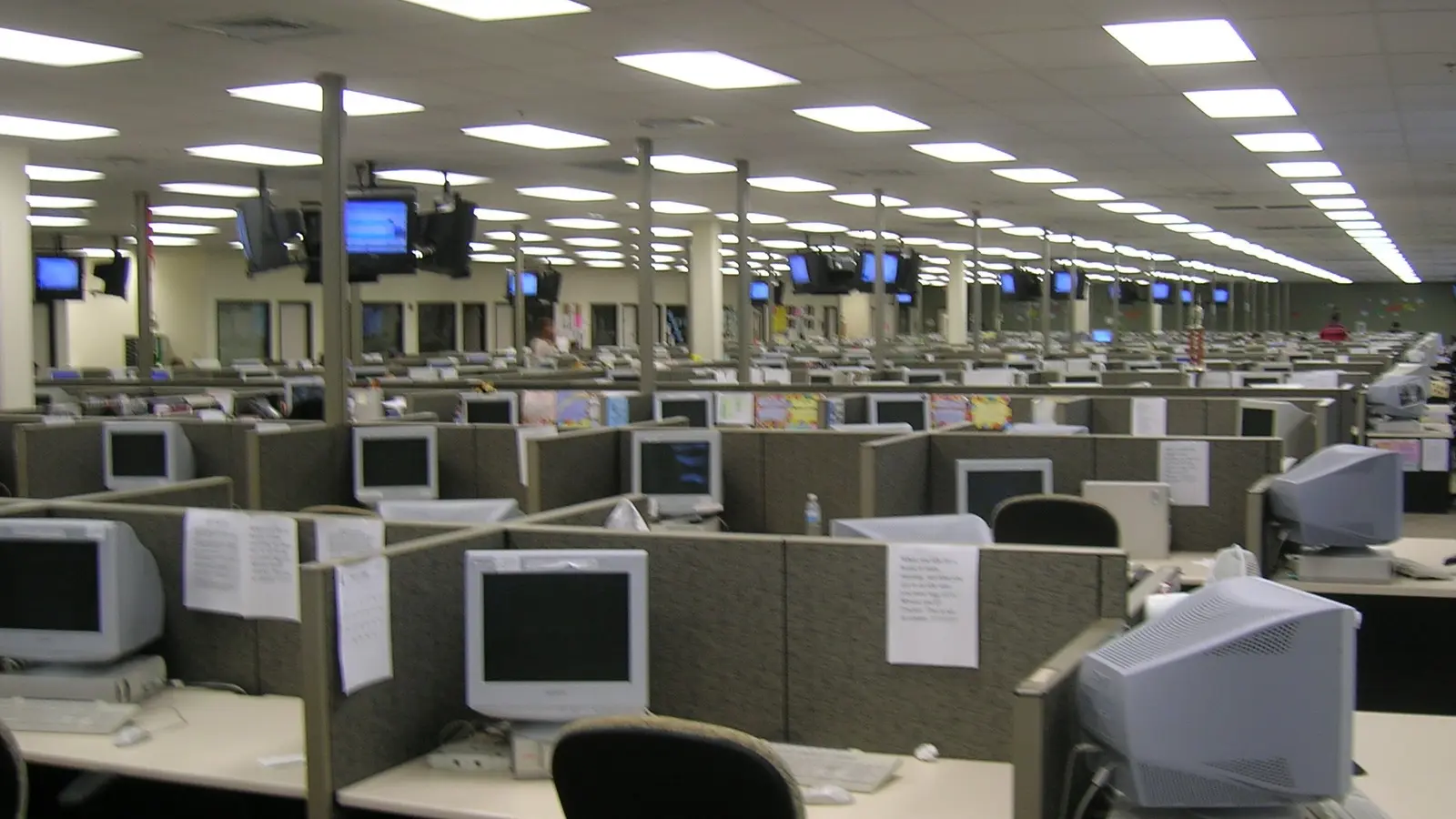
This boundary prevents a common research error. A company page may describe technology in broad terms, while a network record may describe an internet resource. Combining them does not prove that the technology runs on that resource. Likewise, a generic photograph of a call centre supplies visual context but does not depict iPacesetters, Avantive Solutions, a company location, an employee or a system. Public evidence should be combined only where the relationship is explicit.
The identity boundary also applies to time. The BGL interview is dated 2020. The Avantive pages and directory object were captured later. The article can state that the rebrand link was publicly described and that the current pages use the Avantive name. It should not assume that every historical operating detail remains current. Locations, services, ownership and technical choices can change.
A practical diligence sequence follows. First, confirm the contracting legal entity and any operating name. Second, identify which entity controls recordings, transcripts, consumer data and analytics. Third, define which locations and subcontractors process the work. Fourth, identify the product or managed-service boundary. Fifth, map the public capability claim to a contractual deliverable and a measurable acceptance test.
The purpose of this sequence is not paperwork for its own sake. Identity determines who can approve a policy, who answers a data request, who must restore a failed system and who bears the cost of a regulatory error. A technology purchase becomes an operating relationship, and operating relationships need exact ownership.
2. The public capability map
Avantive's public pages describe a connected set of contact-center functions. The speech-analytics case study says the company uses AI, machine learning and natural-language processing to analyse interactions [S04]. The voice-analytics page describes conversion of speech into structured information and the use of analysis to identify trends or coaching opportunities [S05]. The real-time AI page positions machine assistance alongside a human representative [S06].
The machine-learning page adds predictive framing [S07]. The quality-assurance page describes monitoring and feedback processes [S08]. The branded-calling page describes presenting brand information in the calling experience [S09]. The accelerated manual dialing page describes a workflow intended to preserve human initiation while increasing dialing efficiency [S10]. Together, these sources support a public capability map that reaches from pre-call selection through live interaction, review and reporting.
The map is not an architecture. Public pages do not reveal whether the functions share one platform, use several suppliers, run in a customer environment or are delivered as a managed service. They do not identify a particular speech model, language model, classifier, data store, telephony provider or reporting tool. They do not state the release cadence, availability target, recovery objective or support boundary.
That absence is important because integration determines whether separate capabilities become one dependable workflow. Speech analysis needs audio that is complete, correctly associated with an interaction and available within the required time. Real-time guidance needs low enough delay to influence a conversation. Quality review needs a durable link among the recording, transcript, score, policy version and reviewer decision. Branded calling needs accurate identity data and cooperation across the call path.
A buyer should therefore translate each capability into an observable contract. For speech analytics, define supported languages, audio conditions, error measures, latency and coverage. For real-time guidance, define the event that produces a recommendation, the deadline for display and the representative's ability to ignore or escalate it. For quality assurance, define sampling rules, reviewer calibration and dispute handling. For dialing, define consent, list suppression, call initiation and recordkeeping controls.
The public capability map also reveals dependencies between functions. A conversion model may use labels produced by earlier quality review. A training tool may use recordings selected by analytics. A script recommendation may depend on campaign and jurisdiction. A caller-identity display may depend on number reputation and downstream support. A failure in one data source can propagate into several apparently separate tools.
This is why product demonstrations are not enough. A demonstration can show that a feature works with prepared data. Production reliability requires evidence that inputs remain valid, failures are visible, operators retain control and recovery is tested. Customer outcome requires evidence that the capability improves a defined result without shifting cost or risk elsewhere.
3. Reading the reported performance figures correctly
The AI speech-analytics case study reports four striking figures: a 50% reduction in associate training time, a 39% reduction in attrition, a 17.2% increase in first-call resolution and a 104% increase in conversion [S04]. These numbers deserve attention because they show the outcomes the company associates with its use of analytics. They also require disciplined interpretation.
The retained page does not provide the starting values, sample sizes, observation periods, campaign mix or statistical uncertainty. It does not identify whether each number came from the same operation. It does not describe a randomized comparison, matched control group or independent reproduction. It does not identify a customer whose records could support external review. Without those details, the figures remain first-party, company-reported results.
That does not make them useless. It changes the question from "Can a buyer expect this result?" to "What measurement design would allow a buyer to determine whether a comparable result occurs here?" Each metric needs a numerator, denominator, baseline, period and exclusion policy. Training time could mean calendar days, paid hours, classroom hours or time to a performance threshold. Attrition could be voluntary, involuntary, early-tenure or annualized. First-call resolution depends on how repeat contacts are linked. Conversion depends on eligible contacts and campaign definition.
The cost model must also check displacement. Faster training may require more preparation of scenarios, scoring rules or recordings. Lower attrition may reflect staffing, pay, scheduling or campaign changes as well as analytics. Higher first-call resolution may increase handle time. Higher conversion may produce more cancellations or complaints if quality controls are weak. A metric can improve while total operating cost or customer experience worsens.
A credible reproduction plan freezes definitions before the review period. It records the technology version, campaign, team composition and policy changes. It measures both expected benefit and foreseeable harm. For real-time assistance, that might include correct interventions, missed interventions, false interventions, representative override, disclosure adherence, complaint rate and downstream rework. For training, it might include time to proficiency, calibration quality and performance after several weeks.
The result should be segmented. Speech conditions, language, campaign, jurisdiction, product complexity and representative tenure can all affect performance. An average may conceal a serious failure mode for a small but important group. If the tool performs well on clear English calls but poorly on noisy multilingual calls, the operating decision may be selective use rather than universal deployment.
The buyer should retain the raw measurement logic and enough evidence to audit it. A dashboard number without its calculation rules is difficult to challenge after a policy or data mapping changes. Reproducibility is part of production reliability because the organization must know whether a measured improvement is real, durable and attributable to the change being evaluated.
The responsible conclusion is balanced. The figures in S04 are specific and relevant, and they justify further diligence. They do not support a general promise. Their value lies in defining hypotheses that can be tested against the buyer's own workload, controls and cost structure.
4. Capability, production reliability and customer outcome
The three-layer distinction is central to evaluating AI-assisted contact centers. Capability asks whether a system can perform a function under stated conditions. Production reliability asks whether the complete service performs correctly and recoverably over time. Customer outcome asks whether that performance improves a result that matters to an identified customer or end user.
For speech analytics, capability may mean producing a transcript, sentiment label or phrase match. Production reliability adds audio capture, language identification, queueing, model service, storage, access, score delivery and monitoring. Customer outcome might be fewer repeated contacts, more accurate disclosures or better resolution. A transcript can be technically produced while arriving too late for action. A label can be statistically reasonable while creating no operational improvement.
For real-time assistance, capability may mean presenting a script or alert. Production reliability includes end-to-end delay, policy version, desktop integration, representative control and logging. Customer outcome depends on whether the assistance improves a defined interaction without harming trust, compliance or resolution. A correct recommendation displayed after the relevant moment has no practical value.
For branded calling, capability may mean attaching authenticated identity information or a brand presentation to a call. Production reliability depends on the calling number, originating service, identity chain, downstream support, diversion handling and reputation systems [S09][S19][S20]. Customer outcome might be a better answer rate or less confusion. The public sources do not establish that every carrier or device presents the same information.
The distinction changes procurement. A feature checklist evaluates capability. A service design review evaluates production reliability. A controlled operational review evaluates customer outcome. Mixing the three lets a polished feature stand in for an unproven service or lets a business metric hide technical fragility.
It also changes accountability. A model team may own classifier quality. A platform team may own availability and latency. Operations may own policies and escalation. Compliance may own disclosure rules. The customer may own campaign data or consent. Production reliability exists only when these responsibilities connect and no critical failure falls between them.
NIST's AI Risk Management Framework encourages organizations to govern, map, measure and manage AI risk [S14]. The associated Playbook offers operational suggestions for applying those functions [S15]. These resources are valuable because they move attention from a model in isolation to the socio-technical system around it. They do not certify the iPacesetters or Avantive environment.
A practical review asks three questions for every feature. What can the feature do, under which conditions and with which error measure? What infrastructure and human controls keep it dependable in daily operation? What result will be measured, and what evidence would disprove the expected benefit? Clear answers prevent capability from being mistaken for production reliability or customer outcome.
5. Supervision and quality control
Human supervision is not a ceremonial approval step. It is the operating mechanism that decides when machine output may influence a representative, a campaign or a customer. Avantive's real-time AI page explicitly frames machine assistance alongside a human representative [S06], while its quality-assurance page describes monitoring and feedback [S08]. Those public positions are consistent with a supervised design, but they do not reveal the private control implementation.
The first supervision decision is scope. Some outputs can be advisory. Others may affect a required disclosure, a financial offer, an account action or whether an interaction is escalated. Higher-impact uses require stronger review, clearer authority and more complete records. A sentiment label used to prioritise coaching is different from a label used to suppress a complaint.
The second decision is confidence. A system should not turn uncertainty into false precision. Low-confidence transcription, mixed language, missing audio or an out-of-domain interaction needs an explicit path. The representative may continue without assistance, request a human review or use a safe default. The workflow should record that the machine did not supply a dependable result.
The third decision is override. A representative needs to know whether a suggestion is optional, required or blocked by policy. An override should be possible where the representative has better context, but high-risk overrides may need a reason and later review. If people learn that the software is often wrong, they may ignore it. If they are punished for justified overrides, they may follow bad advice.
Quality sampling must include both ordinary and difficult interactions. Random samples estimate broad performance. Risk-based samples find rare but consequential cases. Disagreement samples reveal where the machine and human reviewer diverge. Complaint-linked samples test whether the quality program detects harm that later becomes visible.
Reviewer calibration is another recurring cost. Two reviewers can score the same call differently. If labels are later used for coaching or model improvement, inconsistent review becomes inconsistent training data. Calibration sessions, reference examples and adjudication reduce that drift. They also consume skilled time that should appear in the business case.
Supervision needs a policy lifecycle. A disclosure, approved phrase, escalation rule or prohibited claim can change. The system must show which version applied to an interaction and when it became effective. Old recordings evaluated under a new rule can create misleading trends. A reliable program preserves policy version with the score.
Finally, supervision needs an appeal path. A representative, reviewer or customer-service leader should be able to challenge a transcript or score. The appeal should preserve the original output, the corrected result, the reason and any downstream repair. That process creates learning evidence and prevents one mistaken decision from silently spreading into coaching, compensation or reporting.
6. Integration cost: audio, identity, scripts and records
Integration is where a collection of useful features becomes a production service. The public pages describe speech analytics, quality assurance, dialing and caller identity [S05][S08][S09][S10]. Each function depends on data and timing from the surrounding operation. The cost of connecting those dependencies can exceed the cost of enabling the feature.
Audio capture is the first dependency. The recording must be complete, associated with the correct interaction and stored in an approved location. Stereo channels, hold periods, transfers and conference segments can affect transcription. A missing beginning may remove the required disclosure. A wrong interaction identifier can attach a score to the wrong person.
Metadata is the second dependency. Campaign, product, jurisdiction, language, queue, representative, timestamp and disposition may influence policy and analysis. If a field changes meaning or arrives empty, the model may still return a result that looks valid. Data contracts should define allowed values, ownership, freshness and handling of unknowns.
Desktop timing is the third dependency. Real-time assistance needs a path from audio or events to analysis, decision and display. Each hop adds latency and a possible failure. A useful service-level measure is not only model response time but time from the relevant spoken event to a visible, actionable recommendation.
Script integration is the fourth dependency. Approved language may vary by campaign or jurisdiction. The system needs exact versioning and effective dates. A stale script can be technically available and operationally wrong. A release process should compare the displayed language with the approved source and support rollback.
Telephony identity is the fifth dependency. Branded calling and authenticated identity involve originating numbers, service providers, certificates, SIP identity handling, downstream verification and possible diversion [S09][S19][S20]. A break in the chain can remove or alter the presentation without changing the content of the call. Monitoring must distinguish identity failure from call-completion failure.
Reporting is the sixth dependency. Dashboards often combine call records, model scores, quality reviews and business outcomes. The join rules matter. If one interaction can produce several calls, or one call can contain several transfers, a simple row count can distort first-call resolution or conversion. Metric definitions belong in the system design.
Every integration needs observable failure. A silent default is dangerous because it makes missing analysis look like a neutral result. The workflow should distinguish no audio, unsupported language, service unavailable, low confidence, policy missing, identity not verified and record-write failure. Different causes need different remediation.
The integration review should end with recovery. Can the operation continue safely if analytics is unavailable? Can calls proceed without branded presentation? Can a representative access an approved script through another path? Can delayed records be reconciled without duplicate actions? A fallback that is never practiced is only a diagram.
7. Dialing, caller identity and regulated operations
Outbound technology operates where software, telecommunications and consumer rules meet. Avantive's accelerated manual dialing page describes a workflow designed around human initiation [S10]. Its branded-calling page describes presenting identity information [S09]. These are public capability claims, not a determination that a particular campaign complies with every applicable rule.
The FTC's Telemarketing Sales Rule page identifies duties involving material disclosures, misrepresentation, calling times, do-not-call requests, payment restrictions and records [S16]. The FTC compliance guide provides operational detail and important scope distinctions [S17]. The rules applied to a campaign depend on facts such as purpose, audience, consent, jurisdiction and the role of each party.
This creates a data-governance problem before the first call. The operation needs a lawful and current basis for the list, a suppression process, campaign rules and evidence of what was known when the call was initiated. A model cannot repair a missing permission record. A fast dialer can amplify a list error.
Disclosure assistance can reduce memory burden, but timing and completeness matter. A phrase shown after the relevant point is not equivalent to a phrase delivered at the required time. Speech analytics may later detect that words were spoken, but a transcript does not prove that the customer heard or understood them. Quality review should distinguish text presence from effective delivery.
Caller identity adds another layer. FCC guidance explains the consumer problem of unwanted calls and caller-ID spoofing [S18]. RFC 8224 defines authenticated identity management in SIP [S19], and RFC 8588 addresses identity information through call diversion [S20]. These technical mechanisms help convey and verify information, but they do not guarantee a favourable device display, answer rate or customer perception.
Number reputation can also change independently of authentication. A correctly identified call may still be labelled or blocked based on complaint history, traffic patterns or downstream analytics. Operations therefore need monitoring across identity, reputation, completion and customer feedback rather than one binary "signed" status.
Exception handling is essential. A consumer may revoke permission, dispute a prior request, receive a call intended for someone else or ask not to be contacted. A number may be reassigned. A call may cross a jurisdictional boundary. The workflow needs a fast stop path and a durable record that updates all relevant systems.
The economic lesson is direct. Dialing efficiency can reduce idle time, while caller identity can improve context. Both can also increase governance and integration cost. A serious business case includes suppression quality, record retention, reputation operations, exception review and the cost of pausing a campaign when evidence is incomplete.
8. Data governance and privacy
AI-assisted contact centers operate on sensitive material: voice, transcripts, names, account context, intent, emotion labels, dispositions and quality scores. Avantive's privacy policy describes public website data practices, sharing conditions and a boundary between website information and data handled for clients [S12]. That boundary is important because a website policy is not a full description of client-processing arrangements.
The first governance task is purpose. A recording collected to handle an interaction may later be proposed for quality review, training, analytics or model improvement. Each use needs an approved basis and a defined scope. "Available" does not mean "appropriate for every purpose."
The second task is minimisation. A transcript can make sensitive content easier to search and copy than audio. The operation should decide which fields are needed, which can be masked and how long each form should remain. Retaining every intermediate output indefinitely increases breach, discovery and misuse exposure.
The third task is access. A representative may need the current interaction. A reviewer may need a sample. A model-maintenance team may need labelled excerpts. A manager may need aggregate trends. Giving every role access to full recordings and transcripts is simple but difficult to justify. Role-based controls and access records create recurring administration.
The fourth task is correction. Speech recognition can miss names, numbers, negation or technical terms. If the transcript feeds a score, search result or coaching decision, a correction mechanism is required. The corrected text should not erase the original evidence without a record of what changed.
The fifth task is supplier scope. A managed service may involve telephony, recording, storage, analytics, identity and reporting suppliers. A buyer needs to know where data goes, which party can use it, how it is deleted and what happens when a supplier changes. The public sources do not identify this private chain.
The sixth task is model improvement. Labels derived from human review may be reused to adjust a model. That creates a feedback loop. Poor calibration can reproduce bias. A temporary campaign rule can become a durable label. Governance should separate operational decisions from approved training material and record who authorised reuse.
Data governance has a direct operating cost: review, redaction, access management, retention jobs, deletion verification, incident response and supplier oversight. It also reduces hidden cost by preventing uncontrolled copies, conflicting records and decisions that cannot be explained. The relevant question is not whether governance slows AI adoption. It is whether the system can remain useful when its data must be defended, corrected or removed.
9. Business continuity and recovery
Avantive's disaster-recovery article discusses risk assessment, planning, backup, communication, testing and geographic operating choices [S11]. It is first-party guidance, not evidence that a particular iPacesetters or Avantive service has met a defined recovery objective. It nevertheless identifies the right operational categories.
A contact center has several continuity layers. Telephony must receive or place calls. Representatives need connectivity and approved applications. Identity and consent data must be available. Recordings and interaction records must be captured. Analytics may assist the work. Reporting and reconciliation must continue. Each layer can fail independently.
The safe degraded mode should be explicit. If real-time analytics stops, can representatives continue with an approved static script? If recording fails, must the affected campaign pause? If caller-identity presentation is unavailable, can calls proceed under policy? If a transcript queue is delayed, can later processing avoid duplicate coaching or records?
Recovery objectives should be tied to impact, not only infrastructure. Restoring an analytics service is different from clearing its backlog. Reconnecting telephony is different from confirming that every campaign uses the correct policy. Recovery is complete only when inputs, outputs and records are reconciled.
Testing needs realistic dependencies. A tabletop discussion can reveal ownership gaps. A technical exercise can test failover. An operational exercise can test whether people recognise degraded output and use the fallback. A data exercise can test whether delayed records reconcile correctly. Each produces different evidence.
Geographic distribution can reduce one concentration while creating another. Multiple sites may still depend on one telephony provider, identity service, data store or policy system. Remote work may reduce facility dependence while increasing home connectivity and access-control variation. Continuity analysis should follow common dependencies rather than count locations.
Communication is a control. Representatives need to know which features are unavailable and which fallback applies. Managers need a clear impact statement. Customers may need an update when service commitments are affected. Technical teams need a record of temporary exceptions and their expiry.
Post-recovery maintenance matters. Temporary broad access, disabled checks, manual spreadsheets or emergency routing can outlive the incident. A closeout should remove exceptions, reconcile records, verify metrics and assign corrective work. Otherwise, recovery from one failure mode creates the next one.
No retained source reports a specific outage, recovery time or tested control for the company. The continuity analysis is a diligence framework grounded in S11 and the broader governance sources [S14][S15]. It should be used to request evidence, not to imply that a failure occurred.
10. Failure modes and exception handling
The most useful way to evaluate automation is to list how it can fail. A failure mode is not an allegation. It is a condition the design should detect, contain and recover from. Contact-center automation has failures in data, models, interfaces, policy, people and external networks.
The first class is input failure. Audio may be missing, clipped, duplicated, misrouted or associated with the wrong record. Metadata may be stale or empty. The language may be unsupported. The system should identify these conditions instead of producing an ordinary-looking score.
The second class is interpretation failure. Speech recognition may change a negation, number or name. Sentiment analysis may mistake intensity or cultural expression. A phrase matcher may detect words without context. A predictive model may apply a pattern learned from another campaign. Low confidence and out-of-scope inputs need visible handling.
The third class is timing failure. A recommendation can be correct but late. A suppression update can arrive after a list is loaded. A policy version can change while a desktop keeps the old copy. Monitoring should measure end-to-end timeliness and not only component availability.
The fourth class is policy failure. A rule may be incorrect, incomplete or assigned to the wrong campaign. A required disclosure may vary by jurisdiction. A human reviewer may interpret the policy differently. Version control, approval and calibration reduce this risk.
The fifth class is interface failure. A telephony event may not reach the analytics service. A result may not appear in the desktop. A record may fail to write. An identity header may be lost or altered along a diverted call path [S19][S20]. Every interface should have a detectable error state and reconciliation method.
The sixth class is human-system interaction failure. Representatives can over-trust a suggestion, ignore repeated false alerts or learn workarounds that remove evidence. Reviewers can become inconsistent. Managers can optimise the visible metric while harm moves elsewhere. Training and measurement must include how people respond to the system.
The seventh class is external failure. A carrier can change presentation, a supplier can have an outage, a consumer can dispute consent or a rule can change. The operation may not control the event, but it controls its response, records and stop conditions.
Exception handling converts these failures from surprises into managed work. Each exception needs a category, owner, safe default, evidence requirement, escalation time and closure rule. High-impact exceptions need immediate containment. Repeated low-impact exceptions may indicate drift or integration debt.
An exception queue can itself fail. If it grows without prioritisation, important cases wait behind routine corrections. If closure is measured only by volume, reviewers may choose the easiest cases. The queue needs severity, ageing, root-cause analysis and a feedback path into policy, integration or model maintenance.
11. Maintenance, drift and software lifecycle
AI-assisted operations are not installed once. They change as campaigns, products, languages, regulations, call patterns, suppliers and software versions change. Maintenance is the work that keeps earlier acceptance evidence relevant.
Model drift is one category. The distribution of calls can change even if the model does not. A new product introduces vocabulary. A campaign shifts geography. Representatives adopt new phrasing. A carrier changes audio handling. Monitoring should compare current inputs and outcomes with the conditions used for approval.
Policy drift is another category. Disclosure language, suppression rules, escalation criteria and quality standards change. A model can remain statistically stable while its output becomes operationally inappropriate. Policy versioning and periodic review are therefore as important as model metrics.
Integration drift occurs when an upstream field, API, identifier or event sequence changes. A mapping can silently place calls in the wrong campaign. A new null value can become a default. Contract tests, schema checks and reconciliation reports reduce this risk.
People drift matters too. Reviewer calibration changes as teams turn over. Representatives learn which alerts matter and which can be ignored. Managers may change incentives. A dependable program measures disagreement and override patterns rather than assuming the initial training remains effective.
Software lifecycle creates supplier risk. A speech service, dialer, identity provider or reporting platform can change price, interface, region or support policy. A tightly coupled workflow can make replacement expensive. Portability requires documented data formats, export rights, policy ownership and a practical transition plan.
Lock-in is not only a contractual term. It can arise from accumulated labels, custom scripts, historical scores, reviewer habits and dashboard definitions. A replacement tool may be technically available but unable to reproduce years of operating context. The cost model should include data migration, metric reconciliation and retraining of people.
Maintenance should be scheduled and evidence-based. A monthly review might cover service health, exceptions and access. A campaign change triggers policy and data checks. A model or interface release triggers regression tests. A regulation change triggers scope and disclosure review. A serious incident triggers a focused reassessment.
The maintenance burden should not be hidden under "continuous improvement." It needs owners, time and acceptance criteria. Some maintenance reduces manual work through automation, but the automated checks also need review. A mature system makes this recurring cost visible so that savings are not calculated against an imaginary zero-maintenance baseline.
12. Building a complete operating-cost model
A complete cost model begins with direct charges: licences, usage, connectivity, implementation and support. Those figures are necessary but incomplete. The larger question is what work the organisation must perform to make the service dependable and defensible.
Supervision cost includes policy ownership, review, calibration, override analysis and escalation. Integration cost includes audio, telephony, identity, scripts, data mapping, access and reporting. Maintenance cost includes releases, drift review, retention, supplier changes and regression tests. Exception-handling cost includes investigation, correction, communication and recovery.
There are also opportunity costs. Representatives may spend less time searching for information but more time responding to alerts. Quality specialists may review more interactions but spend more time adjudicating model disagreement. Managers may gain faster dashboards but need stronger metric governance. The balance depends on the workload.
A useful business case separates one-time and recurring work. One-time work includes initial mapping, configuration, acceptance tests and training. Recurring work includes monitoring, reviews, data operations and support. Event-driven work includes campaigns, releases, incidents and regulatory changes. Exit work includes export, migration and deletion.
Benefits need the same discipline. Time saved should be measured against a baseline. Quality improvement should use a stable definition. Conversion should include eligibility, cancellation and complaint outcomes. Training gains should include later performance. Continuity benefits should be tied to tested recovery.
The first-party metrics in S04 can serve as candidate benefit categories, not inherited values. A buyer can ask whether training time, attrition, first-call resolution or conversion changes in its own setting. It should also measure false interventions, overrides, repeat work, complaints and maintenance hours.
Risk-adjusted cost matters. A rare disclosure failure can outweigh many small efficiency gains. A privacy incident can create legal, operational and reputational cost. A brittle integration can stop a campaign. The business case should assign decision thresholds to high-impact failure modes rather than average them away.
Procurement should require evidence portability. The buyer needs access to its recordings, transcripts, decisions, policy versions and metric definitions in usable formats. It should know what can be exported, how long export takes and what is deleted. These terms reduce future lock-in.
The final model is not a single universal ratio. It is a set of measurable flows tied to a defined operation. That is more work than comparing licence prices, but it produces a decision that can survive a campaign change, a supplier release or an incident.
13. A buyer and operator evidence plan
The first evidence package should resolve identity and scope. It should name the contracting entity, operating name, service, locations, suppliers, data controller and support owner. The public relationship between iPacesetters and Avantive can guide the question, but the contract must provide the current answer [S01][S02][S03].
The second package should define capability. For every feature, record supported inputs, outputs, languages, latency, error measures and exclusions. Distinguish a product statement from a configured customer use. Include examples of low-confidence and unsupported cases.
The third package should define production reliability. Request availability measures, end-to-end delay, monitoring coverage, incident classes, recovery objectives, release controls and recent test evidence. Ask how the operation behaves when analytics, identity or recording is unavailable.
The fourth package should define customer outcome. Select a small number of metrics, freeze definitions and record the baseline. Include possible harm and displacement. Do not approve a claim merely because a dashboard changed after deployment.
The fifth package should cover supervision. Identify which decisions are advisory, which require human review and which must stop when evidence is missing. Review override, calibration, appeal and exception ageing. Confirm that people understand the safe degraded mode.
The sixth package should cover integration. Trace one interaction from telephony through recording, analysis, desktop, quality review and reporting. Identify every join key and timestamp. Test missing, duplicate, delayed and contradictory records.
The seventh package should cover regulated operations. Map campaign facts to applicable rules and policies. Verify list source, suppression, disclosure, recordkeeping and complaint handling. Treat FTC, FCC and IETF material as control references, not proof of compliance [S16][S17][S18][S19][S20].
The eighth package should cover data. Record purpose, retention, access, correction, deletion, location and supplier transfer. Test export and deletion. Review whether operational labels are reused for model improvement and under which approval.
The ninth package should cover lifecycle. Require notice for material interface or model changes, regression evidence, rollback and support commitments. Define data portability and transition assistance. Measure the cost of a supplier exit before dependency becomes deep.
The tenth package should cover outcomes after launch. Review metrics, exceptions, complaints, overrides, incidents, maintenance hours and supplier changes on a regular schedule. A successful launch is not the end of diligence; it is the start of production evidence.
This plan keeps the article's central distinctions intact. Capability is demonstrated under stated conditions. Production reliability is demonstrated through complete-service operation and recovery. Customer outcome is demonstrated through a defined and reproducible measure. None should substitute for the others.
Verdict
iPacesetters, presented publicly through the Avantive Solutions brand, has a technology story with enough specific evidence to examine. Public pages describe AI-assisted speech analytics, real-time monitoring, machine learning, quality assurance, dialing and branded calling [S04][S05][S06][S07][S08][S09][S10]. An independent publication connects the Avantive and iPacesetters identities [S03].
The public record does not support a claim that these functions share a particular private architecture or achieve a guaranteed result. The four performance figures in the AI case study are company-reported and methodologically incomplete in the retained page [S04]. They are useful hypotheses for a buyer to reproduce, not a universal benchmark.
The operational value of AI assistance depends on the control system around it. Supervision keeps uncertain output from becoming an unquestioned decision. Integration preserves identity, timing and context across audio, telephony, scripts and records. Maintenance keeps models, policies and interfaces aligned. Exception handling contains the failure mode that ordinary demonstrations omit.
The same conclusion applies to regulated calling. FTC rules and guidance, FCC consumer context and IETF identity protocols show why dialing and caller identity are not isolated features [S16][S17][S18][S19][S20]. They depend on campaign facts, records, call-path support and human decisions.
For buyers, the practical standard is evidence by layer. Confirm the exact entity and scope. Test capability on representative data. Measure production reliability end to end. Reproduce customer outcome against a frozen baseline. Price the recurring work and the exit path. That approach neither dismisses the public technology claims nor accepts them at face value. It turns them into a defensible operating decision.
Sources
- [S01] https://btw.media/en/directory/ipacesetters-llc
- [S02] https://avantivesolutions.com/about-avantive/
- [S03] https://www.bglco.com/wp-content/uploads/2020/06/BGL-Business-Services-Insider-Contact-Centers-June-2020-1.pdf
- [S04] https://avantivesolutions.com/boosting-call-center-performance-with-ai/
- [S05] https://avantivesolutions.com/voice-analytics/
- [S06] https://avantivesolutions.com/artificial-real-time-intelligence/
- [S07] https://avantivesolutions.com/machine-learning/
- [S08] https://avantivesolutions.com/quality-assurance/
- [S09] https://avantivesolutions.com/branded-calling/
- [S10] https://avantivesolutions.com/accelerated-manual-dialing/
- [S11] https://avantivesolutions.com/7-call-center-disaster-recovery-must-haves-to-ensure-business-continuity/
- [S12] https://avantivesolutions.com/privacy-policy/
- [S13] https://rdap.arin.net/registry/autnum/33238
- [S14] https://www.nist.gov/itl/ai-risk-management-framework
- [S15] https://airc.nist.gov/airmf-resources/playbook/
- [S16] https://www.ftc.gov/legal-library/browse/rules/telemarketing-sales-rule
- [S17] https://www.ftc.gov/business-guidance/resources/complying-telemarketing-sales-rule
- [S18] https://consumercomplaints.fcc.gov/hc/en-us/articles/115002234203-Unwanted-Calls-Texts-Phone
- [S19] https://www.rfc-editor.org/rfc/rfc8224.html
- [S20] https://www.rfc-editor.org/rfc/rfc8588.html
Member Briefing
Deeper Profile Context
Sign in with the right membership level to unlock the full briefing and source notes.
Only for Strategic Circle
Strategic Circle
Open to all readers. Unlock profile briefings after joining and signing in.
Join Strategic CircleOnly for Leadership Alliance
Leadership Alliance
For qualified IP-asset owners and management; sign in to unlock alliance briefings.
Join Leadership Alliance