Summary
- The Internet Archive publishes what it holds to the item and the petabyte, and publishes how it keeps that holding in a single sentence written in April 2016, when the collection was 25 petabytes of unique data and everything was “replicated at least twice in different physical locations”.
- Its own 2025 infrastructure deck counts more than 210 petabytes of unique data and more than 400 petabytes of raw storage in the Bay Area datacenter, and never restates the copy rule. Two copies of 210 petabytes is 420. Read the two numbers together and at least 20 petabytes of the second copy has to sit somewhere the deck does not describe.
- Its October 2024 recovery is dated four times in twelve days and never dated to completion. Its fiscal 2025 accounts, read from labelled third-party extractions, leave 71.2 days of expenses in cash and print no reserve floor.
The page that opens the Wayback Machine makes one claim, and it is a large one: “Search the history of more than 1 trillion web pages” (Wayback Machine landing page). It carries no date and no definition. A trillion of anything is a number you take on the publisher’s word, because the publisher does not say what a web page is, or when it counted them.
That is the small version of the problem. The archive is unusually generous with the numbers that describe what it has collected: item counts by media type, petabytes of “unique data”, a trillion pages. It is unusually quiet about the numbers that describe how it keeps them. Those are the numbers that decide whether a citation you write today resolves in 2036.
BTW has read this entity five times in two years and asked five other questions. The 3 June 2024 explainer behind this piece, Is the Internet Archive safe?, took safety in the narrow sense of connection, account exposure and downloads. A 12 November 2026 briefing read what account holders were told after the October 2024 breach. A 13 October 2026 piece read how the Wayback Machine opened its history to public search in 2001. A 25 July 2026 reading treated the 2024 security crisis as a test of platform responsibility. A 24 October 2026 piece read RIPE Atlas’s argument about who pays for a fast door into old data. None of them tested the copy rule, the finish of the recovery, or the arithmetic of the archive’s own reserves. That is the ground here. The entity itself sits at the Internet Archive in BTW’s directory.
The sentence, and the year it was written
The clearest statement of how the holding is kept is an Internet Archive overview dated April 2016 and hosted on archive.org (April 2016 overview):
The Internet Archive currently contains 25 petabytes of unique data. We store all of the data on our own servers, and everything is replicated at least twice in different physical locations.
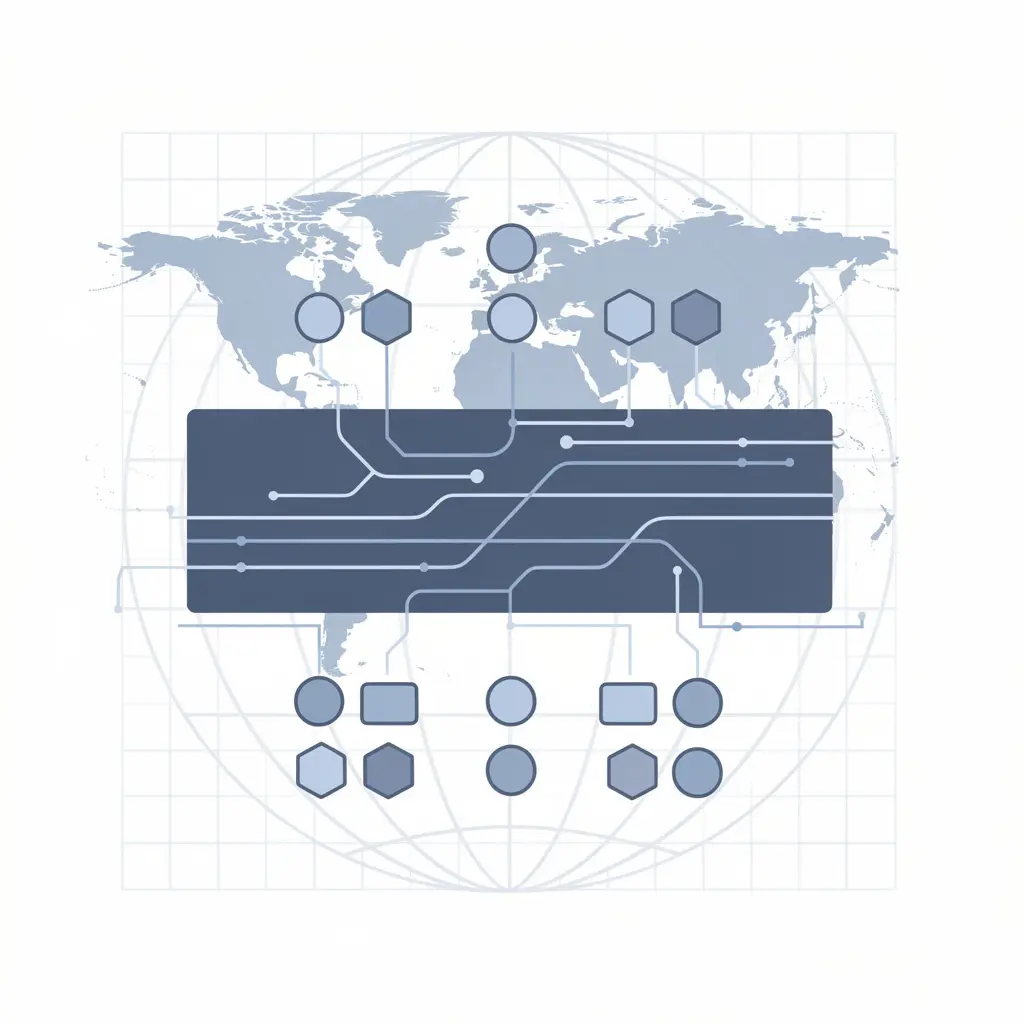
The same page places its data centers “at our headquarters building in San Francisco and at our physical archive buildings in Richmond, California”, and then adds: “In addition there are partial copies of archive data in Amsterdam and at the Library of Alexandria in Egypt.”
Read the shape of that. Two named full locations. Two named partial ones. No fraction attached to any of the four. “At least twice” is a floor; “different physical locations” is the only geographic constraint; and the operating margin between the two, whether five petabytes or fifty sit outside California, is not stated anywhere on the page. That is the entire published rule, and it is dated.
What the count looks like ten years later
The most recent first-party count I could read is a 2025 deck presented by the Internet Archive’s Jonah Edwards at a Library of Congress-hosted meeting (2025 Materials Update and Storage Update). It is labelled 2025 and prints no month or day. It states “Over 210 petabytes of unique data”, and on the next slide “Total available raw storage volume of over 400 petabytes in Bay Area datacenter”, alongside 22,000 spinning disks in Bay Area datacenters, “Averaged 123TB/day of ingested material” and “YoY growth running around 20%”.
The materials slides count 56 million texts, 8.4 million books digitized in 22 centers worldwide, 11.5 million movies excluding television, 3.3 million broadcast news programs, 13 million audio items, 1.3 million software titles and 5.3 million images, and record the Wayback Machine at “1 trillion web pages celebrated last October” while capturing 800 million pages a day. The international slide puts Internet Archive Canada’s headquarters in Vancouver in June 2022, full datacenter space there in 2024, and “additional sites being brought online this year in EU and Caribbean”.
A deck with room for 22,000 disks and eight separate media counts has no line for the number of copies and no fraction for Vancouver, the EU or the Caribbean. The rule was not restated, corrected or withdrawn. It was simply left where it was.
Now the arithmetic, and it is mine. At least 210 petabytes of unique data is 8.4 times the 25 petabytes at which the rule was written, and 185 petabytes more. Sharper: two copies of at least 210 petabytes is at least 420 petabytes, and the archive’s own deck prints at least 400 petabytes of raw capacity in one datacenter. On those two numbers alone, at least 20 petabytes of the second copy must sit outside the Bay Area, if both operands describe the same collection, which they may not, because the deck never defines “unique data” and raw storage volume is capacity rather than contents.
So that is a direction and a floor, not a measurement, and I am the one doing the subtraction. The capacity figure does read as a real count rather than a slogan: 400,000 terabytes across 22,000 disks is 18.2 terabytes per drive, the size of a large nearline disk.
The undated page, and why the date matters more than the number
A second version of the rule circulates on an undated third-party reproduction of an About page (reproduction of an Internet Archive About page): “A single copy of the Internet Archive library collection occupies 145+ Petabytes of server space (and we store at least 2 copies of everything).” The same page lists 835 billion web pages, 44 million books and texts, 15 million audio recordings including 255,000 live concerts, 10.6 million videos including 2.6 million Television News programs, 4.8 million images, 1 million software programs, “28+ years” of web history and 4,400 books scanned a day in 20 locations. It prints no date at all; the 2024/09 in its file path is not a document date.
A forum post of 17 March 2025 quotes archive.org/about as saying the same thing (quotation of archive.org/about): a single copy at 145+ petabytes, at least 2 copies of everything. Notably, that quotation does not carry the “different physical locations” clause. A third party quoting a page is not inspection of the page, and I treat it as corroboration of a wording, not as the wording itself.
The live archive.org/about page yielded no readable text at retrieval on 26 November 2026, and a 2026 Wayback capture of the same address returned only its capture banner and timestamp. So the honest statement is narrow: whether any live first-party page still carries either the two-copy sentence or the physical-locations clause is unverified, and no claim in this piece rests on it.
The figures also cannot be reconciled, and I will not try. 145+ petabytes is a single copy; 210+ petabytes is “unique data” on a slide; 400+ petabytes is raw capacity. Three units, at least two dates, one undefined term. What can be said is directional and modest: the sentence promising two copies was written at 25 petabytes, the number now circulating for a single copy is roughly six times that, and no page I read states a copy count at the scale the archive now claims.
The clock that never finished
October 2024 is the one moment the archive had to publish a schedule, and it did. The services update of 21 October 2024, written by Chris Freeland (21 October 2024 services update), says that “In recovering from recent cyberattacks on October 9, the Internet Archive has resumed the Wayback Machine (starting October 13) and Archive-It (October 17), and as of today (October 21), has begun offering provisional availability of archive.org in a read-only manner. Features like uploading, borrowing, reviewing items, interlibrary loan, and other services are not yet available.”
Four dates in twelve days: 9, 13, 17 and 21 October 2024, the span mine. That is a publisher that can date an arrival to the day when it chooses to. Then the update dated 28 October 2024, carrying “Last updated: November 13, 2024” (28 October 2024 services update), lists borrowing, uploads, moving images, software and interlibrary loan under Services Online, and closes with one line: “More services & features coming online soon.”
Across the ten documents read for this piece on 26 November 2026, no first-party page prints a date on which full service returned, and none states that a capability never came back. Intervals to that observation day, all mine: 778 days since the attack, 766 since archive.org returned read-only, 743 since the checklist’s last update. The recovery has an arrival log and no completion record. For a filing that cites a 2024 capture, that is the difference between “the archive is back” and “the archive is back for the functions I need”.
Seventy-one days
Money is the other durability surface, and here the archive is legible only through labelled third parties. ProPublica’s Nonprofit Explorer extraction of the return for the fiscal year ending December 2025 (ProPublica Nonprofit Explorer extraction) reports Revenue $23,709,162, Expenses $27,766,880, Net Income -$4,057,718, Net Assets $2,758,483, Total Assets $9,668,632 and Total Liabilities $6,910,149, with the return filed on 24 August 2026. The prior row, fiscal 2024, reports $26,831,969, $23,501,138, $3,330,831 and $953,608, filed 19 September 2025.
A field-level transcription of the fiscal 2025 return (field transcription of the fiscal 2025 return) gives year-end cash of $3,969,422 against an opening $4,226,414, and savings and temporary cash investments of $1,449,595 against an opening $2,947,385; records that the organisation answered yes to obtaining separate, independently audited financial statements; and shows two related-party loans, $2,252,435 and $2,800,000, inside other liabilities.
The arithmetic is mine throughout. Expenses exceeded revenue by $4,057,718, which is 17.1 per cent of revenue. Cash and savings total $5,419,017, which is 19.5 per cent of a year of expenses: 71.2 days, or 2.34 months. That reproduces, from the same two lines, a third-party aggregator’s headline of “Cash reserves 2.3 mo of spending” (aggregator’s derived metric) — the aggregator’s arithmetic, not an Internet Archive reserve policy. The swing from a $3,330,831 surplus to a $4,057,718 deficit is $7,388,549, and it decomposes exactly: revenue fell $3,122,807, 11.6 per cent, and expenses rose $4,265,742, 18.2 per cent.
One figure I refuse to tidy. If the fiscal 2024 closing net assets of $953,608 are carried into fiscal 2025, closing net assets would be minus $3,104,110, not the positive $2,758,483 printed. The divergence is $5,862,593, and the page carries no restatement note. Either the two rows have different perimeters or one of them moved; a stranger cannot tell which, and I will not pretend to.
Across the same ten documents there is no reserve floor, no months-of-expense target, no donor-concentration disclosure and no going-concern sentence. The return says an independent audit exists. The audit itself was not located or opened, so this is an absence from ten documents, not proof that the audit is silent.
The fair case for the archive
The countercase deserves stating properly. Those 22,000 spinning disks, 18.2 terabytes each, and 123 terabytes ingested a day are the numbers of an institution that measures itself in public, and the April 2016 sentence was volunteered when nobody was asking for it. A copy rule is closer to an engineering invariant than to a marketing claim, and invariants are usually proved by tests, not republished in press releases. Nothing in the reviewed set shows the rule has failed. The archive’s habit of counting is a public good, and it is right about that.
All of which is why restating the rule costs one sentence. An invariant no outsider can check is a promise, and a promise last published at 25 petabytes is now cited at 210. The archive does not need to publish an audit of its replication. It needs the same sentence with a current number, a date, and the fraction at each site it already names.
What would change the classification
Four short pages. First, the copy rule at current scale: how many copies, in how many distinct physical locations, and what fraction sits at Vancouver, in the EU and in the Caribbean. Second, a dated completion of the October 2024 restoration, or a sentence naming a capability that never returned. Third, a reserve floor or a months-of-expense target, published beside the audit the return already says exists. Fourth, a named successor or custodian of last resort for the collection. None of the four appears in the ten documents read on 26 November 2026.
So the test is falsifiable and I will state it as such: if any of those ten documents printed a copy count at the current scale signed by anyone other than the Internet Archive, or a date on which full service returned after October 2024, then the claim that durability here is evidenced at a ten-year-old vintage would be wrong.
The archive’s generosity with its inventory is not a trick. It is the habit of an organisation that believes counting is a public good, and it is correct. The gap is on the other side of the ledger. To cite a Wayback capture is to wager that a sentence written in April 2016 still describes a 210-petabyte collection, that a recovery finished sometime after its last update, and that 71 days of cash is enough for an institution courts and libraries now treat as a record office. None of those three is currently a checkable fact.
They are the shape of an instrument nobody has republished since the collection was one eighth its present size, and the second copy is the part of the record that fails silently.
Member Briefing
Read the full trend briefing
Members read the full briefing with the source notes behind every finding.
Strategic Circle
A daily briefing in your language, built from changes we have verified.
Join for USD 20/monthCancel anytime.
Members also get the full research library, a daily briefing on the networks they follow and the private forum.