
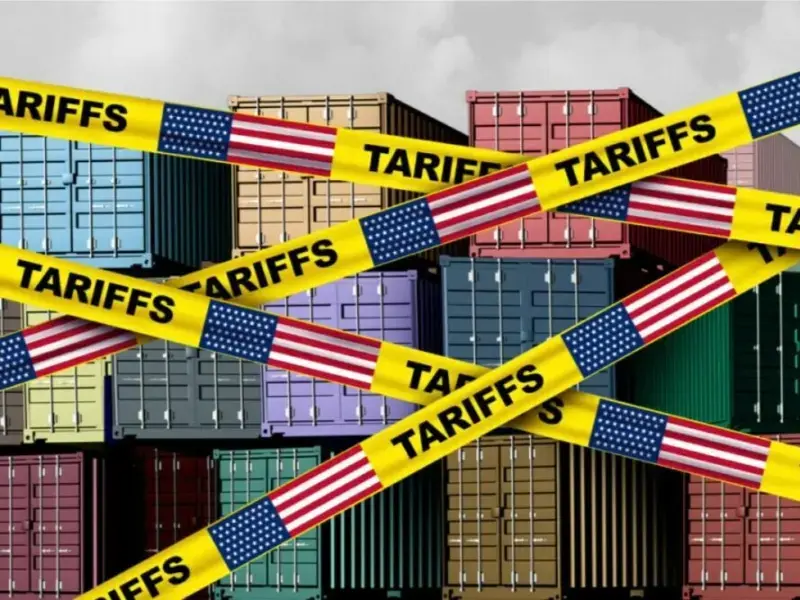
- US tariff uncertainty is causing project delays for Indian IT services firms.
- Major players like TCS, Infosys, and Wipro are experiencing strain due to the ongoing trade tensions.
What happened: Project delays amid tariff uncertainty
The ongoing US tariff war is having a significant impact on Indian IT services firms, leading to project delays and a slowdown in decision-making. Companies such as Tata Consultancy Services (TCS), Infosys, and Wipro are reporting increased uncertainty, which has begun to affect project timelines and client decisions. TCS, Asia’s largest IT services provider, has flagged growing uncertainty since February, resulting in project delays and some ramp-downs. K. Krithivasan, CEO and MD at TCS, stated that the company started witnessing uncertainty in March, particularly in the US Consumer Business Group. This was driven by a significant drop in consumer sentiment, which has had a cascading effect on retail and travel industries. Wipro is also facing similar challenges, with CEO & MD Srinivas Pallia acknowledging that the tariff hike has led to a slowdown in transformation projects in both the US and European markets.
The US government’s push for onshoring, beginning with tariffs on goods, is impacting IT outsourcing and offshoring sectors. US firms have long relied on global partners like TCS due to talent gaps, global reach, and cost competitiveness. Neil Shah, Vice President Research at Counterpoint Research, noted that the pressure for onshoring is likely to affect these sectors significantly. Many companies are adopting a wait-and-see approach, hoping to reassess their IT spending once the US trade posture becomes clearer.
Ray Wang, principal analyst and founder at Constellation Research, highlighted that projects focused on cost reduction and regulatory compliance are still being funded, but discretionary projects are being delayed.
Also read: US Tariff War: Impact on Global Trade, Navigating the Tariff War: Strategies for IT Firms
Why it is important
The impact of the US tariff war on Indian IT services firms underscores the broader challenges faced by the global IT industry. The uncertainty surrounding tariffs is causing delays in project timelines and a slowdown in digital transformation spending. This situation highlights the need for IT firms to adopt flexible engagement models and navigate the complexities of trade policy. The potential for AI to reduce reliance on outsourced IT services adds another layer of transformation. As the 90-day tariff hold ends, the industry faces the possibility of contract renegotiations and client attrition.
This situation underscores the importance of adaptability and strategic planning in the face of ongoing trade tensions.