Summary
- The Applicant Support Program ran from 19 November 2024 to 19 November 2025, with a four-week extension to 19 December 2025 for applicants already in the system; support means a 75-85% reduction in evaluation fees, capacity development, pro bono providers, an Applicant Counselor, a bid credit in contention resolution and reduced base registry fees if the applicant prevails.
- The Applicant Guidebook's own version history runs V0-2025.10.30, V1-2025.12.16, V2-2026.04.24 and V3-2026.10.07, the authoritative text; the round opened for applications on 30 April 2026, which means two of the four versions arrived after applications were already being filed.
Two clocks, one applicant
Read the two programme pages side by side and a sequence appears that neither page states.
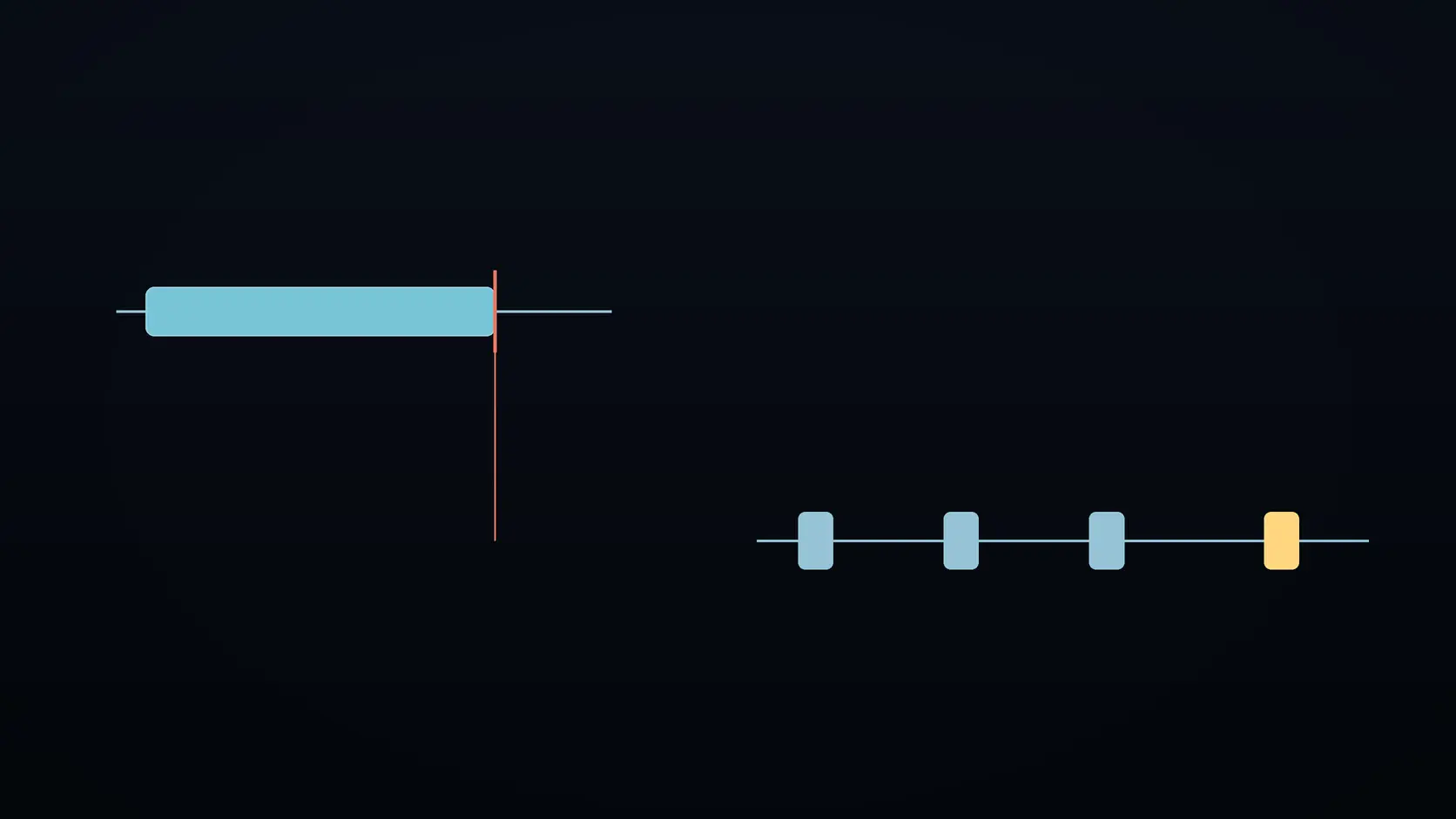
Support applications closed on 19 December 2025. The guidebook's first Board-adopted version, V0-2025.10.30, predates that by seven weeks. Then came V1-2025.12.16 — three days before the support extension deadline — V2-2026.04.24, six days before the application window opened on 30 April 2026, and V3-2026.10.07, the authoritative version, more than five months into the application period.
Each revision is described as minor. Three minor revisions after the beneficiaries were fixed is still three revisions of the document that determines what the beneficiaries receive.
What support actually buys
The package is specific: a 75-85% reduction in evaluation fees, an ASP capacity development programme, access to pro bono professional service providers who are independent of ICANN and not endorsed or contracted by it, an Applicant Counselor, a bid credit in contention resolution, and reduced base registry fees if the supported applicant wins and reaches contracting.
Then the sentence that matters for a reader of process: the bid credit is described as one "applied to supported applicants participating in contention resolution procedures established in the 2026 Round Applicant Guidebook", with the type of support "determined as part of the implementation of SubPro Final Report Topic 35" and further detail to be "included in the 2026 Round Applicant Guidebook".
A benefit handed to the weakest applicants is defined by reference to a chapter that was still being finished. That is not a scandal; it is how a document with a change log is built. It is also how a supported applicant ends up holding a promise whose value depends on a section number.
The mitigation is transparency
To ICANN's credit, the mechanism is documented. Every version is published, dated, numbered V#-YYYY.MM.DD, with a change log and a full list of changes, and the page states the rule plainly: "The latest version in English (top row of the table) is the authoritative version."
That rule does real work. It means no applicant can argue from an older PDF, and it means the moving target has a visible position at any moment. What it does not do is give a supported applicant more time, or more capacity to reread, than an applicant with a legal team.
What the sequencing costs
The support programme exists because some applicants cannot absorb the cost of applying. The sequencing asks those same applicants to absorb the cost of change: they committed under V0, they will be evaluated under V3, and the one benefit that protects them from a contested string — the bid credit — depends on a procedure described elsewhere.
The asymmetry is easy to miss because both pages are honest. One lists dates for support; the other lists dates for versions. Put them in one column and the smaller applicant is always the one whose commitment is earlier than the rulebook that judges it.
A note on eligibility
One line from the support page deserves to be quoted whenever this programme is described: "Qualifying for support via the ASP does not equate to qualifying for a gTLD." Support is a discount and a set of services, not a decision. The evaluation still happens, under the guidebook, in its latest form.
The judgement
ICANN has built the disciplined version of a hard process: versions, dates, a change log, one authoritative text, and a support programme that pays part of the bill. The sequencing is still backwards, because the people least able to track a moving document are asked to sign up earliest and read latest.
What would change this judgement is one fact: a change log showing that no revision after V0 touched a criterion, fee or procedure that applies to supported applicants. Until that is published as a filtered list, the safe assumption is that the supported applicant carries the drift.
Member Briefing
Read the full trend briefing
Members read the full briefing with the source notes behind every finding.
Strategic Circle
A daily briefing in your language, built from changes we have verified.
Join for USD 20/monthCancel anytime.
Members also get the full research library, a daily briefing on the networks they follow and the private forum.