
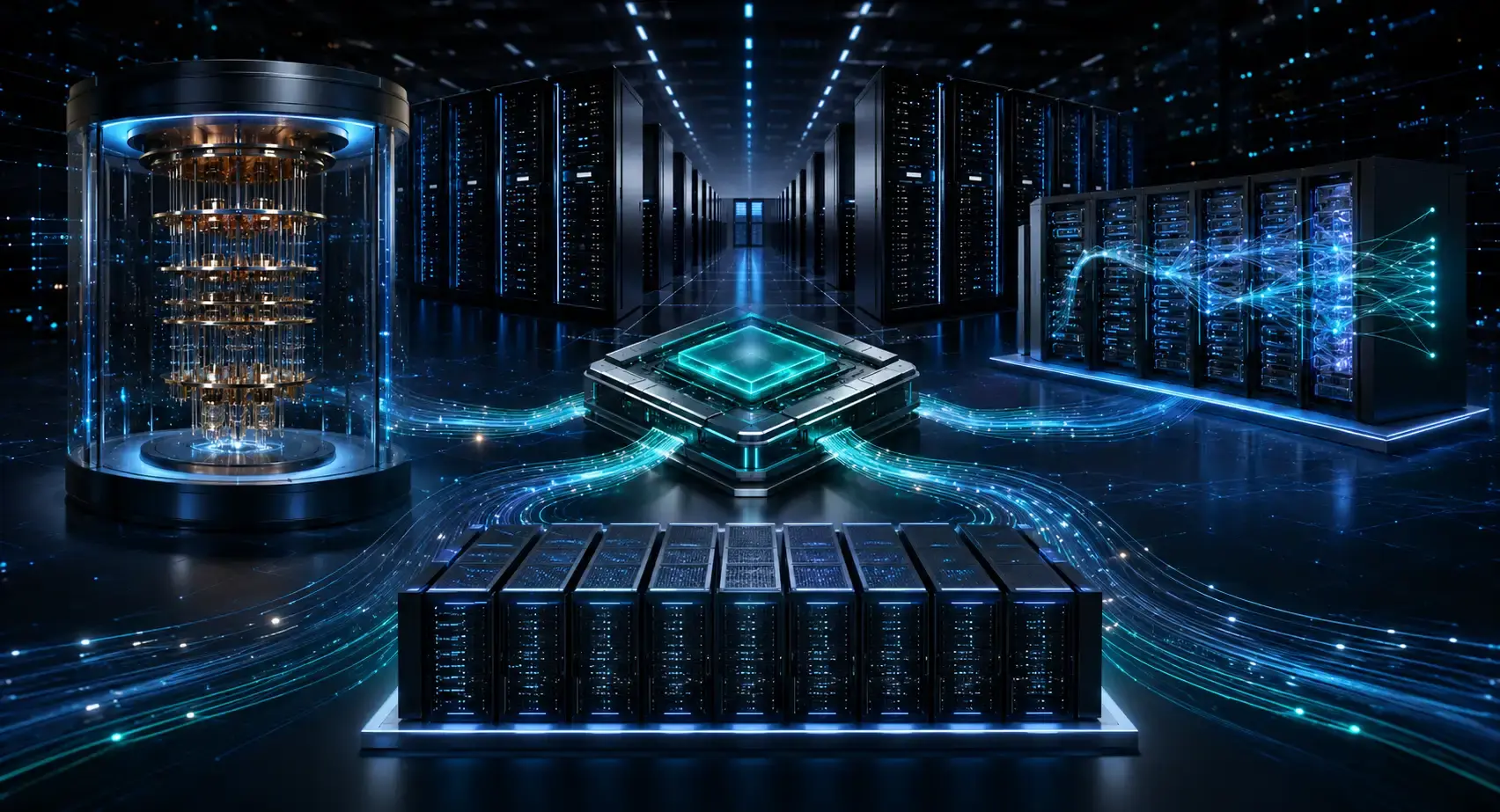
HPE is expanding quantum collaborations with eight technology companies to test hybrid architectures connecting quantum processors, supercomputers and AI accelerators. The public signal is not immediate quantum commercialisation, but the shift of quantum adoption into orchestration, interconnect, scheduling and data centre integration problems.
• Eight partners test quantum links across HPC AI and control systems
• Data centre constraints move closer to quantum commercialisation debate
The fact
Hewlett Packard Enterprise said at HPE Discover 2026 on June 15 that it is expanding quantum collaborations with Intel, IQM, Qblox, Quantinuum, QuEra Computing, Quantum Machines, Rigetti and Riverlane. The work will connect quantum processors with supercomputers and AI accelerators through hybrid testbeds, software interoperability, benchmarking, quantum control systems and error-correction technologies. HPE is extending its Cray supercomputing platform across multiple quantum hardware approaches.
The Assessment
HPE's strategy is to become the orchestration layer across competing quantum architectures, embedding its Cray supercomputing platform into hybrid testbeds before commercial winners emerge. For BTW readers, the signal is infrastructure-led: practical quantum use will depend on how HPC and AI environments handle interconnect latency, workload scheduling, cryogenics, power, cooling and security integration.
What to Watch
Watch whether HPE converts these research relationships into customer testbeds, and whether its Cray platform becomes the neutral control layer for hybrid AI, HPC and quantum workloads.
Signal Brief
- Signal: HPE connects quantum processors to supercomputing and AI systems
- Region: Global
- Market Class: Global Cloud Services Trends
Market Context
- The announcement signals that quantum adoption may become an infrastructure integration issue for data centres, HPC operators and AI compute buyers before it becomes a standalone hardware market.
- Operational relevance: Medium
- Time Horizon: Next quarter
Member Briefing
Deeper Trend Context
Sign in with the right membership level to unlock the full briefing and source notes.
Only for Strategic Circle
Strategic Circle
Open to all readers. Unlock trend briefings after joining and signing in.
Join Strategic CircleOnly for Leadership Alliance
Leadership Alliance
For operators, investors, and policy teams that need relationship evidence, failure paths, and source notes. Sign in to unlock.
Join Leadership AllianceSnapshot
Category
Global Cloud Services TrendsDevelops enterprise computing, HPC, AI infrastructure and hybrid computing platforms
Region
GlobalContent Type
Signal BriefingPrimary Domain
MarketTopic
InfrastructureImpact
MediumThe announcement signals that quantum adoption may become an infrastructure integration issue for data centres, HPC operators and AI compute buyers before it becomes a standalone hardware market.
Confidence
High confidence (88%)Confidence score guide
Published reporting