
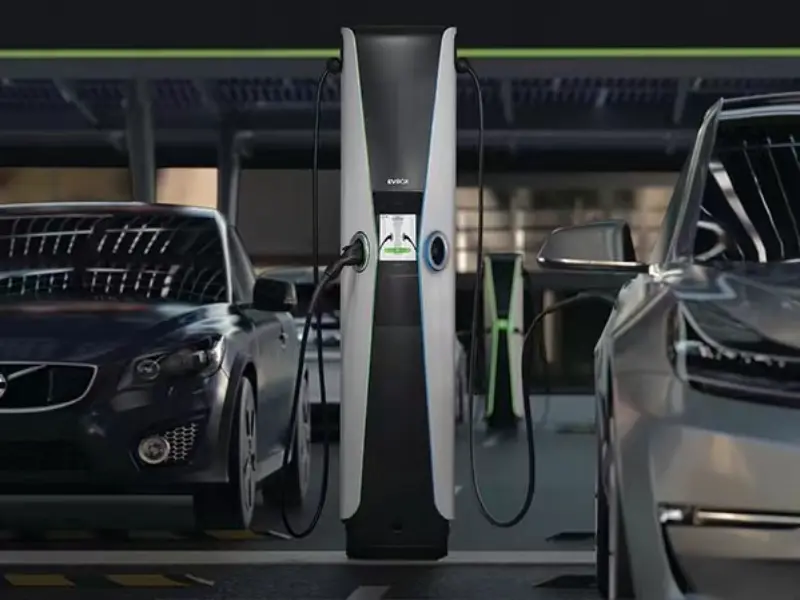
- The increasing demand for EV charging infrastructure in the US presents an opportunity for dealerships to enhance customer experience and meet demand by offering commercial EV charging stations, but how much does a commercial EV charging station cost?
- Dealerships considering commercial EV charging stations should focus on level 2 or level 3 chargers, considering factors like permits, ongoing maintenance, and installation expenses, with potential financing options available to offset costs.
- Adding a commercial EV charging station benefits dealerships by showcasing commitment to industry progress, enhancing customer experience, and expanding service offerings, while partnering with platforms like ACV Auctions can help anticipate and meet the growing demand for EVs.
As the shift towards electric vehicle (EV) adoption grows in the United States, there is an increasing demand for support infrastructure, presenting opportunities. Dealerships can enhance customer experience and meet demand by offering EV charging stations. These stations enable efficient servicing of EVs and ensure vehicles are charged post-service, streamlining processes and boosting satisfaction. If you’re an EV dealer, you might be curious about the costs of commercial EV charging stations.
Also read: How do autonomous vehicles work?
Also read: What AI voice generator is everyone using?
What is a commercial EV charging station?
Commercial EV charging stations come in three types: level 1, level 2, and level 3 (also known as “DC fast charging”). While level 1 is standard for home units, public stations typically use level 2 chargers operating at 240V. DC chargers, operating at 480V, offer the fastest charging.
Currently, there are 126,500 level 2 and 30,487 level 3 charging stations in the US, excluding Tesla’s 16,822 superchargers and destination chargers. S&P Global projects that EVs will represent 40% of new vehicle sales by 2030, totalling over 28 million vehicles, necessitating the rapid expansion of charging infrastructure. The research estimates a requirement of 2.1 million level 2 chargers and 172,000 level 3 chargers nationwide by 2030, in addition to residential units. This presents an opportunity for commercial charging station installation, particularly for EV dealers.
Thirty-five states have committed to federal assistance, accessing part of the $7.5 billion allocated under the Bipartisan Infrastructure Law. The government aims to install 500,000 charging stations as part of this initiative.
How much does a commercial EV charging station cost?
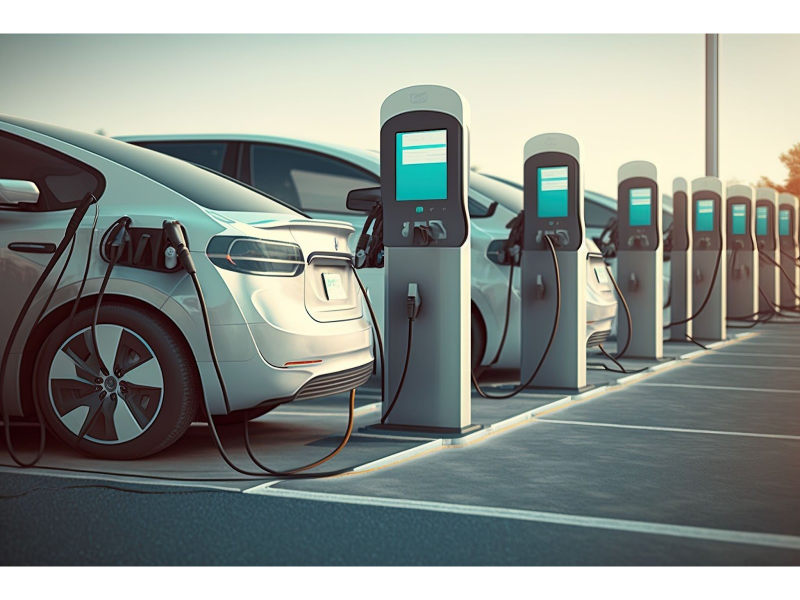
To establish a commercial EV charging station at your dealership, focus on level 2 or level 3 chargers, as level 1 chargers are best suited for homes and are less costly. Budgeting considerations include permits, ongoing maintenance, and installation expenses.
Infrastructure costs, notably for power delivery, typically comprise a significant portion of startup expenses. This includes labour and materials for concrete, electrical conduit, wiring, and electrical panels if a new power supply is needed from the mains. Installation costs vary based on charger quantity, manufacturer, and output levels, alongside landscaping, lighting, and aesthetic enhancements.
Charger costs can vary, with estimates from WattLogic suggesting $7,000 for a level 2 charger with 48A, 200-240V AC, and 4 to 8 hours of charging, and $75,000 for a level 3 charger with 250A, 480V DC, and 15 to 30 minutes of charging. Various options exist between these extremes, and the final expense hinges on charger quantity and installation intricacies. Additionally, incentives or utility rebates may offset costs.
Financing options for commercial EV charging stations
You may also be able to finance the solution in one of three different ways, but you would be passing on the cost to consumers instead of offering the EV charging stations as a value add.
Turnkey installation. You can choose a turnkey installation where the providing company covers everything. You’ll work with a company that handles all the design, product selection, permits, incentives, rebate management, and installation.
Monthly subscription. This option helps you avoid all the upfront costs. You would need to compare this to potential revenues as you would charge people for the service, but this could represent a separate income stream. However, you may also want to offer charging for free as an enhancement to your customer service offering.
Cost & revenue splitting with a provider. You can get the EV charging company to install the station for you and operate it commercially. They will collect the revenues and share the money with you instead. As a further variation, the company might split both the cost of installation and the revenue with you, which will typically give you a higher share of that revenue.
How does commercial EV charging stations benefit your dealership?
The coming decade will see a surge in demand for commercial EV charging stations. Here’s how adding one can benefit your dealership:
Demonstrates commitment to Industry Progress: Showcases dedication to reducing carbon emissions and supporting the EV revolution, enhancing brand image and setting your dealership apart from competitors.
Enhances customer experience: Provides charging infrastructure, turning wait times into engaging experiences with amenities like lounges, Wi-Fi access, and refreshments. This not only boosts customer satisfaction but also allows dealerships to showcase their latest models, accessories, and services.
Expand service offerings: Builds long-term customer relationships by becoming the go-to location for charging. Offer EV-specific maintenance, battery health checks, and exclusive discounts, ensuring customer loyalty and repeat business.
Moving forward: Consider installation costs, local demand, and available financing options. Take advantage of federal funding opportunities.
Anticipate demand: To meet the growing demand for EVs, partner with ACV Auctions. As the leading online car auction for dealers, we offer transparent sourcing of electric vehicles nationwide, providing the most up-to-date wholesale pricing and real-time data. Register with ACV Auctions today to explore our selection of electric vehicles and get started.