
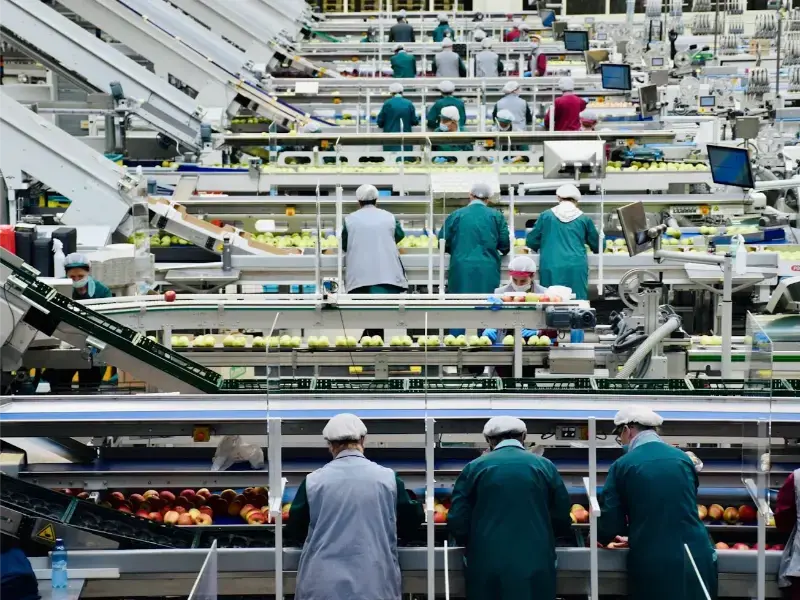
- Robots handle cutting, slicing, and packaging tasks with precision and consistency, improving efficiency in food production.
- Robots equipped with sensors and cameras inspect food products for defects, ensuring high-quality standards are met before packaging.
- Robots are used for sorting, weighing, and packaging food items, streamlining the packaging process and increasing productivity.
Food processing and packaging have changed as a result of robots and automation in the food business, even if the foods we eat are essentially the same. Every aspect of the food and beverage business has changed as a result of the development of information technology, including agriculture, food production, and robots in packaging.
Automated food processing
Robots are equipped with advanced sensors and machine vision systems to perform tasks such as cutting, slicing, and dicing fruits, vegetables, and meats with high precision and consistency.They can handle delicate food items without causing damage, ensuring uniformity in size and shape. In the meat processing industry, robots are used for deboning, trimming, and portioning meat cuts, improving efficiency and reducing labour costs.
Quality control
Vision systems integrated into robots can inspect food products for defects, foreign entities, or inconsistencies in colour and texture. Robots can sort and segregate items based on quality parameters, ensuring that only products meeting quality standards are packaged and distributed.This technology helps food manufacturers maintain product quality, reduce waste, and comply with food safety regulations.
Also read: Tesla’s humanoid robot, Optimus, may debut in 2025
Packing and packaging
Robots are employed for tasks such as picking, placing, and packaging food items into containers, boxes, or trays.Collaborative robots, or cobots, work alongside human operators to pack products efficiently and safely. Robotic systems can handle a wide range of packaging formats, from flexible pouches to rigid containers, adapting to changing production needs.
Warehousing and logistics
Autonomous mobile robots (AMRs) navigate warehouse environments to transport raw materials, ingredients, and finished goods. Robots optimise inventory management by organising and moving products within warehouses, reducing manual handling, and minimising errors.They contribute to faster order fulfilment and improved supply chain efficiency, especially in e-commerce and online grocery fulfilment centres.
Also read: What are the 3 advantages of robots in industry?
Cooking and food preparation
Robots equipped with cooking capabilities can perform tasks such as grilling, frying, and baking food items in commercial kitchens and food service establishments. These robots follow precise recipes and cooking parameters to ensure consistency in taste and texture. Some robotic systems are designed for specialised tasks like sushi preparation, pizza assembly, or burger flipping, enhancing kitchen operations.
Cleaning and sanitization
Robots integrated with UV-C lights or disinfection systems are used for sanitising food processing equipment, production areas, and packaging facilities. Autonomous cleaning robots can navigate through facilities, disinfecting surfaces and equipment to maintain high levels of hygiene and prevent cross-contamination. These robots reduce the risk of foodborne illnesses and ensure compliance with sanitation standards and regulations.