
RIR Watchdog
Five regional sessions tracking allocation policy, board legitimacy, and institutional continuity.
Open RIR WatchdogGovernance
The internet runs on institutions most people never see. We follow the regional registries, ICANN, the IETF and the operator communities through every board vote, policy fight and court case, and tell you what each move means for your network.

Latest Coverage
9,343 articles

Story
ARIN answered a precise operator complaint in five weeks and marked the documentation repair complete. That is the constructive part of the record. The harder question is why the live example no longer contains the length boundary that made the requested correction capable of…

Story
An unexpected Whois update can place a complete rejected entity in somebody's inbox. AFRINIC's `upd-to` field explains why that person received the warning; it does not identify the sender, confer a credential or prove that the attempted change ever reached the registry.

IETF
A value may be public, repeated and still do important cryptographic work. That is the apparent paradox at the centre of HKDF. Hugo Krawczyk’s extract-then-expand design makes the answer operational: salt, source entropy and application context are separate inputs with separate…

CASE FILE
A voice system can win a latency chart by emitting a breath, an earcon or a filled pause before its useful response is ready. A new individual Internet-Draft proposes a harder comparison: keep the first sound, but also measure when uninterrupted speech begins, where the packets…

History
EIP's version field looked backward while its address space looked forward. RFC 1385 kept the familiar IPv4 header so an old machine would see an ordinary packet with an option it did not understand—and, ideally, keep forwarding it.

CASE FILE
RFC 9682 allows a CDDL source file to contain no rules. The completed model still needs an entry point. Between those two statements lies a consequential question for anyone buying, assembling or approving modular systems.

Story
ARIN now tells the public that misuse of reserved address pools, including space issued under NRPM §4.10, belongs inside its fraud-reporting process. Follow the link to the live intake form, however, and the explanatory copy still names only fraudulently obtained resources and…
CASE FILE
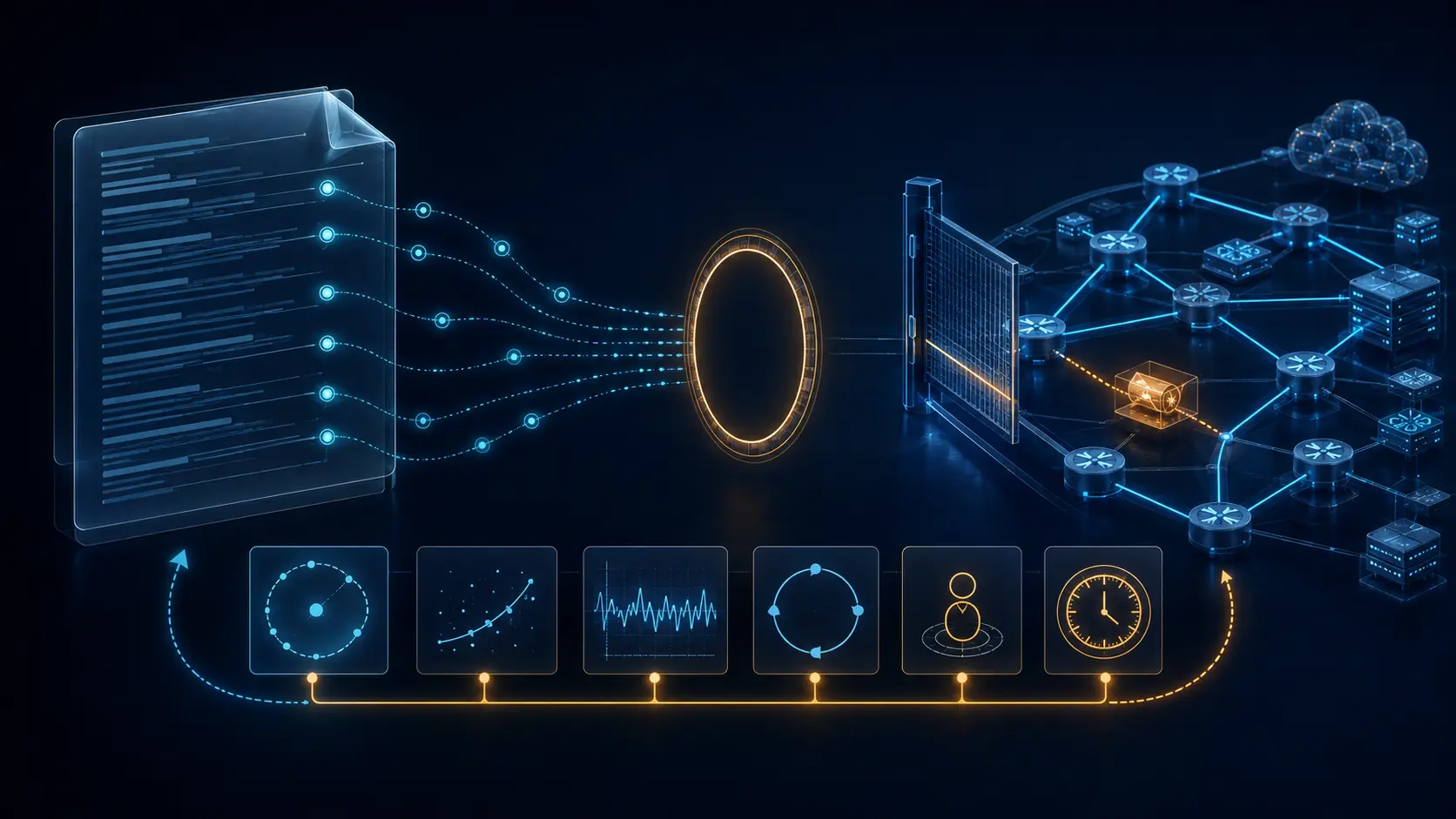
The change board has read the new protocol’s operational section. It names scale limits, monitoring gaps and a migration hazard. Everyone agrees that the document is unusually candid. Then the chair asks who is authorised to accept those limits for the production network, and the…
History
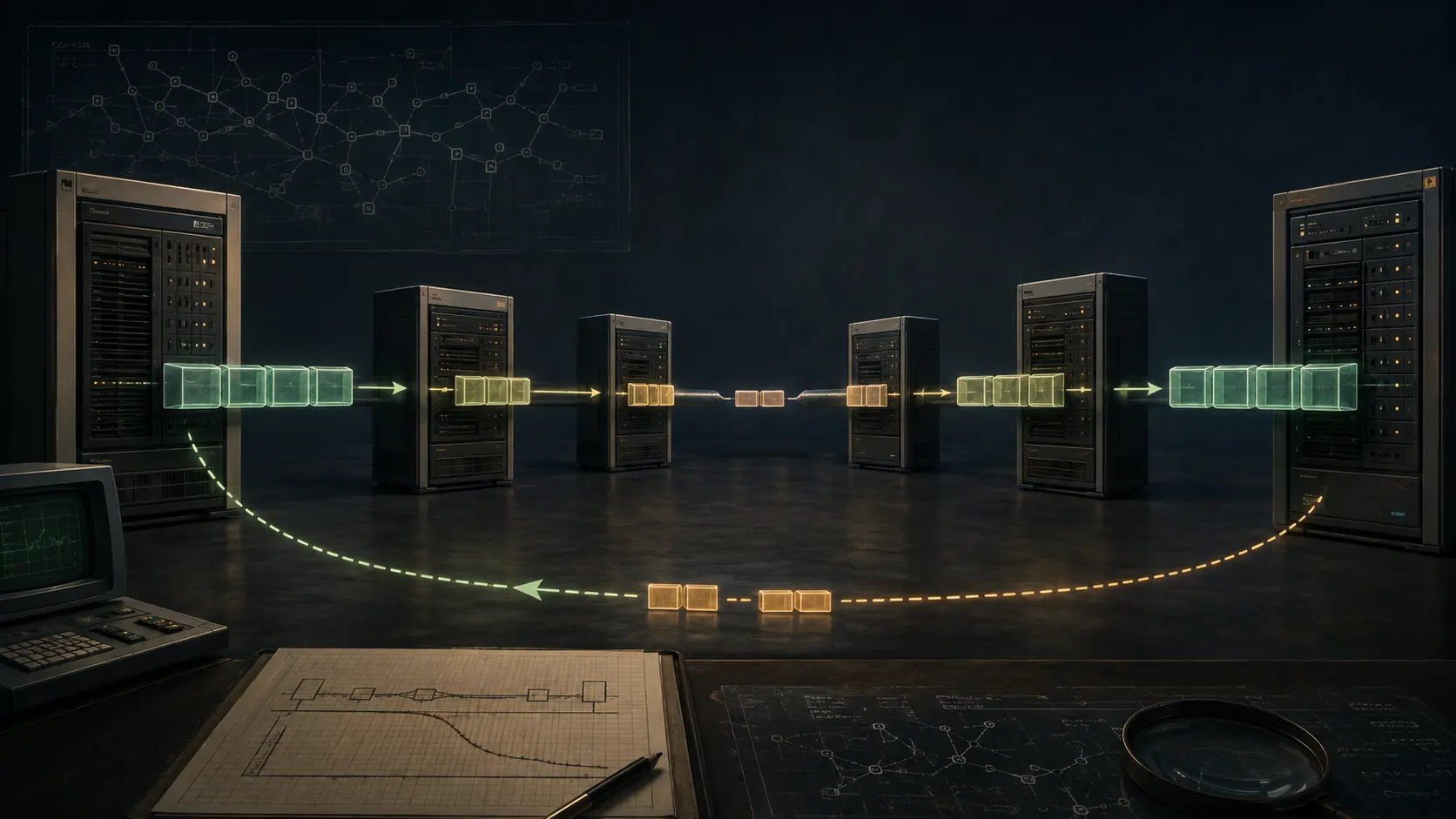
Before Path MTU Discovery learned from failure, an IPv4 packet could carry a tiny writable question. Each router was asked to compare two links and leave behind only the smallest number it had seen.

Story
RIPE's member-of Proves Authorized Set Membership, Not Live Route Propagation intelligence summary explains the development, the public evidence available to readers, the organisations involved, the regional context, market exposure, and the infrastructure consequences that may…

CASE FILE
A JMAP subscription can be accepted just as its authentication assumptions expire. RFC 9749 puts recovery on the client—and a reported error in its optional warning path makes that hand-off worth examining closely.

CASE FILE
A vendor outage alert enters an agent session, passes signature verification and triggers a fallback. The receiver loses its acknowledgement, so the same alert arrives again. Every cryptographic check can still be green while the second delivery repeats a real-world response.…

IETF
A byte string can pass every mathematical check and still be unacceptable to the protocol that received it. Revision 14 of CFRG’s pairing-friendly-curves draft makes that boundary unusually visible: the common document says how to recover valid points and scalars, while the…

CASE FILE
Closing a redundant register should end a redundant obligation. RFC 9751 offers a precise example of administrative subtraction—and a test for organisations whose paperwork can outlive the procedure it describes.

History
One security domain could encode “Unclassified” as 5 while another encoded the same human label as 1. CIPSO did not solve that disagreement by choosing a universal number. It put a Domain of Interpretation identifier beside the number and made interoperability depend on the…

IETF
A DNS reply can carry a label for the server that produced it. That sounds like identity until anycast, operator-defined bytes and hop-by-hop scope are allowed back into the picture. Suzanne Woolf’s work on the requirements behind NSID offers a more useful interpretation: the…

Story
APNIC's ASPA Lists Authorized Providers, Not Observed Transit intelligence summary explains the development, the public evidence available to readers, the organisations involved, the regional context, market exposure, and the infrastructure consequences that may follow. The Story…

Story
APNIC has done the difficult part that institutions often avoid: it identified an old role with no settled scope, named the governance risks around it, and formally adopted a replacement. The next part was deliberately separated. Observer attendance, confidentiality and…

CASE FILE
A legacy inbox can show a readable substitute while losing the address, context or verification that made the original useful. RFC 9755 turns compatibility into a question of custody.

CASE FILE
A network chart contains a clean sixty-second blank. The points before it have a platform, subscription and collection context; so do the points after it. The empty interval has none. A manifest can make received telemetry intelligible, but it cannot, from inside the same…
Session Map
Five regional sessions tracking allocation policy, board legitimacy, and institutional continuity.
Open RIR WatchdogLong-cycle governance dossiers with legal, election, and institutional stress analysis.
Open Case FileMembership, charter, and resource-governance intelligence from the NRS ecosystem.
Open NRS SessionDNS coordination, accountability frameworks, and global multi-stakeholder process dynamics.
Open ICANN SessionProtocol standardization trajectory and interoperability risk under fragmented policy conditions.
Open IETF SessionLong-cycle infrastructure history used for governance interpretation and structural forecasting.
Open History SessionOperator-level implementation intelligence from APRICOT plus regional and national NOG ecosystems.
Open NOGs Session