
Single-stack monitoring for RIR governance continuity.
Governance / RIR Watchdog
RIR Watchdog
RIR Watchdog governance intelligence tracks institutions, policy processes, standards activity, registry operations, accountability disputes, and implementation signals that affect internet infrastructure. BTW.
ARINRIPE NCCAPNICAFRINICLACNIC

Institution legitimacy and policy execution quality.
Decision-critical policy and control changes.
Primary-source reporting plus structural interpretation.
Latest Coverage
Latest from RIR Watchdog
2,424 articles

Story
IPv4 brokers and the line LACNIC must hold as ledger keeper
IPv4 brokers exist because search, trust and proof are costly. Their market can reduce friction only if the registry stays a ledger rather than a moral authority over trade.
Story
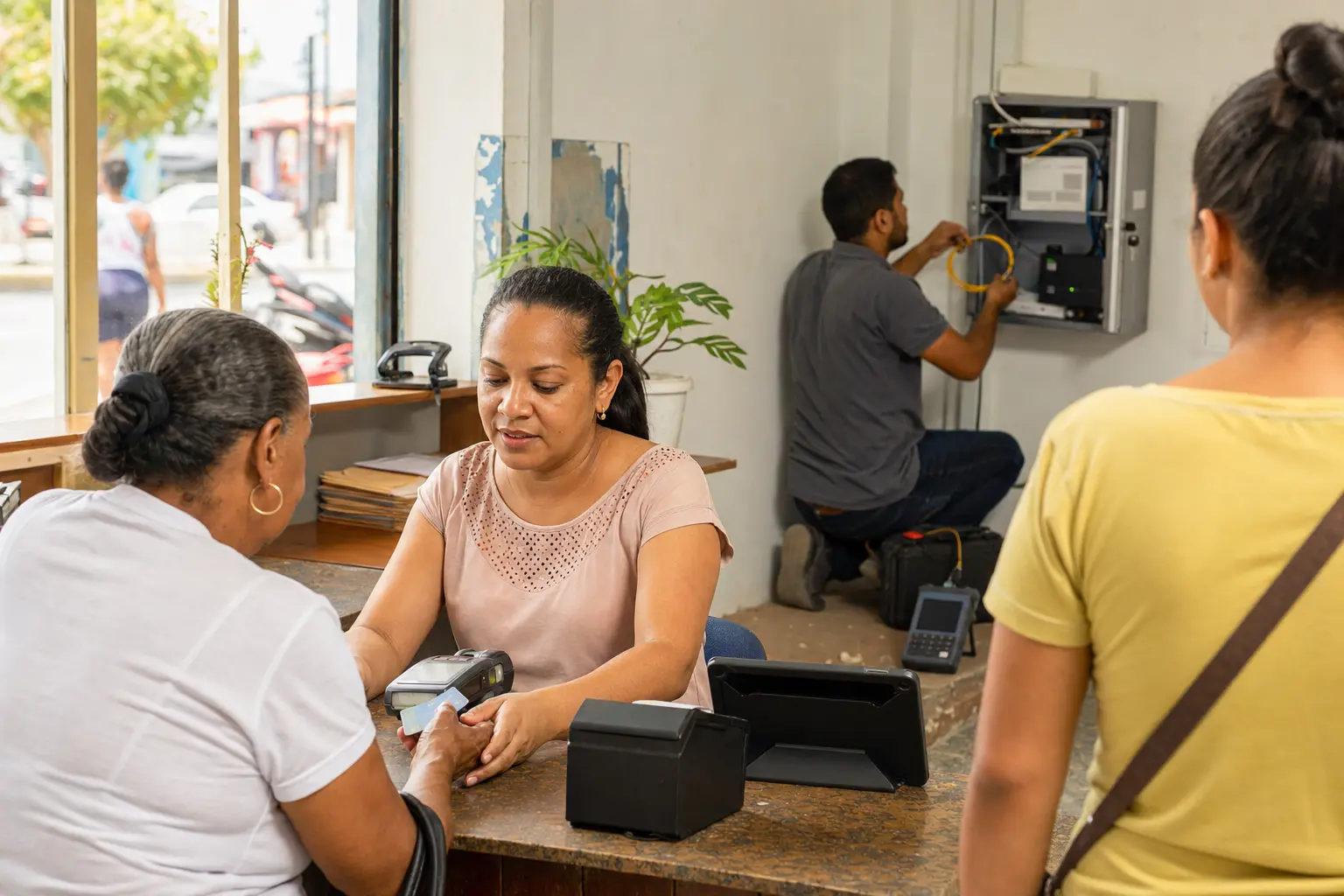
How LACNIC registry decisions travel into customer continuity risk
A registry decision is several contracts away from an end user. The distance does not remove the liability; it merely hides who pays when network identity stops travelling.

Story
Why the title-insurance analogy matters for LACNIC address records
The title-insurance analogy is not a claim that IP addresses are land. It is a way to see why record history, authority and correction matter to scarce-number markets.

Story
Suballocation visibility at LACNIC between privacy and operational proof
Suballocation visibility is the quiet line between privacy and operational accountability. Downstream users need continuity, while markets and abuse desks need enough truth to price risk.

Story
Reverse DNS delegation and LACNIC's leverage over exit and transfer
Reverse DNS looks like a technical service until a holder tries to leave. Then parent-side delegation becomes a price on exit, transfer and customer continuity.

Story
LACNIC ROA revocation as an immediate continuity shock
A ROA can make reachability legible. Its revocation can turn a registry-layer decision into an immediate continuity shock.

Story
Fragmented IRR evidence and the transaction burden on LACNIC IPv4 markets
Routing registries are supposed to reduce uncertainty. When their evidence fragments, scarcity turns old records into new transaction costs.

Story
What LACNIC route objects decide in transfers, leases and upstream changes
A route object is not a constitution. Yet in scarce IPv4 markets it can decide whether a transfer, lease or upstream change is treated as operationally credible.

Story
Routing-security evidence as LACNIC infrastructure for accepted IPv4 use
Routing-security evidence increasingly travels with IPv4 value. It does not make addresses land, but it now shapes whether scarce resources can be accepted, financed and used.

Story
LACNIC fraud checks and the risk of discretionary holder control
Scarce address assets invite false authority claims. The hard institutional task is to reject fraud without converting verification into discretionary control over legitimate holders.

Story
When LACNIC registry cleanliness cannot erase IPv4 reputation memory
A clean registry entry does not always mean a clean address block. Reputation memory can turn scarce IPv4 capacity into a discounted asset with hidden operating debt.
Story
LACNIC university legacy space between campus memory and future option value
University address space is old campus memory and future optionality at once. Scarcity turns research networks, labs and student systems into capital questions.
Story
Public-sector reachability and the quiet force of LACNIC registry continuity
Public-sector reachability and the quiet force of LACNIC registry continuity intelligence summary explains the development, the public evidence available to readers, the organisations involved, the regional context, market exposure, and the infrastructure consequences that may…

Story
IPv4 leasing contracts beyond the reach of LACNIC's thin ledger
IPv4 leasing turns scarcity into a private contract. That contract must carry routing, abuse, payment and continuity risks that a thin registry ledger cannot safely govern.

Story
Delay, reversibility and the LACNIC discount on usable IPv4
A usable IPv4 block can still trade below its apparent value. Liquidity is priced through delay, uncertainty, reversibility and the cost of proving a clean path to use.

Story
Escrow, finality and LACNIC transfer records at the closing desk
IPv4 transfers fail at the closing desk as much as in policy rooms. Scarcity makes payment timing, record updates and finality part of the governance problem.

Story
Can a thin LACNIC ledger improve IPv4 price evidence?
Opaque IPv4 prices tax the least informed party first. A thin ledger can support market transparency without setting prices or policing capital.

Story
When LACNIC transfer proof starts to resemble capital control
Documentation can prevent fraud, but it also prices proof. In cross-border IPv4 transfers, translation, notarisation, legacy files and authority checks can turn a narrow evidence duty into hidden capital control.

Story
Enterprise legacy holders and the LACNIC evidence value of old IPv4 blocks
Old enterprise address holdings are not administrative curiosities. They are operational memory, transaction evidence and balance-sheet optionality in a scarce IPv4 market.
Story
Carrier-grade NAT in LACNIC mobile broadband and the support burden it hides
Carrier-grade NAT is sold as an engineering workaround, but in mobile broadband it becomes a support, logging, reputation and customer-compatibility bill.
Member Unlock
Restricted Profile Intelligence
Login is required to unlock full profile briefings and deep-dive sections.
Strategic Circle Briefing
Join to unlock strategic briefings after signing in.
Join Strategic CircleLeadership Alliance Briefing
For qualified IP-asset owners and management; sign in to unlock alliance briefings.
Join Leadership AllianceSession Map
Registry Sessions
ARIN
North America governance, transfer-market behavior, and member process monitoring.
Open ARINRIPE NCC
Accountability, member visibility, and implementation signals across the RIPE NCC region.
Open RIPE NCCAPNIC
Allocation pressure, policy adaptation, and Asia Pacific institutional execution.
Open APNICAFRINIC
Election process, legal continuity, and board legitimacy under institutional stress.
Open AFRINICLACNIC
Institutional adaptation and ICP-2 governance trajectory in Latin America.
Open LACNIC