Summary
- The RIPE NCC Quarterly Sanctions Transparency Report for Q4 2026, RIPE-868, lists 73 dated cases at 1 October 2026 holding 4,850,688 IPv4 addresses and 82 ASNs. Frozen cases hold 180,992 addresses across 53 cases; “on hold” cases hold 4,669,696 across 20.
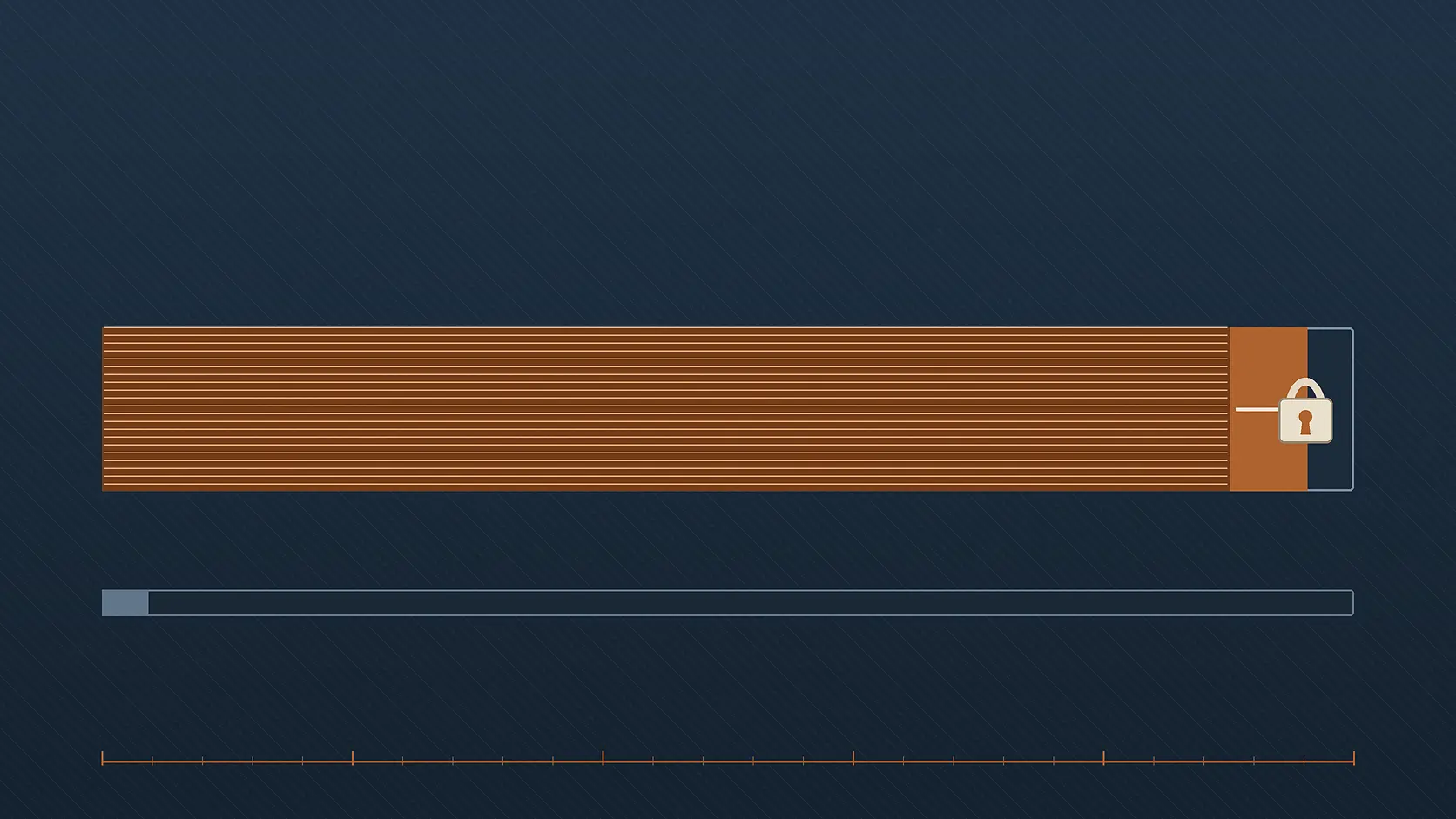
- The on-hold group is 96.27% of all IPv4 in the register, and two on-hold cases dated 08/08/2025 hold 2,377,216 and 1,993,984 addresses — 4,371,200 together, or 90.11% of the total.
- The screening pipeline behind the register cleared 2,108 of 2,339 alerts as false positive, not applicable or exempted — 90.12% — while 39 had not been started and 119 were under investigation on 1 October 2026.
What the register is
The report describes its own mechanism without decoration. As an organisation based in the Netherlands the RIPE NCC must comply with EU sanctions; where it believes a holder is subject to them, it freezes “the registration (not the use)” of their resources. Frozen holders cannot acquire further resources or transfer existing ones, but the resources are not deregistered and members do not lose their service agreement.
Then the sentence the whole table hangs on: “If a member or End User does not cooperate with our checks, or if no documentation can be provided to conclude our investigation, we treat them as though they are sanctioned. This is because we have no way to establish otherwise. The status of cases such as these is ‘on hold’.”
And a detail that makes the freeze bite before any finding exists: because there is no grace period, “potential matches must be treated as though they are sanctioned until our staff can confirm otherwise”, and no requests for new resources and no transfers are processed until a potential case has been cleared. A screening alert is enough to stop the machinery.
Where the addresses actually are
The register's second table is the interesting one. Count the rows and the resources, and 73 cases hold 4,850,688 IPv4 addresses. Of those, the 53 cases marked Frozen hold 180,992 addresses; the 20 marked On hold hold 4,669,696.
The share is the story. 4,669,696 divided by 4,850,688 is 96.27%. Almost every frozen address in the register belongs to a case the registry has not concluded.
The concentration is sharper still. The two largest cases are both dated 08/08/2025, both Members, both Iran, both On hold: 2,377,216 addresses in one, 1,993,984 in the other. Together, 4,371,200 — 90.11% of every address in the register. The largest single Frozen case holds 99,328 addresses. The largest on-hold case outside Iran holds 208,896 and sits in Syria.
By country, the 73 cases read Iran 36, Russia 32, Belarus 3, Syria 2. By relation they read End User 38, Member 33, Member with End User holdings 2. The register is not a list of large incumbent operators; it is a list of a few large holdings and a long tail of small ones, and the large ones are on hold.
The status is not a verdict
“On hold” is precise and easy to misread. It does not mean the registry found a sanctions link. It means the registry could not establish that there is none, because documentation did not arrive or the holder did not answer, and the report's own remedy for that absence is to treat the holder as though the finding had been made.
The burden therefore runs backwards. A holder with a clean legal position and a bad filing practice is in the same column as a designated entity, and the difference between the columns only appears in the label. The register publishes relation, country, date and resource counts for each case — and no name, no reason and no expiry.
There is no published maximum duration for an on-hold case. The report's definitions include “On hold removed: on hold status was cleared and the resources have been unfrozen”, so removal is a defined event; it just has no deadline, and the table does not say how many cases have left the status or how long they took to leave it.
The pipeline that feeds it
The register is the output of a screening process the same report tabulates. At 1 October 2026 there were 2,339 alerts for EU and OFAC investigations: 39 not yet started, 119 under investigation, 2,108 cleared as false positive, not applicable, exempted or OFAC, 20 on hold, 53 confirmed and applicable.
Two readings of one number. 90.12% of alerts are cleared, which is what a name-matching system should look like and is also the reason a backlog of 158 open or unstarted cases matters more than the confirmed count. The pipeline has run from 766 alerts and 4 confirmed cases in April 2022 to 2,339 and 53 today; the confirmation rate has fallen from 0.52% to 2.27% while the absolute number of cases tripled.
The composition is the other half. Of the 2,339 alerts, 1,098 concern Members, 1,234 End Users and 7 inter-RIR transfers. The smaller holders are the majority of the cases, and the larger holders are the majority of the addresses.
Neutrality with a table attached
The due-diligence document in force says the registry “will not take positions with regard to specific political disputes”. That is the right ambition for a registry and it is now tested by a quarterly publication with country columns in it, in which 68 of 73 cases concern two countries and one case holds 2.4 million addresses.
The US list enters through the banking system rather than through law: the report says OFAC is a factor for Dutch banking institutions, which affects the registry's ability to invoice and to be paid. A registry that must be able to bill its members has an operational interest in the US list that the EU mandate alone does not create, and it is honest about that. The consequence is a register whose geography is decided partly by payment rails.
What the numbers cannot say
Four figures would turn this into a management story, and the report publishes none of them. How long an on-hold case lasts, by median and by maximum. How many transfers or new-resource requests were refused because an alert was open. How the 2,108 cleared alerts split between false positives, exemptions and OFAC-only matches, which is the difference between a noisy list and a broad one. And whether the two large Iranian cases are large because of what they hold or because of how long they have been open.
The one that would change the judgment fastest is the duration. If on-hold cases close in weeks, the status is a filing problem. If they stay open for years, the registry is running a permanent freeze on 96% of the addresses it lists, on a standard of evidence it has never published, and the register is less a report on sanctions than a report on compliance paperwork that stopped arriving.
Sources: RIPE-868, RIPE NCC Quarterly Sanctions Transparency Report (Q4 2026); RIPE-863, Due Diligence for the Quality of the RIPE NCC Registration Data; RIPE NCC Member Update: November 2026.
Member Briefing
Read the full trend briefing
Members read the full briefing with the source notes behind every finding.
Strategic Circle
A daily briefing in your language, built from changes we have verified.
Join for USD 20/monthCancel anytime.
Members also get the full research library, a daily briefing on the networks they follow and the private forum.