
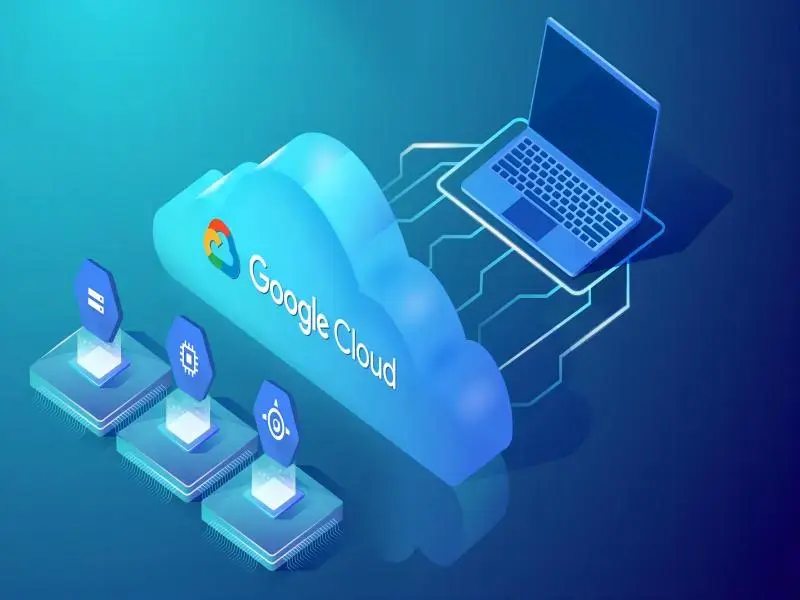
Google Cloud Connect is not a product you can put in a shopping cart. It is the name for the unglamorous work of making old infrastructure and Google Cloud Platform behave like one system. That distinction matters because the cloud market has spent a decade selling “transformation” while enterprises quietly spend the real money on integration, migration, and the network plumbing that keeps both worlds talking.
The name has a split personality. It once described a Microsoft Office sync plug-in that pushed documents into Google Docs; today it describes the collection of GCP services that connect on-premises data and applications to the cloud. The second meaning is the one operators care about—and the one that decides whether a hybrid estate is a strategy or a science project.
Google Cloud Connect is best understood as a suite of tools and services designed to integrate on-premises data and applications with Google Cloud Platform (GCP). It lets businesses use cloud scale without pretending their existing infrastructure disappeared overnight.
What Google Cloud Connect actually does
It is not one switch. It is a set of jobs: move data, keep it in sync, connect networks, integrate cloud services, and keep security teams from losing sleep.
Data migration without the big-bang fantasy
Google Cloud Connect simplifies moving large volumes of data to the cloud through direct network connections, cloud storage gateways, and transfer services for physical appliances. In practice, that means Cloud Interconnect for private high-throughput links, Transfer Appliance for the awkward petabytes that will not fit down a WAN, Storage Transfer Service for entity data, Database Migration Service for databases, and Migrate to Virtual Machines for workloads that need a lift-and-shift before anyone utters the phrase “cloud-native.”
Hybrid connectivity is the real moat
Hybrid connectivity lets some applications and data stay on-premises while others run in Google Cloud. That is not a transitional compromise; it is the operating model for most large enterprises. The strategic value sits in latency, routing, private connectivity, and predictable egress—not in a slide that says “all-in cloud.”
Synchronisation and cloud-service integration
Once data is in the cloud, Google Cloud Connect enables integration with services such as BigQuery for analytics, Vertex AI for machine learning, and Cloud Functions for serverless computing. Synchronisation keeps on-premises systems and cloud environments aligned so teams are not arguing over whose spreadsheet is the truth.
Security and compliance
Security and compliance are not footnotes. Google Cloud Connect leans on identity and access management, encryption, audit logging, and data-loss controls so data is protected in transit and at rest. The cloud does not remove the need for governance; it moves governance into configuration.
Also read: Why do many organisations use a hybrid and multi-cloud strategy?
Why the economics favour the bridge, not the destination
The pitch for cloud is elasticity. The invoice is integration. Google Cloud Connect earns its keep because it attacks the costs enterprises actually feel: migration risk, network complexity, data gravity, and the operational tax of running two estates that refuse to speak the same language.
Enhanced flexibility is the headline benefit: organisations can move applications and data at their own pace. Improved scalability follows because cloud resources can expand without a fresh capex cycle. Cost savings are possible under pay-as-you-go pricing, but only if the company manages egress, idle capacity, and integration sprawl. Advanced analytics and AI are the upside—BigQuery and Vertex AI can turn locked-away data into something useful. Simplified management is the promise; disciplined architecture is the price.
Where Google Cloud Connect earns its keep
Data-intensive applications are the obvious fit. Businesses that need high-performance analytics or machine learning can keep sensitive systems close while pushing analytical workloads into Google Cloud. Hybrid cloud adoption is the second fit: companies that want a balance between on-premises and cloud resources get a bridge instead of a cliff. Cloud-native development is the third: developers can build and deploy applications that use GCP services without forcing every legacy system through a rewrite on day one.
Also read: Top 5 Internet of Things (IoT) platforms
The strategic catch: integration is sticky
Once data flows through BigQuery, once IAM policies map to the org chart, and once network routes are built, switching costs rise. That is the quiet lock-in. Not a contract; architecture. The most durable lock-in is the one that looks like convenience.
Google Cloud Connect is therefore less a product than a posture: meet enterprises where they are, then make the bridge indispensable. The cloud war is not won in the data centre or the region. It is won in the plumbing between them. And plumbing, unlike hype, has a wonderful habit of showing up on the invoice.




