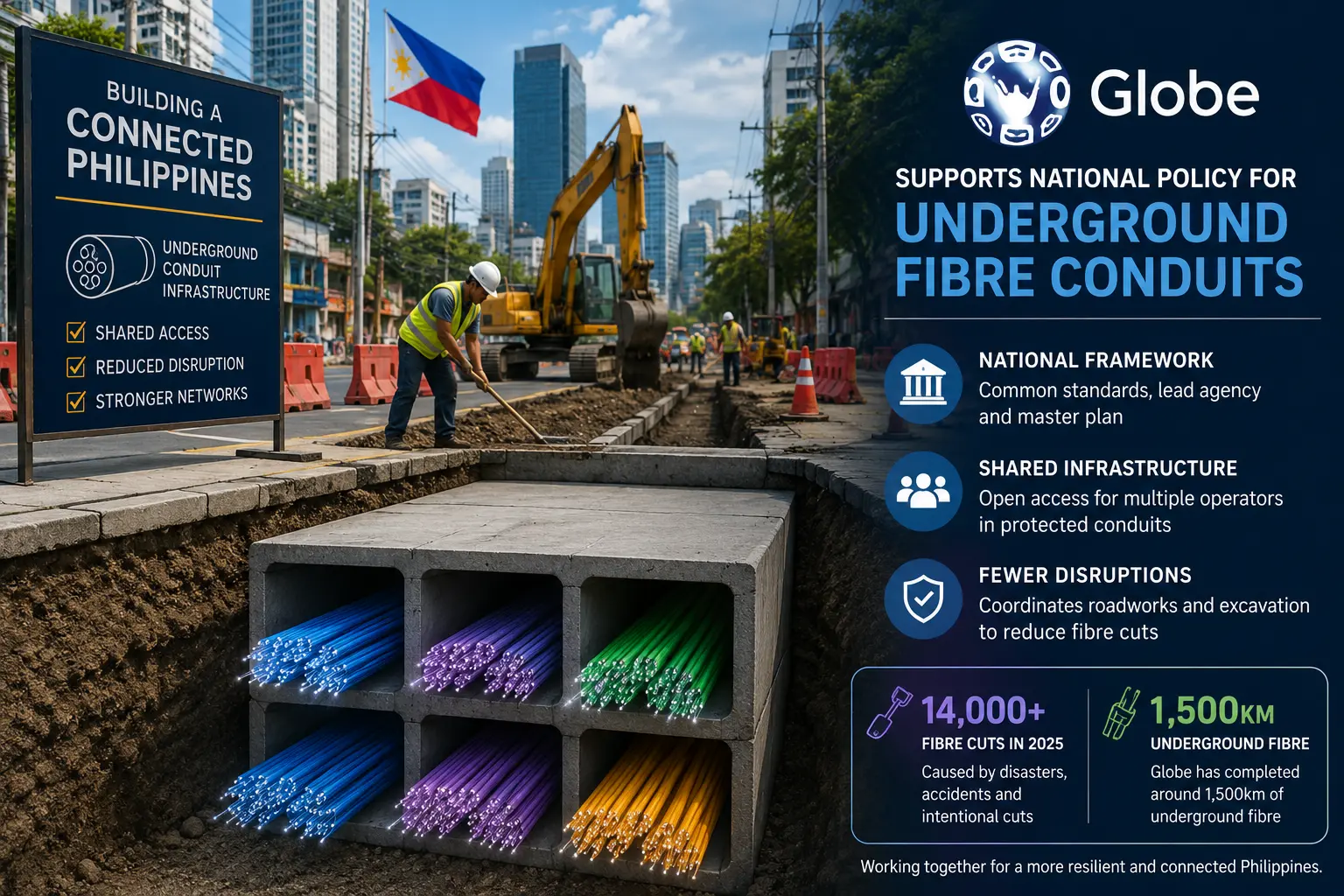
- Globe is proposing a national master plan, common technical standards, a lead agency and rules for the shared use and maintenance of underground telecom conduits
- Globe recorded more than 14,000 fibre cuts in 2025 from natural disasters, accidents and intentional damage, and has completed about 1,500km of underground fibre
The fact
Globe Telecom has proposed a national framework for underground telecommunications conduits in the Philippines through the Private Sector Advisory Council's Digital Infrastructure sector. It is calling for a National Underground Conduits Master Plan, common technical standards, a lead government agency and rules covering shared use and long-term maintenance.
The proposal follows the Konektadong Pinoy Act, which requires the Department of Information and Communications Technology and Department of Public Works and Highways to develop a Dig Once policy with other agencies, local governments and private entities. Section 17 covers telecom conduits in public rights-of-way alongside road, bridge, rail and other construction.
Globe says it recorded more than 14,000 fibre cuts in 2025 from natural disasters, accidental damage and intentional cuts. The company has previously reported completing about 1,500km of underground fibre facilities nationwide.
The assessment
The policy would change when operators plan part of their fibre networks. Where a road, bridge or rail project includes shared conduit, telecom providers would need to identify route and capacity requirements before the civil works are completed, rather than return later for another excavation. Government agencies would also need designs and records that leave usable conduit space for participating networks.
That makes implementation a coordination problem as much as an engineering one. A common conduit needs clear responsibility for maintenance, accurate route records and rules for how operators gain access to available space. The 14,000 fibre cuts do not measure the size of the opportunity directly because Globe says they include disasters, accidents and intentional damage. Underground conduits mainly address the part of the problem linked to physical exposure and excavation.
For BTW readers, the policy matters when telecom duct capacity is designed into an actual road or infrastructure project before construction starts. That is where Dig Once can avoid a later excavation; a national framework alone does not change the physical network.
What to watch
Watch for DICT and DPWH to issue the Dig Once framework and for the government to identify the first road, bridge or rail projects using shared telecom conduits. The rules should clarify maintenance responsibility, access to spare capacity and cost allocation. Once routes enter service, fibre-cut data on those corridors will show whether the approach is reducing avoidable excavation-related damage.
Member Briefing
Deeper Profile Context
Sign in with the right membership level to unlock the full briefing and source notes.
Only for Strategic Circle
Strategic Circle
Open to all readers. Unlock profile briefings after joining and signing in.
Join Strategic CircleOnly for Leadership Alliance
Leadership Alliance
For qualified IP-asset owners and management; sign in to unlock alliance briefings.
Join Leadership Alliance