
Topic
RPKI and Route Security
Within the Topic facet, RPKI and Route Security topic intelligence connects articles that share a specific subject, signal focus, or monitoring theme. The page gives readers a richer path through related reporting, source evidence, market actors, and infrastructure implications, with enough context to understand why the topic matters across company movements, governance decisions, regional exposure, and operational risk. Readers can compare recurring signals, affected organisations, public evidence, market context, service continuity, procurement, competition, compliance, and strategic planning questions behind the subject instead of stopping at a thin list of matching articles. It explains what the topic covers, which infrastructure actors or policies are involved, what evidence supports the coverage, and why the subject may matter for operators, customers, investors, and policy readers.

Story
FORT’s Provider Cap Checks the Sum Before the Union
FORT’s fixed release checks the combined lengths of two provider lists before removing duplicates. The distinction is visible in code; no affected customer or router withdrawal was observed.

Story
APNIC 62’s OTC Warning Is Also a Looking-Glass Problem
BIRD can stop a leaked route before ordinary filters have an entity to retain. The September warning asks for more than softer rejection: an explanation that survives without giving the route permission to travel.

Story
FORT’s Snapshot Patch Changes the Rebuild, Not the Meaning of a Good Hash
The published 1.6.8 fix constrains snapshot references and moves a download ahead of workspace deletion. Its cache still remembers an attempt result—a distinction that matters when signed routing evidence vanishes from a local view.

Story
APNIC Will Put VRP History in REx. A Timeline Still Needs a Vantage Point
APNIC plans to show current and historical RPKI VRP information for an individual Internet number resource in REx. That could turn a specialist dataset into useful public memory. But a dated line is not self-explanatory: unless it names the observation, derivation and scope…

Story
RIPE NCC Lets Operators Sign ASPAs Without Showing the Providers It Sees
RIPE NCC has made ASPA signing possible and tells operators to list every real upstream. Its public guide also says the Dashboard offers no BGP-derived hint about who those upstreams might be. The missing interface is not an automatic answer but an evidence receipt that helps a…

Story
APNIC's ASPA Interface Checks Observed Paths. A Standby Provider Leaves No Path to Check.
APNIC has built a sensible safety rail into its new ASPA interface: suggest providers from visible routing data, then show how an edit would affect paths that BGP observers can see. The awkward provider is the one hired precisely not to be visible yet. A standby link turns the…

Story
LACNIC’s BGP Case Counts 368 Route Peers. The Vendor Could Not Produce a Definitive Installation List.
LACNIC’s latest routing-security case is unusually rich in network evidence and unusually poor in application evidence. The route, certificate and attack window can be reconstructed in detail; the vendor still cannot say which installations accepted the malicious update. That gap…

Story
AFRINIC's Prefix Checker Can Supply the ASN From BGP. The Verdict Keeps Only the RPKI Time.
AFRINIC's Prefix Checker Can Supply the ASN From BGP. The Verdict Keeps Only the RPKI Time. intelligence summary explains the development, the public evidence available to readers, the organisations involved, the regional context, market exposure, and the infrastructure…

Story
APNIC Will Automate Route-Record Alignment. The Roadmap Does Not Name the Conflict Winner
“Alignment” sounds like database housekeeping. In APNIC’s Q3 2026 roadmap, it means something harder: deciding how resource holdings, a route-management template, Whois route objects and RPKI authorizations should change when they disagree—and preserving enough evidence to show…

Global Institutional
ISC-AGP1 and the Authority Chain Behind Internet Systems Consortium’s Network Identity
ISC-AGP1 and the Authority Chain Behind Internet Systems Consortium’s Network Identity intelligence summary explains the development, the public evidence available to readers, the organisations involved, the regional context, market exposure, and the infrastructure consequences…

Global Institutional
DFINFRA and AS210860: What Would Prove an Operating Network?
DFINFRA and AS210860: What Would Prove an Operating Network? intelligence summary explains the development, the public evidence available to readers, the organisations involved, the regional context, market exposure, and the infrastructure consequences that may follow. The Global…

Global Institutional
Where ISC’s Control Ends—and the Evidence of Recovery Begins
Where ISC’s Control Ends—and the Evidence of Recovery Begins intelligence summary explains the development, the public evidence available to readers, the organisations involved, the regional context, market exposure, and the infrastructure consequences that may follow. The Global…

Global Institutional
What AS210764 Can—and Cannot—Prove About ISC’s Operational Control
What AS210764 Can—and Cannot—Prove About ISC’s Operational Control intelligence summary explains the development, the public evidence available to readers, the organisations involved, the regional context, market exposure, and the infrastructure consequences that may follow. The…

Story
ARIN’s ASPA Change Is a Set Decision. It Needs a Diff Receipt
Changing one upstream in an ASPA is not the digital equivalent of adding a name to a contact list. The operator is replacing a signed statement about the whole provider set. ARIN can acknowledge the transaction, yet the operator still needs evidence of what changed, what was…

Global Institutional
DFINFRA and AS210860: The Evidence Stops Before Operational Control
DFINFRA and AS210860: The Evidence Stops Before Operational Control intelligence summary explains the development, the public evidence available to readers, the organisations involved, the regional context, market exposure, and the infrastructure consequences that may follow. The…

Global Institutional
DFINFRA and AS210860: The Missing Continuity Loop
A registry association can identify where to investigate, but continuity is demonstrated only when routing, reachability, recovery authority and customer consequence align in time.

Global Institutional
DFINFRA and AS210860: The Missing Link Between Registration and Operational Control
DFINFRA and AS210860: The Missing Link Between Registration and Operational Control intelligence summary explains the development, the public evidence available to readers, the organisations involved, the regional context, market exposure, and the infrastructure consequences that…

Story
Rapport Tests Cache Survival. Its Missing-Manifest Warning Is Still Commented Out
LACNIC’s young RPKI test suite preserves the right routes when a manifest disappears; the quieter question is whether the person responsible for those routes is demonstrably told why they are now coming from cache.

Global Regional ISP
INFINITYWIFI: Three Different Meanings of Network Control
INFINITYWIFI: Three Different Meanings of Network Control intelligence summary explains the development, the public evidence available to readers, the organisations involved, the regional context, market exposure, and the infrastructure consequences that may follow. The Global…
Global Institutional
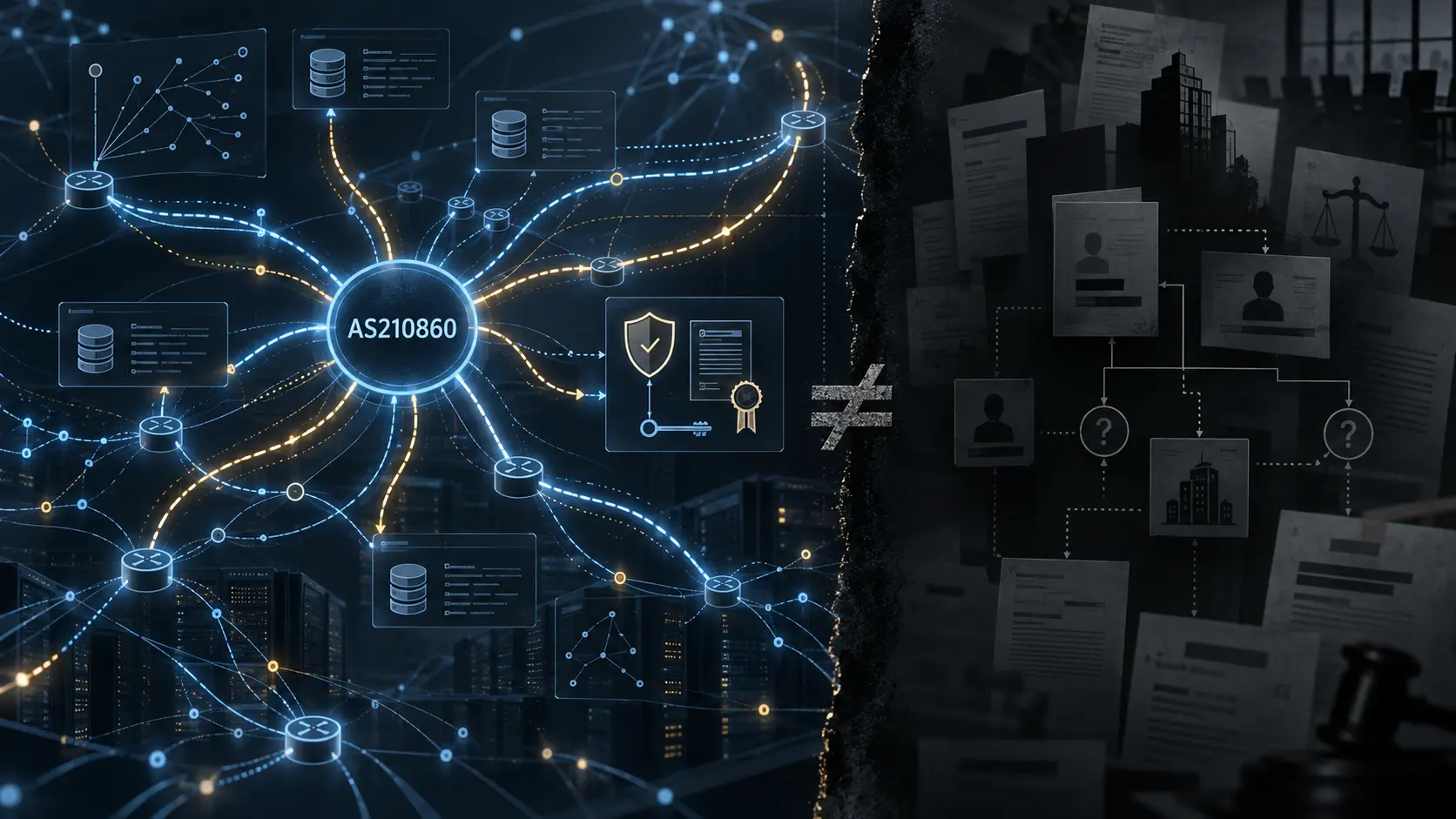
DFINFRA and AS210860: The Control Chain Is Defined, but Not Yet Proven
DFINFRA and AS210860: The Control Chain Is Defined, but Not Yet Proven intelligence summary explains the development, the public evidence available to readers, the organisations involved, the regional context, market exposure, and the infrastructure consequences that may follow.…