
Topic
Network-resource Evidence
Within the Topic facet, Network-resource Evidence topic intelligence connects articles that share a specific subject, signal focus, or monitoring theme. The page gives readers a richer path through related reporting, source evidence, market actors, and infrastructure implications, with enough context to understand why the topic matters across company movements, governance decisions, regional exposure, and operational risk. Readers can compare recurring signals, affected organisations, public evidence, market context, service continuity, procurement, competition, compliance, and strategic planning questions behind the subject instead of stopping at a thin list of matching articles. It explains what the topic covers, which infrastructure actors or policies are involved, what evidence supports the coverage, and why the subject may matter for operators, customers, investors, and policy readers.
History
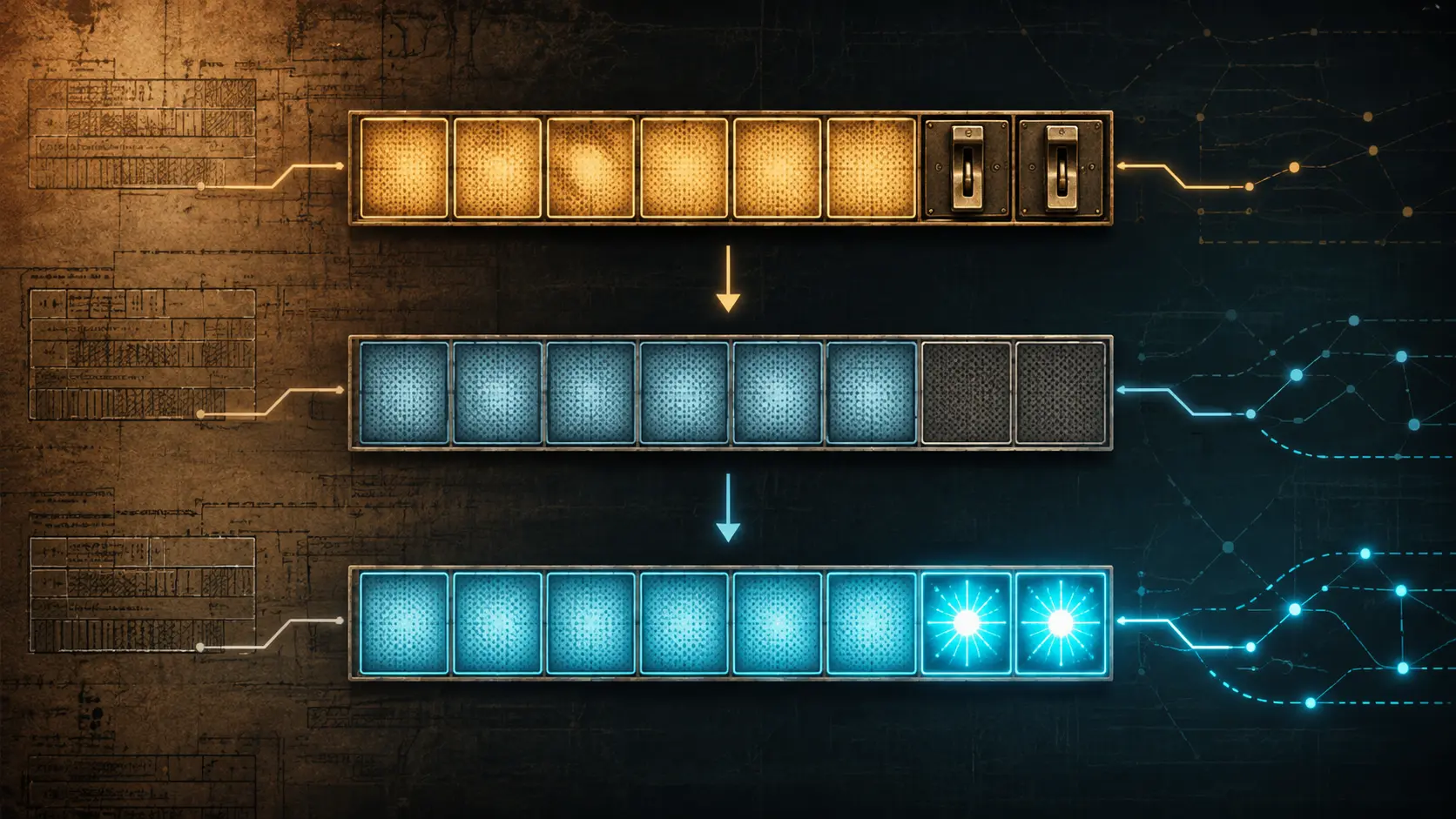
The Octet That Changed Its Contract: From IPv4 Type of Service to DSCP and ECN
The second octet of the IPv4 header did not move, but its contract did. What began as precedence and desired service qualities became a configurable per-hop behavior selector plus an explicit congestion signal—a history of compatibility managed by redefining bits in place.

Story
APNIC Whois mnt-irt Points to Incident Response, Not Network Control
A mandatory contact pointer can look like a declaration of who runs a network. In APNIC Whois, `mnt-irt` has a narrower and more useful meaning: it connects a number-resource record to an Incident Response Team entity for security and abuse handling. That link strengthens…
History
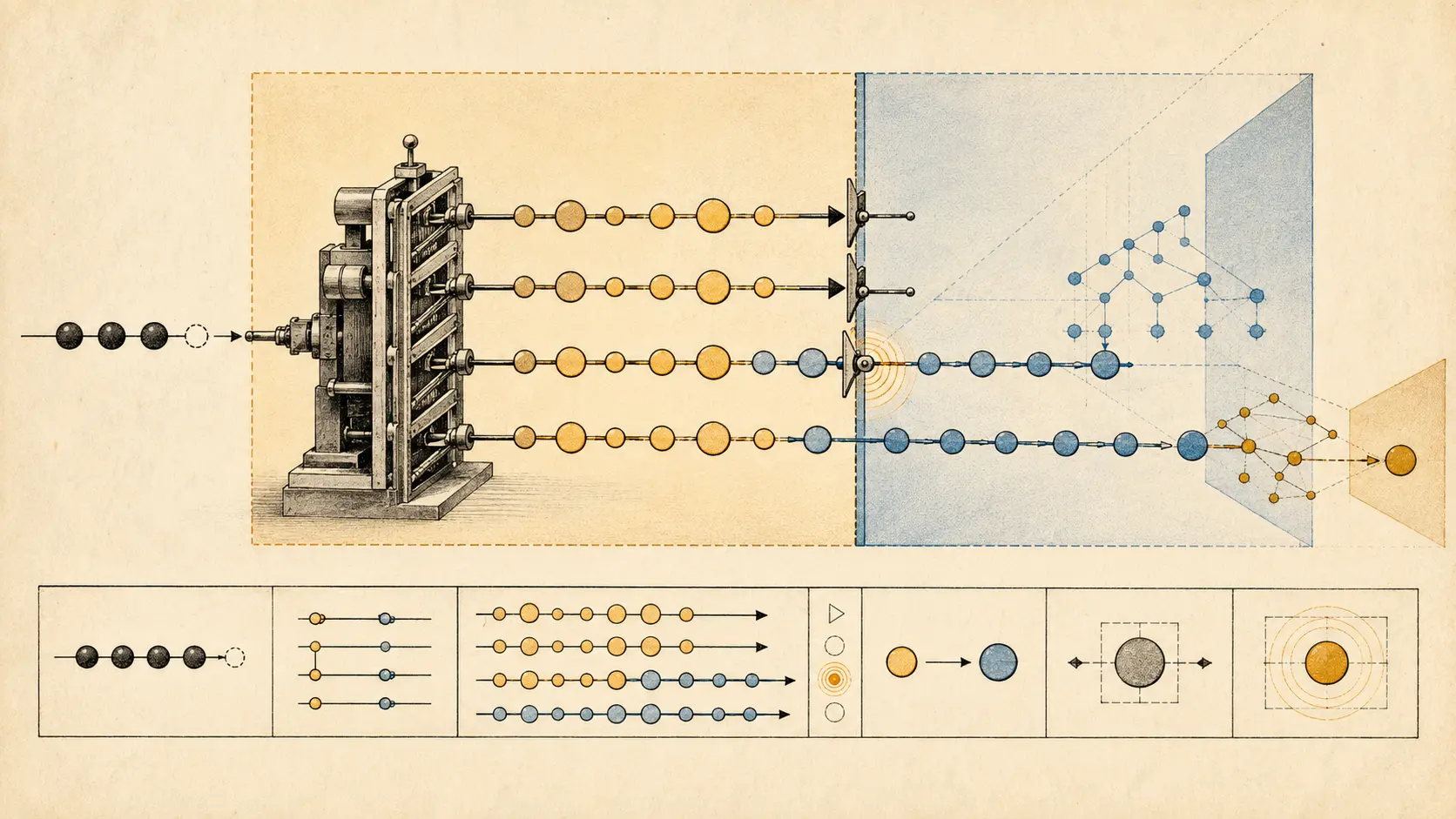
The Name Looked Complete. The Resolver Still Rewrote It: RFC 1535
`UnivHost.University.EDU` looks like an address already supplied. To one 1993 resolver, it was only the beginning of a search. Before asking for the rooted name the user appeared to mean, the software could manufacture three longer candidates, cross from a locally managed suffix…

Global Regional ISP Trends
A Successful PMTUD Probe Is Not a Stable Path-MTU Receipt
A 1,450-byte probe is acknowledged, the dashboard turns green, and the next production datagram of the same size disappears after taking a different tunnel member. The probe was valid evidence. The mistake was allowing one observation to certify a path that could change.

History
The Length That Outranked the Frame: Why IPv4 Counts Its Own Header
An IPv4 packet can sit inside a link-layer frame that is longer than the packet itself. The small field that resolves the ambiguity does more than count payload: it declares the complete IP datagram, header included, so the network layer keeps its own boundary when the enclosing…

CASE FILE
The Beacon Anchor Became Verifiable. Its Quantum Timeline Still Needed Another Archive
Revision 01 of Wathīqa repairs an important weakness in its evidence record: the first beacon value is no longer merely a time-shaped field but a signed pulse tied to a pinned certificate, with an optional successor that can prove immediate chain continuity. The repair is real.…

CASE FILE
The Receiver Lowered the Window. The Sender Never Changed Its Algorithm
A small advertised TCP window is often read as proof that the receiving application cannot keep up. RFC 9840 makes that shortcut unsafe. It gives the receiver a second reason to limit the window—deliberate low-priority transport—while leaving the sender’s congestion-control…

IETF
A QUIC PADDING Frame Adds Wire Bytes, Not Transport Progress
A full-size Initial datagram can look reassuring on an operations dashboard. Its added bytes may still be only PADDING, with no content that advances the handshake or the application.

IETF
A Lease Is a State Machine: RFC 9915 Tightens DHCPv6 Authority
A client can receive an address successfully and still fail hours later when renewal, rebinding or delegated-prefix continuity crosses a server or relay boundary. DHCPv6 is therefore a state machine, not a one-shot response: the operational question is whether identity, lifetime…

Story
ARIN’s Incoming-Reassignment Switch Makes Registry Association Consent-Bound
An organization identifier used to be available for an upstream provider’s reassignment workflow unless another requirement failed. Since ARIN’s January 2026 release, the recipient can refuse that association before it is created. The new switch changes registry accountability in…

Global Regional ISP Trends
An IPv6 Router Advertisement Is Not a Default-Path Receipt
A host can install a fresh IPv6 default route from a Router Advertisement while its chosen first hop is already unusable in the forward direction. The advertisement is real control-plane evidence. It is not the end of the path investigation.

History
The Number IPv4 Could Not Freeze: How the Protocol Field Became a Live Registry
IPv4 devoted one octet to a deceptively simple question: what protocol should receive the payload next? The answer could not live in the packet format alone. It required a shared assignment system that could change while the eight bits on the wire stayed fixed.

History
The Header Shrunk to One Octet. The Missing Bytes Moved into Shared State: RFC 1553
A packet crosses a slow link with a one-octet compression header. Its ordinary thirty-octet IPX header is absent. Nothing has been lost—if the receiver still holds exactly the right prior header in exactly the right slot. Let one earlier packet vanish, however, and the same…

IETF
A QUIC CRYPTO Frame Carries Handshake Bytes, Not a TLS Message Boundary
A protected packet can carry handshake bytes without proving what TLS has understood, accepted, or completed.

Global Regional ISP Trends
A BGP End-of-RIB Marker Is Not Proof Every Route Is Fresh
An End-of-RIB marker can arrive after a BGP restart, close the initial update for IPv4 unicast and turn a session indicator green while another address family still carries retained state from before the restart. EOR is useful convergence evidence. Its meaning is also narrower…

History
Why IPv4 Checksums Only Its Header
A packet can carry an undamaged payload and still be dangerous to forward if a bit error changes its destination, length or remaining lifetime. IPv4 therefore checks the control surface routers must trust: its header, and only its header.

Story
Barry’s README Uses the IPv6 Prefix Its Lexer Rejects
`::/0` and `0::/0` name the same IPv6 address space. In LACNIC’s experimental Barry generator, the first spelling is documented as a default yet an open issue says it stops at the descriptor lexer; adding one zero lets the token proceed. That is not an RPKI validation failure. It…

CASE FILE
The Reference Was Well-Formed. It Was Not Yet Evidence
A digest can look precise enough to end an argument. Revision 03 of the Canonical Payload Binding draft instead turns that apparent certainty into a sequence of accountable tests: the reference must be admissible, one authorized digest context must be selected, the artifact must…

CASE FILE
The Maximum Metric Kept the Link. Missing Data Could Keep It or Remove It
A routing value can look catastrophic without withdrawing a link, while an empty field can either remove that link or leave it eligible. RFC 9843 makes those outcomes deliberate. Operations fail when telemetry turns three different protocol states into one red icon.

IETF
A QUIC preferred_address Advertises a Migration Target, Not Reachability
A server-authenticated invitation to test another path is not a health check, a capacity claim, or proof of service continuity.