
Topic
Membership Accountability
Within the Topic facet, Membership Accountability topic intelligence connects articles that share a specific subject, signal focus, or monitoring theme. The page gives readers a richer path through related reporting, source evidence, market actors, and infrastructure implications, with enough context to understand why the topic matters across company movements, governance decisions, regional exposure, and operational risk. Readers can compare recurring signals, affected organisations, public evidence, market context, service continuity, procurement, competition, compliance, and strategic planning questions behind the subject instead of stopping at a thin list of matching articles. It explains what the topic covers, which infrastructure actors or policies are involved, what evidence supports the coverage, and why the subject may matter for operators, customers, investors, and policy readers.

NANOG
The Price of Entering the Room
NANOG publishes a clear price for admission to its meetings. It does not—and perhaps cannot on a registration page—publish the full price of becoming a familiar, trusted and repeatedly visible entity in the North American network-operations community. Reconstructing that larger…

NANOG
NANOG Planned for Email History. Its Official Discord Still Needs a Public-Record Bridge.
NANOG made two announcements on consecutive days in February 2025. One invited its community into a newly official Discord server and described what people could do there. The other explained, in unusually concrete terms, how its mailing lists would move to new software without…

NANOG
The $1.58 Million Boundary: What a NANOG Sponsor Buys—and What Still Has to Pass Review
In 2024, meeting sponsorship supplied NANOG with $1,576,133 in cash—more than meeting fees and roughly half of all revenue and support. Yet the public sponsorship offer does not promise a technical talk, and the published proposal process assigns selection to the Program…

NANOG
The Business Card Is Allowed. Price Coordination Isn't: NANOG's Commercial Boundary
At NANOG 89, a peering representative could stand at a highboy table with business cards and a single white paper or one-sheet while a customised slide rotated nearby. The precision of that setup captures the institution's commercial problem: independently controlled networks…

NANOG
Which NANOG Rule Is the Rule?
NANOG’s public Bylaws say an elected Director serves three years. Its live Board Responsibilities page says two. The contradiction is real, but the historical record resolves it: the live guidance sentence reflects an earlier rule while the controlling instrument has moved on.…

NANOG
The Empty Chair With an End Date
NANOG’s rules allow a vacant Board seat to be filled at once—but only until the calendar turns. The important question is not whether temporary power exists. It is whether members can see its authority, its clock and the route back to their vote.

NANOG
The Verbs Behind NANOG’s Executive Office
The public record does not support the caricature of an Executive Director who runs NANOG by title alone, or the opposite picture of a figurehead serving a volunteer Board. What it reveals is more consequential: a paid operating layer moving decisions through money, contracts…

NANOG
NANOG’s Members Can Govern NANOG—Not North America
In 2020, 125 ballots produced 96 percent approval for a NANOG bylaw amendment; 583 people were eligible to vote. Those figures describe a valid decision inside NANOG, Inc., not a plebiscite of North American network operators. The distinction is not a technicality. It is the line…

NANOG
NANOG’s Board Mandate Has a Denominator
NANOG’s election archive becomes most useful where it names not only the winners, but the eligible electorate and the ballots cast. Those figures support a serious defence of the organization’s internal self-government. They also show exactly why a NANOG election cannot be made…

LACNOG
From Custody to Capacity: What LACNOG’s Incorporation Actually Changed
Five audited year-end figures document the end of LACNIC’s custody of LACNOG funds. They also expose the limits of the change: an account can move, a legal person can acquire new capacities, and a regional mandate can still remain unproved.

AUSNOG
The One Package Outside AusNOG’s Draw—and the Records the Other 22 Need
AusNOG replaced a long-running sponsorship waiting list with package-by-package draws in 2024. The change coincided with a visibly larger field, but an expanded inventory, unresolved package counts and an undocumented execution trail mean the public record still cannot answer the…

NANOG
The Space Between NANOG’s Ballot and Its Boardroom
NANOG asks Board candidates to disclose the organisations around them, then asks Directors and officers to disclose again when a later decision touches an affiliated organisation. The public-interest question is not whether an employer name proves influence—it does not—but…

NANOG
After the Ballot: How Power Travels Through NANOG's Appointed Committees
NANOG's members elect most of the Board, not the specialist bodies that shape programmes, elections, audits and community work. The case for appointment is strong; the harder question is whether the public record lets a reader follow each grant of authority from selection to…

NANOG
The Ballot Had One Switch
In 2018, NANOG disclosed 34 bylaw changes in unusual detail, then gave members one yes-or-no control over the entire package. That design made the proposed text inspectable while leaving the members' proposition-level preferences unknowable—a distinction that matters even when…

NANOG
The Status Switch: What NANOG’s Good-Standing Rules Actually Change
The Status Switch: What NANOG’s Good-Standing Rules Actually Change intelligence summary explains the development, the public evidence available to readers, the organisations involved, the regional context, market exposure, and the infrastructure consequences that may follow. The…

NANOG
What, Exactly, Did NANOG Acquire?
NewNOG incorporated in 2010. The 2011 handoff then transferred named NANOG assets to that corporation, giving the forum a legal holder for its name and domain, archives, contracts and financial risk. It made NANOG more durable and its responsibilities easier to locate without…

SANOG
Eight Days That Stayed Put: Who Did What When SANOG 34 Moved
SANOG 34 kept its late-July opening and early-August finish, but the entity-facing machinery needed to make those dates real had to be rebuilt from Colombo to Kolkata. The surviving public record separates local risk advice, an unsigned regional decision, replacement-host…
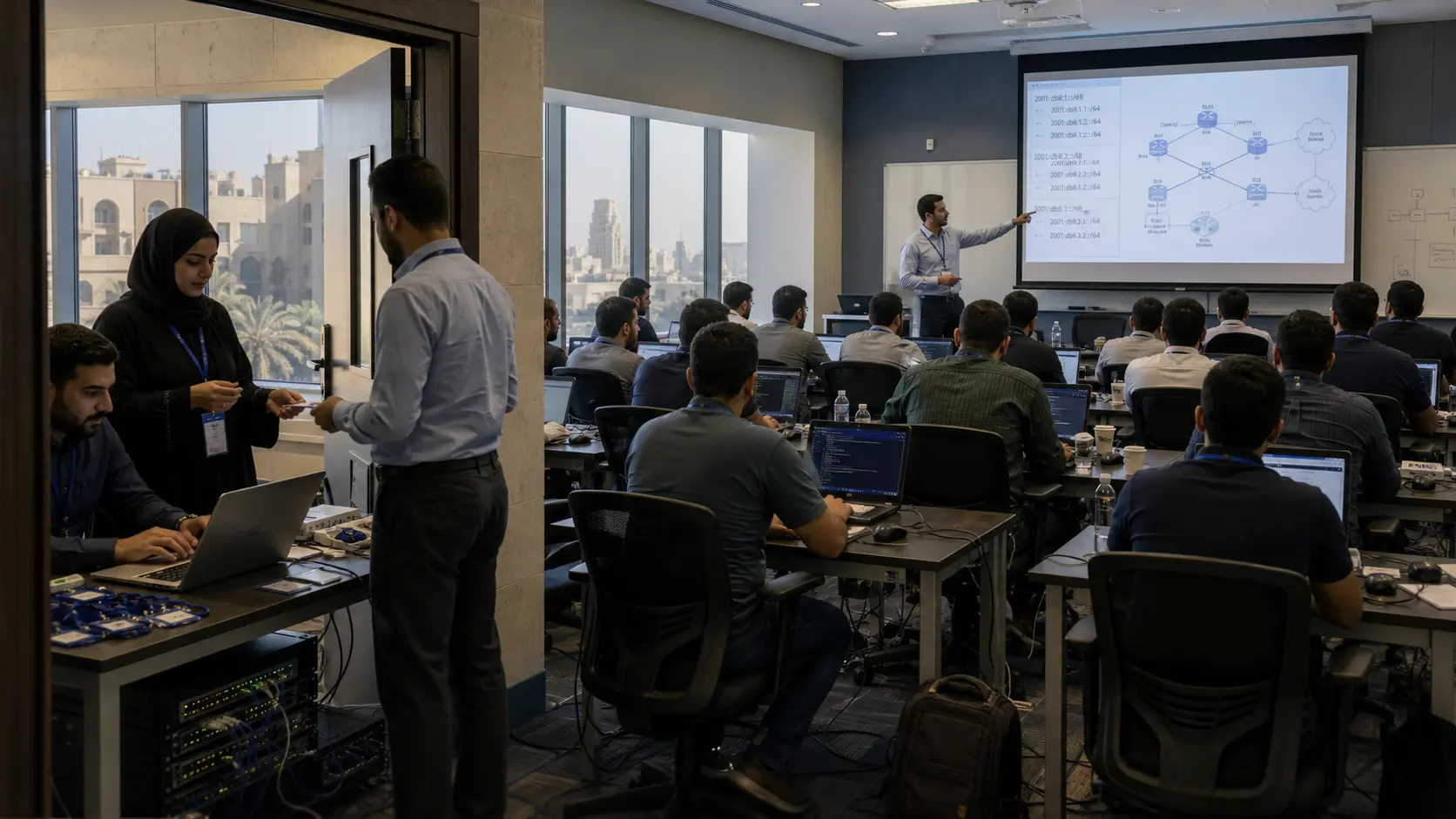
MENOG
The Classroom Moved. Who Chose the Lesson?
When MENOG announced one regional meeting instead of two and more country roadshows, it made technical training easier to reach. The harder question is whether it also moved the power to choose—over seats, teachers, materials, accreditation and the future use of what was taught.

Number Resource Society
A Versioned Event Schema for Comparing RIR Decisions
Regional Internet Registries disclose substantial activity, yet the same decision can still be counted at different moments, under different names and against different populations. A useful comparison layer should begin below dashboards and annual totals: one bounded, versioned…

Number Resource Society
A Global South Label Cannot Substitute for a Mandate
The Global South names a real distribution of disadvantage and an unstable political coalition at the same time. It can draw attention to colonial inheritance, expensive capital, infrastructure gaps, weak bargaining power, linguistic exclusion and the fact that most people who…