
Topic
Institutional Legitimacy
Within the Topic facet, Institutional Legitimacy topic intelligence connects articles that share a specific subject, signal focus, or monitoring theme. The page gives readers a richer path through related reporting, source evidence, market actors, and infrastructure implications, with enough context to understand why the topic matters across company movements, governance decisions, regional exposure, and operational risk. Readers can compare recurring signals, affected organisations, public evidence, market context, service continuity, procurement, competition, compliance, and strategic planning questions behind the subject instead of stopping at a thin list of matching articles. It explains what the topic covers, which infrastructure actors or policies are involved, what evidence supports the coverage, and why the subject may matter for operators, customers, investors, and policy readers.

North America Institutional
Camp Lejeune Made Water Monitoring, Exposure Reconstruction and Delayed Remedy an Accountability Test
Camp Lejeune is not only a history of contaminated drinking water. It is a test of whether public institutions can detect a hazard, preserve the evidence needed to understand it, reconstruct exposure without disguising uncertainty, and build remedies that do not confuse legal…

NANOG
NANOG Planned for Email History. Its Official Discord Still Needs a Public-Record Bridge.
NANOG made two announcements on consecutive days in February 2025. One invited its community into a newly official Discord server and described what people could do there. The other explained, in unusually concrete terms, how its mailing lists would move to new software without…

NANOG
The $1.58 Million Boundary: What a NANOG Sponsor Buys—and What Still Has to Pass Review
In 2024, meeting sponsorship supplied NANOG with $1,576,133 in cash—more than meeting fees and roughly half of all revenue and support. Yet the public sponsorship offer does not promise a technical talk, and the published proposal process assigns selection to the Program…

Global Cloud Services
left-pad Showed How Registry Policy Can Become Supply-Chain Liability
The 2016 left-pad disruption showed that a package registry becomes accountable infrastructure when a maintainer's deletion right, a namespace dispute, and a deep dependency graph can stop unrelated software from building.

North America Institutional
Mars Climate Orbiter made unit conversion a systems-interface accountability test
The 1999 mission loss is a control-evidence case about interfaces, verification, anomaly escalation and project governance, not a folklore story about one arithmetic mistake.

Europe and Middle East Institutional
London Ambulance made computer-aided dispatch a patient-safety accountability test
The 1992 CAD failure was not only a software procurement story; it tested whether emergency command systems can prove readiness before automation controls real patients, crews and calls.

North America Institutional
Patriot made clock drift a battlefield-software accountability test
The 1991 Dhahran failure was not just a rounding-error anecdote; it tested whether software timing limits, operating assumptions and warning paths matched live deployment duration.

North America Institutional
Hubble made mirror-test evidence a space-program accountability test
The Hubble mirror flaw was not only an optics defect; it tested whether contractors, reviewers and public agencies could prove that a precision instrument had been independently measured before launch.

North America Institutional
Genesis made parachute orientation a sample-return accountability test
The Genesis crash was not just a hard landing; it tested whether inherited designs, switch orientation, verification evidence and recovery plans could protect irreplaceable science.

NANOG
Three SSIDs, Three Duties: What NANOG’s Meeting Network Publishes—and What It Leaves Unmeasured
At NANOG 97, an attendee choosing Wi-Fi was also choosing among three different promises. The main network offered WPA3 with a public shared key. The legacy network was openly unencrypted. The third network offered IPv6 without an IPv4 gateway or DHCP. That compact menu is more…

North America Institutional
NPOESS made satellite requirements a weather-continuity accountability test
The failed tri-agency polar satellite program tested whether NOAA, NASA and the Department of Defense could turn shared requirements, cost controls and schedule truth into continuity evidence.
North America Institutional
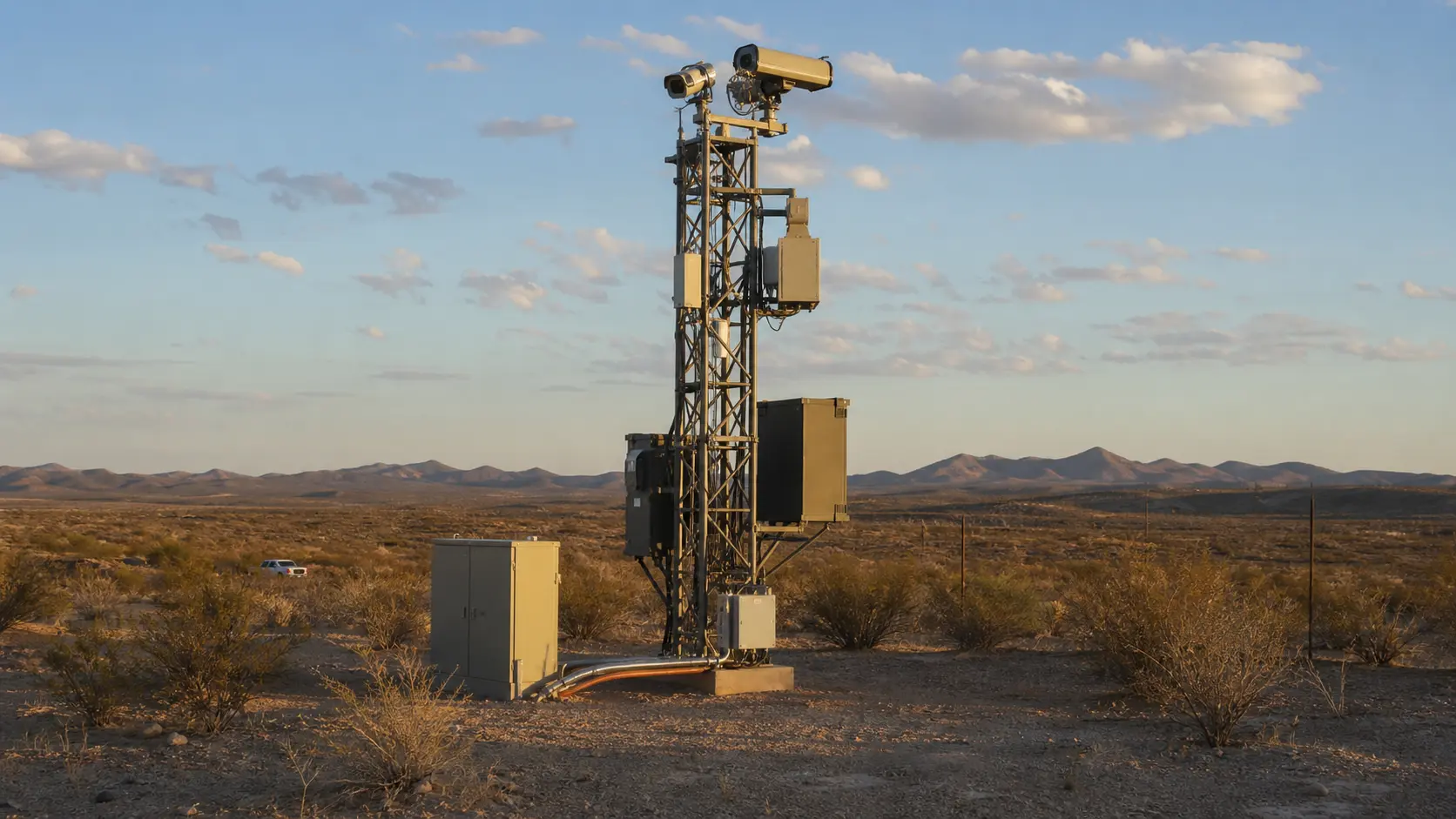
SBInet made virtual-border sensors an acquisition-accountability test
The cancelled virtual fence tested whether DHS and CBP could prove surveillance technology, contractor milestones and field requirements before scaling a border-security platform.

North America Institutional
HealthCare.gov made marketplace launch readiness a public-service accountability test
The 2013 federal marketplace launch showed that eligibility, enrollment, contractor integration, testing and command authority can become care-access risk when a public digital service goes live before evidence is ready.

NANOG
The Business Card Is Allowed. Price Coordination Isn't: NANOG's Commercial Boundary
At NANOG 89, a peering representative could stand at a highboy table with business cards and a single white paper or one-sheet while a customised slide rotated nearby. The precision of that setup captures the institution's commercial problem: independently controlled networks…

North America Institutional
FBI Virtual Case File made case-management modernization an accountability test
The abandoned Virtual Case File effort showed that modernizing investigative information is not simply a software purchase. It is a test of whether mission needs, field use, contractor delivery, security, testing and executive evidence agree before a public-safety institution…

North America Institutional
Coast Guard Deepwater made acquisition-asset modernization an accountability test
The Integrated Deepwater effort showed that replacing an aging public-service fleet is not simply a sequence of purchases. It is a test of whether mission needs, contractor integration, asset quality, cost, schedule and field evidence agree before the government depends on…

NANOG
The First Packet Is Not the Mandate
An operations archive can show when a crisis first became visible, how competing explanations fared and which repairs appeared to work. What it cannot do, simply by accumulating messages, is turn observation into origin, repetition into consensus or useful advice into…

NANOG
Which NANOG Rule Is the Rule?
NANOG’s public Bylaws say an elected Director serves three years. Its live Board Responsibilities page says two. The contradiction is real, but the historical record resolves it: the live guidance sentence reflects an earlier rule while the controlling instrument has moved on.…

NANOG
The Verbs Behind NANOG’s Executive Office
The public record does not support the caricature of an Executive Director who runs NANOG by title alone, or the opposite picture of a figurehead serving a volunteer Board. What it reveals is more consequential: a paid operating layer moving decisions through money, contracts…

NANOG
NANOG’s Members Can Govern NANOG—Not North America
In 2020, 125 ballots produced 96 percent approval for a NANOG bylaw amendment; 583 people were eligible to vote. Those figures describe a valid decision inside NANOG, Inc., not a plebiscite of North American network operators. The distinction is not a technicality. It is the line…