
Topic
Developer Tool Economics
Within the Topic facet, Developer Tool Economics topic intelligence connects articles that share a specific subject, signal focus, or monitoring theme. The page gives readers a richer path through related reporting, source evidence, market actors, and infrastructure implications, with enough context to understand why the topic matters across company movements, governance decisions, regional exposure, and operational risk. Readers can compare recurring signals, affected organisations, public evidence, market context, service continuity, procurement, competition, compliance, and strategic planning questions behind the subject instead of stopping at a thin list of matching articles. It explains what the topic covers, which infrastructure actors or policies are involved, what evidence supports the coverage, and why the subject may matter for operators, customers, investors, and policy readers.

CASE FILE
PeeringDB Search Can Now Hand Its Filters to the API
PeeringDB has shortened the walk from a browser search to a reusable query. The gain is operational: a team can carry its selection logic into a script, while the result still needs checking against the people and systems that make an interconnection real.

Story
PeeringDB API v3 draft sets freshness targets but no launch date
An 18 September proposal sketches a public, read-only service for multiple locations and puts numbers on data freshness. It remains open for comment; the figures are targets, not evidence of live performance.

History
Before Linux Had a Release, Linus Torvalds Asked MINIX Users What They Needed
The 1991 origin story is often compressed into one famous Usenet post. The surviving record shows a slower sequence: technical questions, a request for MINIX users’ advice, a limited source snapshot, and then a wider FTP announcement.

Story
PeeringDB ends routine public beta releases, retaining previews for major UI and API changes
After an August trial, PeeringDB now sends routine releases from internal testing to production. Its product manager says the test drew no feedback; significant interface and API changes will still receive a public beta.

Global Cloud Services Trends
Deno’s Two Exit Clocks Put Cloudflare’s Portability Claim on a Different Schedule
Deno Deploy now has the shorter clock: six months of operation before shutdown. The Deno runtime has the longer one: another year of monthly bug and security releases before Deno ends its own development. JSR is meant to continue, while Cloudflare’s plan to combine celld and…

Academics
Xinu Turned Operating Systems Into a Lab Students Could Run
An operating-systems course can name the interfaces without ever letting students see a system assembled. Douglas Comer’s Xinu work tried to close that gap with a small, hierarchical operating system and a Purdue lab that automated the path from build to board. The records show…

History
A Remote Call Was Never Local: RFC 707’s Tenex Prototype
RFC 707 tried to make a familiar programming action—calling a procedure—work across a network. SRI’s TENEX prototype showed that the proposal could be made concrete on one machine family; the document’s sharper lesson was that a cleaner call syntax could not make messages, delay…

CASE FILE
PeeringDB’s API v3 Draft Expands Reads Without Rewriting Data-Use Rules
PeeringDB is proposing a read-only interface served from multiple locations. Its draft would make queries easier to cache, but the existing rules still govern bulk storage, redistribution and commercial reuse.

Academics
Lorrie Cranor’s Privacy Labels Need a Trail From Code to Store
The work around Google Play’s Data safety section points to a practical question: can a developer trace each store declaration back to code and SDK behavior? Lorrie Cranor’s research on usable privacy puts that translation problem inside the software workflow.

North America Cloud Services Trends
Namespace’s $42 million test is usable build capacity, not commit volume
The developer-infrastructure company says revenue grew eightfold in a year and serves more than 1,000 companies. Its new capital is meant to expand data centres and Mac hardware; the proof will be reliable, paid builds whose accepted output justifies the compute they consume.

Global Cloud Services Trends
Atlassian’s AI engineers face the test of product leverage
Atlassian says 46 forward deployed engineers have put more than 80 AI agents into production for over 100 enterprise customers. Those counts show activity; they do not yet show whether embedded engineering becomes a repeatable software business.

Leaders
Grace Hopper Turned Portability into a Test—and Credited the Team
A language standard can describe what a compiler should do without showing whether different vendors’ compilers actually do it. When Grace Hopper returned to Navy service in 1967, the problem was no longer only how to write a common language. It was how to test the…
History
An HTTP Library Was Not an Interoperability Plan: RFC 3205
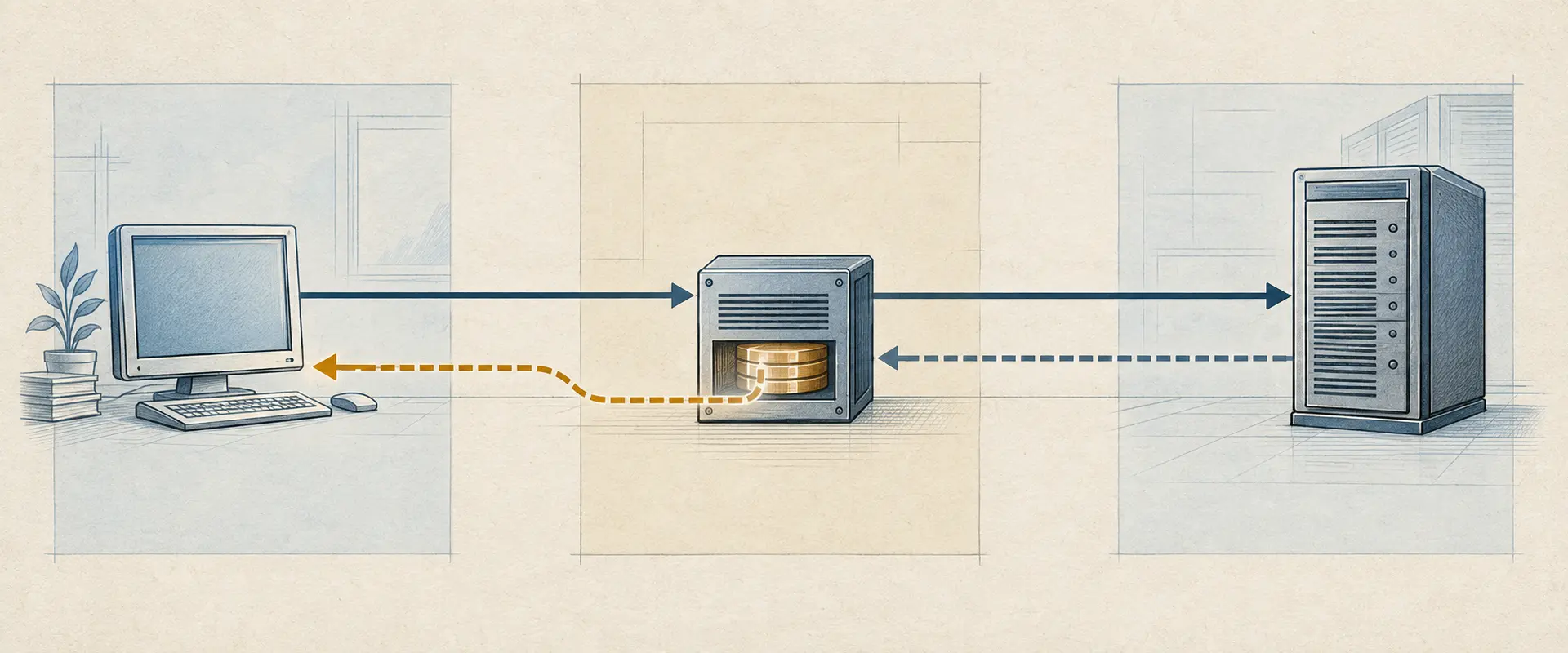
In 2002, protocol designers were tempted to borrow HTTP for its installed base: browsers, server code, security machinery and access through existing network boundaries. RFC 3205 did not reject that bargain. It asked designers to account for the assumptions that came with…

Global Cloud Services Trends
NVIDIA’s Hugging Face deal makes openness an economic test
The announced US$11.9 billion purchase price sets a clear scale for NVIDIA’s proposed acquisition. The less settled question is whether an open model platform can keep extending NVIDIA’s hardware demand while staying useful to developers who choose other silicon.

Academics
Robin Milner and the theorem that search could not mint
A proof tactic may explore thousands of branches and announce success. In the LCF architecture, that announcement is not the acceptance event. The decisive entity is a theorem value that can be created only through a protected set of axioms and inference-rule functions. Robin…

History
Sophie Wilson and the Receipt That Arrived with ARM1 Silicon
When ARM1 returned from fabrication on 26 April 1985, the board was already waiting and much of its software had already run—on models and simulators. The chip's immediate boot was not a miracle of a naturally flawless RISC design. It was the visible receipt for months of…

History
Adele Goldberg and the Contract That Let Smalltalk-80 Travel
The Blue Book turned a live system into a portable agreement: preserve the image, implement the entity memory, bytecodes, contexts and primitives, and let unlike machines run the same Smalltalk-80. The agreement made reimplementation possible; it never promised equal speed…

History
Karen Spärck Jones Made Rarity Count; IDF Did Not Make It True
The same word can be commonplace in one document collection and unusual in another. Karen Spärck Jones turned that difference into a useful retrieval signal. Her achievement was not to discover a universal measure of importance, but to show how a collection can disclose which…

History
Lynn Conway’s Lambda Rules Made Layout Portable, Not Certain
Replacing micrometres with a single unit called λ changed who could design chips and how a fabrication process could receive their work. It did not turn a clean layout into a working chip. Lynn Conway’s scalable rules matter because they created a powerful interface—and because…

IETF
Who Owns the Extra Spellings? RFC 9741 and the Cost of Text Aliases
A permissive decoder can spare a client a repair while giving another team a reconciliation problem. RFC 9741 makes a small but consequential distinction visible: accepting two texts as one value does not decide whether they are one resource, one approval or two billable…