
Topic
Data Sovereignty and Locality
Within the Topic facet, Data Sovereignty and Locality topic intelligence connects articles that share a specific subject, signal focus, or monitoring theme. The page gives readers a richer path through related reporting, source evidence, market actors, and infrastructure implications, with enough context to understand why the topic matters across company movements, governance decisions, regional exposure, and operational risk. Readers can compare recurring signals, affected organisations, public evidence, market context, service continuity, procurement, competition, compliance, and strategic planning questions behind the subject instead of stopping at a thin list of matching articles. It explains what the topic covers, which infrastructure actors or policies are involved, what evidence supports the coverage, and why the subject may matter for operators, customers, investors, and policy readers.

Europe and Middle East Institutional
Flynas makes a cheap seat depend on aircraft time
A passenger buying a low fare from Flynas is not buying a simple discount. The ticket is a timed claim on an aircraft, a crew, airport access, fuel, maintenance reserves and a booking system that must keep selling extras after the base fare has done its work. The commercial test…

North America Institutional
Gilead's treatment course must outrun the patent clock
A Gilead course is sold as more than a bottle, vial or injection kit: it is a promise that a clinic, payer and patient can turn laboratory evidence into durable disease control before rebates, rival drugs and patent expiry take the margin away.

Europe and Middle East Institutional
Alinma's sharia account has to turn compliance into trust
A Saudi customer opening a sharia-compliant current account is not buying a slogan. They are buying daily access to salary deposits, cards, transfers, credit, savings returns, branch support, mobile reliability and an assurance system that makes the bank's religious promise…

Europe and Middle East Institutional
Ahli Bank's account has to make a smaller Omani lender feel safe
Ahli Bank's customer account is a test of trust in a smaller listed Omani bank: the product must make salary deposits, cards, branch service, digital lending and everyday payments feel safe enough for customers to stay even when larger local banks can advertise more scale.

Europe and Middle East Institutional
Bank Nizwa's home finance has to price patience as well as faith
A household choosing between an Islamic home-finance plan and a conventional mortgage is not only comparing a monthly payment. It is buying time, property access, Sharia assurance, servicing reliability and the bank's ability to wait through salary cycles, title checks, rate…

Europe and Middle East Institutional
Bank AlJazira's account has to make remittance trust repeatable
For a Saudi salary-transfer customer, Bank AlJazira is not tested by a branch sign or a broad promise of Islamic banking. It is tested by the account that receives income, the app that moves that income, the Fawri remittance path that sends part of it abroad, the fee table that…
Europe and Middle East Institutional
American Express Saudi Arabia has to make the acceptance fee local
A Saudi merchant does not need another abstract premium card promise. It needs to know whether American Express acceptance brings enough higher-value customers, settlement certainty, fraud control, rewards-funded demand and local payment integration to justify a separate merchant…

Europe and Middle East Cloud Services
GigaCloud's Server Bill Is a Recovery Promise in Ukraine
A Ukrainian company choosing where to keep a recoverable server is not buying patriotism by the month. It is buying a practical claim: that local support, backup discipline, data-location choice, network geography and hryvnia billing can reduce the cost of failure enough to…

Europe and Middle East Institutional
Freja eID has to sell the avoided failure, not the login
A paid Freja identity check is a small transaction only if the relying party counts the screen in front of the user. Once fraud exposure, support work, regulatory access, onboarding abandonment and the cost of being wrong are counted, the product becomes a priced claim that a…

Europe and Middle East Institutional
Crosskey's core-banking file carries the risk of outsourcing
A regional bank does not outsource a processing file because a file is glamorous. It does it because the hidden costs of running accounts, payments, loans, compliance updates, customer data, interfaces and operational continuity can be heavier than the visible price of buying a…

Europe and Middle East Institutional
Saudi Tadawul sells the receipt behind a trade
A broker's exchange fee, an issuer's listing charge and a data buyer's feed subscription look modest beside the value of Saudi securities changing hands. Saudi Tadawul Group matters because those charges buy something harder to audit than a price screen: official trust that a…

Europe and Middle East Institutional
Tabadul turns a customs message into an operating toll
Tabadul is valuable if a digital trade message removes enough uncertainty from Saudi customs, port release, broker authorization, payments, inspections and audit records to justify becoming a recurring toll inside the logistics system. The public record supports that direction…

Europe and Middle East Institutional
AKVA group's service visit is the margin test for fish-farm equipment
A fish-farm manager does not call for service because a machine has become inconvenient. The call is made because cages, feed lines, cameras, sensors, nets and software sit between live biomass and a loss that can compound by the hour. AKVA group ASA sells hardware, software and…

Europe and Middle East Institutional
GLS Poland prices delivery trust at the parcel scan
For a Polish merchant, the parcel scan is not just a carrier status update. It is the moment an invoice line becomes evidence for a customer, a marketplace, a support team and a claim file. GLS Poland's public record suggests that its paid unit is the parcel scan and delivery…

Europe and Middle East Institutional
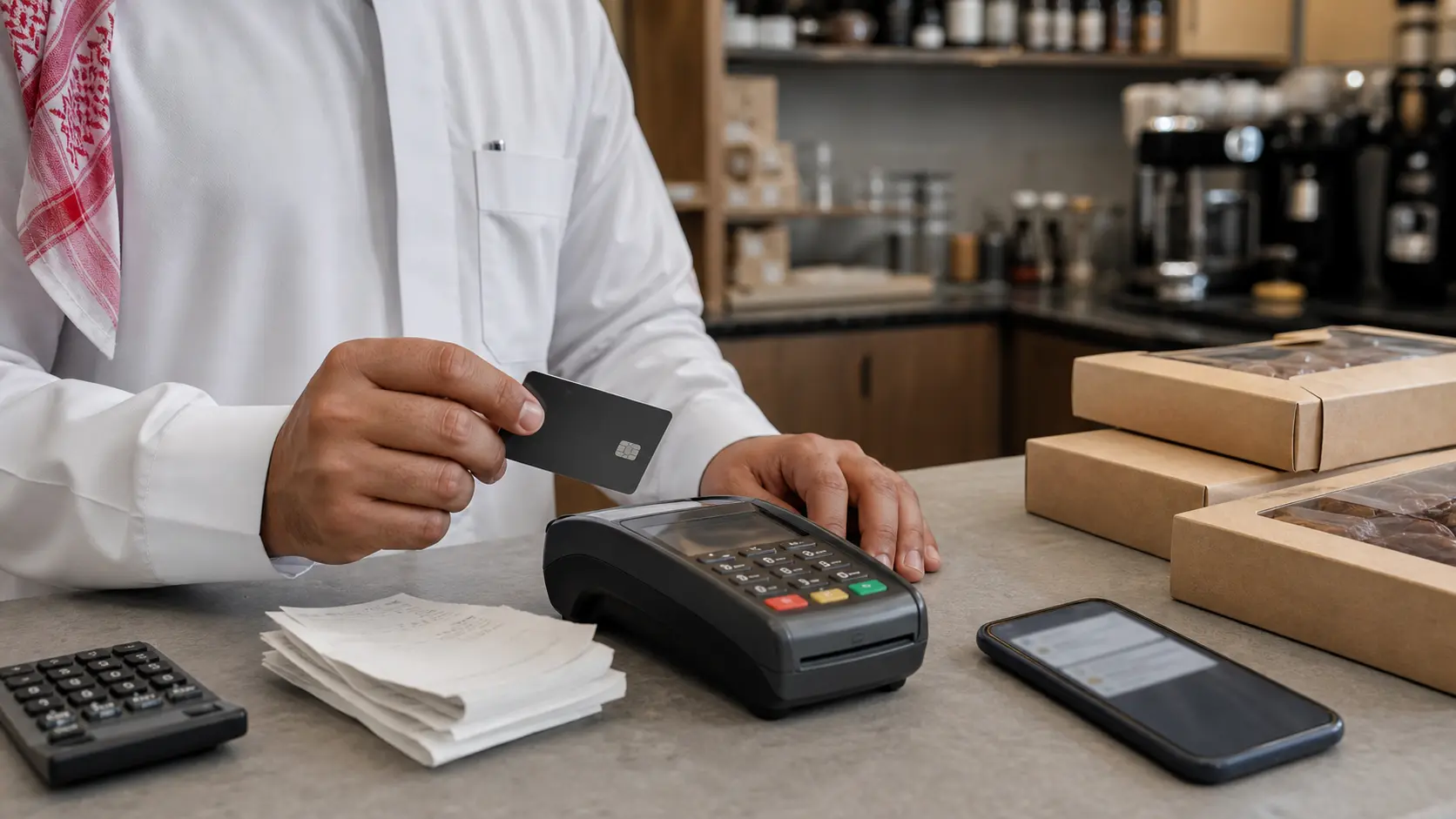
X-Pay's checkout terminal has to make small merchants settle faster
A card terminal looks simple at the counter: a plastic device, a tap, a receipt and a customer who leaves. For a Saudi merchant, the real purchase is more complicated. The useful unit is not the device. It is a checkout-and-settlement transaction that turns a sale into money the…

Asia-Pacific Institutional
Dai Nippon Printing: why a secure card is not a print job
Dai Nippon Printing's secure-card order looks like a small physical shipment, but the paid unit is really a bundle of printing precision, embedded security, personalization, controlled handoff, compliance discipline and issuer trust that a commodity print job cannot provide.

Asia-Pacific Institutional
Fujitsu's systems contract prices failure before the outage
Fujitsu sells the kind of enterprise systems work that looks expensive before a failure and looks cheap only if the failure never arrives: integration labor, legacy modernization, managed operations, cloud controls, support response and the proof a customer needs when critical…

Asia-Pacific Institutional
Honda's connected-car account must prove software reliability
Honda's connected-car account is a commercial reliability test, not just a screen, app or subscription line. The owner gives Honda access, attention, data and sometimes subscription spend; Honda has to return lower friction when something needs to be diagnosed, updated, repaired…

Asia-Pacific Institutional
JCB's merchant transaction must justify a domestic payment rail
JCB is not only a Japanese card brand. It is a merchant-acceptance bargain: a shop gives up a slice of each sale because authorization, settlement, fraud control, rewards funding and acceptance economics may bring Japanese domestic spend, Asian cardholders, travel demand and…

Asia-Pacific Institutional
Ricoh's copier lease is now a workflow support contract
Ricoh's old copier bargain was easy to understand: put a multifunction printer in the office, finance the device, sell toner and service, and keep the customer printing. The modern contract is harder to price because the paid unit now blends equipment, consumables, service…