
Topic
AI Infrastructure Economics
Within the Topic facet, AI Infrastructure Economics topic intelligence connects articles that share a specific subject, signal focus, or monitoring theme. The page gives readers a richer path through related reporting, source evidence, market actors, and infrastructure implications, with enough context to understand why the topic matters across company movements, governance decisions, regional exposure, and operational risk. Readers can compare recurring signals, affected organisations, public evidence, market context, service continuity, procurement, competition, compliance, and strategic planning questions behind the subject instead of stopping at a thin list of matching articles. It explains what the topic covers, which infrastructure actors or policies are involved, what evidence supports the coverage, and why the subject may matter for operators, customers, investors, and policy readers.

North America Datacenter Trends
Penguin’s AI factory boom is now a working-capital business
Penguin Solutions reported record sales and profit for fiscal 2026 and raised its next-year sales-growth outlook to about 40%. Yet continuing-operations operating cash flow turned negative as receivables and inventory expanded. The test is whether deployments convert into…

North America Datacenter Trends
PDN’s two B300 systems carry two different principal risks
Professional Diversity Network has committed about $1.177 million across two NVIDIA B300 systems, but the contracts offer no single route back to that capital. One system earns rent independently of compute revenue, yet can be returned early and leaves residual value with PDN…

North America Datacenter Trends
Axe owns the GPUs; Duos keeps the site—and a refinancing clock
The Columbus sale separates servers from the campus around them. Its economics turn on a seller note that can come due when the new owner borrows against the very hardware it has just acquired.

Global Cloud Services
Oracle's Financing Ledger: The Only Part of Its AI Story That Can Actually Be Counted
Most of what Oracle says about its artificial intelligence buildout cannot be checked by an outsider. The $664 billion in remaining performance obligations that the company reported on September 10, 2026 is a management-defined figure with no disclosed counterparty list, no…

Global Datacenter Trends
Axiom’s $2bn preferred deal is built around a spin-off date
Flex has agreed to sell preferred shares in its Axiom subsidiary, but the contract is as much about the route to separation as the headline amount. Funding, balance-sheet tests and a deadline put distinct risks on different parties.

North America Institutional
Two Companies Named Hughes, One AI Legacy That Got Lost
Before Hughes Network Systems ran self-healing networks on Microsoft's cloud, an earlier Hughes ran one of the defining autonomous-vehicle programs in American AI research. The directory entry that links them is mostly an accident of naming — and the collision tells you something…
Global Cloud Services Trends
Oracle's Everywhere Ledger: What Database@AWS, Database@Azure and Database@Google Cloud Actually Verify
Oracle has spent two fiscal years telling investors it can run its database everywhere its customers already are. Unlike the company's artificial intelligence capacity backlog, which is measured in hundreds of billions of contracted dollars that no outsider can count, the…

Europe and Middle East Cloud Services
Genesis Cloud's Peering Story Outlived Its Network: Reading a 10G AI-Cloud Design Against 2026 Routing Reality
Genesis Cloud built a documented, vendor-celebrated interconnection story: a 10 Gbit remote-peering path from Kristiansand to DE-CIX Frankfurt, marketed as the transport backbone of a European AI cloud. In 2026, the independent routing record tells a different story. Separating…

Europe and Middle East Cloud Services
The Only Audited Floor of G42: What the Group's Operating Companies Actually Disclose
Abu Dhabi's G42 describes itself through a family of operating companies — Core42, Khazna Data Centers and Presight among them — and its public narrative is usually told in headline units: gigawatts of planned AI campus, hundreds of thousands of authorized chips, national-scale…

Europe and Middle East Cloud Services
The Anchor Question: What Actually Backs Mistral Compute's 200 MW and 1 GW Forward Commitments
On 11 August 2026, Mistral announced European Compute Units and an anchor group of enterprises whose multi-year commitments are supposed to underwrite 200 MW of Mistral-operated infrastructure in Europe by the end of 2027 and up to 1 GW by 2030. The mechanism is now public. What…

Global Institutional
G42's Export Entitlement Has an Expiry Date: Why a 2027 Sunset Clause Now Outranks Every Gigawatt Announcement
The most consequential number in Abu Dhabi's AI infrastructure story is not 5 gigawatts, 500,000 chips, or 35,000 chips. It is a date: April 6, 2027. Under a US Commerce Department rule effective July 10, 2026, two entities in the Group 42 orbit — Group 42 Holding Ltd d/b/a G42…

Europe and Middle East Cloud Services
Allianz Technology's Ledger: What €3.42 Billion and 10,688 Employees Say About an AI-First Insurer's Tech Arm
Allianz Technology SE is the entity that runs the IT for the world's largest insurer's operating companies, and its 2026 statutory filing is the first dated, quantified record of what that actually costs — and what it employs.
Global Institutional
Allianz Technology's Agentic Pivot: The Operating Model Behind the 80% Number
Allianz Technology SE spent 2022 and 2023 building and insourcing a global SD-WAN estate, then spent 2025 and 2026 retrenching headcount under a cost programme. The newest layer of the public record is different in kind: a described operating model for putting AI agents into…

Europe and Middle East Datacenter
Mistral Compute's Other Layers: An AS With One Peering Port, and a Grid Line Still in the Ground
Previous BTW reporting on Mistral Compute sorted its megawatt ledgers, traced its $830 million debt structure and audited its execution evidence. Two layers remained largely untouched: how the cluster connects to the internet, and how it connects to the grid. Both now have dated…

Global Cloud Services
Oracle's Non-OpenAI Ledger: What the Meta Deal and the Four-Customer Wave Actually Verify
A $664 billion backlog reads as diversification only if customers can be counted. Oracle's public record lets you count to one.
Global Cloud Services
Meta's $279 Billion Bet on Leases, Not Yet On Data Centers
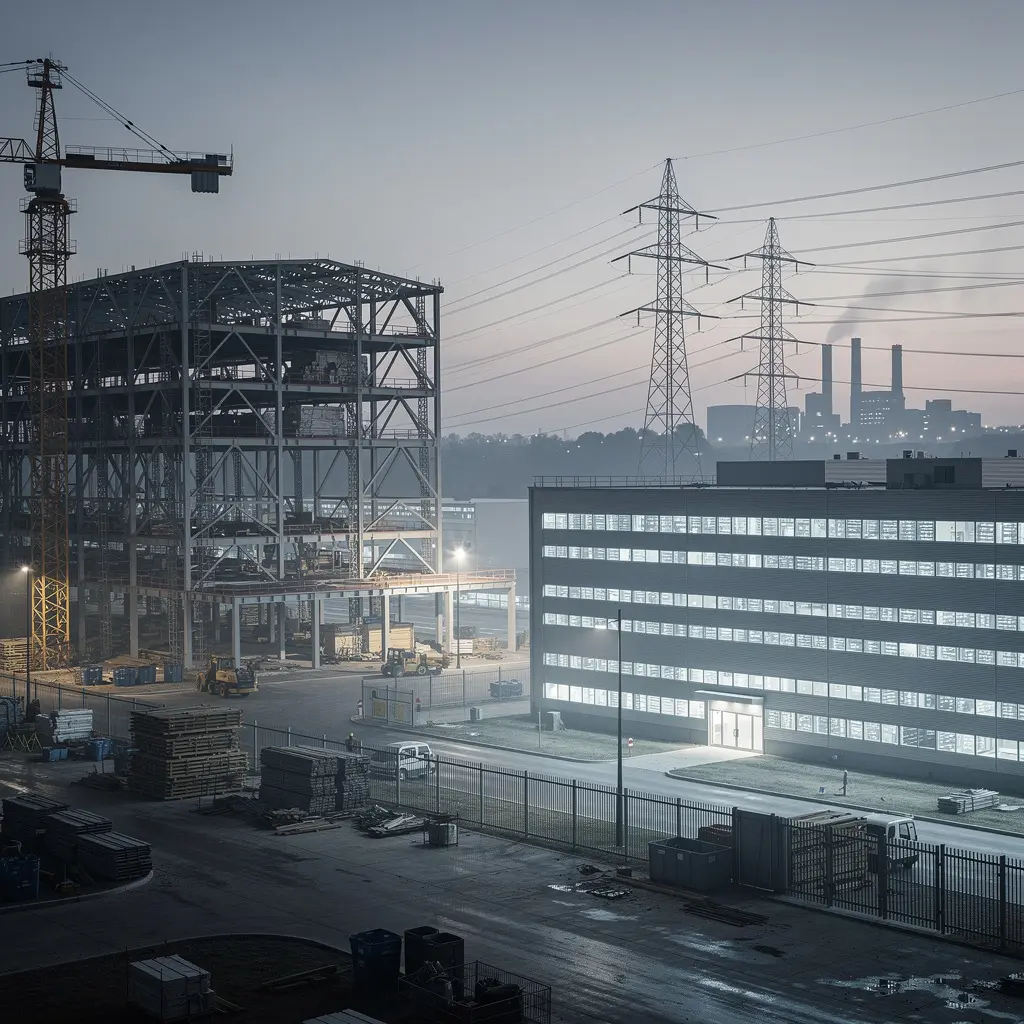
Meta has committed roughly $279 billion to data-center leases that have not even begun. This longform examines what that financing structure actually buys, where announced capacity ends and operating capacity begins, and why the gap between the two registers is where delivery…

Europe and Middle East Institutional
What DFKI Actually Operates: Named Systems, Dated Testbeds, and the Numbers That Don't Reconcile
Germany's largest AI research institute is usually described by its aggregate statistics — departments, staff, spin-offs — most of which are self-reported and, as this article documents, internally inconsistent. A different picture emerges when the question is narrowed to…

Global Datacenter Trends
Volantis’s $88m round funds the test behind its photonic inference claims
The Series A finances A-1 commercialization, with first customer engines targeted for 2027. The public record separates wafer-scale link measurements from system-level speed and cost claims; it does not yet join them with a reproducible workload benchmark.

Global Cloud Services Trends
Lambda’s new GPU loan spreads deployments, not disclosed customer risk
Three deployments and two investment-grade customers sit behind one $1.008bn delayed-draw facility. The structure broadens the visible contract set; it does not show how much credit exposure moved away from any one customer.

Asia-Pacific National Telecom Trends
SoftBank closes OpenAI’s final $10bn tranche; debt remains
SoftBank has completed its promised $30bn follow-on investment in OpenAI, but the last $10bn payment came from senior-note proceeds. The bridge facility is now fully repaid and canceled; it has not erased the new bond obligations.