
Topic
Abuse-contact Economics
Within the Topic facet, Abuse-contact Economics topic intelligence connects articles that share a specific subject, signal focus, or monitoring theme. The page gives readers a richer path through related reporting, source evidence, market actors, and infrastructure implications, with enough context to understand why the topic matters across company movements, governance decisions, regional exposure, and operational risk. Readers can compare recurring signals, affected organisations, public evidence, market context, service continuity, procurement, competition, compliance, and strategic planning questions behind the subject instead of stopping at a thin list of matching articles. It explains what the topic covers, which infrastructure actors or policies are involved, what evidence supports the coverage, and why the subject may matter for operators, customers, investors, and policy readers.
Number Resource Society
The Tool That Never Promised to Be Right: What RIPEstat's Abuse Contact Finder Actually Returns
The Tool That Never Promised to Be Right: What RIPEstat's Abuse Contact Finder Actually Returns intelligence summary explains the development, the public evidence available to readers, the organisations involved, the regional context, market exposure, and the infrastructure…
Europe and Middle East Institutional
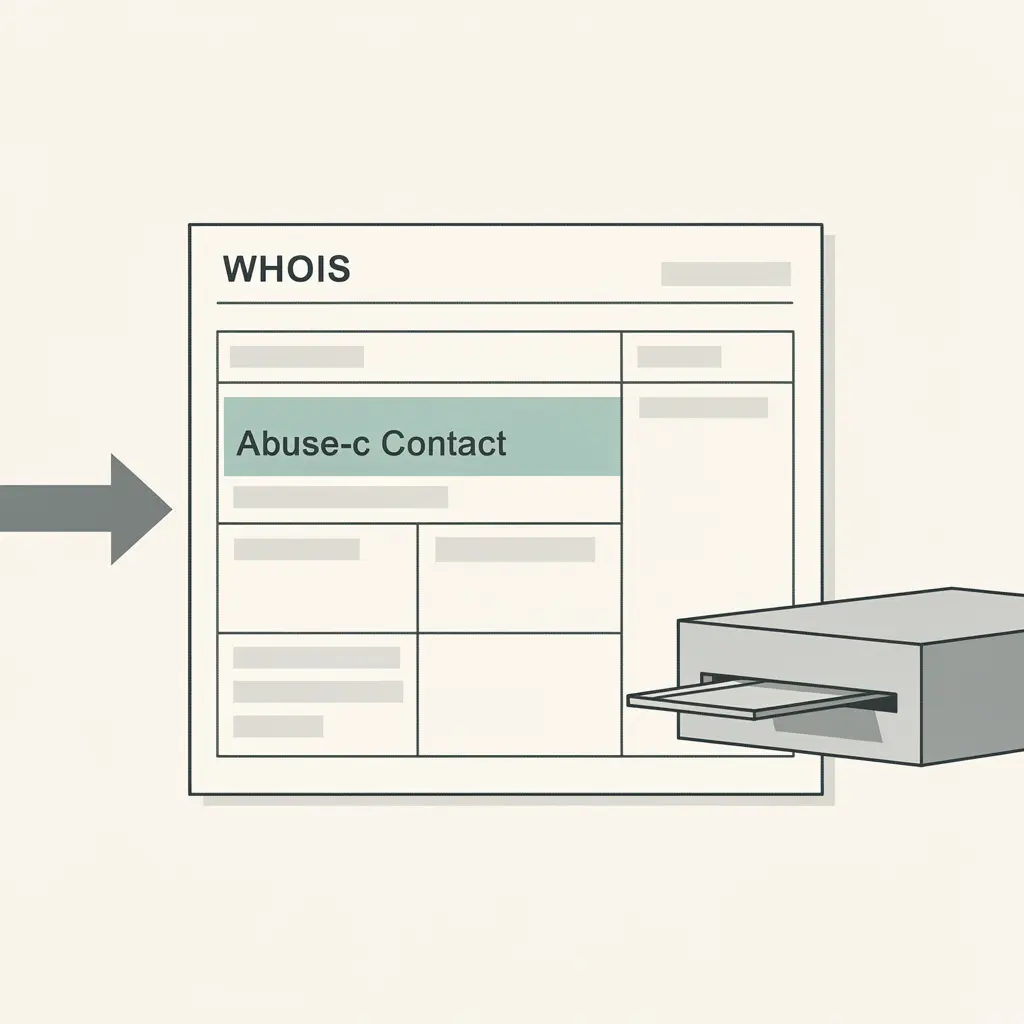
Registered Validity Is Not Accountability: What the Svea Abuse Roles Prove After the Merger
When Svea Ekonomi AB merged into Svea Bank AB on 3 January 2022, the registry kept pointing abuse reports at contact entities that still carry the dissolved company's name. The RIPE NCC's own rules guarantee only that those mailboxes exist and can receive mail — not that anyone…

CASE FILE
The Complaint That Never Reaches the Registry: Who Answers When You Report Abuse in the RIPE Region
Every spam wave, phishing kit and botnet C2 eventually produces a human being who clicks "report abuse" and waits. In the RIPE service region, the routing of that report — and the removal, in May 2026, of a paper notification channel from the registry's enforcement procedure…

Global Regional ISP
The Abuse Address and the Empty Stage: What AS210057's Response Layer Proves — and What It Cannot
The Abuse Address and the Empty Stage: What AS210057's Response Layer Proves — and What It Cannot intelligence summary explains the development, the public evidence available to readers, the organisations involved, the regional context, market exposure, and the infrastructure…

Europe and Middle East Cloud Services
Tideo Administration: Who Answers for a Dormant Danish ASN?
Tideo Administration: Who Answers for a Dormant Danish ASN? intelligence summary explains the development, the public evidence available to readers, the organisations involved, the regional context, market exposure, and the infrastructure consequences that may follow. The Europe…
CASE FILE
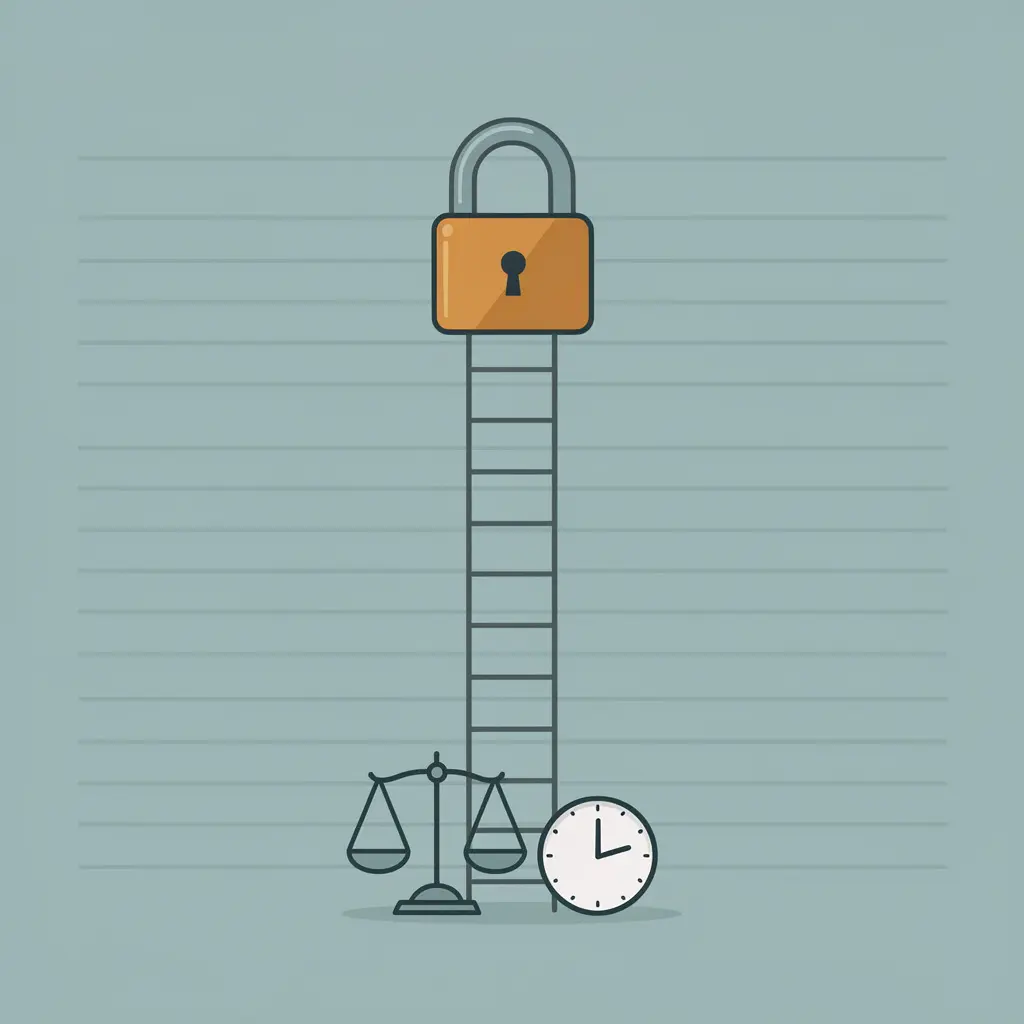
The Remedy Chain Behind RIPE NCC's Never-Fired Last Resort
The RIPE NCC has spent years documenting that it can close a member and deregister their internet number resources over an invalid abuse contact. What its own published instruments also document — and what no prior coverage has assembled in one place — is what happens next: who…

Europe and Middle East Regional ISP
INFINITYWIFI: A Clean Registry Record, a Crowded Storefront, and the 1,280-Address Question
INFINITYWIFI: A Clean Registry Record, a Crowded Storefront, and the 1,280-Address Question intelligence summary explains the development, the public evidence available to readers, the organisations involved, the regional context, market exposure, and the infrastructure…

Story
RIPE ABUSE 2025-2026: The Enforcement Record That Still Never Fires
The RIPE NCC's abuse-contact regime ran at full volume through 2025, and the numbers are now on the record: 2,320 validation investigations, 86,959 validated email addresses, 2,825 assisted registry checks. What the same 2026-dated documents do not show is a single enforcement…

CASE FILE
When Abuse Contacts Outlive the Company They Name: Inside the Svea Registry Record
The directory entry reads "Svea Eknonomi Abuse Role" — a label that turns out to compress three separate registry stories, one corporate merger, a SEK 45 million sanction, and a set of stale abuse mailboxes pointing at organisations that may no longer be reachable.

Story
LACNIC Warned About Attendee-Database Emails. That Is Not Yet a Breach Notice.
A sales pitch can prove that somebody was targeted. It cannot, by itself, prove how the sender found the target. LACNIC's warning about emails offering attendee databases is useful precisely because it stops at that boundary. The next useful step is to make the changing evidence…

Number Resource Society
Verified to Receive, Never Tested to Answer: RIPEstat's Abuse Contact Finder
RIPEstat's Abuse Contact Finder is the step between a complaint and a responsible network: it reads the RIPE Database and hands a reporter the mailbox to use. The RIPE NCC verifies that those mailboxes exist and can accept mail. Its own documents say that validation does not…

Story
LACNIC’s XARF Guide Counts Seven Required Fields. The Specification Lists Eight
The missing item is `sender`, the field that separates the complainant from the organization transmitting the report. A validator must name the schema it enforced before “valid” can become operational evidence.
Number Resource Society
RIPE ABUSE: The Escalation Ladder Is Documented, Its Use Is Not Counted
RIPE NCC publishes the steps it can take when an abuse contact fails validation, including closing a member and deregistering its resources. What it does not publish is how often the last step is reached. The only figures the registry has attached its name to are from 2017 to…

Number Resource Society
Reachable Is Not Responsive: Inside RIPE NCC's Abuse-Contact Validation
RIPE NCC now validates the abuse-mailbox attributes published in its database at least once a year — first with automated checks that send no email, then through a graduated escalation that can end in the closure of a member and the deregistration of internet resources. The…

Story
APNIC Wants Login to Read the Current IRT Email State
An account should not inherit yesterday’s lock answer when today’s IRT contact state says something else. APNIC’s 2026 roadmap proposes replacing reliance on a static account lock flag with a login-time check of continuously tracked IRT email validity. That is a small sentence…

Story
TWNIC’s Table Leaves 68 Completions Beyond Its 30-Day Gate
A 328-member validation ledger closes arithmetically, but its cumulative milestones imply 68 completions after the access-restriction threshold without showing which controls were used.

Europe and Middle East Cloud Services Trends
A Hetzner server transfer does not carry the old owner’s mail permission
A cloud server can arrive in the buyer’s project while a mail-dependent application remains unready. Hetzner’s public policy attaches blocked mail ports to the account, not to the machine’s history. That makes a change of ownership an authorisation question as well as a resource…

Global Institutional Trends
RIPE ABUSE: A Reporting Route Is Not Proof of Repair
RIPE ABUSE: A Reporting Route Is Not Proof of Repair intelligence summary explains the development, the public evidence available to readers, the organisations involved, the regional context, market exposure, and the infrastructure consequences that may follow. The Global…

Story
LACNIC’s Abuse-Contact Lockout Sits Outside the Policy Manual
LACNIC’s policy manual says when an abuse contact becomes noncompliant. A separate help page says the consequence is blocked access to MiLACNIC. The missing entity is not another reminder email. It is the public record that joins a rule to the administrative control it activates.
CASE FILE
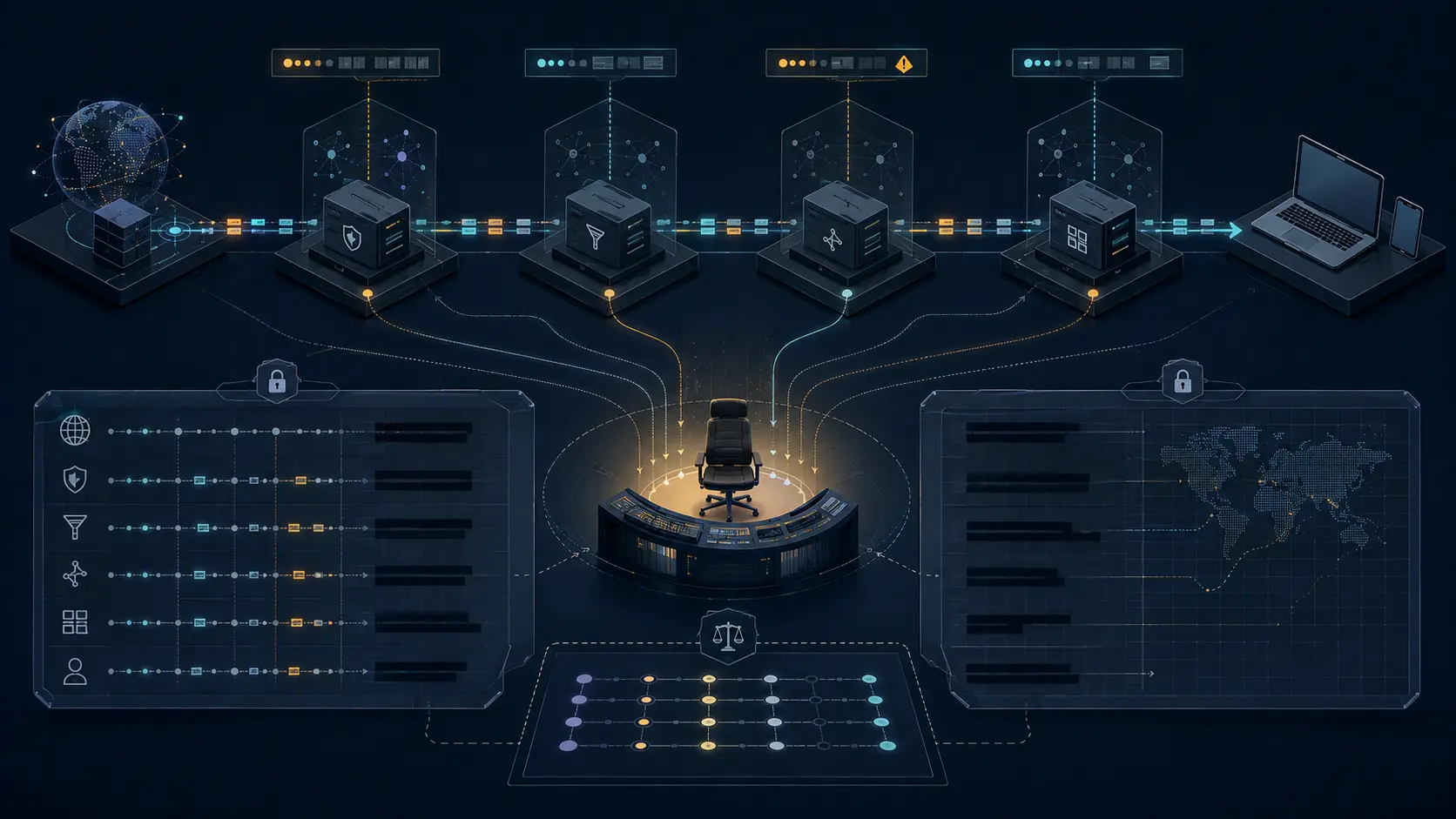
A Proxy-Status Chain Does Not Name the Incident Owner
RFC 9209 can make a failure path legible without making anyone accountable for repairing it. The missing entity is an intermediary fault-handoff matrix: a private governance record that connects each visible or redacted hop to an operator, an escalation clock, retained evidence…