
Time Horizon
Multi-year
Within the Time Horizon facet, Multi-year time-horizon intelligence organises articles by the period over which a signal is expected to matter. The page helps readers distinguish immediate operational changes from longer-cycle governance, investment, standards, and infrastructure shifts that may unfold across quarters or years. It connects timing assumptions with public evidence, related actors, market context, customer exposure, policy pressure, and infrastructure planning so readers can judge whether a development is urgent, strategic, or still waiting on confirming evidence. The page also explains how time horizon changes the meaning of a signal, which organisations may be exposed, and which infrastructure decisions require short-term action or long-cycle monitoring.

History
The Eighth Bit Needed Permission at Every Hop: How 8BITMIME Changed SMTP
Email could describe an accented character long before every relay could carry its bytes unchanged. 8BITMIME made that mismatch visible: a server had to promise capability on this hop, and acceptance created a duty to keep every bit.
CASE FILE
The Path Was Shorter Because the Evidence Was Gone: BGP ATOMIC_AGGREGATE and the Authority to Compress
The `/22` remained visible, its origin stayed valid and every external session was green. One of the four `/24`s beneath it had nevertheless disappeared. The public path looked cleaner at precisely the moment when the network knew less about the destinations it claimed to reach.
Global National Telecom
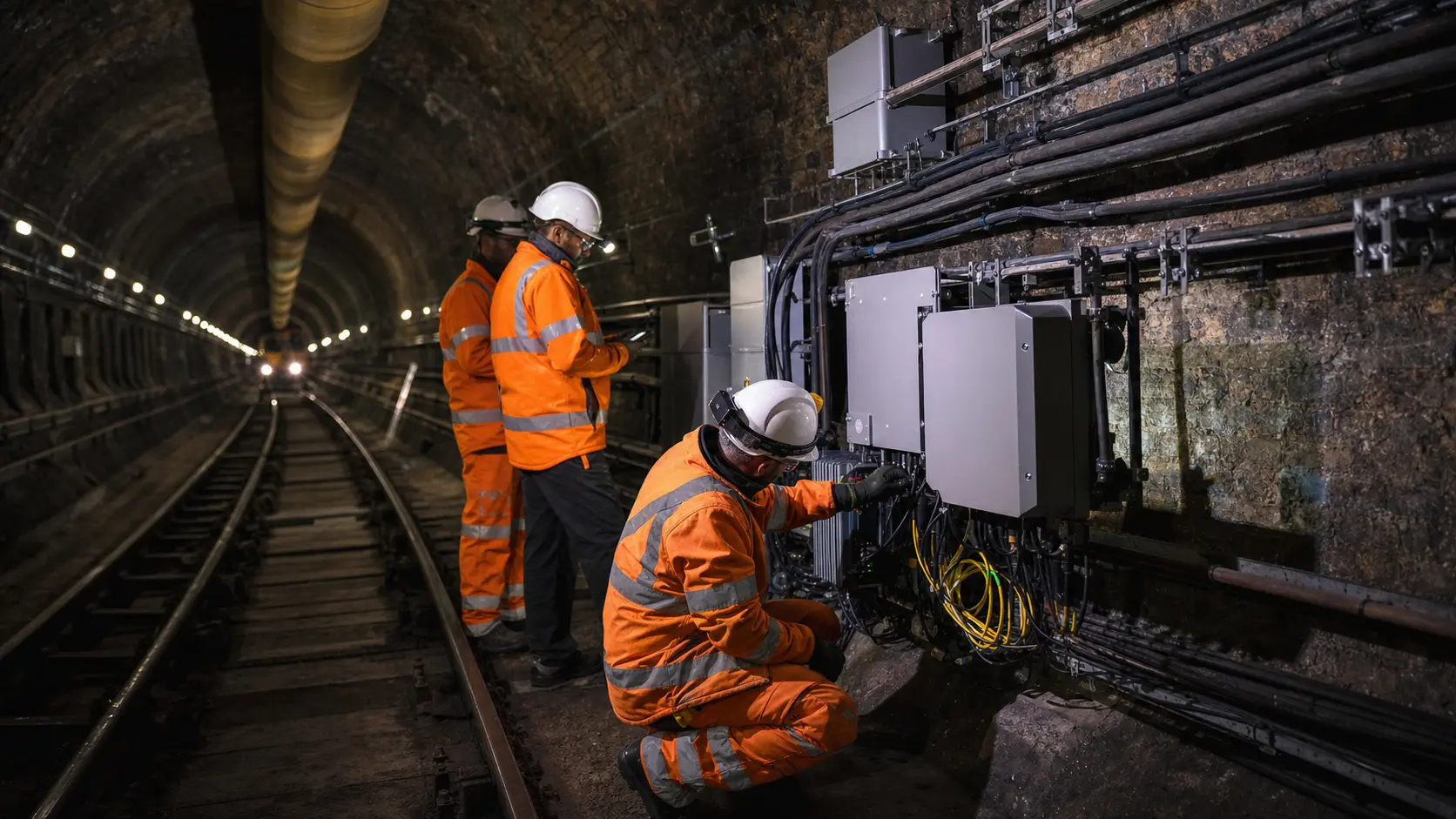
Boldyn's £1bn Tube network must earn its 20-year lock-in
Four mobile operators can share one radio and fibre layer beneath London instead of attempting four separate builds. That is sensible engineering. It is also a twenty-year concentration of operating power, financed before the network produces mature cash. Boldyn has to prove that…

History
The Commands Sent Before Their Answers Arrived: How SMTP PIPELINING Changed the Wait
Early SMTP made a sender pause after nearly every command. On a distant link, the message could spend more time waiting for permission to continue than moving. PIPELINING shortened that silence, but only by making order—not wording—the ledger of unfinished work.
CASE FILE
The coalition that spoke for operators: who authorized TCCM at WSIS+20?
TCCM placed registry and infrastructure operators inside the WSIS+20 consultation record with unusual persistence. The record shows who spoke, which organizations endorsed two important submissions and where the final United Nations text matched the coalition’s requests. It does…
CASE FILE
The Internet Saw One AS. Operations Had Twelve: BGP Confederations and the Authority of a Hidden Topology
The public route never changed. External peers still saw AS 64500, the sessions remained Established and the prefix stayed visible in collectors. Inside the network, however, one router had crossed from Member-AS 65021 to 65031 while its neighbor still believed the old boundary.…

History
The Method That Refused to Be Misunderstood: Why HTTP 510 Existed
RFC 2774 tried to stop servers returning success after ignoring mandatory HTTP extensions. The fate of 510 shows the cost of verifiable semantics.
CASE FILE
The Router Could Not Read the Attribute, So It Forwarded It: BGP's Partial Bit and the Authority of Ignorance
This technical explainer opens with a constructed operating scenario, not a reported incident. The transit router does exactly what the protocol asks: it receives a route carrying an optional transitive attribute it does not understand, preserves the opaque bytes, sets Partial…

History
The Message Measured Before It Moved: How SMTP SIZE Made Refusal Early
Early SMTP could carry a large message all the way to a server before learning that the server would never keep it. The SIZE extension did something narrower than guaranteeing delivery: it let two relays compare a declared load with local capacity before paying the full transfer…

Europe and Middle East Datacenter Trends
Britain proposes putting up to £712,500 per MW behind a data-centre queue place
Ofgem's proposed commitment fee would turn a cheap grid reservation into a financed option. That is useful discipline, but the security is not a certificate of viability: investors still need to prove that a customer, electrical equipment, finance and an energisation path can…
CASE FILE
The Prefix Was IPv4; the Way There Was IPv6: RFC 8950 and the Authority of a Cross-Family Next Hop
In an illustrative migration scenario, the maintenance report says the IPv6-underlay change succeeded. Every BGP session is Established, capability 5 appears in both OPEN messages, and the IPv4 prefixes remain visible. Yet one rack cannot reach an IPv4 customer. The route exists…

History
The Network Answered in the Origin's Place: Why HTTP Needed 511
A client asked one server for a resource and received an answer from the network in between. HTTP 511 tried to name that substitution without granting the interceptor the origin's identity. Its limits explain why captive-portal design later moved toward provisioned, authenticated…
CASE FILE
The Next Key Was Announced but Not Delivered: TCP-AO and the Authority of a Key Epoch
In an illustrative rollover scenario at 02:07, the dashboard turns green. Both BGP routers show key 42 in their key chains, and one captured TCP segment carries `RNextKeyID=42`. The operator concludes that the rollover has completed and deletes key 17. Seconds later, TCP…

History
The Stability Rule That Punished Recovery: Route Flap Damping
A mechanism built to protect 1990s routers from repeated BGP updates learned to remember change without understanding its cause. The result was an unusual distribution of power: a prefix holder could repair a route, while distant networks continued to treat the recovery as…

History
The Server That Stopped Calling Back: How Passive FTP Crossed the Firewall
FTP’s most consequential accommodation to the firewall was not encryption, tunnelling or a new transfer engine. It was a smaller decision: let the client make the second call. That reversal made old machinery fit a new network boundary while leaving security judgment where it…
CASE FILE
The Packet Arrived with No Distance to Spare: BGP GTSM and the Authority of Proximity
In an illustrative maintenance scenario at 02:13, one direction of a multihop BGP session moves onto a longer path. The peer still emits every TCP segment with TTL 255. The receiver, configured to admit two routed hops, now sees 252 instead of 253 and discards the traffic before…

History
The Request Was Too Large Before Its Body Began: Why HTTP Needed 431
An HTTP request can fail before its content is read, not because the protocol declared one universal ceiling, but because a receiver decided how much control context it was willing to process. Status 431 made that private boundary visible without pretending that every hop shares…

History
The Host That Learned a Small Routing Table: How IPv6 Ranked First Hops
IPv6 did not make every host a routing speaker. It let a router disclose a few expiring choices, then left the host to combine longest-prefix logic, observed reachability and local policy. The useful invention was as much the boundary as the route.
CASE FILE
The Filter That Crossed the Session but Not the Boundary: BGP ORF and the Authority to Ask for Less
Consider an illustrative customer changing its inbound prefix-list from a full table to a narrow feed. Its router immediately looks cleaner: unwanted routes disappear from the local RIB. Yet the provider may still be generating and transmitting every one of them, only to have the…

History
The Server That Counted Before It Answered: Why HTTP Needed 429
A request can be valid, authorized and still arrive after its allotted share has gone. HTTP 429 made that refusal legible while leaving the decisive questions—who is counted, across what scope and at whose cost—with the server that owns the capacity.