
Profile
Briefing
Briefing profile intelligence connects person, company, institution, and other entity coverage for readers comparing the subjects behind BTW.MEDIA reporting. The page helps compare public profiles, related events, evidence packs, role changes, operating footprints, governance exposure, organisational links, and market relevance while keeping organisation and people records distinct from ordinary news chronology. Readers can understand the subject behind the headline, the evidence supporting that profile, and the infrastructure or market relationships that make the profile relevant. They can see who or what the profile represents, which public sources support it, how it connects to companies, markets, governance bodies, or events, and what changes may deserve continued attention as the subject evolves.

IETF
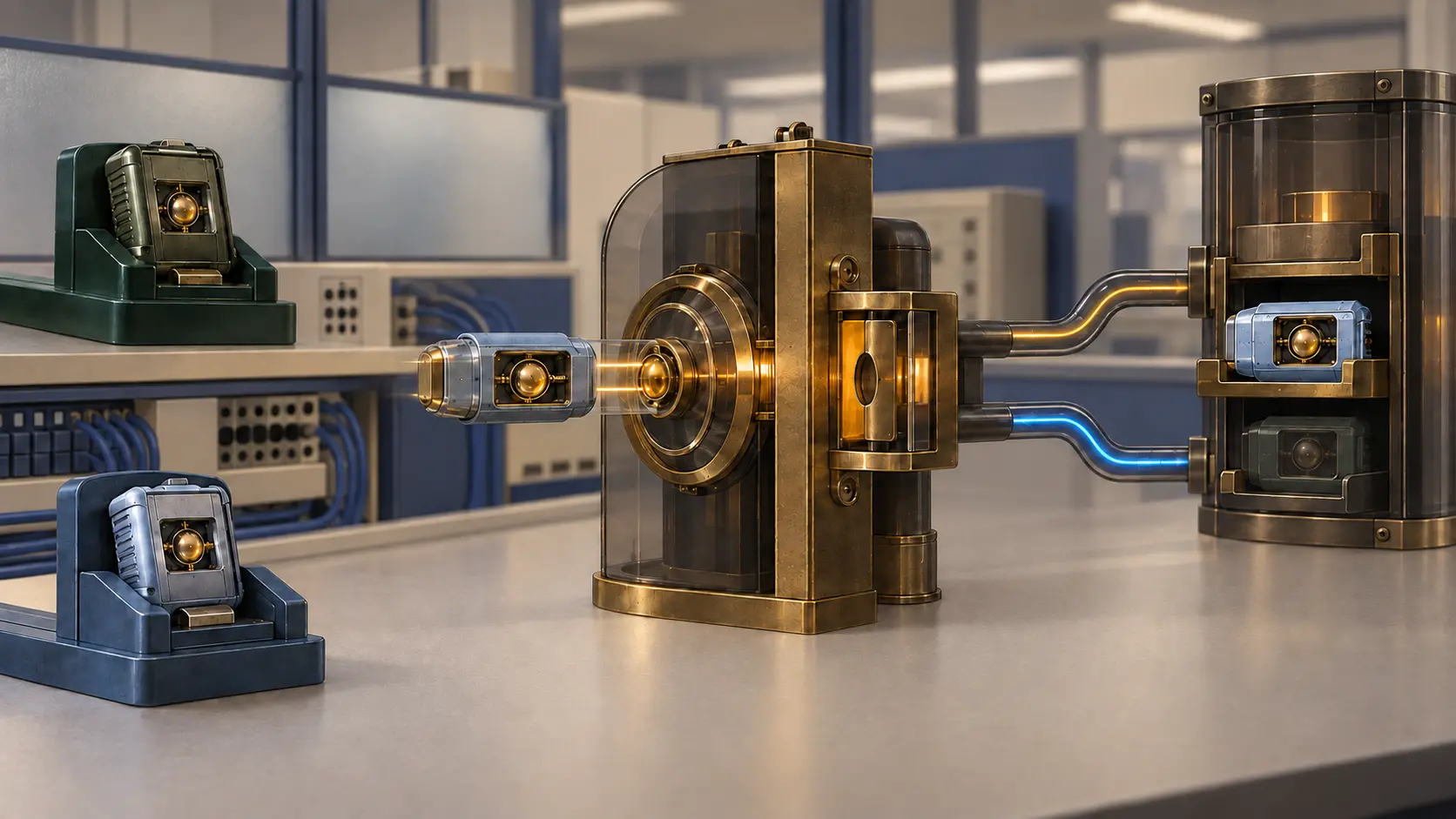
Open Cloud Mesh announced the share. It did not prove the resource could be accessed
An OCM Share Creation Notification records a grant at the federation layer. The access token, Protocol Server decision, underlying resource operation and recipient result still need receipts of their own.

History
The Address Did Not Say Which Machine Would Answer: RFC 2373
IPv6 anycast reused an ordinary unicast-shaped address for an extraordinary promise: deliver this packet to one member of a configured set. RFC 2373 made the economy possible by leaving the winning machine out of the address. The route chose it.

CASE FILE
The LIST Command Returned OK. Some Mailbox Metadata Was Still Missing: RFC 9590
A green completion line is comforting because it is exact. It is dangerous when a larger claim is attached to it. RFC 9590 makes that boundary unusually visible: an extended IMAP LIST command may complete successfully even when the server could not return metadata for one of the…

History
The Counter Rose. The Cause Did Not: RFC 2358 and Fast Ethernet
When Ethernet became ten times faster, its management vocabulary had to change without pretending that every new number was a diagnosis. RFC 2358 preserved one Ethernet identity across speeds, added evidence for 100 Mb/s operation and drew a durable line between a measured…

Global Cloud Services Trends
IBM puts digital-asset control on premises; settlement still crosses the boundary
Putting wallets, policies and signing keys inside a bank's own data centre changes who can authorise a transaction. It does not bring the whole payment chain home. IBM's new Digital Asset Haven betas expose a more useful market question: can a bank prove each handoff from local…

History
The Commit Line Was Not the Business Receipt: RFC 2371
In a distributed purchase, the machines can agree on COMMIT while the customer is still staring at a timed-out page. RFC 2371 drew that boundary with unusual precision. Its Transaction Internet Protocol coordinated transaction managers; it did not carry the order, define the…

IETF
The MOQT object number jumped. The media had not necessarily disappeared
Media over QUIC now gives relays three answers for a hole in a fetch: never existed, still unknown, or timed out. Operations teams should resist turning all three into one red “loss” counter.

Story
RIPE Fellowship Offers Full Support. Travel Feasibility Sits Outside the Published Score
RIPE NCC has opened its Fellowship for two 2027 meetings with a clear promise of coaching, training and full support. Its detailed programme page also describes visa, cross-border travel and reimbursement constraints that may leave part of the journey with the applicant. The…

IETF
A Network AI Draft Faces Two Different Safety Questions at IESG Review
A poisoned classifier and a well-behaved model that issues a dangerous network change call for different safeguards. A proposed IESG note about that distinction has now been removed from the conflict-review response; the underlying IRTF research question remains, and the review…

CASE FILE
The Signature Verified. It Did Not Name the Approvers: RFC 9591
An auditor receives a valid Schnorr signature, the group public key and the exact message. The equation checks. The approval list is still missing. RFC 9591 makes that result possible by design: FROST compresses several signing shares into one ordinary-looking signature. The…
History
The Address Moved. The Key Did Not: RFC 2356
A laptop leaving a private network in 1998 acquired a new address and, to an ordinary firewall, appeared to become someone else. RFC 2356 proposed a more durable name: let the packet present a cryptographic key identifier that survived the move. That separation was powerful, but…

History
The Unsubscribe Button Was Not the Unsubscribe Receipt: RFC 2369
In 1998, a mailing-list command could arrive inside an ordinary message without looking like a command at all. RFC 2369 gave mail clients a small set of structured headers from which they could build a consistent interface. Its deeper achievement was also its limit: the header…

Global Cloud Services Trends
VAST DataEnclave brings models to private data; the market gate is key release
Confidential computing can prevent a host from casually inspecting a model or a dataset. It cannot decide whether the model owner and the data owner should do business. VAST DataEnclave matters because it makes that second question operational: two owners keep separate keys…

IETF
A Regionalized ROA can sign a place. It still cannot prove a hijack
An individual Internet-Draft would add geography to route-origin validation. The useful part is a new, explicit signal. The dangerous shortcut is to treat that signal as the event it is meant to detect.

History
The Packet Diagram Was Correct. The Implementations Still Disagreed: RFC 2360
A protocol can assign every bit and still leave its most consequential decision unwritten. When a count is wrong, an option is unknown or memory runs out, does the receiver salvage the message, discard it, reset the session or preserve the old state? In 1998, RFC 2360 treated…

CASE FILE
The Capability List Said EdDSA. It Still Had Not Named the Curve: RFC 9864
An algorithm name can look like a complete answer while leaving the decisive parameter somewhere else. A service that advertises `EdDSA` has said less than many capability systems assume: it may support Ed25519, Ed448, or a locally constrained interpretation. RFC 9864 repairs…

History
The Repair Packet Joined the Congestion: RFC 2354
A damaged media stream seems to ask for an obvious remedy: send something extra. In 1998, RFC 2354 showed why that instinct was incomplete. A retransmission, parity packet or redundant encoding consumes the same path that lost the original. Repair can recover a unit before…

CASE FILE
SDM4 fixed the fibre. The optical link still has to be built
SDM4 MCF MSA 1.0 is useful precisely because it is narrower than its launch language can sound. It gives four-core fibre suppliers a common passive baseline; it does not make every connector, transceiver, lane map or installed link interoperable by declaration.

IETF
OAuth Has a Named Registry Expert—and an Unfinished Plan to Add More
An IESG agenda item can look like a vacant post until it is read beside the minutes and the live registry. Three OAuth registries still name an expert. The unresolved public decision is how additional review capacity will be appointed and made visible without mistaking an…

History
Before Reliable Multicast Could Become a Standard, It Had to Prove It Would Not Become Everyone Else’s Congestion: RFC 2357
Reliable multicast promised to send one copy of a file and let the network distribute it to many receivers. RFC 2357 asked who would pay when that economy multiplied feedback, prolonged a transfer or crowded out unrelated traffic. Its answer was unusual for 1998: publication…