
Profile
Analysis
Analysis profile intelligence connects person, company, institution, and other entity coverage for readers comparing the subjects behind BTW.MEDIA reporting. The page helps compare public profiles, related events, evidence packs, role changes, operating footprints, governance exposure, organisational links, and market relevance while keeping organisation and people records distinct from ordinary news chronology. Readers can understand the subject behind the headline, the evidence supporting that profile, and the infrastructure or market relationships that make the profile relevant. They can see who or what the profile represents, which public sources support it, how it connects to companies, markets, governance bodies, or events, and what changes may deserve continued attention as the subject evolves.

History
The Message That Expired at Only One End
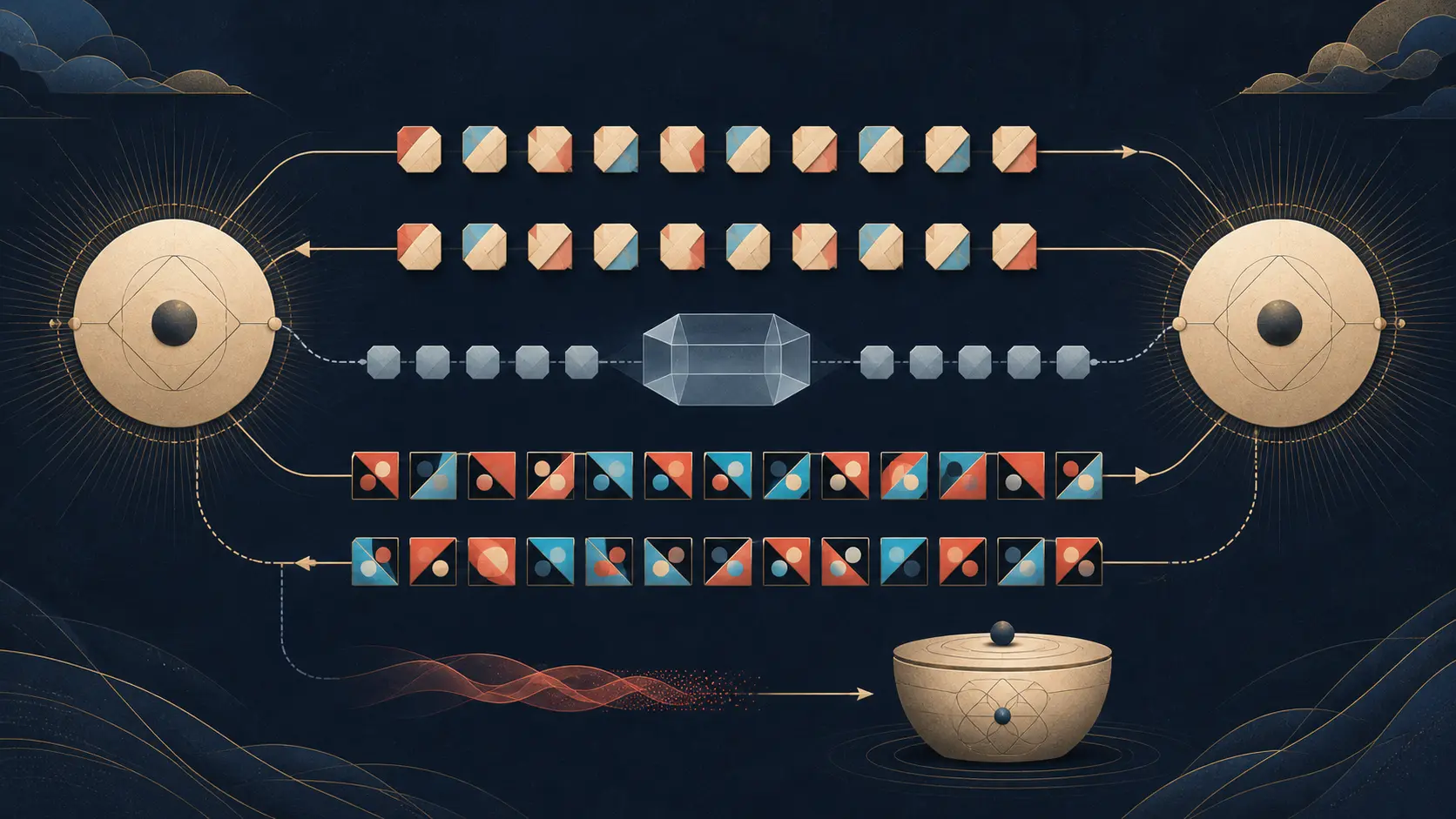
A sender could stop pursuing a message whose usefulness had run out. It could not make the receiver infer that decision from silence, or recall a copy already on its way. SCTP’s partial-reliability extension made abandonment a shared procedure without disguising it as delivery.
History
The Name That Spent Its Capital Letters: How DNS Turned Case into a Reply Challenge
DNS was built to recognize a name regardless of how its ASCII letters were capitalized. Two decades later, engineers noticed that the discarded distinction could still make a forged reply harder: the name could mean the same thing to the server while carrying a pattern only the…

History
The Packet That Had to Go Home Before Going On
A mobile computer could carry its address to another network, but not necessarily the right to emit that address from there. Mobile IPv4's reverse tunnel sent an outgoing packet home before letting it continue to its correspondent. The detour was less an admission that the…

History
The New Key That Inherited Its Past: What TLS KeyUpdate Could Rotate
A protected connection may last far longer than the key that first carried its traffic. TLS 1.3 gave that connection a way to move forward without renegotiating who its peers were—but the new secret remained a descendant of the old one, with a sharply bounded security promise.

History
The Alert EOF Could Not Replace: How TLS Made One Direction's End Explicit
A receiver can authenticate every byte it saw and still not know whether more bytes were meant to arrive. TLS solved that narrower problem by putting the ending inside the protected conversation, then learned that the two directions should not be forced to end together.

History
The Report That Had to Wait for the Crowd
An RTCP report timer reaches its appointment, and the source still does not send. The report is ready. The correct next action may still be to send nothing. In the control protocol accompanying real-time media, an appointment made with an incomplete picture of the group is not an…

History
The Record the Receiver Could Not Hold: How TLS Made Size a Local Claim
A small endpoint may be able to stream encrypted output while lacking the memory to authenticate an equally large record arriving from its peer. TLS eventually learned that the two directions do not have to pretend they are the same machine.

History
The Checksum That Had to Ask in the Old Language
A TCP endpoint could propose a different checksum without making an old peer fail. The old peer would ignore the unfamiliar option, answer normally, and thereby withhold the matching signal the experiment required. The fallback that made RFC 1146 safe to deploy also made…

History
The Flight TLS Sent Before the Server Finished: How False Start Borrowed One Round Trip
TLS False Start let a client release freshly encrypted application data after sending its own Finished but before verifying the server's. It saved a wait by moving data across an unfinished proof boundary—not by removing the proof, resuming an old session or sending plaintext.

History
The Address That Needed a Local Footnote
Copy `fe80::1%eth0` from one host to another and every character survives. The intended path may not. `eth0` belongs to the first host’s local map, so the apparently complete address carries a footnote whose authority ends at the machine that wrote it.

History
The Name TLS Had to Hear Before It Could Hide It: How SNI Made Shared HTTPS Possible
At a shared address, a TLS server had to choose a certificate before it could decrypt the HTTP request that named the intended site. Server Name Indication resolved that ordering problem by putting the name in the ClientHello—making virtual HTTPS practical while leaving the…

History
The Row That Existed Before It Was Ready
An SNMP manager can write `createAndWait`, yet it can never read `createAndWait` back. What returns may be `notReady`: the row now exists, but the device cannot yet attempt to use it. That asymmetry turned a request into an action and incompleteness into an observable fact.

History
The Memory the Server Sealed for Later: How TLS Session Tickets Made State Client-Carried
A TLS server learned to put its own resumable memory into a sealed entity and ask the client to bring it back. The arrangement saved per-client storage, but it did not abolish state: it concentrated acceptance in ticket keys, expiry rules and a fallback the server still…

History
Two Registrations, One Phone
The edge proxy had already crashed and restarted. The incoming call had already reached the service. The phone, however, had not yet learned that its old return path was gone. SIP Outbound was designed for precisely this interval—and for the harder question that followed: when…

History
The Server Carried the Proof: How OCSP Stapling Moved Evidence, Not Authority
A website could hand a visitor a signed answer about its own certificate without becoming entitled to write that answer. OCSP stapling made that separation useful—and left a less visible bargain over freshness, silence and who must keep the evidence available.

History
The Reply That Taught a Resolver to Stop Asking
A refusal can end a conversation, or send the question somewhere else. When DNS designers considered a new response code for servers unwilling to provide a conventional ANY answer, unfamiliarity could make resolvers try other authoritative servers. A small, nonempty answer…

History
The Header That Waited Behind Its Data
A variable-length header could stand between an arriving packet and a useful boundary in memory. In the early 1980s, BSD systems tried moving that obstacle: put the data first and its higher-level headers afterwards, then restore the ordinary arrangement at the receiver. Trailer…

Global Regional ISP Trends
Hyperoptic coverage is not serviceable until the building says yes
A broadband map can colour an address as covered before anyone has secured the right to open the riser, use the shared duct or enter the corridor that leads to the flat. Hyperoptic’s own installation documents show why the useful unit of coverage is not the postcode but the…

History
A Map Pin Was Not a Measurement
DNS LOC could express a coordinate to a thousandth of an arcsecond while declaring a horizontal error circle ten kilometres across. That was not a contradiction. The format distinguished the fineness of an address on a map from the strength of the knowledge behind it. A consumer…

History
Eight Bytes the Endpoints Could Not Negotiate Away
A PPPoE session could open successfully without carrying the packet size that justified opening it. The extension that addressed this problem separated permission, negotiation and a size-sensitive fallback. Its historical importance lay in a broadband migration: when the session…