
Impact
HIGH
Within the Impact facet, HIGH impact intelligence highlights articles where the expected effect level, operational exposure, or decision relevance is comparable. Readers can use the page to separate routine market updates from higher-consequence governance, infrastructure, security, and investment signals that may affect planning, procurement, policy, or customer exposure. The page connects the consequence band to public evidence, related organisations, regional context, operating dependencies, service continuity, competition, investment timing, compliance, and customer risk. It helps readers decide which developments deserve deeper monitoring, which actors are most exposed, and how a signal may affect operations or market planning.

CASE FILE
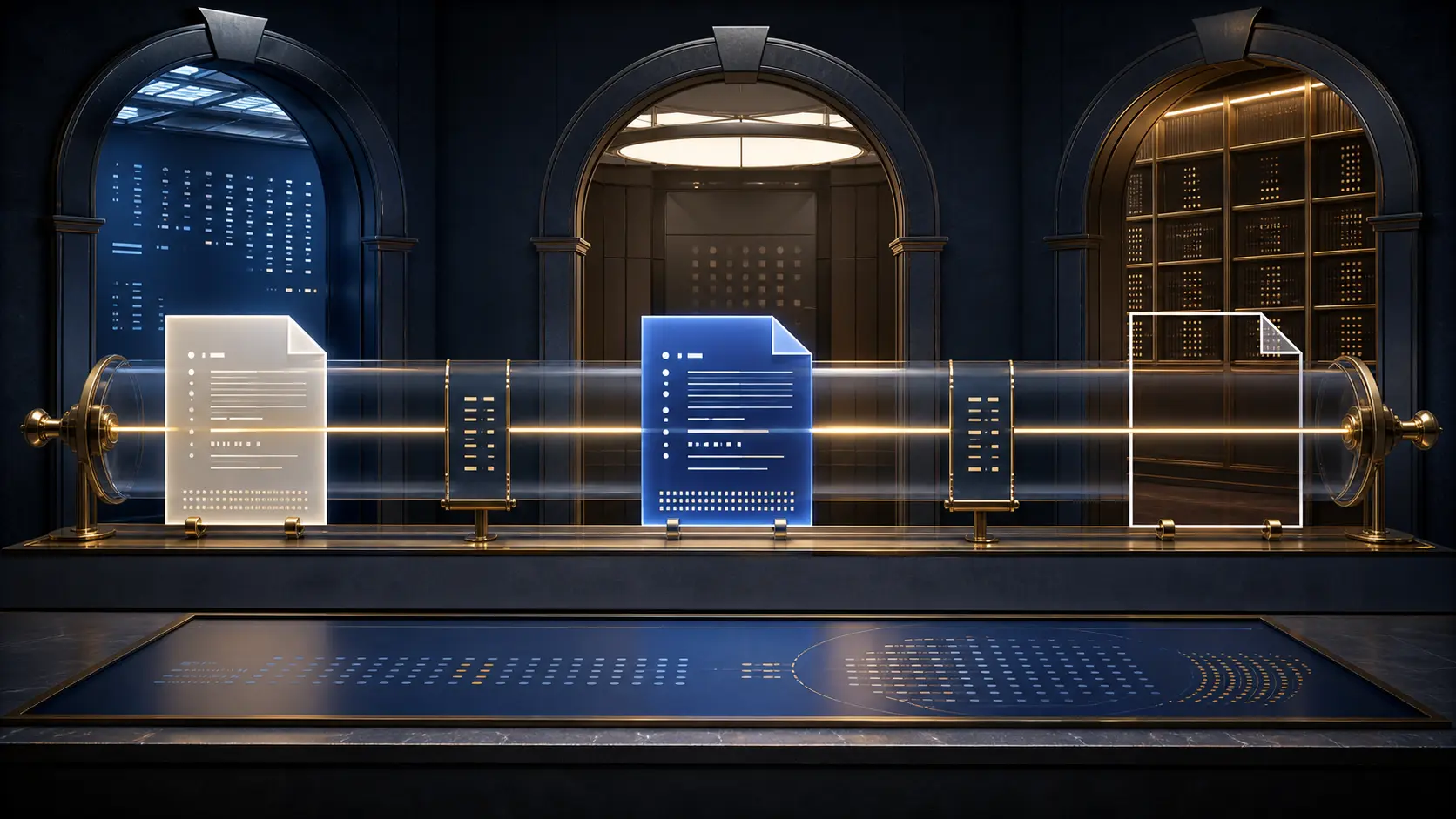
The DNS ID Was Zero. The Cache Still Needed a Clock: RFC 9953 and DoC Evidence
A cache can make a constrained network quieter without becoming the authority that decided what the answer means. RFC 9953 makes that line unusually precise: it lets equivalent DNS-over-CoAP requests share a representation, then requires a separate clock before anyone may rely on…
CASE FILE
W3C's 2026 XML Namespace Points to a Moving Draft Without a Change Policy
W3C dated a new XML Security namespace on 19 August 2026. The first archived Internet-Draft revision to use it appeared two days later, replacing a placeholder while the document was still adding material. Early allocation is useful; the unresolved governance question is what…

History
The Fiber Was Fast. The Service Was Still a System: RFC 1077
In 1988, optical fibre made terabit-scale raw capacity imaginable before the Internet knew how to turn it into ordinary service. RFC 1077 located the harder work beyond the glass: switches, hosts, allocation, management and proof of what a path actually delivered.

IETF
Hooman Bidgoli and the Leaf Set That Was Not a Delivered Multicast Service
The control plane can produce an orderly list of intended receivers while the data plane is still divided across controller state, replication segments, service context and receivers that have not seen a packet. RFC 10018 makes the list useful. It does not make the list a…

History
The Queue Accepted a Job. It Had Not Printed a Page: RFC 1179’s Two Acknowledgements
In a networked print system, the easiest status word is usually the least useful one: accepted. A client has opened a connection, named a queue, sent files and received zero-valued acknowledgements. That is real evidence. But it is evidence of a bounded exchange with a line…

History
HEMS Left the Protocol Race. Its Data Model Stayed in the Room: RFC 1076
In 1988 the Internet chose a short-term management protocol, and one rival stepped aside to make agreement possible. Seven months later, that rival published a remarkably rich query language anyway. RFC 1076 is the record of what selection can retire, what it can preserve, and…

History
The Ring Could Share a Filter. It Could Not Prove a Group: RFC 1469’s Multicast Boundary
In the early 1990s, IP multicast met a local medium with an awkwardly small vocabulary. A Token-Ring adapter could be told which hardware destinations to accept, but its scarce functional addresses could not give each IP group a private physical label. RFC 1469 solved the…

Global Cloud Services Trends
Getty Says It Can Pay. A 30-Day Interest Grace Period Is the Plan
Getty Images has put a clock on a financing decision without saying that it lacks the money to settle it. The company intends to use contractual 30-day grace periods for two interest payments due on 1 September, says it has sufficient cash to pay, and has hired Guggenheim to…

IETF
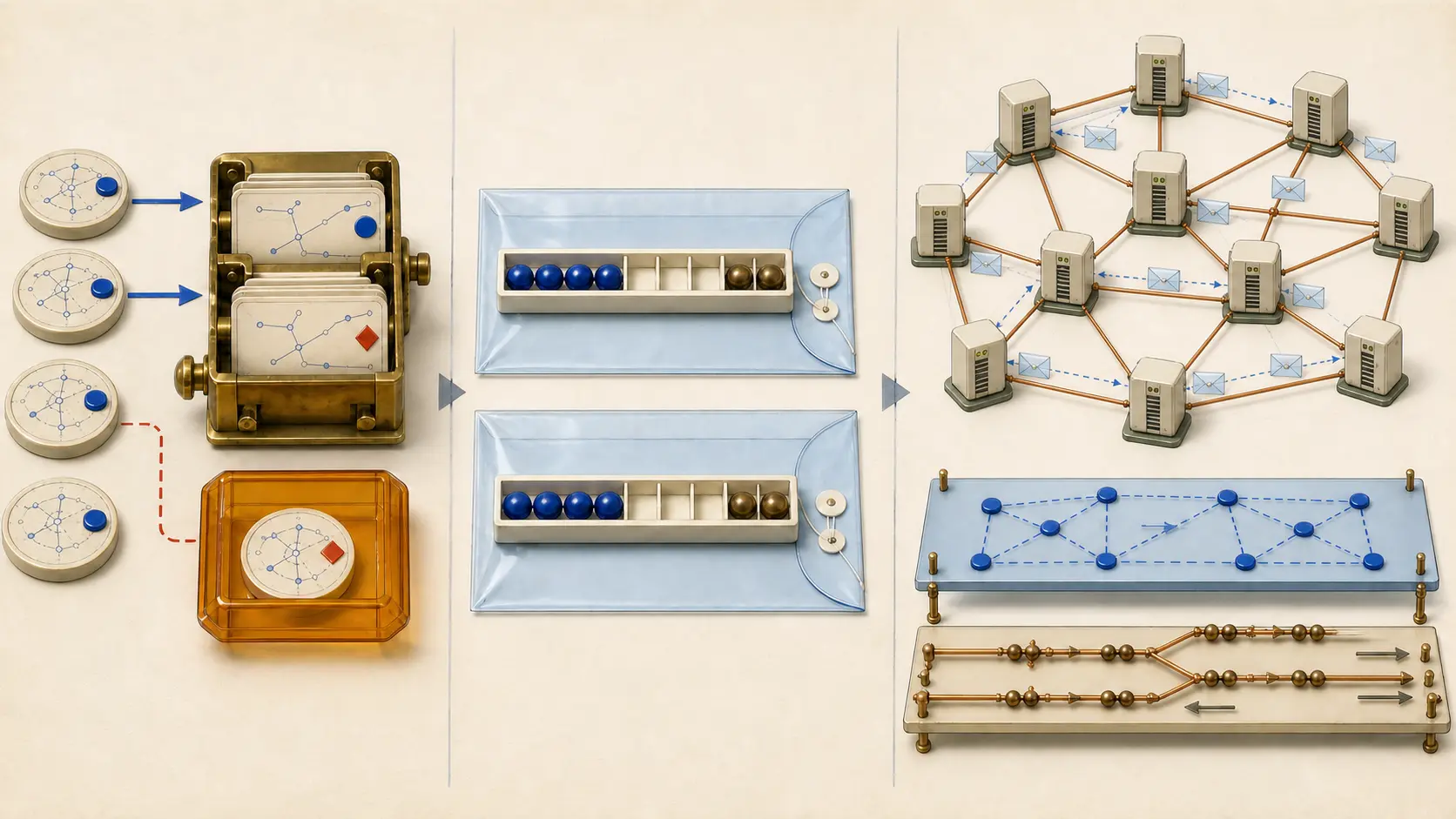
Carlos Pignataro and the Watt Reading That Did Not Prove a Greener Network
A power meter can report a precise number while leaving the environmental claim undecided. Turning that number into energy, emissions or permission to switch off spare capacity requires separate evidence—and a record of who accepted the trade.
History
NSFNET Put IP Inside an OSI Address. Policy Still Chose the Route: RFC 1074
Thirteen T1 sites did not become one routing domain by choosing a pure protocol family. The 1988 NSFNET backbone carried IS-IS control packets over IP, fitted Internet addresses into NSAP-shaped fields, and let a policy database decide which EGP claims could become interior…

IETF
IETF Marks Two Capture Controls Incomplete. Their Q4 Proof Needs a Public Map
One line in the IETF Administration LLC’s 2026 Risk Register names the institutional failure that open technical organizations are often least comfortable naming: “The IETF, or a key part of it, is captured.” The same line says two controls are complete and two remain unfinished…

CASE FILE
W3C’s WebMCP Charter Patch Adds HTML Scope Without Naming HTML or ARIA Groups
W3C’s open Web Machine Learning charter patch does more than add an AI-labelled deliverable. It would put JavaScript tool registration, browser mediation and declarative annotations on HTML forms inside the Working Group’s proposed scope. Yet the same diff leaves the charter’s…

IETF
Sean Turner and the Private-Key Proof That Did Not Authorize a Certificate
A certification request can carry a valid signature and still have no right to become the certificate it asks for. The signature answers a narrow question about a key; identity, namespace entitlement, intermediary action and issuance remain separate decisions.

History
The Client Owned the Window. The Server Owned the Reaction: RFC 1073 and Telnet NAWS
An 80-by-24 terminal window became 80-by-64 without opening a new Telnet connection. Four small values crossed the link, and the remote host gained a better chance of placing its cursor correctly. Nothing in that exchange required the host to use the new geometry. RFC 1073 made…

History
The Name Was Local. The Number Still Needed a Record: RFC 1101’s DNS Mapping Boundary
In 1989, DNS could already distribute host information, but it did not yet offer a standard way to ask what a network number was called. RFC 1101 proposed a small answer: use PTR records, host-zero names and masks in `IN-ADDR.ARPA`. Its lasting discipline is equally small. A…

Global Cloud Services Trends
IREN Wrote Down US$638.8m. AI Had Not Replaced Mining
IREN's largest FY2026 transition number was not AI revenue but the value removed from old assets. A US$638.8 million impairment marks an accelerated exit from mining hardware and displaced infrastructure. Yet Bitcoin mining still supplied most full-year revenue, operating AI…

CASE FILE
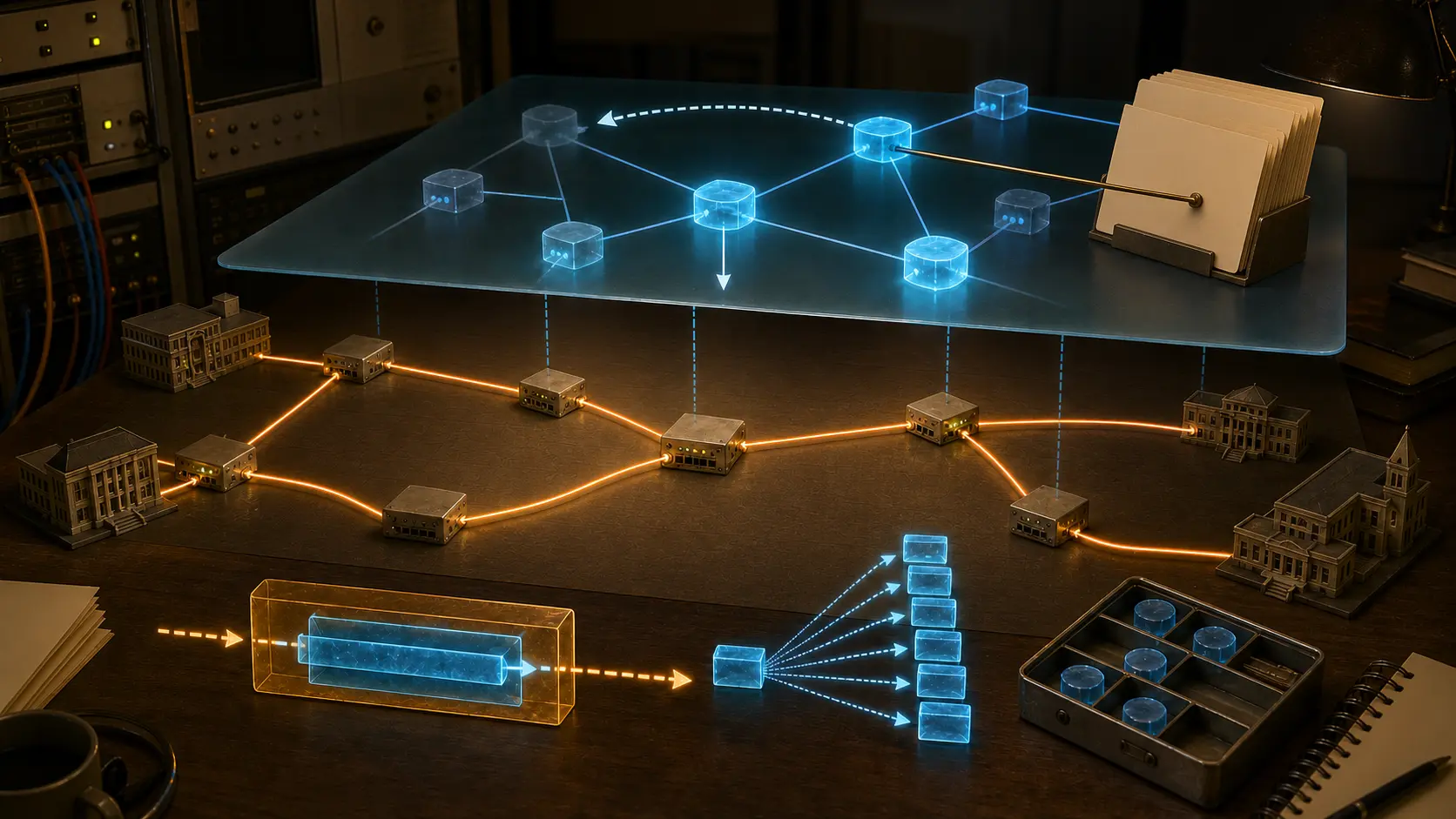
What the Aggregate Report Actually Knows: RFC 9990 and the Boundary Before Enforcement
A DMARC dashboard can make a narrow observation look like a verdict. One receiver reports a large count from a source range, records an evaluated policy and shows a disposition. That is valuable operational evidence. It is not a global traffic census, proof of a sender's intent…
History
The Internet Was the Link, Not the Network: RFC 1070's Experimental OSI Boundary
In one of RFC 1070's imagined laboratories, two machines could exchange their OSI roles without changing either Internet address or cable. Every host would remain reachable by IP. Yet the experimental network could briefly lose its new router because an old list still pointed…

CASE FILE
W3C WebRTC Patch Says SFrame Covers Only Part of Retired Identity Work
An open correction to W3C’s next WebRTC charter separates two decisions that its public draft had joined together. WebRTC Identity may be discontinued because implementors have shown too little interest. SFrame may cover a limited subset of its use cases. But the Working Group…

History
The Request Was Queued. The File Still Had to Move: RFC 1068 and BFTP's Completion Boundary
In 1988, an Internet file-transfer experiment made the instruction outlive the terminal session. A user could leave after submitting a job; a daemon would remember, retry and report later. That persistence solved a human waiting problem, but it also created a new fact that was…