
Primary Domain
Internet Infrastructure
Within the Primary Domain facet, Internet Infrastructure intelligence groups reporting by primary domain so readers can follow a focused area of internet infrastructure, governance, connectivity markets, or digital capital. The page brings together related articles, public evidence, institutions, companies, people, regional exposure, operating dependencies, and market context that may otherwise sit across separate category pages. It explains the domain, the likely actor class, the market or governance context, and the source material readers should use when comparing signals. Operators, analysts, and governance readers can see how the same domain appears across events, profiles, market shifts, public-source evidence, regional dependencies, and longer-cycle infrastructure decisions over time.

History
The API Was Still Working. Its Response Said to Start Leaving.
A client asks for a resource, gets a normal answer, and finds a retirement clock in the response header. The service still works. The operator has already told its users to build their next dependency elsewhere. In March 2025, RFC 9745 gave that awkward interval a standard HTTP…

Story
LACNIC Approved IPv4 Sub-Assignments. Every New Deal Resets a Three-Year Clock.
LACNIC Approved IPv4 Sub-Assignments. Every New Deal Resets a Three-Year Clock. intelligence summary explains the development, the public evidence available to readers, the organisations involved, the regional context, market exposure, and the infrastructure consequences that may…

Leaders
Izumi Okutani Cut APNIC's Objection Clock in Half. The Chair Kept the Spare Four Weeks.
The policy room had agreed, but the mailbox was still open. Okutani and Dean Pemberton proposed making four weeks the first finish line instead of eight. The remaining time became a decision for the Policy SIG Chair—and that rule still sits in APNIC's process today.

History
The API Error Got an Address. The Operator Got a Promise to Keep.
A `403 Forbidden` can tell a browser or proxy that access failed. It cannot tell a purchasing program whether an account ran out of credit, a card was rejected, or a policy refused the sale. In 2016, an HTTP standard gave those failures a common envelope and made a URI the name…

Story
The Sponsor Walks. RIPE NCC Starts Two Ten-Day Clocks on Your Address Resources.
A company can operate an independently assigned address block while another company sponsors its registry contract. If that sponsorship ends, RIPE NCC's current procedure gives the End User ten working days to establish a new contract before a notice, then ten more from the…
History
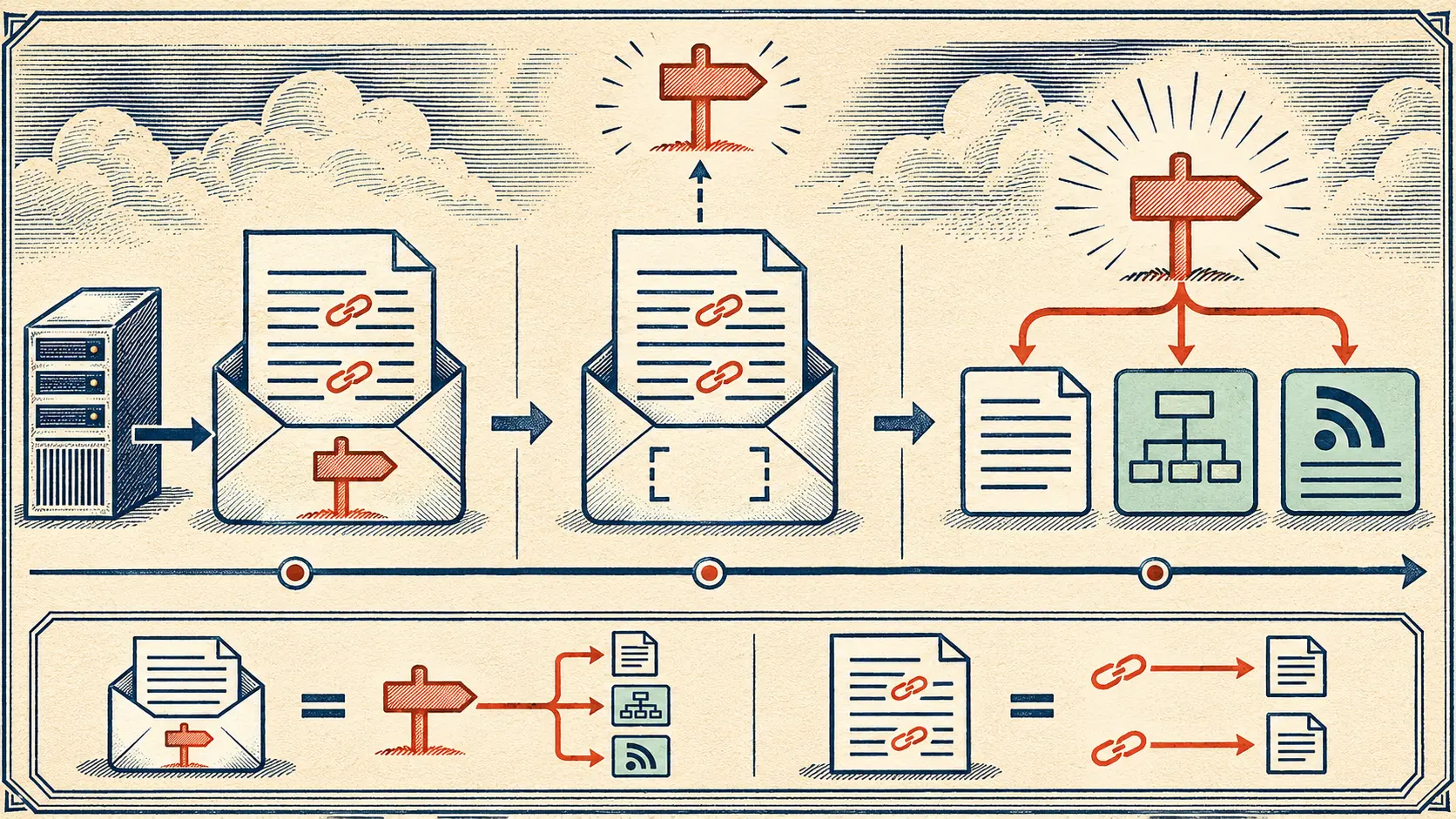
HTTP Put Links Outside the Page. Two Years Later, the Standard Took Them Away.
In 1997, an HTTP response could carry a `Link` field naming a related resource even when the page body held no such instruction. The next HTTP/1.1 standard left the field out. The 2010 specification that brought it back gave a blunt reason: the earlier version lacked enough…

Europe and Middle East Institutional Trends
Europe Wants a Map of Its Internet Backbones Before It Chooses Where to Spend
The Commission is offering up to €400,000 for an 18-month study of land and submarine routes, ownership risk and the next funding criteria. Whoever draws the baseline will help define which gaps count as strategic.

History
The Internet Put Experiments in an X- Drawer. The Drawer Would Not Empty.
An extra letter once offered protocol designers a bargain: put `X-` on a private field and the official names would stay clean. The bargain worked until a useful experiment needed an official name. By then software already knew the old spelling. A 1997 HTTP standard had to treat…

Story
The ARIN Admin and Tech Contacts Are Gone. The Recovery Ticket Costs $100.
An organization can still hold its IP addresses while nobody left on its payroll can edit the ARIN record that controls them. The registry has a way back in, but it is a staff-reviewed Org ID recovery ticket, with a $100 fee paid before evaluation under the 2026 schedule. ARIN's…

History
Cookie2 Announced a Better Cookie. Eleven Years Later, HTTP Retired the Announcement.
In 2000, a browser could tell a server that it understood a newer cookie scheme by sending `Cookie2: $Version="1"`. A server that understood the signal could answer with `Set-Cookie2`, while an older server ignored it and kept using the familiar path. The upgrade was carefully…

Story
RIPE NCC Gives a Conference Up to Two Months. Research Can Get a Year by Publishing.
A network for a conference has a closing date; a research project can ask RIPE NCC for more time. The registry's temporary-number policy turns that difference into a hard calendar. An event gets its scheduled run plus at most a month, within a two-month ceiling. Research can…

Latin America and Caribbean Institutional Trends
Uruguay Cut Keys for a New DNS Algorithm. Its Root Record Still Says 8.
SeCIU replaced the .uy security module and generated keys for today’s algorithm and a future one. The IANA delegation still displays one algorithm-8 DS record. A key ceremony is the first move, not the cutover.

Global Institutional Trends
ECMWF’s AI Air Forecast Reaches Day Ten. Physics Still Owns Day Zero.
AIFS-COMPO doubles the published forecast horizon for atmospheric composition. The experimental system still starts from CAMS’s physical analysis, and the public can inspect charts before it can download the forecast fields.
History
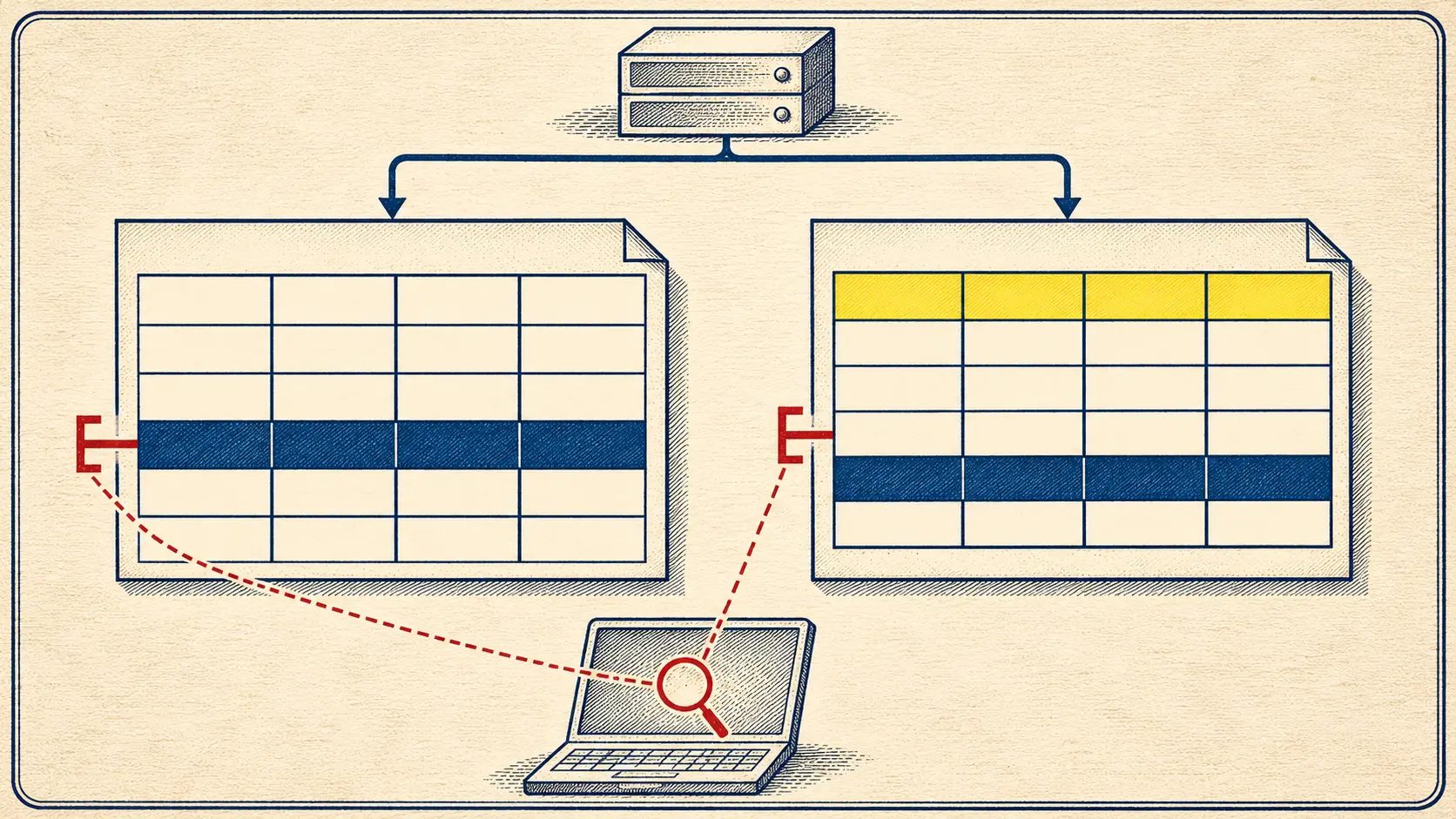
The Web Could Link to Row Four. Then Row Four Moved.
A link to a CSV file once pointed only to the file. In 2014, an RFC gave readers a way to point at a particular row, column or cell: put a fragment after the URL and let the client interpret it. That made a data citation look beautifully precise. It also gave the citation a…

Story
The Conference Ends. APNIC Can Reassign Its IPv4 Without Quarantine.
APNIC has reserved a real IPv4 range for temporary networks: `163.61.168.0/21`. A conference can receive a portion for a few months, return it before the assignment expires, and leave APNIC free to issue it again immediately. The usual quarantine period is waived. That makes a…

Story
APNIC Gives an Internet Exchange a /26. It Keeps the Exit Door.
An exchange point needs addresses for its peering fabric. APNIC will give a new one a small IPv4 block, then bind the block to a job: connect peers. Growth requires proof, the previous block goes back within three months, and a global route announcement can put the delegation at…

History
Browsers Turned 302 into GET. HTTP Kept the Habit and Added 307.
A browser sends a form with POST. The server says the result has temporarily moved. At the new address, should the browser send the form again, or fetch a page with GET? Early HTTP texts tried to keep the method steady and warned against automatic POST redirection. Browsers took…

Story
ARIN Put Its Account Portal in the Audit. The Public Report Still Covers RPKI.
ARIN says its 2026 SOC 2 review now includes ARIN Online. The report customers can download today covers only RPKI in 2024–25. The missing document is the expanded auditor opinion.

Leaders
Nathalie Trenaman Put a Lock on the Door to the Locksmith
RIPE NCC wanted to reject invalid routes on its own network. Nathalie Trenaman had to answer the awkward question first: what happens when the member locked out is trying to reach the portal that fixes the mistake?

Story
ARIN Gives You IPv4 to Build IPv6. The Market Cannot Have It.
An organization can still get a small IPv4 block from ARIN's special reserve if it needs the addresses to put IPv6 into service. The same block is barred from the ordinary specified-recipient transfer market. ARIN's policy makes the purpose of an address visible in the rights…