
Primary Domain
Infrastructure
Within the Primary Domain facet, Infrastructure intelligence groups reporting by primary domain so readers can follow a focused area of internet infrastructure, governance, connectivity markets, or digital capital. The page brings together related articles, public evidence, institutions, companies, people, regional exposure, operating dependencies, and market context that may otherwise sit across separate category pages. It explains the domain, the likely actor class, the market or governance context, and the source material readers should use when comparing signals. Operators, analysts, and governance readers can see how the same domain appears across events, profiles, market shifts, public-source evidence, regional dependencies, and longer-cycle infrastructure decisions over time.
History
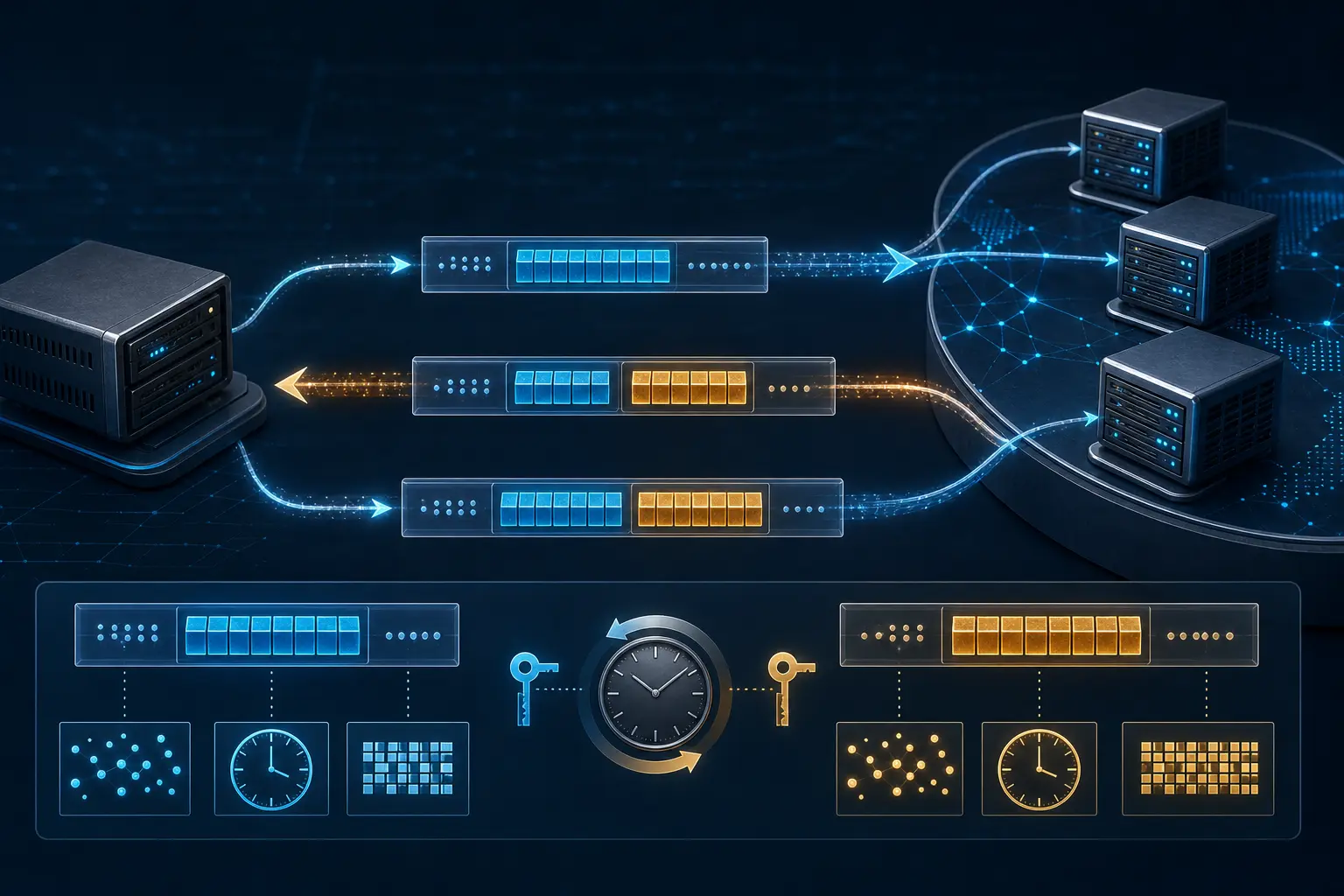
The Token That Proved a Reply Had a Path Back: DNS Cookies Without Identity
A small EDNS option changed what a DNS server could reasonably infer from a UDP source address. It did not identify the sender. It showed, more narrowly and more usefully, that someone at that apparent address had received an earlier reply and returned a server-made token.

CASE FILE
The Edge Negotiated HTTP/2. The Origin Still Spoke HTTP/1.1: TLS ALPN and the Authority of One Connection
The browser offered `h2` and `http/1.1`. The edge selected `h2`, completed TLS and exchanged valid HTTP/2 frames. A fleet dashboard then labelled the origin “HTTP/2 native.” It was not. The edge terminated that connection and opened a different one upstream, where it sent…

CASE FILE
The CA Was on the List. The Identity Was Not Approved: TLS `certificate_authorities` and the Authority of a Selection Hint
The client chose a certificate whose issuer appeared in the server's CA list. The server built and validated the chain. Then the application rejected the subject because that identity had never been admitted to the tenant. Every cryptographic step could be correct while access…

CASE FILE
The Staple Was Signed. The Status Could Still Be Stale: TLS OCSP and the Authority of a Cached Answer
The certificate was revoked at 10:07. At 10:11, the server still stapled a correctly signed `good` OCSP response whose `nextUpdate` was hours away. Nothing had been forged. The answer was authentic, within its declared interval and already behind reality. The incident began when…

CASE FILE
The Socket Closed. The Transaction Did Not: TLS close_notify and the Authority of an Ending
The payment service wrote a success response, initiated an orderly TLS shutdown and recorded the request as complete. Its database commit failed milliseconds later. The client had received an authentic ending, but not the fact it needed. `close_notify` said the server would send…

CASE FILE
The Ticket Survived. The Session Did Not: TLS 1.3 Resumption and the Authority of Carried State
The failover node accepted a TLS 1.3 session ticket issued before the user’s access was revoked. Cryptographically, the shortcut worked: the client knew the resumption PSK and its binder covered the new handshake. Operationally, the old decision had crossed into a new connection…

CASE FILE
The Record Was Longer. The Message Was Not: TLS 1.3 Padding and the Authority of Observable Length
The incident report treated a larger encrypted record as a larger application message. Its arithmetic was precise and its conclusion was false. The sender had rounded TLS 1.3 records to a block boundary and sometimes emitted padding-only Application Data. The capture established…

CASE FILE
The First Hello Was Rejected. It Was Not Erased: TLS HelloRetryRequest and the Authority of the Transcript
The capture began with a second ClientHello. It offered one key share, the server accepted it, and the handshake completed. Read in isolation, the trace appeared to prove that the client had chosen that group from the start. It proved nothing of the kind. The missing first flight…

CASE FILE
The Client Expected a Certificate. The Library Accepted a Key: TLS Raw Public Keys and the Authority of Negotiation
The key was mathematically usable. That was precisely the problem. In June 2026, wolfSSL disclosed that an RPK-enabled build could accept an unnegotiated Raw Public Key where the peer expected X.509, bypassing certificate-chain validation. The repair did more than reject a format…

CASE FILE
The Proof Arrived After the Connection Began. It Did Not Rewrite the Past: TLS Exported Authenticators and Application Authority
At 14:03, a valid certificate proof arrived on a connection that had already carried hundreds of operations. The service upgraded every stream and relabelled five earlier minutes as authenticated by the new identity. The signature was sound. The history was not. TLS Exported…

CASE FILE
The Certificate Had Not Been Verified. Its Memory Claim Already Had to Be Judged: TLS Compression and the Pre-Trust Boundary
A two-kilobyte handshake message says it will become twelve megabytes after decompression. Before the receiver can inspect a name, a signature or a chain, it must decide whether that unauthenticated claim deserves memory and CPU. RFC 8879 makes certificates smaller on the wire…

CASE FILE
The Edge Received a Key. It Did Not Receive the Certificate: TLS Delegated Credentials and the Boundary of Short-Lived Authority
A front end can finish a TLS 1.3 handshake for the certificate owner without holding the certificate’s long-term private key. What crosses that boundary is powerful but deliberately small: a signed public key, a role, an algorithm and an expiry—not the certificate, the CA…

Global Institutional Trends
A network is not resilient when its clock has one owner
A network can keep its power, routes and servers and still lose the ability to decide what happened first. Precision time is the quiet dependency beneath radio synchronisation, authentication, control systems, transaction records and incident evidence. Resilience begins when the…

IETF
The Packet Arrived Last. That Does Not Mean the Event Happened Last
In a wraparound test, a CoAP server sends one notification just before its Observe value rolls over and another just after. The newer datagram reaches the client first. The older one has been sleeping in a queue inside the network and arrives second. A client that sorts the two…

CASE FILE
The Peer Requested New Keys. It Did Not Own the Epoch: TLS 1.3 KeyUpdate and the Authority to Rotate a Live Connection
One encrypted record leaves under the old key. Every later record from that sender must use the next one. The peer can authenticate the transition and ask for a reciprocal change, but it cannot see whether yesterday’s secret left memory, choose the other endpoint’s work queue, or…

CASE FILE
The Speaker Was in the Session, Not the Path: IXP Route Servers and the Authority to Broker Reachability
The BGP session was established to one system. The route began with another network's AS number. Its next hop named a third address on the exchange fabric, and the packets never crossed the machine that had delivered the UPDATE. Nothing was malformed. The apparent contradiction…

CASE FILE
The Request Said Urgent. The Scheduler Still Decided: HTTP Priorities and the Authority to Allocate Scarce Delivery
A browser can call a hero image urgent, an origin can prefer the font, and a CDN can see both through a different connection map. RFC 9218 lets each express useful information. It does not let any of them annex the scheduler that finally allocates the next byte.

History
The Prefix That Tried to Make IPv6 Automatic: 6to4 and 2002::/16
6to4 offered a seductive bargain: turn an existing IPv4 address into an IPv6 network and let relays complete the journey. The address trick worked as specified. The operational responsibility did not assemble itself around it.

Asia-Pacific National Telecom Trends
User-level AI-RAN needs an error ledger, not one average
DOCOMO and Samsung report that simulated user-level optimisation cut throughput-degradation frequency from 13.1% to 7.2%. The result is promising; commercial control depends on who improved, who was incorrectly changed, what other users lost and how the network rolls back.

Global Datacenter Trends
The battery passport behind a data-centre UPS replacement
A replacement battery rack can fit the room, the voltage window and the maintenance plan yet still fail as an option. From 2027, a qualifying industrial battery also needs an evidence chain that can travel with the hardware.