
Content Type
Research
Within the Content Type facet, Research intelligence gathers BTW.MEDIA articles that share the same editorial format, helping readers compare briefings, profiles, risk notes, market analysis, and event coverage without mixing different kinds of evidence. The page explains how this content type frames internet infrastructure events, company movements, governance decisions, operational signals, and public evidence across the site. Readers can compare which actors or infrastructure systems appear most often, how source quality changes interpretation, and whether the material is a durable profile, a time-sensitive event, a strategic market signal, or a governance development. The result is a useful search page for operators, investors, customers, analysts, and policy stakeholders who need to understand the consequence, timing, and evidence behind similar article formats.

IETF
An AEGIS Codepoint Is Not a Negotiation Receipt
RFC 10032 gives six AEGIS variants stable AEAD identifiers. It does not show that two peers offered the same suite, chose the same tag length, executed the intended implementation path or protected a single live packet with it. The missing record sits between specification…

History
Anita Borg and the Systers List: Admission to a Governed Room, Not Proof of Equality
A message could enter Systers because a member, an address and the list's routing rules admitted it to a private professional room. That delivery made scattered women in computing less isolated; it did not verify every identity claim, guarantee a career opportunity, erase…

IETF
A DHCP Lease Is Not a Relay-Topology Receipt
RFC 9928 lets an intermediate relay speak DHCPv4-over-DHCPv6 for a legacy IPv4 client that knows nothing about the conversion. The lease can be valid while the evidence connecting the request to its physical access port is incomplete. The missing entity is not another success…

History
Andrew S. Tanenbaum and the Amoeba Capability That Authorized an Object, Not a Person
Amoeba compressed a service address, an entity name, an operations mask and an anti-forgery check into 128 bits. The resulting capability could travel with user code and carry authority without a central list of holders—but a valid token still said nothing by itself about the…
Leaders
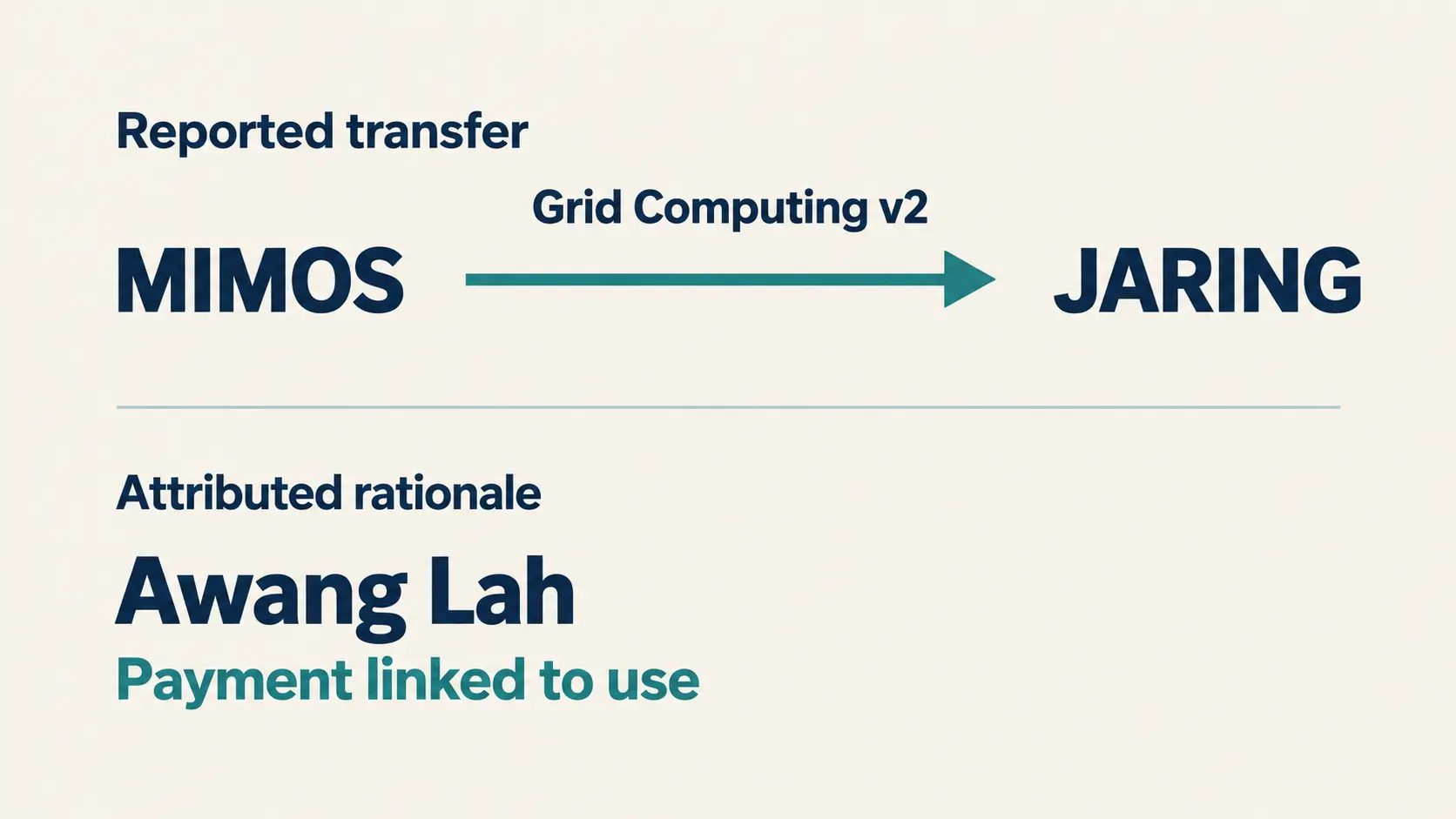
Mohamed Awang Lah and JARING’s pay-for-use proposition
The relevant leadership question is what an executive argued a technology would do for customers—and what would establish that the benefit reached them.

Global Cloud Services
Cloudflare R2’s zero-egress price is not a zero-cost exit
Cloudflare lists no charge for outbound transfer from R2 and documents a way to copy entities out. The remaining economic question is what customers must spend—and successfully operate—to turn that export into a working replacement.

Global Institutional
ISC DHCP to Kea: why a converted file is not a migrated service
ISC’s keama utility addresses a specific part of the move from ISC DHCP to Kea: converting recognized configuration constructs into Kea JSON. The harder deployment question begins after that output exists. Lease state, high availability, DNS updates and locally defined behavior…

ICANN
The Enforcement Chain Behind ICANN’s Rules
ICANN's authority becomes consequential only when a policy, contract, compliance process and review route connect to an operational act. The public record identifies that chain, but it does not yet prove a single regulator-like mandate, a current universal contract baseline or an…

IETF
The IETF’s Authority Is Procedural: How Consensus Becomes a Decision—and Where It Can Be Challenged
The [Internet Engineering Task Force](<https://btw.media/en/directory/ietf>) does not govern through a statute, a regulator’s licence or a conventional corporate chain of command. Its authority is assembled through a procedural mechanism: a community discusses technical…

Leaders
The missing handoff: What Malaysia’s internet history can prove about Mohamed Awang Lah
Malaysia’s early internet history contains two institutional stories that are often placed too close together: the development of public connectivity around RangKom and JARING, and the later organization of national incident response through MyCERT, NISER and CyberSecurity…

Global Regional ISP
ROYA’s AS210837: What Would Prove Operational Control and Durable Repair?
ROYA’s AS210837: What Would Prove Operational Control and Durable Repair? intelligence summary explains the development, the public evidence available to readers, the organisations involved, the regional context, market exposure, and the infrastructure consequences that may…
Global Cloud Services
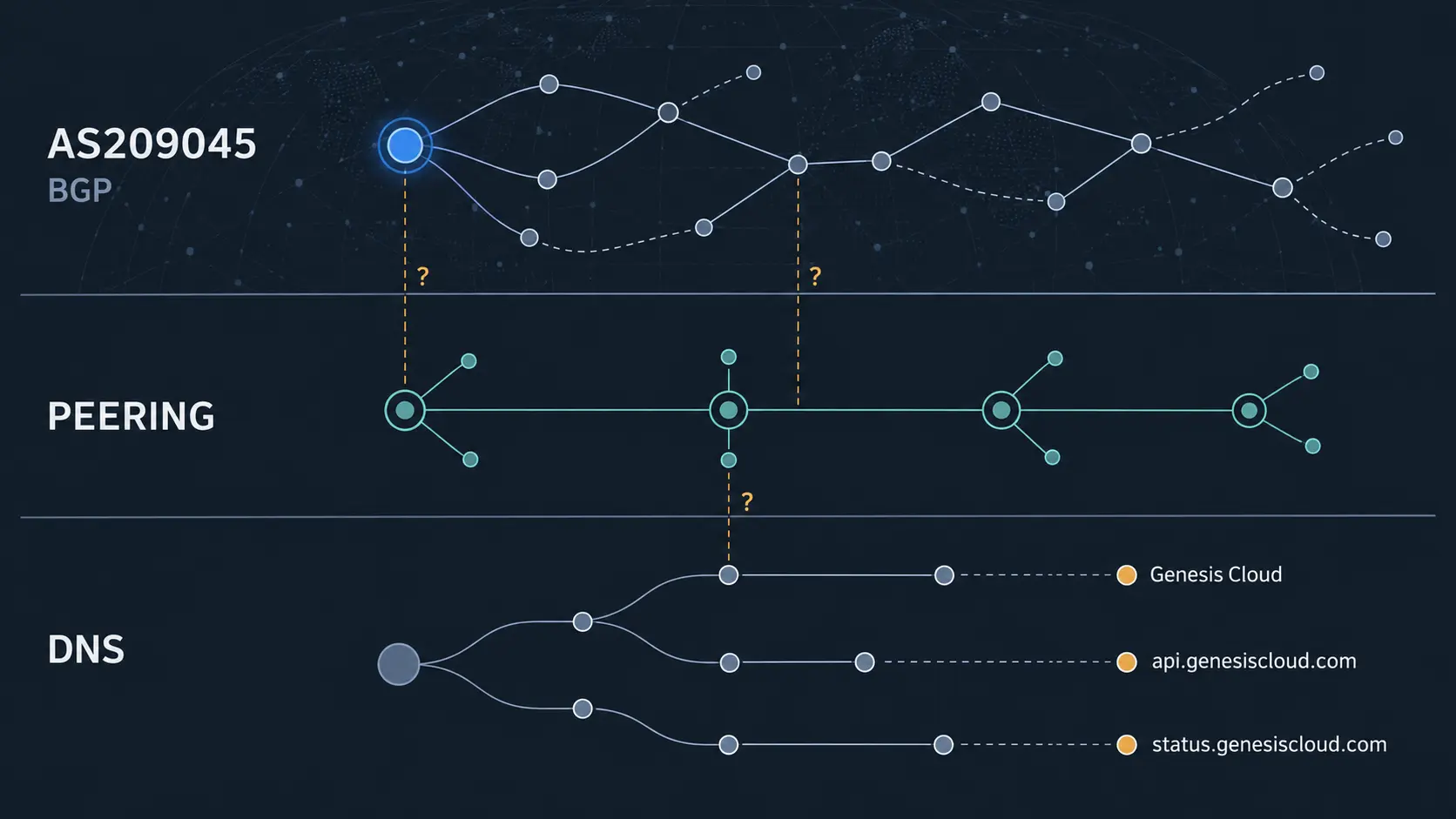
Genesis Cloud’s Network Control Plane: When AS209045, DNS and Peering Still Do Not Prove Reachability
Public records can describe a cloud provider’s network identity without proving that customers have an independently observable path to its applications. Genesis Cloud’s case is therefore less a question of whether one registry entry is authoritative than of whether several…

CASE FILE
RFC 9919's SHA-1 Count Is Not a Retirement Receipt
RFC 9919 gives OCSP operators a useful migration signal: log the hash algorithm used by clients. It does not turn a falling counter at one responder into proof that every relying party has left SHA-1 behind.

History
The Page Had One Character Universe, Whatever Bytes Carried It: RFC 2070
Two HTML files could carry different octets and still present the parser with the same character. RFC 2070 made that result architectural rather than accidental: `charset` selected the decoder for the concrete resource, while HTML kept one abstract UCS document character set.…

History
The Password Left the Wire. Its Equivalent Stayed in the File: RFC 2069
“We do not store passwords,” an administrator might have said in 1997. “We store only their digests.” RFC 2069 made the first half of that reassurance meaningful on the network: a client could prove knowledge of a password without sending it in cleartext. It also made the second…

IETF
EVPN Can Select One Multicast Source. It Cannot Certify Redundancy.
A receiver may show one clean programme while two contribution sources are transmitting. RFC 9856 explains how an EVPN can suppress the extra copy. It does not establish that the surviving source was healthy, equivalent, or switched without loss. Those are separate operational…

History
Ned Freed and the Filename That Had to Be Reassembled Before It Could Be Distrusted
RFC 2231 let a long internationalised MIME parameter travel as numbered pieces. A receiver has to reconstruct the pieces in order before decoding them—but a valid result is still content-disposition metadata, not a safe pathname, an identity claim or permission to act.

History
The Version Number Promised the Next Message, Not This One: RFC 2068
In January 1997, an HTTP message that began with `HTTP/1.1` was making a carefully bounded promise. The label described the sender’s message format and the highest HTTP capability it could support in further communication. It did not say which HTTP/1.1 features this particular…

IETF
The Reply Crossed Three Domains. The Proof Did Not
RFC 9716 gives an SR-MPLS echo reply a route home when ordinary IP reachability ends at a domain boundary. Its label stack can be supplied in advance or assembled border by border. That makes inter-domain diagnosis practical; it does not turn one returned echo into proof that the…

History
RFC 2067: The Standard Deleted Three Legal Packet Shapes
In 1997, Internet engineers advanced IP over HIPPI by making the specification smaller. Three packet forms allowed by RFC 1374 disappeared: a short burst could no longer come first, the D1 area could no longer contain fill, and the D2 offset could no longer be nonzero. RFC 2067…