
Content Type
Research
Within the Content Type facet, Research intelligence gathers BTW.MEDIA articles that share the same editorial format, helping readers compare briefings, profiles, risk notes, market analysis, and event coverage without mixing different kinds of evidence. The page explains how this content type frames internet infrastructure events, company movements, governance decisions, operational signals, and public evidence across the site. Readers can compare which actors or infrastructure systems appear most often, how source quality changes interpretation, and whether the material is a durable profile, a time-sensitive event, a strategic market signal, or a governance development. The result is a useful search page for operators, investors, customers, analysts, and policy stakeholders who need to understand the consequence, timing, and evidence behind similar article formats.

Asia-Pacific Cloud Services
WalksCloud's Taiwan Cloud Bet Is Support Control, Not Cheap Compute
Walks Cloud Services is most convincing when it is read as a small Taiwanese operating partner, not as another commodity virtual-server seller. The hard economic judgement is that its chance to matter depends on controlling the customer problem around latency, Mandarin and local…

Global National Telecom
Washington State K-20 Telecommunications Network: The Public Backbone Bargain Behind Education Broadband
Washington State K-20 Telecommunications Network is best understood as a public infrastructure bargain, not a retail broadband brand: it gives schools, colleges, libraries and education agencies carrier-grade continuity by pooling demand, public governance, E-rate economics…

North America Regional ISP
Wholesail Networks and the Noel Legacy: The Hidden Wholesale Margin Beneath Northwest Fiber
Wholesail Networks is economically important because it sits in the part of the broadband stack where retail customers rarely look: controlled fiber routes, carrier handoffs, local peering, and the ability to turn regional distance into wholesale margin. The hard judgement is…

Asia-Pacific Cloud Services
Wide Host Media and the Thin Economics of Indonesian Local Cloud
Wide Host Media should be read as a real Indonesian hosting operator with visible local network and colocation surface, not merely a brochure reseller, but the economic judgement is still cautious: its advantage sits in Bandung and Jakarta proximity, support, and low-entry…

Asia-Pacific Cloud Services
Wind Cloud Macao Looks More Like A Resource-Control Play Than A Local Cloud Platform
Wind Cloud Macao is economically interesting because it sits in the gap between Macao's demand for local, compliant, low-latency infrastructure and the limited public evidence that the company itself controls a full local cloud operating layer. The hard judgement is that Wind…

Latin America and Caribbean Regional ISP
Witmac Internet and the Tehuacan margin behind regional broadband
Witmac Internet is not trying to out-scale Telmex, Izzi, Totalplay or Megacable across Mexico. Its business case is narrower and more demanding: turn local coverage, low entry prices, mixed fiber and wireless delivery, office-based service, neighborhood installation, and…

Asia-Pacific Regional ISP
World Phone Internet Services: The Indian ISP Selling A Circuit Relationship
World Phone Internet Services: The Indian ISP Selling A Circuit Relationship intelligence summary explains the development, the public evidence available to readers, the organisations involved, the regional context, market exposure, and the infrastructure consequences that may…
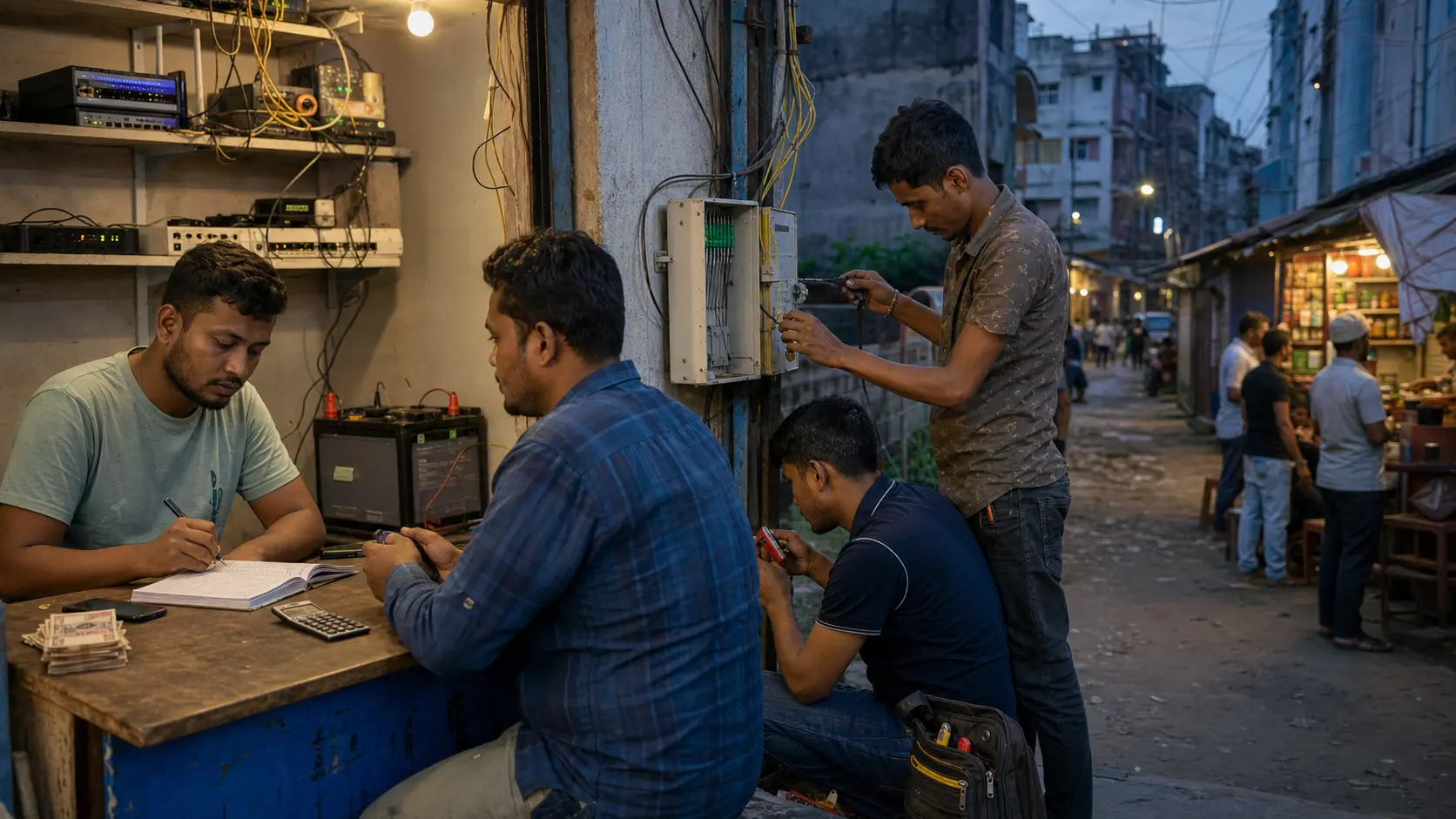
Asia-Pacific Regional ISP
World Faith Communication and the trust economics of a small Dhaka broadband operator
World Faith Communication is not publicly visible as a large Bangladeshi access network. Its public case is narrower and more revealing: a Mohakhali-based, BTRC-licensed ISP whose economics depend on prepaid household discipline, repair responsiveness, local collection, and…

Global Regional ISP
Worldstar Network and the Thin Economics of a Taiwan Hosting Name
Worldstar Network is best read as a real Taiwan hosting and colocation name with a long public history, not as an invented brand, but the current economic judgement is cautious: the surviving evidence supports a small local infrastructure-service business and historical network…

Asia-Pacific Cloud Services
Xenax Cloud's India Bet Is Support Economics, Not Hyperscale Capacity
XENAX CLOUD INDIA PRIVATE LIMITE is best read as a young Indian hosting operator trying to turn small-business cloud frustration into rupee-priced support contracts. The public record points to a real company, a real AS number, a visible Banda, Uttar Pradesh address, and a broad…

Latin America and Caribbean Cloud Services
SkyOnline and the Argentine Trust Hedge Behind Local Cloud
SkyOnline de Argentina S.A. is best understood as a Buenos Aires infrastructure hedge: a local data-centre and cloud operator that tries to sell financial-district proximity, power resilience, carrier choice and private-cloud control to Argentine companies that face dollar costs…

Story
Language as an evidence filter in AFRINIC policy
Language is not a courtesy layer in AFRINIC policy; it is an evidence filter that decides which operators can turn operating harm into material objections before scarce-number rules harden.

Story
Remote AFRINIC meetings and the controls behind speaking and voting
Remote participation can widen AFRINIC's governance room, but legitimacy depends on the platform controls, identity checks, proxy rules and assurance record that decide who can speak and vote.

Story
AFRINIC representation after travel, language and time costs
AFRINIC shows that formal openness is not the same as representation: travel, language, time, legal budget, employer permission and procedural fluency decide whose voices become visible in registry governance.

Story
Why silence cannot carry consent in AFRINIC governance
In AFRINIC's scarce-address politics, quiet is not proof of agreement; non-response can reflect exclusion, fatigue, operational overload, legal caution, fear, rational apathy or distrust.

Story
The framing power in AFRINIC scarce-address disputes
AFRINIC shows why the first economic decision in scarce-address governance is often the framing decision: whether a dispute is named as conservation, liquidity, development, abuse, compliance, fairness, capital control or institutional legitimacy.

Story
AFRINIC chair rulings as a channel of registry value
Chair discretion in AFRINIC's policy process is not mere meeting management; in a scarce-address registry, rulings on scope, objections, last call and rough consensus can move economic value without a formal vote.

Story
The procedural workload behind AFRINIC policy proposals
Policy openness is not costless: in a scarce-address registry, the people who can afford to draft, track, revise and monitor proposals repeatedly gain a structural advantage over the operators most exposed to the result.

Story
AFRINIC conflict rules as safeguards for public ledger decisions
Conflict rules are not etiquette for a scarce-address registry; they are the machinery that shows whether private interests can steer public ledger decisions.

Story
Controlling valuable ledger changes at AFRINIC
Corruption risk in a scarce-address registry is not only a matter of misconduct; it is a question of whether valuable ledger changes are controlled, evidenced and reversible.