
Content Type
Research
Within the Content Type facet, Research intelligence gathers BTW.MEDIA articles that share the same editorial format, helping readers compare briefings, profiles, risk notes, market analysis, and event coverage without mixing different kinds of evidence. The page explains how this content type frames internet infrastructure events, company movements, governance decisions, operational signals, and public evidence across the site. Readers can compare which actors or infrastructure systems appear most often, how source quality changes interpretation, and whether the material is a durable profile, a time-sensitive event, a strategic market signal, or a governance development. The result is a useful search page for operators, investors, customers, analysts, and policy stakeholders who need to understand the consequence, timing, and evidence behind similar article formats.

Global Cloud Services Trends
A billion-dollar security alliance still needs an evidence ledger
NTT DATA and Palo Alto Networks have set a large commercial ambition for a deeper global alliance. The useful test is not the headline value but whether customers can see where platform responsibility ends, managed-service responsibility begins, and an outcome becomes measurable.
Global Institutional Trends
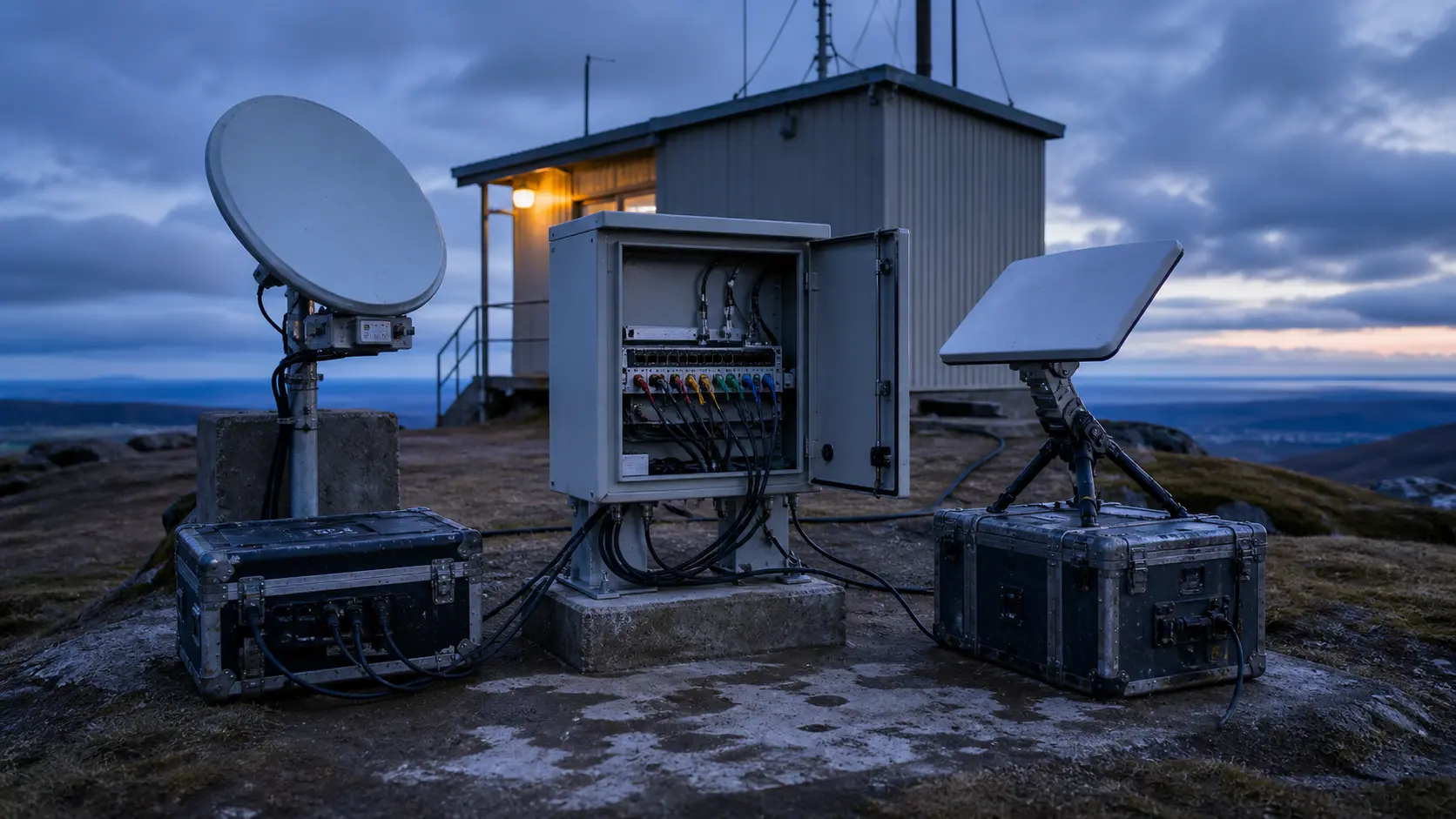
A satellite terminal is not public infrastructure until the buyer can leave
A dish on a roof is visible, countable and easy to photograph at launch. The harder public asset is the right to keep that site connected when the account holder changes, the subscription ends, a licence moves or the original supplier is no longer the right one.

History
When the Warning Reached the Wrong Server: The History of Path MTU Discovery
In 2015, Cloudflare found that a TCP flow and the ICMP warning meant to repair it could enter the same data centre and still reach different machines. The path had stated its limit. The server handling the connection never heard it. That incident exposed the institutional bargain…

Global Regional ISP Trends
IPv6 Extension Headers Are Becoming a Path-Compatibility Tax
The address answers. Ping works. Then the transport header moves 64 bytes deeper into an otherwise valid IPv6 packet, and the path goes quiet. Basic reachability survived; optional capability met the smallest parser on the route. It is a compact demonstration of how a protocol…

Asia-Pacific National Telecom Trends
Y.3335 standardizes the path, not the service
ITU-T has approved a common framework for low-latency, energy-efficient communication across operator domains. Y.3335 can align how networks describe the problem, but it does not yet prove that a multi-operator path will meet a latency target, consume less energy or survive a…

CASE FILE
The Public Path Looked Cleaner. Its History Had Been Rewritten: BGP Private-AS Removal and the Authority to Erase a Hop
The customer route arrived with three private autonomous systems in its path. At one public exit they vanished. At another, one survived. At a third, all three returned wearing the provider's number. Each operator had configured something called private-AS removal. The public…

CASE FILE
Trusted channels, no command: who can speak for FIRST in a cyber crisis?
A warning enters a trusted channel during a cross-border incident. Three decisions follow, and they do not belong to the same institution: who may enter the room, who may speak for the network, and who may act on an affected system. FIRST has substantial control over the first…

CASE FILE
Empowered without a vote: what the IGF Leadership Panel can actually command
The IGF Leadership Panel was designed to carry messages, recruit senior attention and find resources. Appointment by the UN Secretary-General gives that work institutional access. The operative rules still leave the annual programme with the MAG, execution with the Secretariat…

ICANN
The drafting room behind root advice: who controls the RSSAC Caucus pipeline?
Most RSSAC reports are built in a body far larger than the committee that formally approves them. The current rules make that division visible: experts may propose, research and draft; root server operator representatives keep the gates for admission, scope, amendment and…

ICANN
The security advisers the Board appoints: where SSAC authority stops
Three dates describe the gate. On 25 November 2025, an internal membership committee recommended three candidates. On 10 December, SSAC approved them by consensus. On 25 January 2026, the ICANN Board appointed them. Expertise entered through a committee of incumbents and acquired…

CASE FILE
A database governed by its entries: who gets a vote in PeeringDB?
A legal business entity can cross PeeringDB's membership threshold with two credentials: an active account and a representative or role subscribed to the governance list. The vote that follows is real. It is also only the first layer of authority over a database whose daily…

CASE FILE
The Tag Fit. The Authority Did Not: BGP Large Communities and the Namespace That Executes Policy
The route carried exactly the value the interconnection handbook prescribed. One provider acted on it, another erased it, and a third would have accepted the same instruction from a party that had never been authorized to give it. Twelve octets solved the numbering problem. They…

IETF
Jana Iyengar and the Connection That Outlived Its Address
A QUIC connection can continue when a device changes networks, but the old session cannot lend every old assurance to the new path. RFC 9000 preserves connection state narrowly, then demands fresh evidence for reachability, sending limits, congestion, ECN and privacy.

CASE FILE
The Route That Knew Nothing and Reached Everything: BGP Default Origination and the Authority of Last Resort
A customer still had an Established BGP session, a selected `0.0.0.0/0` and several successful probes. Most of the Internet had nevertheless become unreachable. The route with the widest scope had survived the loss of the service it was supposed to summarize.

CASE FILE
The Path Was Shorter Because the Evidence Was Gone: BGP ATOMIC_AGGREGATE and the Authority to Compress
The `/22` remained visible, its origin stayed valid and every external session was green. One of the four `/24`s beneath it had nevertheless disappeared. The public path looked cleaner at precisely the moment when the network knew less about the destinations it claimed to reach.

IETF
Sally Floyd and the Test That Throughput Alone Could Not Pass
A faster flow can be a worse network result. Sally Floyd’s work on congestion-control evaluation shows why a headline rate must be tested against delay, loss, fairness, instability, difficult paths and the traffic it displaces before an algorithm earns a wider deployment.

Global National Telecom
Boldyn's £1bn Tube network must earn its 20-year lock-in
Four mobile operators can share one radio and fibre layer beneath London instead of attempting four separate builds. That is sensible engineering. It is also a twenty-year concentration of operating power, financed before the network produces mature cash. Boldyn has to prove that…

CASE FILE
The coalition that spoke for operators: who authorized TCCM at WSIS+20?
TCCM placed registry and infrastructure operators inside the WSIS+20 consultation record with unusual persistence. The record shows who spoke, which organizations endorsed two important submissions and where the final United Nations text matched the coalition’s requests. It does…

CASE FILE
The Internet Saw One AS. Operations Had Twelve: BGP Confederations and the Authority of a Hidden Topology
The public route never changed. External peers still saw AS 64500, the sessions remained Established and the prefix stayed visible in collectors. Inside the network, however, one router had crossed from Member-AS 65021 to 65031 while its neighbor still believed the old boundary.…

CASE FILE
The Router Could Not Read the Attribute, So It Forwarded It: BGP's Partial Bit and the Authority of Ignorance
This technical explainer opens with a constructed operating scenario, not a reported incident. The transit router does exactly what the protocol asks: it receives a route carrying an optional transitive attribute it does not understand, preserves the opaque bytes, sets Partial…