
Content Type
Research Analysis
Within the Content Type facet, Research Analysis intelligence gathers BTW.MEDIA articles that share the same editorial format, helping readers compare briefings, profiles, risk notes, market analysis, and event coverage without mixing different kinds of evidence. The page explains how this content type frames internet infrastructure events, company movements, governance decisions, operational signals, and public evidence across the site. Readers can compare which actors or infrastructure systems appear most often, how source quality changes interpretation, and whether the material is a durable profile, a time-sensitive event, a strategic market signal, or a governance development. The result is a useful search page for operators, investors, customers, analysts, and policy stakeholders who need to understand the consequence, timing, and evidence behind similar article formats.

Story
AFRINIC Can Count 4,498,432 Reserved Addresses. It Cannot Publicly Explain the Count
AFRINIC’s daily statistics can tell an exact story about stock and almost none about state change. On the 20260827 serial, 4,498,432 IPv4 addresses sat behind one word—`reserved`—even though AFRINIC publicly describes three quite different reasons for placing addresses there.

Story
RIPE NCC Put “Public Arguments” Inside Its Sponsorship Conflict Test
RIPE-866 is designed to protect neutrality from money and influence. Its hardest line does something broader: it treats litigation, arbitration, public argument and other conflict as neighbours, then carries the test from a disputing party to anyone associated with one. That may…

Story
LACNIC Cut Its Recovery Window to Three Months in 2015. One Procedure Page Still Says Six
LACNIC has a clean public record of shortening its resource-recovery publication period from six months to three. It also has a current operational page and policy manual that use the shorter clock. The unresolved problem is simpler and more practical: another public procedure…

Story
ARIN-2026-4 Calls Two Clauses Redundant. The Replacement Needs a Scope Map
ARIN’s consolidation draft says two IPv6 clauses can be retired without meaningful change. That may be right. But the old and proposed sentences do not name the same subjects, duties or qualifiers, so redundancy should be demonstrated proposition by proposition while the text is…

Story
APNIC’s prop-167 Status Needs Two Rows
APNIC did publish the hourly directory statistics its community asked to see. The live files make that success unusually easy to verify. They also make a second fact harder to ignore: `prop-167-v002` asked for another output, and the Executive Council gave it a different…

Story
The Date Line in 4.10: When ARIN’s Interpretation Becomes Text
`ARIN-2025-8` would put `within the ARIN service area` into NRPM 4.10 as a codification of existing staff practice. Its timetable says `Immediate`, while its comments say staff has no intention to extend the restriction to allocations issued before implementation. The statements…

Story
AFRINIC’s Bandwidth Upgrade Cannot Be Closed by Uptime Alone
A service can remain switched on, connected to the Internet and technically available while every useful interaction through it becomes slower. AFRINIC’s February capacity notice described that middle state. Its own service commitment shows why restoring performance requires a…

Story
RIPE NCC’s Five-Year Restriction Now Turns on “Involved”
RIPE-791 attached a later application to two named roles around a former member: contact person and representative. RIPE-863 replaces those roles with a different test—whether a person provided fraudulent or misleading data or was `involved` in providing it. The five-year period…
Story
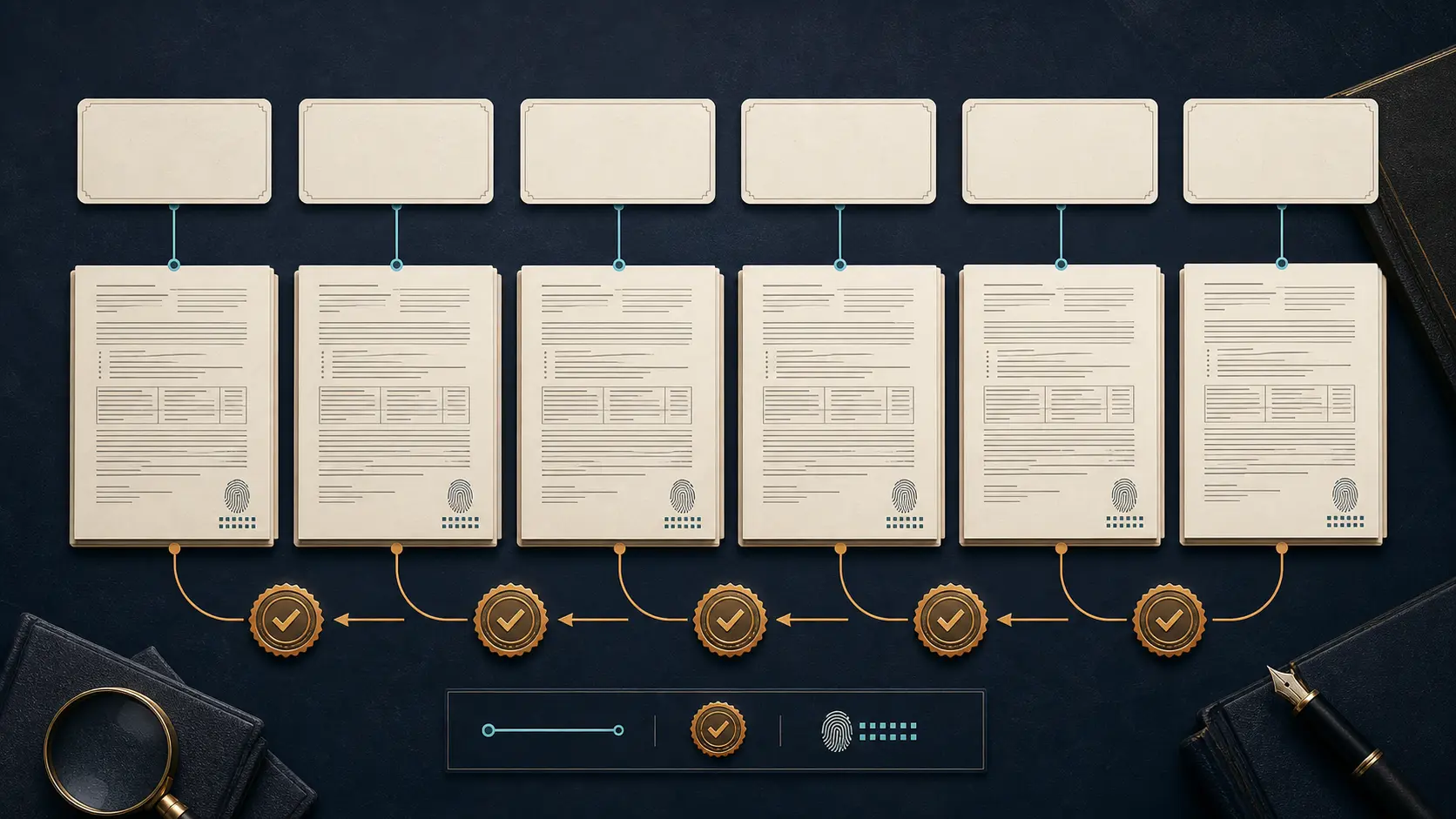
Six Minutes Are Published. LACNIC’s Summary Column Says Nothing
LACNIC’s 2026 Board page presents six meetings, six dates and six links to approved minutes. Beside them sit six empty `Summary of activities` cells. The records exist; the map into the records does not. That difference determines whether a reader can find a decision without…

Story
ARIN’s 75% Gate Depends on a Plan That Can Change
Sixty assigned prefix units are 75% of a plan containing 80 units. The same sixty are only 60% of a revised plan containing 100. No address has moved, yet the qualification result has. Draft Policy `ARIN-2026-2` makes that possible in principle because its proposed…

Story
APNIC’s First IPv6 PI Request Has No Previous Assignment
APNIC’s `prop-175-v001` offers to remove a peculiar round trip: issue a `/48`, wait for deployment, invite the applicant back, receive much the same network plan and assess the larger need a second time. Reusing the later-stage test is economical. It is also a change of state…

Story
One Portal, Four Unfinished Clocks
MyAFRINIC v2 has become more than a software project: AFRINIC's own records place four materially different policy paths behind the same portal milestone, making it necessary to prove each implementation separately rather than letting one launch announcement stand for all four.

Story
The Commitment Must Keep Its Name: RIPE NCC’s Missing Annual Ledger
RIPE-862 offers a precise starting chain: **Internet Resilience, Scalability and Routing Security**; the service-level objective **Security**; and the key metric **Internet Number Resources covered by ROAs and ASPA**. The next links—a costed 2027 Activity Plan and Budget…

Story
AFRINIC’s petition proposal needs a receipt for every step from Board silence to implementation
AFRINIC’s Draft01 responds to a real institutional failure: a registry cannot leave policy work frozen whenever its Board cannot act. But its alternative route—from fifteen supporters to a new staff analysis and then deemed ratification—still lacks the evidence controls that…

Story
LACNIC’s Election Commission Can Assign a Candidate to a Country They Are Not a Citizen Of
In 2025, LACNIC published an Electoral Commission candidate as a citizen of Uruguay and a resident of Brazil, then ruled that his long residence and economic activity meant he would occupy Brazil’s country slot. The official result and current roster continue to list him as…

Story
The second consultation placed Board review before a future SGMM vote
AFRINIC’s 4 August announcement described a careful sequence for moving constitutional text from public comments to committee revision, independent legal scrutiny, Board review and, only if the Board allowed the proposal to advance, later consideration by members. The important…

NANOG
The Corporation NANOG Built—and the Networks It Did Not Own
When NANOG left Merit’s institutional shelter, the decisive transfer concerned a trademark, a domain, archives, contracts and financial responsibility—not routers, address space or the authority to speak for North America’s autonomous networks.

Story
Resolution 201804.407 Renewed the CEO Contract Before Final KPIs and Performance Evaluation
AFRINIC’s Board approved a three-year renewal on the same employment terms at a special meeting on 19 April 2018, even as its own resolution deferred finalising the chief executive’s KPIs and performance evaluation until May. The surviving sequence supports a precise governance…

Story
AFRINIC’s Interim Management Committee Was Given Six Months. Who Renewed It?
AFRINIC gave three senior employees collective responsibility for day-to-day management during its CEO vacancy and said the arrangement would last six months or until a new chief executive arrived. The announcement was public; the full authority chain was not. Using the…

Story
Eight elected seats in one notice: what AFRINIC’s 12 September result proves
AFRINIC’s brief announcement did something institutionally significant: it named an occupant for every member-elected Board seat in a single exceptional reconstitution cycle. Yet the notice remains a declaration, not a complete result receipt. Its evidentiary value becomes clear…