
Content Type
Analysis
Within the Content Type facet, Analysis intelligence gathers BTW.MEDIA articles that share the same editorial format, helping readers compare briefings, profiles, risk notes, market analysis, and event coverage without mixing different kinds of evidence. The page explains how this content type frames internet infrastructure events, company movements, governance decisions, operational signals, and public evidence across the site. Readers can compare which actors or infrastructure systems appear most often, how source quality changes interpretation, and whether the material is a durable profile, a time-sensitive event, a strategic market signal, or a governance development. The result is a useful search page for operators, investors, customers, analysts, and policy stakeholders who need to understand the consequence, timing, and evidence behind similar article formats.

History
The Fiber Was Fast. The Service Was Still a System: RFC 1077
In 1988, optical fibre made terabit-scale raw capacity imaginable before the Internet knew how to turn it into ordinary service. RFC 1077 located the harder work beyond the glass: switches, hosts, allocation, management and proof of what a path actually delivered.

History
The Queue Accepted a Job. It Had Not Printed a Page: RFC 1179’s Two Acknowledgements
In a networked print system, the easiest status word is usually the least useful one: accepted. A client has opened a connection, named a queue, sent files and received zero-valued acknowledgements. That is real evidence. But it is evidence of a bounded exchange with a line…

History
HEMS Left the Protocol Race. Its Data Model Stayed in the Room: RFC 1076
In 1988 the Internet chose a short-term management protocol, and one rival stepped aside to make agreement possible. Seven months later, that rival published a remarkably rich query language anyway. RFC 1076 is the record of what selection can retire, what it can preserve, and…

History
The Ring Could Share a Filter. It Could Not Prove a Group: RFC 1469’s Multicast Boundary
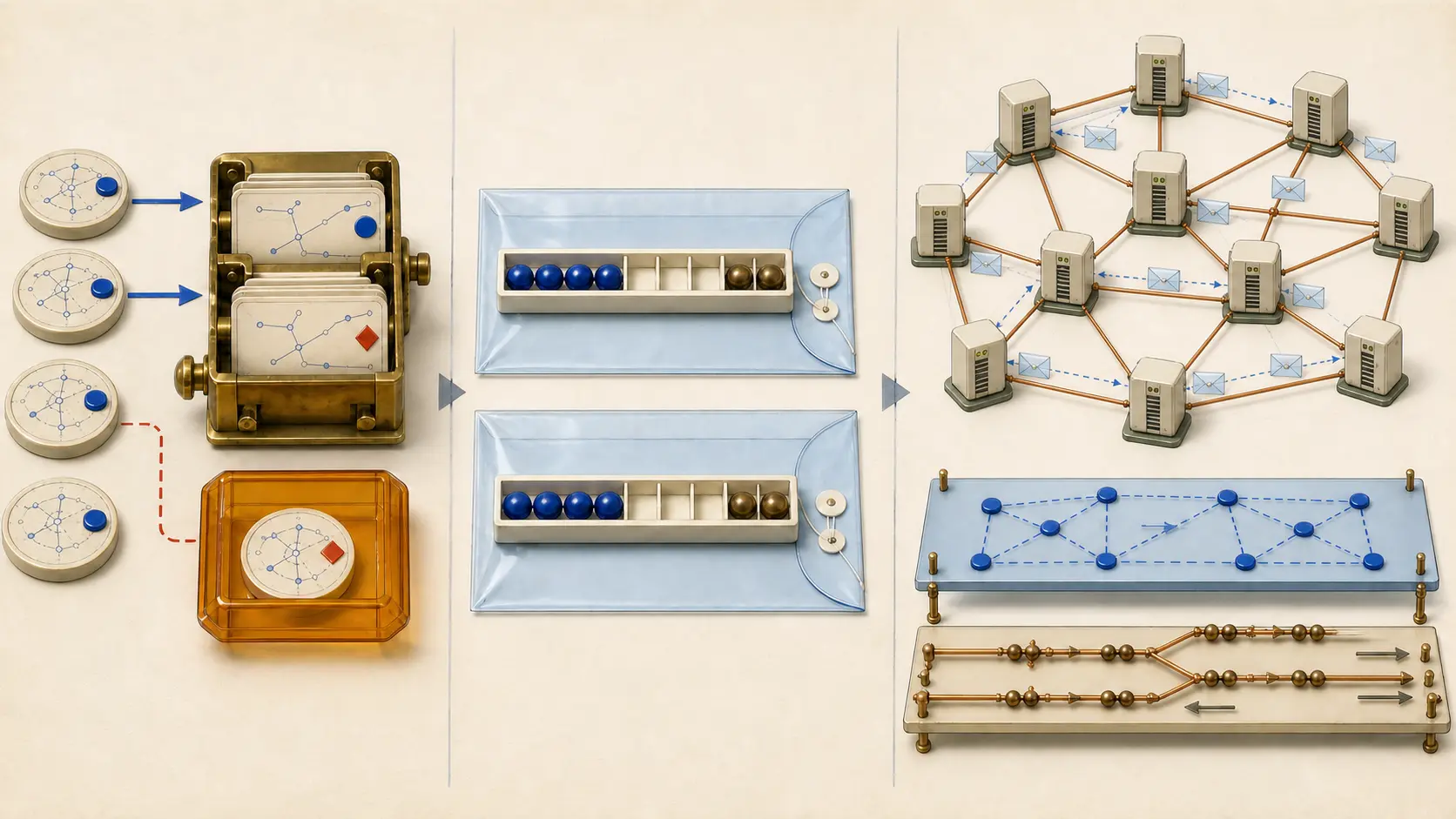
In the early 1990s, IP multicast met a local medium with an awkwardly small vocabulary. A Token-Ring adapter could be told which hardware destinations to accept, but its scarce functional addresses could not give each IP group a private physical label. RFC 1469 solved the…
History
NSFNET Put IP Inside an OSI Address. Policy Still Chose the Route: RFC 1074
Thirteen T1 sites did not become one routing domain by choosing a pure protocol family. The 1988 NSFNET backbone carried IS-IS control packets over IP, fitted Internet addresses into NSAP-shaped fields, and let a policy database decide which EGP claims could become interior…

History
The Client Owned the Window. The Server Owned the Reaction: RFC 1073 and Telnet NAWS
An 80-by-24 terminal window became 80-by-64 without opening a new Telnet connection. Four small values crossed the link, and the remote host gained a better chance of placing its cursor correctly. Nothing in that exchange required the host to use the new geometry. RFC 1073 made…

History
The Name Was Local. The Number Still Needed a Record: RFC 1101’s DNS Mapping Boundary
In 1989, DNS could already distribute host information, but it did not yet offer a standard way to ask what a network number was called. RFC 1101 proposed a small answer: use PTR records, host-zero names and masks in `IN-ADDR.ARPA`. Its lasting discipline is equally small. A…
History
The Internet Was the Link, Not the Network: RFC 1070's Experimental OSI Boundary
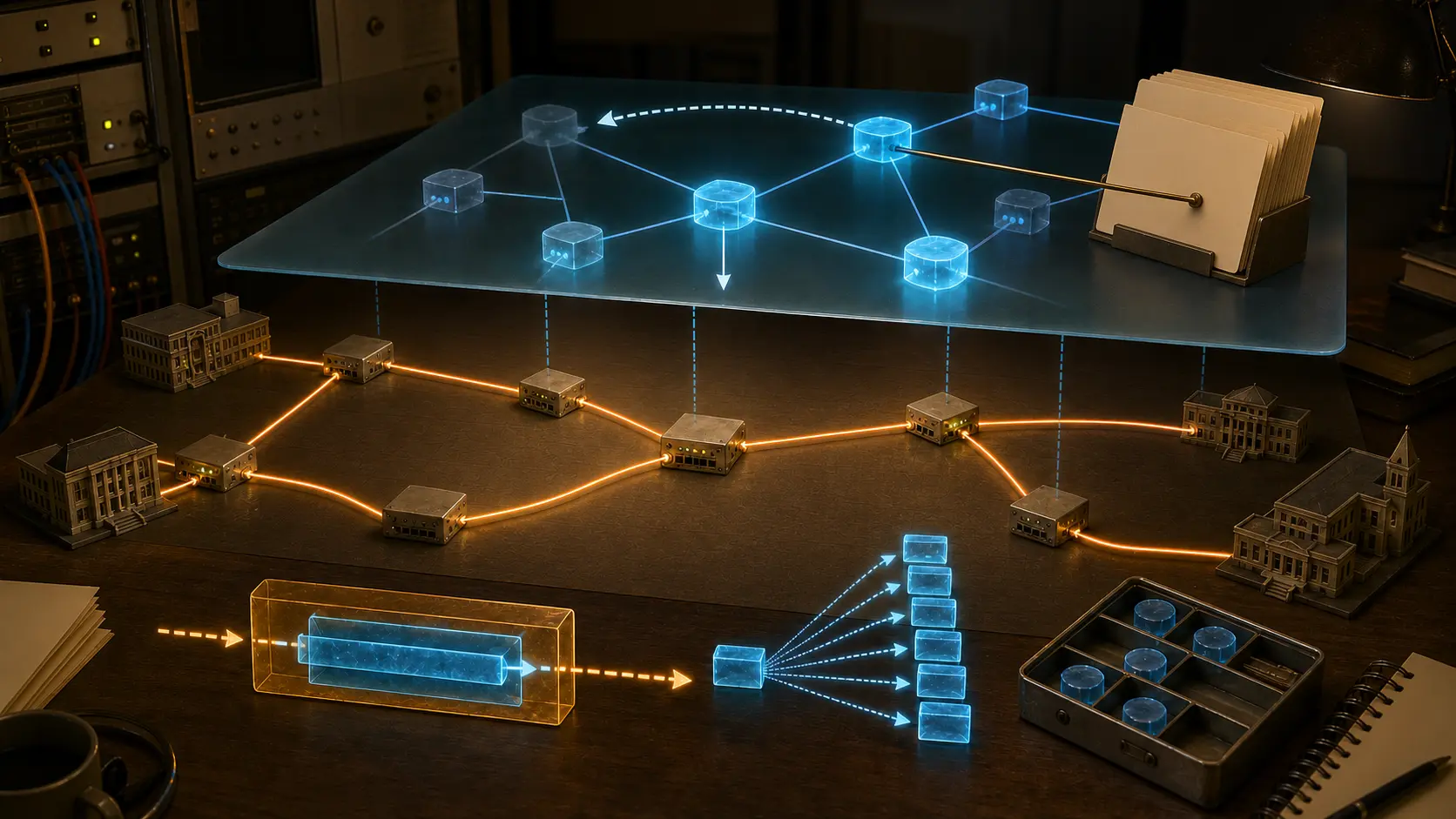
In one of RFC 1070's imagined laboratories, two machines could exchange their OSI roles without changing either Internet address or cable. Every host would remain reachable by IP. Yet the experimental network could briefly lose its new router because an old list still pointed…

History
The Request Was Queued. The File Still Had to Move: RFC 1068 and BFTP's Completion Boundary
In 1988, an Internet file-transfer experiment made the instruction outlive the terminal session. A user could leave after submitting a job; a daemon would remember, retry and report later. That persistence solved a human waiting problem, but it also created a new fact that was…

History
The FDDI Frame Carried IP. It Did Not Carry Identity: RFC 1188’s Encapsulation Boundary
An FDDI interface could put an IP datagram onto a fast local ring only after several small facts agreed: which link grammar carried the payload, how large a packet could be, and which local hardware address represented an IP neighbour. RFC 1188 made those facts interoperable in…

History
The Low-Delay Packet Was Given Less Room to Wait: RFC 1046's Queuing Bargain
In one of the Internet's early experiments with differentiated service, the faster class did not receive an infinite fast lane. It received a smaller waiting room. RFC 1046 proposed that a node bound delay by limiting the low-delay queue, discarding overflow and capping the…

History
The Mailbox Was a Contact. It Was Not a Control Room: RFC 1173’s “Oral Tradition”
Before the Internet had a single operational mythology, it had a more modest arrangement: if a problem crossed a boundary, someone needed to be reachable on the other side. RFC 1173, published in 1990, made that arrangement visible. Its lasting lesson is not that a role mailbox…

History
A Policy Sentence Was Not a Network Control: RFC 1087 and the Limits of “Acceptable Use”
In 1989, the Internet Activities Board could identify conduct that threatened a shared research facility. It could say that intentional intrusion, disruption, waste, destruction and privacy compromise were unacceptable. What it could not do with a sentence was observe an act…

History
The Bit Preserved a Return Path. It Did Not Authenticate the Request: RFC 1044's HYPERchannel SRC
In a physical network, an address can do something concrete without saying who is entitled to act. RFC 1044 gave HYPERchannel messages a Source Address Correct bit that could survive only while the declared return address remained usable in reverse. That was valuable path…

History
The Speed Was a Display Hint. It Was Not the Link: RFC 1079’s Telnet Boundary
In 1988, a remote terminal program could know something useful about the terminal at the other end without pretending to know the network between them. RFC 1079 made that distinction unusually crisp. It let one Telnet peer request a pair of terminal speeds and let the other peer…

History
Before DHCP, Four Bytes Chose the Grammar: RFC 1048 and BOOTP's 64-Octet Limit
Before a diskless machine could fetch its operating system, it needed enough network knowledge to ask for one. BOOTP carried that knowledge in a field only 64 octets long. RFC 1048 made the field intelligible across vendors with four opening bytes and a compact option…

History
The Name Was the Address. It Was Not a Route: RFC 1088’s IP-over-NetBIOS Mapping
In February 1989, RFC 1088 made an unusually literal bargain between two naming systems. A host carrying IP over NetBIOS would derive a 16-byte NetBIOS name from its IP address: `IP.XX.XX.XX.XX`, with each `XX` written as ASCII hexadecimal. The name was meant to let a NetBIOS…
History
Four Bytes Put a Message in TCP. They Did Not Rebuild the OSI Network: RFC 1006’s TPKT Boundary
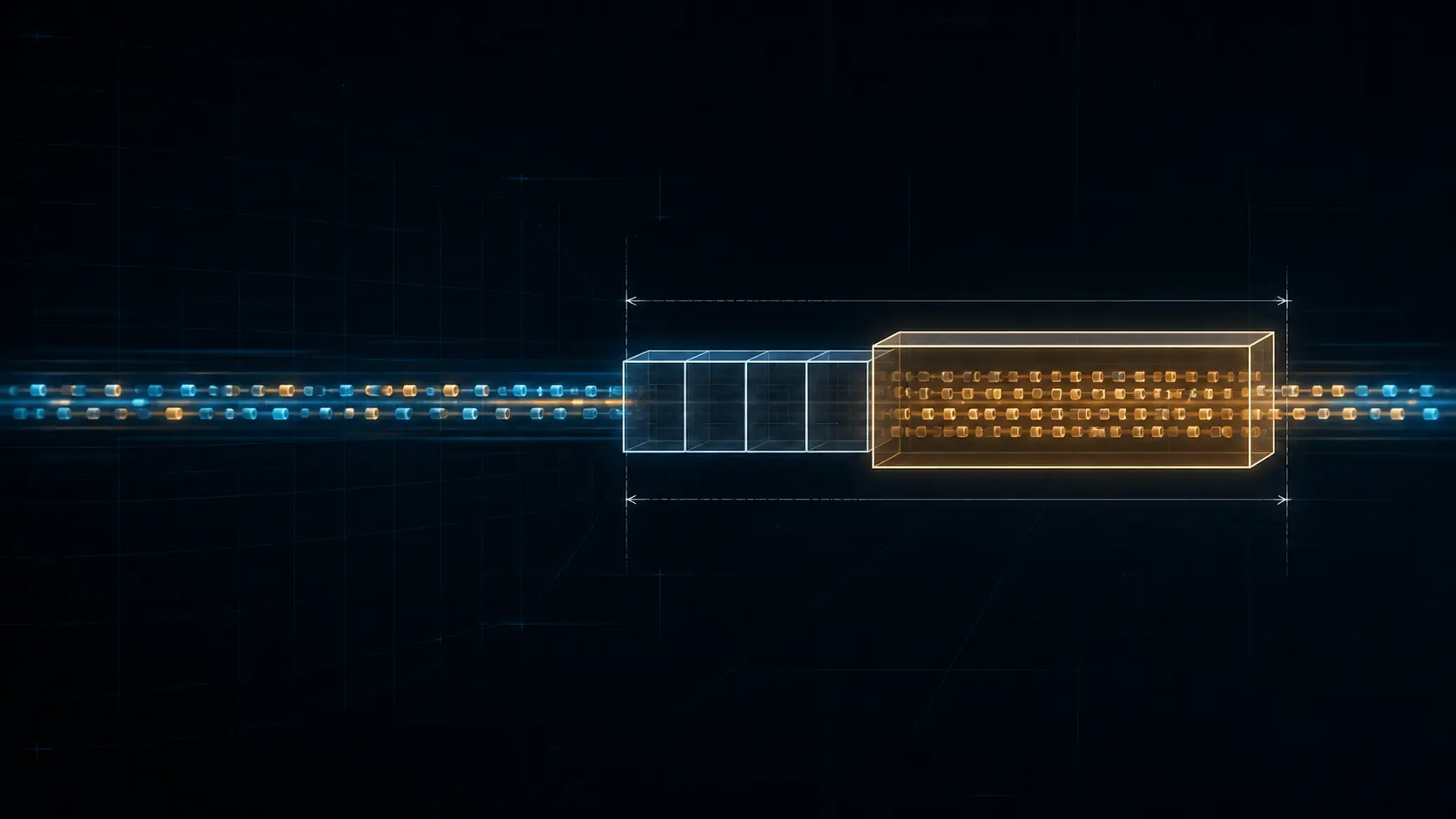
TCP can deliver every byte in order and still decline to say where one application-shaped entity ends. In 1987, RFC 1006 addressed that awkward fact for ISO Transport over TCP with a remarkably small intervention: put four octets before a TPDU, then make the receiver count. The…

History
The Token Found the Connection. It Did Not Admit the Subflow: MPTCP's MP_JOIN Boundary
One new TCP SYN can propose to become part of a connection that began somewhere else, on another address pair, minutes earlier. That is the useful oddity in Multipath TCP. It is also where a casual description—“the session moved”—loses the decisions that keep continuity from…

Story
LACNIC and the economics of transition architecture beyond RIRs
A transition test built around functions, records and authority—not around the fantasy that scarce network resources can govern themselves.