
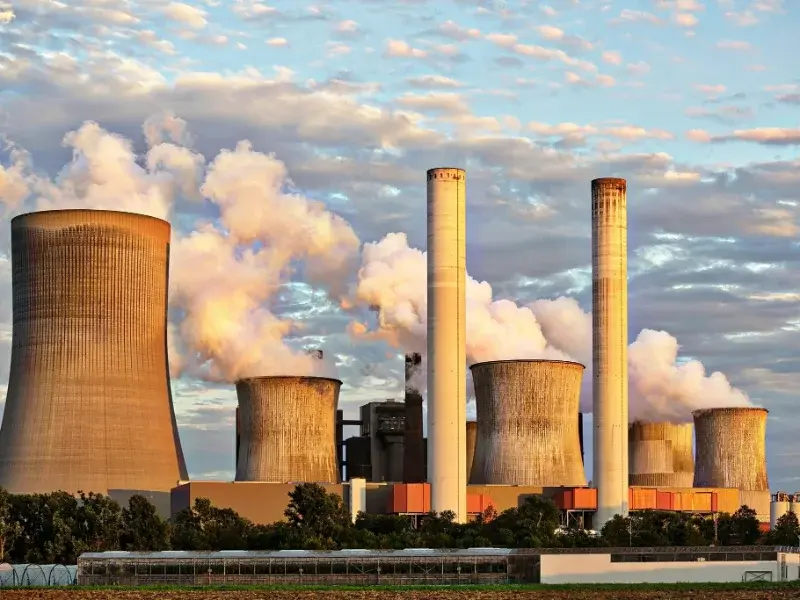
- Nuclear power plants generate electricity through the combined action of three parts: nuclear reactors, steam turbines, and cooling systems.
- The safety design of nuclear power plants is very important, with the aim of protecting the reactor from external intrusion and protecting the outside from radiation in the event of an internal failure.
Nuclear power plants consist of three main sections: the reactor building, where nuclear reactions occur; the turbine room, where steam generated from these reactions drives turbines to produce electricity; and the spent fuel storage building, which safely stores radioactive materials. Together, these sections form a critical infrastructure for generating electricity from nuclear energy while ensuring safety and environmental responsibility.
Also read: Microsoft hires nuclear expert to fuel its data centres
Also read: US looks to nuclear to address AI data centre power shortage
What are three main sections of a nuclear power plant
A typical nuclear power plant has three main parts: 1) Reactor building. 2) Turbine room. 3) Spent fuel storage building.
1.Reactor building
The reactor building and spent fuel building are usually built to withstand damage, but the turbine room has little protection unless the nuclear power plant uses a boiling water reactor, where the steam from the reactor is used directly to spin the turbines. In this case, the turbine room needs to be protected because the steam from the reactor is radioactive and can be dangerous if released into the air.
2. Steam generators/Turbines
The heat generated by the reactor core is used to create steam in the steam generators. This high-pressure steam then drives a turbine connected to a generator, converting mechanical energy into electrical energy.
3.Cooling system
Nuclear power plants require cooling systems to remove excess heat generated in the process. This typically involves cooling towers or large bodies of water (such as rivers or lakes) that circulate water through the reactors, which then releases the heat into the environment.
These parts work together to harness the heat generated by the nuclear reactions, converting it into mechanical energy and ultimately electrical energy for distribution, thereby generating electricity.
During the construction of the containment building for the Hualong One reactor at the Fangchenggang Nuclear Power Plant in China, a large crane was needed just to install the roof on the building, which was a very complicated operation, so it was not easy to build these buildings. In the Chernobyl nuclear accident, the Ministry of Electricity did not build the containment building because it was expensive and time-consuming to build a containment building.
Importance of containment buildings in nuclear power plants
In most modern nuclear power plants, the reactors are protected by 3 to 5 feet of concrete to withstand impacts and explosions. In older designs, such as those at Chernobyl or Fukushima, there is little or no containment to prevent the release of radioactive fallout. In boiling water reactors, the containment is usually a square building and is not as heavily protected as a pressurised water reactor containment, which is a cylindrical building made of thick concrete. Non-light water reactors have less containment because the reactors themselves are safer, so there is less chance of releasing radioactive material. For example, the Magnox reactors used in the UK have a different style of containment than the light water pressurised water reactors in the United States. Non-light water reactors also use containment, such as the Candu reactor, and the type of containment used actually depends on the type of reactor used.
New reactor technologies under study
France is exploring the development of a new generation of reactors, such as SMRs (small modular reactors), molten salt reactors (MSRs) and high temperature reactors (HTRs). These reactors offer the following advantages:
Improved nuclear safety: Emerging technologies aim to make reactors safer and more resistant to nuclear accidents.
Better use of resources: Some of these reactors can use fuel more efficiently, reducing the amount of radioactive waste.