
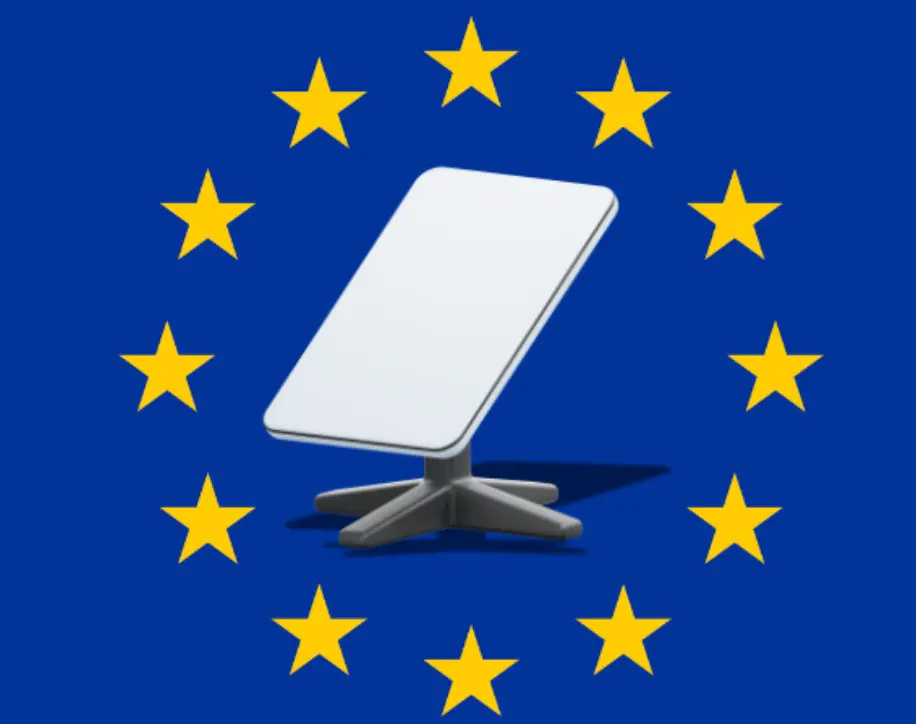
- The European Union has launched IRIS², a multi-orbital satellite constellation with 290 satellites designed to compete with Starlink, offering secure, high-speed broadband to European governments, businesses, and citizens.
- Backed by a €10 billion initial investment and a public-private partnership, IRIS² is set to enhance Europe’s space capabilities, improve connectivity in remote areas, and boost the region’s strategic autonomy by 2030.
What happened: New satellite network aims to strengthen Europe’s space and security capabilities
The European Union has greenlit the IRIS² satellite project, a major initiative aimed at creating a European-led alternative to SpaceX’s Starlink. IRIS², which will consist of 290 satellites in both Medium Earth Orbit (MEO) and Low Earth Orbit (LEO), is designed to provide secure and high-speed connectivity for governmental users, businesses, and European citizens. The project is supported by the SpaceRISE consortium, which includes major European space firms like SES, Eutelsat, Hispasat, Thales, Airbus, and OHB, alongside telecom operators such as Deutsche Telekom and Orange.
This initiative follows growing demand for satellite connectivity services and is seen as a direct response to the increasing global presence of Starlink. The EU has allocated €10 billion in initial funding, with the aim of offering reliable and resilient satellite-based communication services to European stakeholders by 2030. IRIS² aims not only to provide connectivity but also to ensure greater autonomy and security for the region in the face of growing global competition in the space sector.
Also read: Empowering remote operations: Emma Sinclair on Marlink’s hybrid satellite networks
Also read: Vega-C successfully launches ESA’s sentinel satellite
Why it’s important:
The launch of IRIS² marks a significant step in Europe’s efforts to strengthen its space capabilities and reduce reliance on external satellite providers. With Starlink already dominating the satellite internet landscape, particularly in remote areas, the EU’s new project represents a strategic move to enhance Europe’s digital sovereignty and security.
IRIS²’s focus on offering both governmental and commercial services will ensure that European governments, businesses, and citizens benefit from secure and high-speed connectivity. Moreover, the partnership between public and private entities, including the European Space Agency and telecom companies, underlines the EU’s commitment to innovation and collaboration. By establishing itself as a key player in the satellite internet market, IRIS² not only challenges Starlink’s dominance but also reinforces Europe’s position in the global space race.
This satellite infrastructure project also holds broader geopolitical significance, as it contributes to Europe’s strategic autonomy in space and communication technologies, ensuring that the region can safeguard critical infrastructure and maintain a competitive edge in global connectivity solutions.