
Summary
- Ericsson’s 13 October 2026 announcement changes the formal designation and intended physical setting of its Athlone R&D operation, which Ericsson and IDA Ireland describe as the company’s global R&D headquarters for AI-enabled software and autonomous network solutions.
- The announcement does not establish a quantified incremental investment, net hiring commitment, occupancy date, construction milestone, customer deployment or measured operating outcome. The separately announced €200 million three-year R&D programme from April 2025 must not be treated as new October building capex.
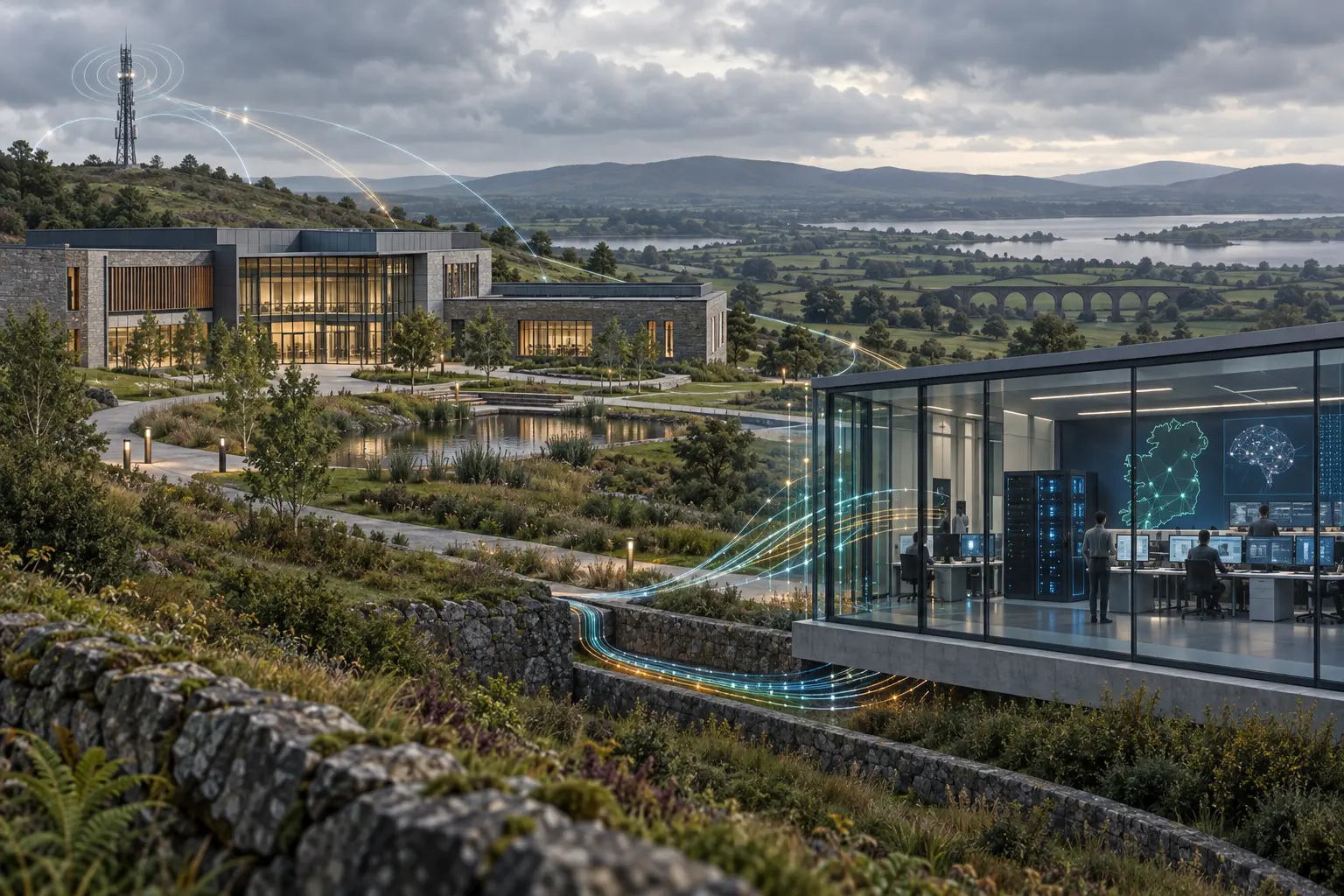
The important change in the 13 October announcement is therefore institutional as much as physical. Ericsson says it will relocate its Athlone R&D site to a purpose-built facility on the IDA Ireland campus. Ericsson and IDA Ireland characterize Athlone as Ericsson’s global R&D headquarters for AI-enabled software and autonomous network solutions. That gives the site a more explicit mandate within Ericsson’s stated technology agenda, but the announcement does not provide enough financial or operational detail to price the incremental change.
That distinction matters because the language of a “global R&D headquarters” can easily be read as a proxy for expansion. The available evidence does not support that shortcut. Ericsson says the existing Athlone operation employs more than 1,300 people and has received more than €3 billion in investment since 2000. Those figures describe the established base. They are not evidence of 1,300-plus new positions or €3 billion of new investment associated with the October announcement.
There is also a separate investment record that needs to remain separate. On 24 April 2025, Ericsson announced a €200 million, three-year R&D programme at Athlone, supported by IDA Ireland. The programme focuses on high-performing programmable networks and includes work involving the Ericsson Intelligent Automation Platform and rApps. Nothing in the 13 October 2026 announcement turns that earlier programme into additional building expenditure or a new October commitment. It is a distinct announced programme with its own three-year period.
The technology rationale is nevertheless material. Ericsson’s release describes work involving AI and machine learning for secure and efficient network management, multi-vendor and multi-technology 4G/5G RAN operations, platforms, cloud-native software and analytics. These are Ericsson’s stated areas of activity and ambition. They indicate why a dedicated facility and headquarters designation could matter to the company’s operating model, but they do not demonstrate that autonomous-network products have already produced customer-proven operating improvements.
The evidence boundary is particularly clear on delivery. The October announcement does not give a quantified cost for the new building, a net hiring forecast, a relocation or occupancy date, or a construction milestone. It also names no customer deployments and reports no measured operating results for autonomous networks. A planned move is consequently not the same thing as a delivered facility, and a formal mandate is not the same thing as demonstrated market impact.
For infrastructure leaders, the useful reading is neither to dismiss the announcement as a property move nor to treat it as a completed expansion. A more defensible interpretation is that Ericsson is formalizing Athlone’s intended strategic role while leaving the scale and timing of the incremental change to future evidence. The site already has a substantial investment and employment base; the new designation potentially concentrates additional organizational importance there.
That creates a practical question for observers: what changes after the announcement? The answer cannot be established from the announcement alone. The strongest future evidence would include an actual occupancy or relocation milestone, changes in net headcount, identifiable spending against the separately announced €200 million programme, product releases, named customer deployments and measured operational effects. Those indicators would convert a strategic designation into evidence of delivery and impact.
Sources
Member Briefing
Deeper Profile Context
Sign in with the right membership level to unlock the full briefing and source notes.
Only for Strategic Circle
Strategic Circle
Open to all readers. Unlock profile briefings after joining and signing in.
Join Strategic CircleOnly for Leadership Alliance
Leadership Alliance
For qualified IP-asset owners and management; sign in to unlock alliance briefings.
Join Leadership Alliance