Summary
- A Canada Energy Regulator inspection officer ordered Enbridge Pipelines Inc. on 19 March 2026 to stop using two chainsaw sled units after near-misses at a spill-response exercise, and gave the company until 30 April to confirm permanent removal from its inventory or submit engineer-reviewed upgrade documentation.
- The notice dated 7 May 2026 states that the situation was remedied to the officer's satisfaction and ticks the box saying the order's measures were satisfied. It records neither route, nor the submission that arrived, nor a finding.
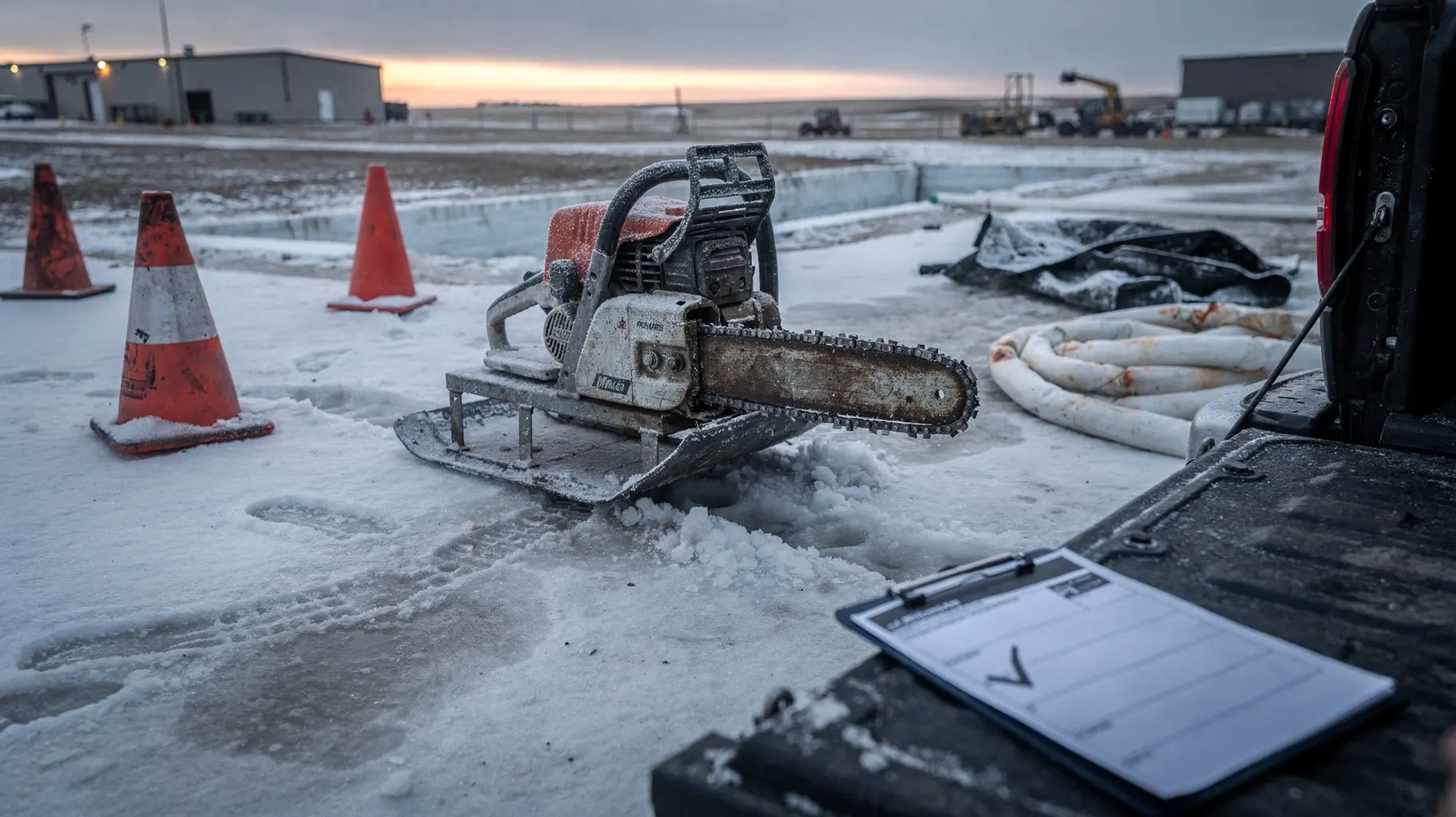
The ice-slotting exercise at Regina, Saskatchewan, was training for winter crude oil spill response. On or about 11 February 2026 a Canada Energy Regulator inspection officer attended it, and the order that came out of that compliance verification records why: near-miss occurrences in which a rotating blade nearly came into contact with the lower extremities of operators in training. On 19 March 2026 at 2:10 pm MST the officer made a verbal order under section 109 of the Canadian Energy Regulator Act, and the written order took effect immediately on delivery that day (Inspection Officer Order No. DWL-001-2026).
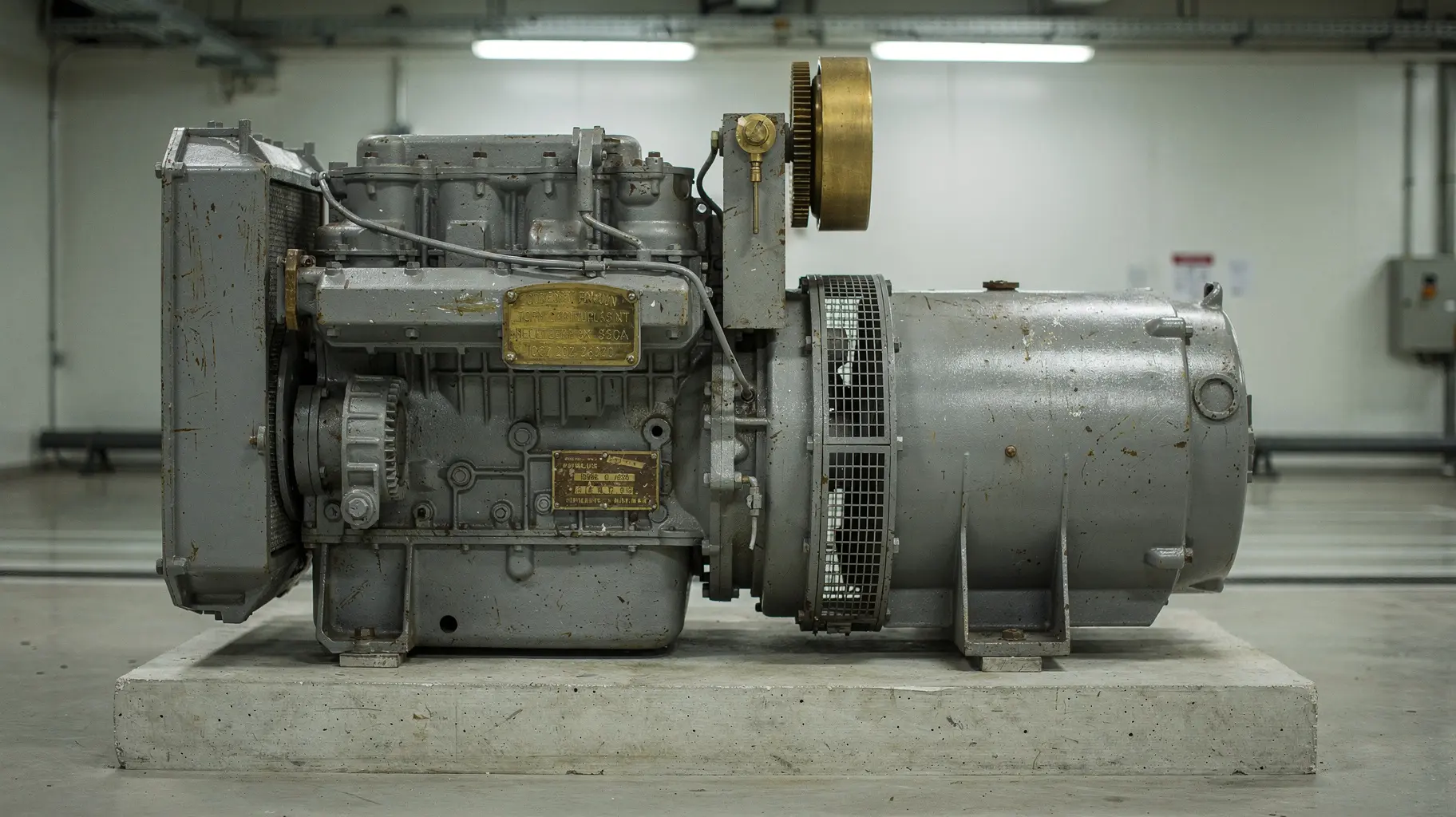
The equipment was an early-model chainsaw sled unit in a Honda-Stihl GX390 configuration, and Enbridge confirmed two such units in its inventory. The order attributes the hazard to the design of the unit — handle configuration, no automatic shut-off, an inadequate locking pin, missing full-height guards, no safety documentation — and concludes that continued use is an unsafe condition. Then it does something unusually exact. Enbridge was to cease all use, deployment and training with the GX390 units immediately and confirm within five days that they had been tagged out of service.
By 30 April 2026 the company was to confirm permanent removal of the two sleds from its spill-response equipment inventory, or submit engineer-reviewed upgrade documentation for the regulator's approval. The units could not return to service without written approval from inspection officers. Failure to comply with a section 109 order is an offence under section 112.
Two routes, deliberately different. Removal takes two units out of an inventory. An upgrade keeps them in service and moves the burden onto an engineering file and a regulator's written approval. Both are lawful compliance, and each leaves behind a different physical fact and a different document. The order does not say which route it expects.
Nineteen March to 30 April is 42 days. The notice is dated 7 May, 49 days after the order, and it runs to one page. The undersigned Canada Energy Regulator Inspection Officer notifies Enbridge Pipelines Inc. that the hazardous or detrimental situation described in Order No. DWL-001-2026 has been remedied to the satisfaction of the Inspection Officer. Then a box, marked: the measures specified in the Order have been satisfied. The notice carries the same compliance verification number, CV2526-062, as the order. The signature block is redacted, so the officer who closed the file is not named on the page (Notice to Resume Work or of Measures Satisfied).
The notice does not say which of the two routes was taken. Across the order, the notice, the consolidated enforcement registry and the regulator's 1 April 2026 release — the four documents read for this piece on 20 November 2026 — no document states whether the two units were removed from the inventory or upgraded and approved, what Enbridge submitted on or before 30 April, or who attested it. That is a bound on four documents and not a claim about a file nobody has seen. The file exists. The published record stops where the checkbox begins.
The registry row behaves like what it is, a lifecycle index: order DWL-001-2026, issue date 2026-03-19, no associated variance or amendment, a Notice of Measures Satisfied dated 2026-05-07, recipient Enbridge Pipelines Inc. in Regina, Saskatchewan, described in one line as use of outdated ice-cutting equipment during a training exercise that posed an unacceptable risk of serious injury to workers (Reports on Compliance and Enforcement). A reader can date the file to the day. A reader cannot test what closed it.
The regulator's release of 1 April 2026 fills in one detail that matters. During the February exercise, officers observed employees using an older ice cutting sled model that would tip forward and expose the blade to the user. Enbridge modified and cleared the sled. Officers reassessed it as still unsafe (What's New, 1 April 2026). The company's own clearance was therefore the judgement the order displaced, and the notice restores a judgement in a phrase — to the satisfaction of the Inspection Officer — without recording the test behind it.
This is not a story about an operator slipping out of an order. The order is a strong instrument: named equipment, a named hazard, dated steps, an offence provision and a ban on returning the units to service without written approval. A two-route remedy is a defensible design, because a company that would rather engineer a fix than scrap a tool should be allowed to. The gap sits in the last page, and it is a gap of design rather than of conduct.
Adjudication leaves a different trace. On 28 April 2026 the Commission decided a toll complaint about the Canadian Mainline, and a secondary legal summary of that letter decision presents its operative sentence in a familiar form: for the reasons that follow, the Commission concludes that the terms in the Support Agreement fall within its toll and tariff mandate and that the tolls, calculated without crediting, are just and reasonable and not unjustly discriminatory (OGEL summary of the 28 April 2026 letter decision). That is a summary and not the decision itself, which was not opened for this piece. The contrast still holds. Where a disputed entitlement and a shipper's money are at stake, the instrument carries reasons. Where near-misses with a rotating blade are at stake, the closing instrument carries a box.
Other pipeline paperwork does give the moment of knowing its own field. The instructions for PHMSA Form 7000-1, revision 4-2023, collect the local time and date of Confirmed Discovery in question A20, separately from the accident time in A4 and the time of the initial National Response Center report in A21a (PHMSA Form 7000-1 instructions). The instructions were read as a search-returned excerpt and not as a completed post-2010 accident report, so treat that as a design fact rather than a description of filing practice. The design lesson is plain. A regulator can decide that the moment a company knew deserves its own box. Nothing on the notice of 7 May gives the moment of proving one.
The financial side of the same relationship is published in a form that sharpens the contrast. The Commission's 2025–26 annual report describes the polluter-pays financial-resources regime under sections 136 to 142 of the Canadian Energy Regulator Act and lists Enbridge Pipelines Inc. as Oil Class 1 with an absolute liability limit of $1 billion and an approved Financial Resources Plan, inside a range the report puts at $200 million to $1 billion for oil pipelines (Annual Report of the Commission, Appendix J). A regulator can attach a billion dollars of standing exposure to this operator's file, and it appears in our directory entry for Enbridge Pipelines Inc.. On the last page of a worker-safety order, it settles for a tick.
The fix is three fields, not a new procedure. The notice should print which of the order's two routes was taken, the date the company's submission arrived, and the attestation the closure rests on — a removal confirmation, or engineer-reviewed upgrade documentation with the approval attached. The order already required that evidence by a stated date. Printing what arrived beside the box would cost the regulator a column, and it would let a stranger check the one thing the file now cannot show: whether the sleds left the inventory or were rebuilt, and who said so.
BTW has read Enbridge three times before. A September 2026 briefing weighed a C$2.6 billion offering against a US$2.55 billion Tallgrass cash consideration. A July 2026 analysis asked whether Line 6B safety, alarm diagnosis, restart authority and riverine response behave as one auditable system. A 2025 event note covered an AT&T solar power purchase agreement. All three treat Enbridge as a counterparty, a financed entity or a failure-and-response system. This piece reads the enforcement file's own paperwork, because that is where a regulator's assurance lives or dies.
Order DWL-001-2026 remains the best document in the file. It says what was wrong, what had to stop, what had to be proven and by when. Everything after 30 April is a phrase. A file that can be dated and cannot be tested is not a closed file. It is a closed envelope.
Member Briefing
Read the full trend briefing
Members read the full briefing with the source notes behind every finding.
Strategic Circle
A daily briefing in your language, built from changes we have verified.
Join for USD 20/monthCancel anytime.
Members also get the full research library, a daily briefing on the networks they follow and the private forum.