
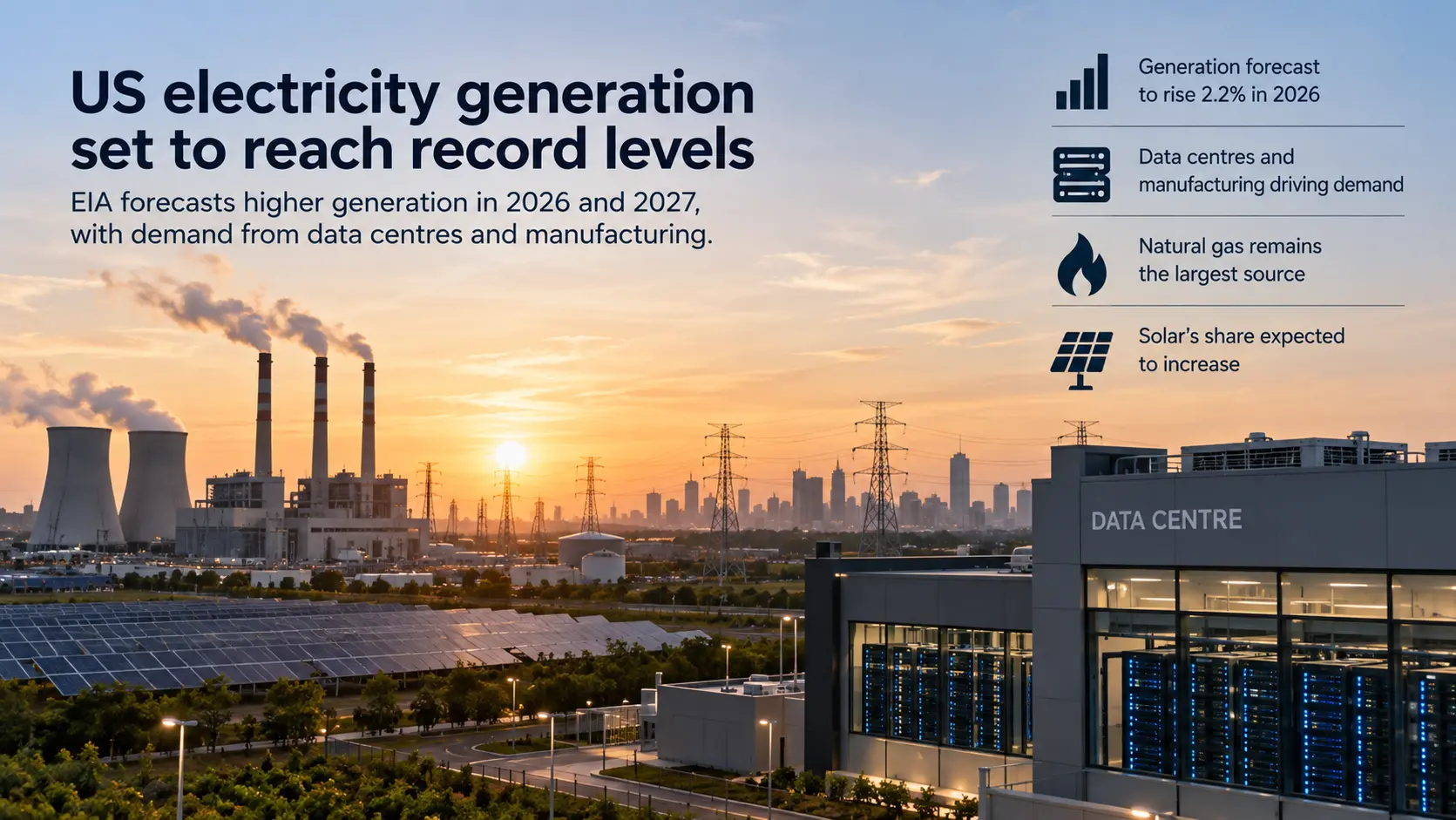
- EIA forecasts US electricity generation will rise 2.2% to a record 4,368 billion kWh in 2026 and grow again in 2027
- Data centres and manufacturing are contributing to demand growth, while natural gas remains the largest source of US electricity generation
The fact
US electricity generation is forecast to reach a record 4,368 billion kilowatt-hours in 2026, the Energy Information Administration said in its September Short-Term Energy Outlook. The agency expects generation to rise 2.2% from 2025 and increase by a further 1.7% in 2027.
EIA said growing electricity use by data centres and manufacturers is contributing to higher commercial and industrial demand. It expects particularly strong growth in the West South Central region, which includes Texas, and said the region remains the largest contributor to forecast sales growth despite a pause in some new Texas data-centre projects.
Natural gas is expected to provide about 40% of US electricity generation in both 2026 and 2027. Solar's share is forecast to rise from 8% to 9%, while coal's share falls from 16% to 14%. EIA separately forecasts retail electricity sales of about 4,135 billion kilowatt-hours in 2026 and 4,211 billion in 2027. The agency attributes the increase to several sources of demand, including data centres and manufacturing, rather than data centres alone.
The assessment
Record national generation does not mean electricity will be available to every new data centre when it needs it. A project can sit in a market where overall supply is growing and still face a long wait for a local grid connection. For developers, the EIA forecast is useful evidence of rising demand, but it does not replace a utility agreement or a confirmed date for power delivery.
The generation mix matters for a different reason. Solar is gaining share, but natural gas is still expected to provide about 40% of US electricity. A data-centre operator making claims about renewable or lower-carbon power therefore needs to show what electricity its own facility will buy rather than rely on the national trend.
For BTW readers, the forecast provides useful context for where US electricity demand is heading. The more important evidence for an individual data-centre project remains local: when power can be delivered, how much is available and what supply arrangement sits behind it.
What to watch
Watch whether later EIA forecasts continue to raise expected electricity demand as more data centres and manufacturing projects develop. At project level, utility connection dates and power-purchase arrangements will show whether growing national generation is translating into electricity that new data-centre campuses can actually use.
Member Briefing
Deeper Profile Context
Sign in with the right membership level to unlock the full briefing and source notes.
Only for Strategic Circle
Strategic Circle
Open to all readers. Unlock profile briefings after joining and signing in.
Join Strategic CircleOnly for Leadership Alliance
Leadership Alliance
For qualified IP-asset owners and management; sign in to unlock alliance briefings.
Join Leadership Alliance