
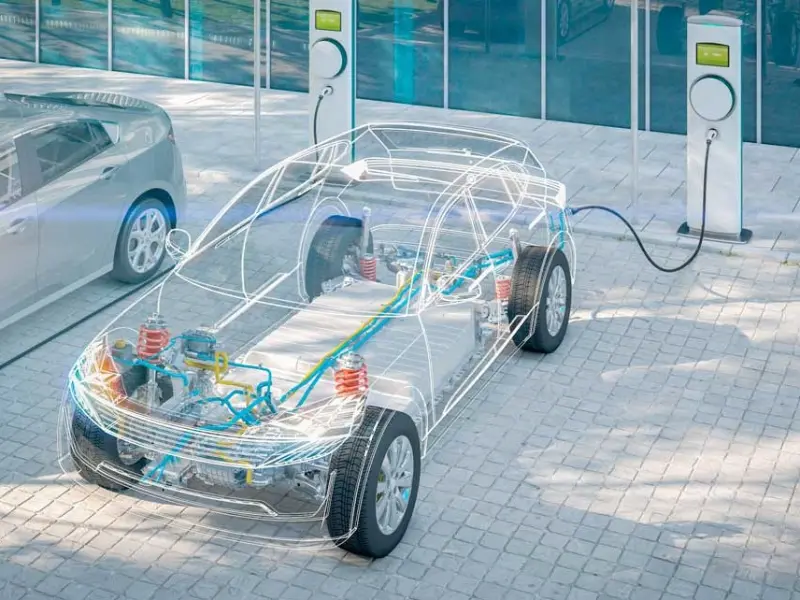
- Electric cars need cooling to keep batteries and other key parts at the best working temperatures for performance and safety.
- The latest technological advances in electric vehicle cooling systems mainly focus on liquid cooling, heat pipe cooling and phase change material cooling
The advent of electric vehicles (EVs) has marked a significant shift towards sustainable transportation. However, the intricacies of their operation, particularly the thermal management of their batteries, are paramount to their performance and safety. The resounding answer to the question, “Do electric cars need cooling systems?” is an affirmative one.
Electric vehicles require cooling systems to ensure that batteries and other critical components operate within the optimal temperature range for vehicle performance and safety.
Why EVs need cooling systems
- Optimal performance: EVs rely on lithium-ion batteries, which, like all batteries, generate heat during operation. Maintaining a stable temperature range of 15°C to 35°C is crucial for peak performance and longevity of the battery.
- Safety precautions: Overheating can lead to thermal runaway, a potentially hazardous situation where the battery’s internal reactions spiral out of control, risking damage or even fire.
- Enhanced charging efficiency: The process of fast charging generates substantial heat. Effective cooling systems are essential to facilitate safe and efficient charging without causing damage to the battery.
- Cold weather function: In low temperatures, batteries can suffer from reduced efficiency. Cooling systems with heating capabilities can ensure the battery operates at an optimal temperature even in cold conditions.
Also read: 5 differences between AC and DC EV chargers
Types of cooling systems
- Air cooling: Utilizes the circulation of air to dissipate heat. It’s a straightforward method but may not be as efficient as liquid cooling, especially in high-performance or hot climate scenarios.
- Liquid cooling: Involves circulating a coolant through the battery pack to absorb and disperse heat more effectively. This method is well-suited for EVs that require long-distance travel, have larger battery packs, or are subject to high thermal loads.
- Phase change material (PCM) cooling: PCMs absorb heat as they change state, providing a thermal buffer. They are particularly useful for maintaining a constant thermal load and stable ambient temperatures.
- Thermoelectric cooling: Uses the Peltier effect to transfer heat from one side of the device to another, creating a cooling effect. This method can be used in conjunction with other types for precise temperature control.
Also read: 4 different types of cooling systems
The latest technologies in EVs cooling systems
The latest technological advances in electric vehicle cooling systems mainly focus on liquid cooling, heat pipe cooling and phase change material cooling, as well as the research and application of immersion cooling technology.
- Liquid cooling technology: This is the most common and mature cooling method at present. Liquid cooling systems keep batteries in the optimal operating temperature range by circulating coolant around the battery to remove excess heat. New DuPont™ eCool technology is one of these innovative liquid cooling technologies that not only improves the performance of the cooling lines, but also increases the sustainability of electric vehicles.
- Heat Pipe Cooling: This technology utilises heat pipes to transfer and dissipate heat and is characterised by efficient heat dissipation.
- Phase change materials cooling: Phase change materials (PCMs) are widely studied for battery cooling because of their ability to maintain temperature stability while absorbing and releasing heat. This technology helps to reduce peak temperatures and temperature differences in batteries, extending their lifespan.
- Immersion cooling: Despite certain safety risks, immersion cooling technology is still attracting attention due to its advantages of simple structure, rapid cooling and good temperature homogenisation performance.
The cooling systems in electric cars are vital for ensuring the performance, safety, and longevity of EV batteries. As the EV market continues to grow, so too will the innovations in thermal management systems, aiming to address the challenges posed by various operating conditions and climates.