
Summary
- DalCOMTEL LLC is best read as a RIPE NCC local internet registry and Russian number-resource holder with public Khabarovsk registration evidence, a compact IPv4 allocation footprint and several third-party signals tying some routed address space to DalCOMTEL-named descriptions.
- The core business question is whether any local access, support, leased-line or resource-administration revenue can pay for upstream connectivity, field repair, address governance, compliance, equipment renewal and customer churn without relying on vague claims about being an ISP.
- The public evidence is real but bounded: RIPE records prove resource-holder status and registration detail, while current routing visibility is strongest around AS213890, a Novoros-Telecom autonomous system announcing DalCOMTEL-described prefixes, and older AS43874 references should be treated as historical or third-party signals rather than current proof of a live standalone network.
The Price Of Reliability Comes Before The Network Map
The first question for DalCOMTEL LLC is not how many prefixes appear in a routing table. It is who pays for a connection that keeps working when the cheapest substitute becomes inconvenient. Local network reliability has a simple economic structure. A household, small office, building owner, public body, shop, camera-system customer or local institution pays a recurring fee.
That fee has to cover the visible product, which is connectivity, and the invisible operating burden, which includes upstream capacity, local transport, equipment, power, on-site repair, customer support, billing, abuse response, regulated information handling, number-resource administration and the next round of replacement hardware. If the fee covers only the bandwidth label, the business can be busy and still destroy value.
That matters because DalCOMTEL is not publicly visible as a national carrier with a large consumer brand. The hard evidence places it in the governance and routing layer: a Russian local internet registry entry, a Khabarovsk address, RIPE organisation data, IPv4 resources and a set of public network-index references. The existing evidence does not prove that the company currently sells every service implied by the regional-ISP label. It does not prove a retail fibre footprint, a cloud platform, a wholesale transit platform or a managed-network business.
It proves a number-resource and administrative footprint, plus some routed address signals. The article therefore has to start with economic discipline. A resource-holder footprint can support a connectivity business, but the cash-flow test still has to be passed customer by customer.
The useful comparison is a local provider that wins because it is reachable, not because it is huge. A small operator can create value if customers pay for quick local response, known routing, familiar billing and practical repair. A large substitute can offer broader coverage, call-centre scale, mobile bundles, national procurement and deeper capital resources. DalCOMTEL's opportunity, if it is actively commercialising local connectivity, would be to serve accounts where locality and response time matter more than national advertising.
Its risk is that customers view fixed connectivity as a commodity until it fails, then expect expensive repair while resisting a price that funds that repair.
Reliability is not a slogan. It is an allocation of money. The operator has to buy enough upstream diversity to avoid single-supplier fragility. It has to maintain local links, route documentation, monitoring, spares and technician availability. It has to answer abuse complaints and registry requests. It has to comply with Russian telecom duties and the rules attached to address resources. It has to survive bad debt and churn. If a customer pays a low monthly fee and leaves after a promotion ends, the operator has funded connection cost for someone else's benefit.
If a customer pays a higher service price because downtime has a real business cost, the operator has a chance to earn a return.
The difference between those two customers is the whole investment case. Revenue growth alone would not be enough. A small provider can grow by accepting underpriced accounts, building thin routes, leasing scarce addresses too cheaply or chasing customers outside its natural repair radius. Value creation requires a different pattern: dense geography, stable accounts, recoverable installation cost, a price that reflects support burden, and enough technical control to respond when routes or facilities fail. DalCOMTEL should be judged by that harsher standard.
What The Public Record Actually Proves
The strongest public facts about DalCOMTEL LLC come from RIPE records rather than marketing copy. RIPE lists the organisation as ORG-AC26-RIPE, with the name DalCOMTEL LLC, country RU, local internet registry type, a Khabarovsk address on Turgenev Street, a Russian registration number and contact information. The organisation record was created in 2007 and has been modified in 2026. That establishes a long-lived registry presence.
It is important because local internet registry status is not decorative; it means the company sits inside the address-governance framework that allocates, records and maintains internet number resources in the RIPE NCC service region.
The same record set shows IPv4 resources connected to the organisation. RIPE data for 79.171.116.0 through 79.171.116.255 identifies the netname RU-ASIACOM-20071012, country RU, description AGRONET-NET, organisation ORG-AC26-RIPE, allocated-provider-aggregatable status, and DalCOMTEL-linked administrative and technical contact references. RDAP output for the organisation also shows the 79.171.112.0 through 79.171.114.255 allocation, the 79.171.116.0 through 79.171.116.255 allocation, and a 185.137.176.0 through 185.137.179.255 allocation in the same DalCOMTEL organisation context. Those address blocks are the concrete asset surface.
They do not automatically prove end-customer service, but they do prove that DalCOMTEL is more than a name in a list.
The routed view is more complicated. Current RIPEstat data shows AS213890, named novoros-as and held by NOVOROS-TELECOM LLC, as announced. RIPE data for that autonomous system lists import and export relationships with AS201776, AS28761 and AS6789. RIPEstat's announced-prefixes view for AS213890 shows six visible IPv4 /24 prefixes in the recent observation window: 91.207.115.0/24, 195.128.159.0/24, 79.171.116.0/24, 79.171.113.0/24, 91.207.114.0/24 and 79.171.112.0/24. Public BGP tooling also describes AS213890 as announcing six IPv4 prefixes and no IPv6 prefixes, with one observed IPv4 peer in the Hurricane Electric view.
Among those prefixes, 79.171.116.0/24 is described as DalCOMTEL LLC in several public routing and IP-intelligence datasets.
That distinction matters. The current route origin in the strongest public view is not a DalCOMTEL-named autonomous system. It is AS213890, with Novoros-Telecom naming and upstream relationships. Some route descriptions and IP-intelligence pages still attach DalCOMTEL to specific address space. That may reflect resource ownership, delegation, reassignment, operational cooperation, historical registration, or a customer and provider relationship. It should not be inflated into a claim that DalCOMTEL currently runs an independent access network under that AS. A careful reader separates resource evidence from operating-control evidence.
Older or third-party pages refer to AS43874, ASIACOM-AS, and DalCOMTEL LLC. Some show 2007-era assignment details, a Khabarovsk address, and 79.171.112.0/22 or 185.137.176.0/22 address ranges. Yet current RIPEstat reports AS43874 as not announced in the checked AS overview, and a direct RIPE REST lookup for AS43874 returned no current entry. That does not make every older reference useless. It means older AS43874 material belongs in the historical and corroborative category, not in the current-operating category.
The stronger present-tense signal is DalCOMTEL as an LIR and resource holder whose named address space appears in the AS213890 routing context.
Network Resources And The Limits Of Inference
IPv4 address space has strategic value because it is scarce, portable in some commercial contexts, useful for customer assignment and still central to many access and hosting environments. DalCOMTEL's resources therefore matter even if the public record is thin on retail service detail. A /24 can support business customers, static addressing, address leasing, small hosted services, network-management functions or local access customers. A /22 can support a bigger operating surface.
The value depends on whether the addresses are used to support profitable services, held for optionality, delegated to another network, or tied to a legacy arrangement that produces limited economic return.
RIPE data places DalCOMTEL inside the local internet registry system. That carries benefits and burdens. The benefit is governance access: the company can hold and administer resources under a recognised registry framework, maintain contacts, and interact with the number-resource ecosystem. The burden is that registry data has to be accurate, abuse handling has to work, and resource use can be scrutinised by customers, partners, registries and security researchers. An address block with poor reputation or unresolved abuse complaints can become a cost rather than an asset.
A block with clean reputation and disciplined assignment can support pricing power.
The routed evidence around AS213890 highlights another limit. A prefix may be registered to one organisation and originated by another autonomous system. That is not inherently suspicious. Smaller resource holders can use transit providers, sponsoring organisations, network partners or customer-provider arrangements to originate space. The economic question is who carries cost and who captures value. If DalCOMTEL merely holds a resource while another operator sells the service, the income may be administrative or leasing-like.
If DalCOMTEL sells local service and uses another AS for reachability, the company may retain customer value but rely on a supplier for the routing layer. If the arrangement is historical and produces no current commercial activity, the address evidence has less value for the operating story.
The evidence also shows no visible IPv6 operating weight. AS213890's public summaries show zero IPv6 prefixes originated or announced in the checked views. Older AS43874 pages also commonly show no IPv6. That does not mean DalCOMTEL cannot use IPv6 privately or through partners. It does mean there is no strong public signal of an IPv6-forward service posture. For a local Russian operator, that may not be a near-term commercial problem if customers still buy IPv4-led service and application stacks remain tolerant of IPv4.
Over time, however, the lack of visible IPv6 can increase reliance on scarce IPv4, address sharing, translation, workarounds and support overhead.
Routing hygiene is another factor. Hurricane Electric's public view for AS213890 reports no RPKI-origin-valid prefixes in the summary examined and notes bogon-related concerns in the page text. Some third-party indexes also flag at least one prefix as having route-origin mismatch concerns. Those pages are not a final authority on operational security, and live routing views change. Still, they point to a real risk category: small networks and delegated-resource arrangements must keep route objects, authorisations and registry records aligned. Misalignment can cause filtering, weak trust, troubleshooting costs and reputation damage.
If DalCOMTEL's value rests on being a reliable local participant in network resource governance, clean routing records are part of the product.
The conclusion is restrained. DalCOMTEL has real resource evidence. It does not have enough public evidence to justify a broad claim about retail scale, transit scale, cloud scale or business-service mix. The value case therefore cannot be built on a large-service narrative. It has to be built on whether a compact resource base can be monetised carefully and whether operating partners, if any, leave enough economics with DalCOMTEL to make the work worthwhile.
Business Model: Selling Local Dependability, Not Just Bandwidth
A plausible DalCOMTEL business model has three possible layers. The first is resource administration: holding IPv4 allocations, maintaining RIPE records, handling abuse contacts and making addresses usable in routing arrangements. The second is local or regional connectivity: selling access, static address use, private links, support or related services to customers that value Russian locality and reachable technical help.
The third is partnership-based operation: allowing another network, such as the AS213890 context visible in current routing data, to originate DalCOMTEL-associated prefixes while DalCOMTEL retains some contractual, resource or customer role.
The attractive version is the second layer. Local dependability can earn a margin when the customer has a cost of outage. A small business with payment terminals, inventory systems, cloud accounting, video cameras or remote-work users does not buy only megabits. It buys someone to call, a repair path, an install date that is kept and a provider that understands the building. A local operator can make money if it serves a tight geography, builds repeatable install practices, keeps enough spares nearby and charges for priority rather than pretending every account is mass-market.
The weaker version is the first layer by itself. Resource holding can have value, especially with IPv4 scarcity, but it is not necessarily a strong operating business. It can produce administrative fees, leasing income or asset optionality, but it can also generate compliance work, abuse handling and reputational risk. If DalCOMTEL's current activity is mainly resource administration, the reliability thesis becomes indirect. The company would be selling the conditions for connectivity rather than operating the full local reliability product itself.
The partnership version sits between those extremes. If another autonomous system originates DalCOMTEL-described space, DalCOMTEL may gain reachability and avoid some network operating costs. That can be efficient. It can also reduce control. The more a reliability promise depends on a supplier's upstream decisions, maintenance windows, peering choices and support culture, the harder it is for the smaller party to own the customer experience. The economics then depend on contract terms: who pays for outages, who controls address assignments, who handles customers, who answers abuse reports and who receives the recurring fee.
This is why the label "regional ISP" should be used carefully. In market terms, the relevant question is not whether DalCOMTEL has a resource-holder footprint associated with internet access. It is whether it can sell a service package with enough control over the cost stack. Bandwidth resale with thin margin is not the same as local reliability. Address leasing without support is not the same as a customer relationship. A site-specific connectivity contract with repair obligations is not the same as passive resource holding. Each model has a different margin, risk and capital need.
Customers pay for practical outcomes. They want a line installed, addresses assigned, support answered, abuse not to shut down service, and their applications to reach Russian and cross-border networks with acceptable performance. The provider benefits if it can bundle those outcomes into a recurring price that reflects the work. The downside sits with the provider if the customer treats the service as a commodity but expects custom repair. DalCOMTEL's strategic problem is to avoid being paid like a bandwidth reseller while being judged like a full-service operator.
Pricing, Unit Economics And The Small-Rouble Problem
The Russian fixed-broadband market is mature and price-sensitive. Public market research reported that fixed wired broadband revenue in Russia grew in 2025, helped by demand for fixed connections at a time when mobile internet restrictions and quality concerns made households and businesses more attentive to stable access. DataReportal's Russia figures show very high internet penetration and fixed download speeds that are already adequate for most ordinary users. That combination is good for demand but tough for small operators. When a service is familiar and widely available, buyers compare headline price, speed and install convenience.
The small-operator problem is that the monthly bill is often too small to absorb mistakes. A low-price household plan must cover a share of upstream transit, local capacity, customer equipment, installation labour, billing, taxes, bad debt and support. If the operator spends one technician visit on a customer who pays a low monthly fee and then churns after a few months, the account is value-negative. If several customers share the same building plant and remain for years, the same fee can be attractive. Density and retention matter more than nominal subscriber count.
Business accounts improve the arithmetic only when priced correctly. A local shop, office, school, warehouse or institution may pay more than a household because downtime has operational cost. But business customers also expect faster repair, clear escalation and often static addressing or special configuration. A higher bill is not automatically higher margin. The support burden rises with the promise. The right unit economic test is gross profit after supplier cost and support cost, not revenue per line.
For DalCOMTEL, public evidence does not disclose retail tariffs or customer mix. That absence is itself important. Without tariff disclosure, visible customer contracts or financial accounts, the prudent assumption is that the business model has to be inferred from resource position and market context. The inferred model can work if the company has a small number of stable accounts, a local support base, and address-resource income that does not consume much labour. It looks weaker if revenue depends on scattered low-price customers, poorly documented delegated routes or one supplier relationship.
RIPE fees and resource charges are small relative to a real network, but they still matter for a compact company. The RIPE NCC 2026 member fee, sign-up fee and resource-related charges create a recurring euro-denominated cost layer. For a Russian company, euro-linked fees and payment logistics have become less trivial since 2022. A large operator absorbs that cost easily. A small LIR must ensure that the resources support enough revenue to justify the membership and administrative burden.
The capital cost of reliability is also rising. Equipment replacement, spares, optics, switches, routers, power backup and customer premises devices are not free. Sanctions, payment channels, logistics, exchange-rate swings and substitute-vendor integration can raise the cost of keeping a network serviceable. The operator may choose cheaper hardware, but cheap equipment can raise failure and support cost. It may choose better hardware, but that consumes working capital. Reliability pricing has to recover that choice.
Inflation and interest rates add pressure. Bank of Russia data in mid-2026 still showed a high key rate and inflation above the target. That affects wages, rent, customer budgets, financing and equipment replacement. Customers resist tariff increases because household and small-business budgets are tight. Suppliers and staff still demand compensation for higher costs. The operator sits between the two. Its ability to pass through cost inflation without raising churn is a core measure of franchise value.
The clean financial question is therefore simple: can DalCOMTEL earn enough cash from each controlled service or resource arrangement to fund maintenance before growth? A small network that funds maintenance first can remain useful for years. A small network that pursues nominal scale before repair discipline ends up with rising complaints, higher churn and growing technical debt.
Cost Base: Upstream Capacity, Backhaul And Field Work
The visible AS213890 routing record points to upstream dependence. RIPE and BGP pages list import and export relationships with several autonomous systems, and Hurricane Electric's observed peer view highlights Miranda-Media in the checked snapshot. If DalCOMTEL-associated prefixes are routed through AS213890, then the economics of those prefixes depend partly on another network's reachability, policy and supplier relationships. That may be rational. A compact resource holder does not need to build an independent backbone for every use case. But supplier dependence has to be priced.
Upstream capacity is only the first cost. Backhaul from customer locations or address-use locations to interconnection points has to be acquired, maintained or leased. If DalCOMTEL serves Khabarovsk-linked customers, geography matters. The Russian Far East has distance, lower density and higher transport complexity compared with Moscow or other dense western markets. If the routed addresses are instead used in southern or partner-network contexts, the cost profile changes again.
Public geolocation pages place some 79.171.116.0/24 addresses in places such as Khabarovsk or Krasnodar-region localities depending on the dataset, which shows why IP geolocation should be treated as a clue, not as a network map.
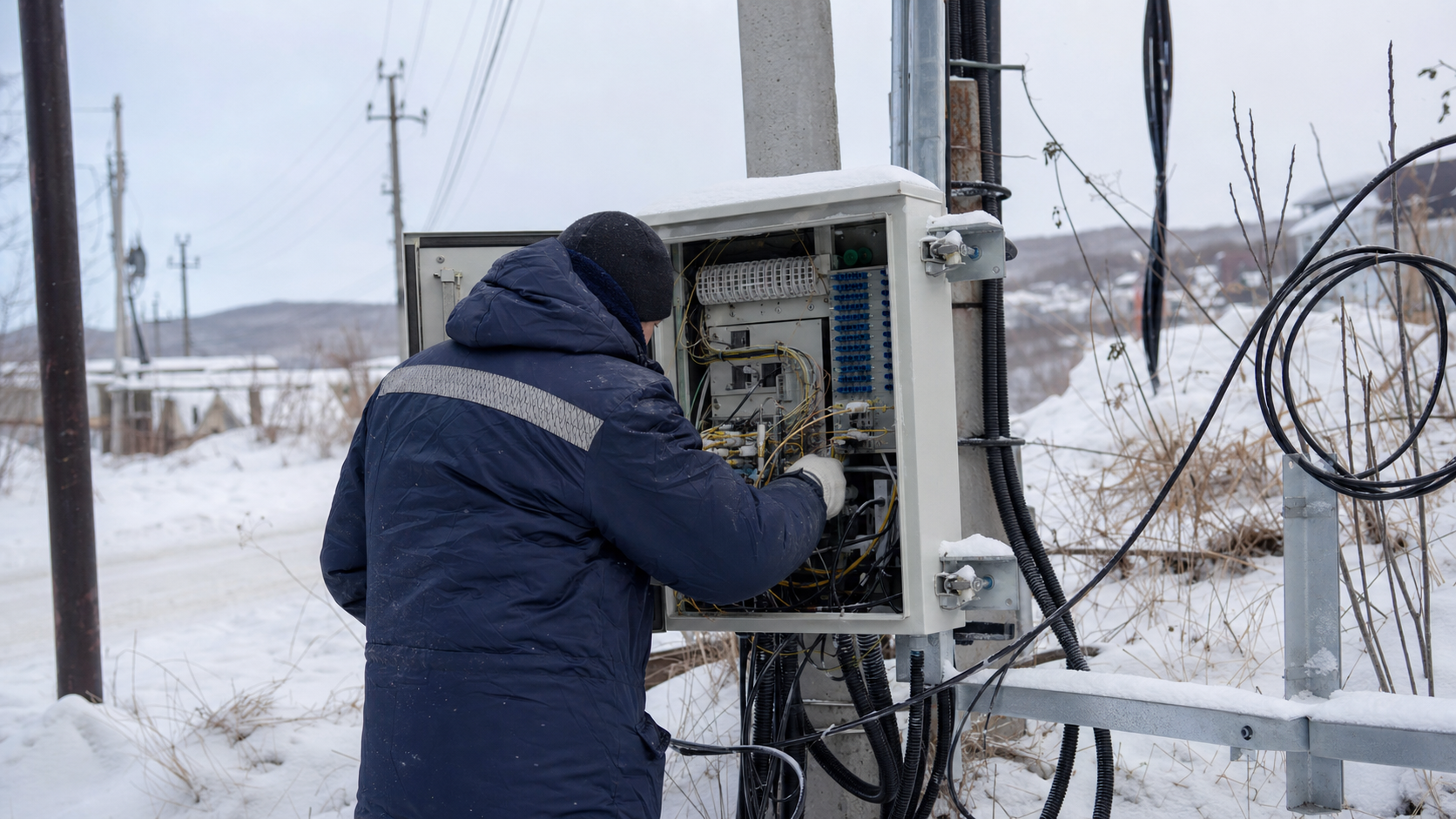
Field work is the most underestimated cost in local connectivity. A network can fail because a cable is cut, a power supply dies, a switch locks up, a building manager changes access rules, a customer router is misconfigured, a storm damages plant, or an upstream route changes. The field response consumes labour and parts. If the operator does not have staff near the failure, response time lengthens or contractor cost rises. If the operator has staff but not enough density, idle time and travel time erode margin.
The same logic applies to abuse handling. Address space used by customers can attract spam, scans, compromised devices, fraud attempts and complaints. If abuse mail is ignored, blocks can be filtered or reputation can deteriorate. If every complaint requires manual investigation, the operator spends skilled time on low-revenue problems. Good abuse handling is not just compliance. It protects the commercial value of the address pool.
Registry maintenance is another operational cost. Contact records, route objects, ROAs, abuse roles, maintainer access and assignment data must be controlled. When records drift, the result can be routing friction or security weakness. For small resource holders, the danger is often not one dramatic failure but slow record decay. A person leaves, an email changes, a partner originates a prefix, a route object is copied, a block is reassigned, and over time the public record no longer cleanly matches operational reality. Buyers of reliability do not care why the record is messy; they care when filtering or abuse problems affect service.
The capital allocation answer is unglamorous. DalCOMTEL, like any compact network participant, needs to spend on documentation, monitoring, route hygiene, spares, customer records and supplier options before it spends on outward claims. That is the difference between a real reliability business and a collection of inherited resources. The public record does not show how DalCOMTEL allocates capital. The investment judgement should therefore remain conditional: the assets are useful if maintained; they become a liability if left unattended.
Supplier Dependence And Route Resilience
Supplier dependence is not automatically bad. Small networks depend on upstreams because the internet is built from interconnection. The question is whether dependence is diversified, transparent and priced into customer contracts. AS213890's RIPE record lists more than one import and export relationship, which suggests route-policy options in the registry record. Public BGP views, however, may observe fewer active paths at any given time. If most visible traffic depends on a single observed peer, resilience is weaker than the formal policy language implies.
For DalCOMTEL-associated address space, the customer-facing risk is that resource ownership and route origin are separated. Separation can work well when contracts are clear. It can work poorly when responsibility is ambiguous. If a customer experiences an outage, does DalCOMTEL control the fix, or does the fix sit with Novoros-Telecom, an upstream, a facility, a local access provider or another partner? If an abuse problem occurs, who has authority to suspend the affected customer? If an address block needs route-object repair, who holds credentials and who has operational knowledge?
The answers determine whether reliability can be sold honestly.
Substitutes raise the pressure. Large Russian operators can offer more route diversity, established facilities, national support, bundled voice or mobile services and procurement relationships. Regional specialists can still compete, but not on scale alone. They have to compete on responsiveness, local fit, willingness to customise and sometimes on serving customers too small or too awkward for larger carriers. If DalCOMTEL's operating role is mostly resource administration, the substitute is not only another ISP; it is any broker, LIR, upstream or larger operator able to provide addresses and routing with less administrative risk.
Cross-border connectivity complicates the calculation. Russian networks have faced a changed international environment since 2022: sanctions, payment restrictions, vendor exits, traffic-routing changes and cloud-service dependencies have altered the cost and resilience of external reachability. A local network can reduce some risk by keeping Russian traffic local and using domestic providers. It cannot eliminate dependence on foreign platforms, international routes, imported equipment or payment systems if customers need them. The economic question is who pays for that resilience.
If customers want global reach and local support but pay only for best-effort commodity access, the provider carries the downside.
Cloud service dependency matters because many customers now experience connectivity through applications they do not control. A local line may be healthy while an overseas software service is slow, blocked, rate-limited or affected by routing policy. The customer still calls the access provider. That support burden is real even when the fault sits elsewhere. A smaller provider can create value by explaining, routing around or escalating practical issues. It can also lose money if every cloud complaint becomes unpaid diagnostic labour.
Route resilience is therefore both technical and commercial. Technically, it means multiple paths, clean route objects, good monitoring and working contacts. Commercially, it means service terms that define what the provider controls, what it does not control, and what level of redundancy the customer has actually bought. A reliability product without that clarity becomes a promise with unpriced downside.
Customers, Concentration And Competition
The public record does not identify DalCOMTEL's current customer base. That makes concentration risk a central unknown. A compact resource holder or local operator can look stable with a few strong accounts, but a single lost contract can change the economics. If most revenue comes from one partner that originates DalCOMTEL-associated space, DalCOMTEL's bargaining position may be weak. If revenue is spread across many small customers, churn and support costs may be higher. If revenue is mainly resource-related, the asset value may be higher than the service value.
The best customer for a company like DalCOMTEL is one with a real cost of downtime and a preference for local accountability. That could be a small enterprise, an institution, a building service operator, a local access reseller, a hosted-service provider or a regional organisation that needs Russian address resources and reachable support. Such a customer can justify paying for a service level above the cheapest mass-market line. The worst customer is a low-margin account that demands fast repair but switches on price.
Competition comes from several directions. National carriers can sell breadth and bundled offers. Local operators can sell familiarity. Mobile broadband can serve as a partial substitute for households and small offices, although fixed service remains important for capacity, stability and latency. Cloud providers and data-centre operators can reduce the need for customers to manage local resources directly. Address-market intermediaries can compete for IPv4 monetisation. Each substitute attacks a different part of the model.
The competition that matters most is the one that reframes the purchase. If the customer sees connectivity as a commodity, DalCOMTEL has little room to differentiate. If the customer sees it as operational insurance, a local provider can earn value. The provider's task is to make the cost of downtime visible. That is easier with businesses than with households. It is easier with customers that use video, remote access, payment systems or hosted applications. It is harder with users whose main requirement is streaming and messaging at the lowest monthly price.
Customer concentration is also a repair issue. Dense customers in one building or locality improve economics because one route, one switch stack and one technician visit can support many accounts. Scattered customers increase cost. A regional provider should resist customers that look attractive in revenue terms but sit outside its efficient support radius unless the contract pays for distance and redundancy. The same principle applies to address resources. A single customer using many addresses can be efficient if well managed, but risky if that customer creates abuse or payment problems.
Without customer disclosure, the prudent judgement is conditional. DalCOMTEL can create value if it has stable, paying, locally reachable accounts or well-governed resource arrangements. It is less attractive if its public footprint reflects legacy holdings with little current commercial control. The facts that would decide the case are customer retention, revenue by service line, churn, gross margin after upstream cost, repair response times and the terms under which DalCOMTEL-associated prefixes are originated.
Regulation, Sanctions And Data Locality
Russian connectivity is not a lightly regulated business. Communications operators face licensing, subscriber information, lawful-access, data-retention and network-control obligations. Article 64 of the Russian communications law requires operators to store certain information about communications on Russian territory and provide authorised access in defined circumstances. Other regulatory changes have expanded information obligations around network addresses, user equipment and technical measures. The details vary by service and operator role, but the direction is clear: compliance is a fixed cost and a management burden.
For a small company, fixed compliance costs bite harder. A large operator can spread legal staff, storage systems, technical interfaces and reporting processes across millions of customers. A compact operator has fewer accounts over which to spread the work. If DalCOMTEL is only a resource holder with limited direct customer service, the compliance load may be narrower. If it sells access or other communications services directly, the load is broader. The public evidence does not resolve that scope, so the analysis should not assume a full retail burden.
It should recognise that any move from resource administration toward direct service increases regulated operating cost.
Sanctions and cross-border payment constraints also matter. RIPE NCC is a Dutch association and has publicly explained how EU sanctions affect Russian members and resource holders. The RIPE position is nuanced: services to Russian members are not simply prohibited, but sanctioned persons and entities create restrictions around resources and financial dealings. For an ordinary non-sanctioned Russian member, the issue is not necessarily loss of registry status; it is practical friction around payment, banking, scrutiny and future changes in sanctions policy.
The risk is tail risk: a change in ownership, designation, bank channel or policy can make routine registry work harder.
Data sovereignty and locality are not only legal themes. They affect customer demand. Russian customers may prefer or be required to keep certain data, systems and connectivity paths inside Russia. That can support local network and hosting demand. It can also reduce the value of cross-border reach if international services are throttled, blocked, unavailable or commercially difficult. A local provider can benefit from locality if it helps customers keep Russian services reachable. It loses if isolation reduces customer willingness to buy richer connectivity or makes equipment and software harder to source.
The equipment side is central. Russian operators have had to adapt to sanctions, vendor exits, component constraints and alternative supply chains. A compact provider needs spare routers, switches, optics, customer equipment and software support. If replacement gear becomes expensive or unreliable, repair costs rise. If the operator delays replacement, outages rise. If it changes vendors, staff may need new skills. None of this is unique to DalCOMTEL, and the public record does not identify its vendors. It is still part of the cash-flow test for any local network reliability business in Russia.
Regulatory risk does not make the business impossible. It raises the hurdle rate. A provider that charges enough, keeps records clean and limits promises to what it can control can operate through this environment. A provider that underprices service while absorbing compliance and equipment friction will struggle, even if its routing tables look active.
Unofficial Signals And What They Do Not Prove
Unofficial market signals are useful when treated as clues. IP-address lookup pages identify DalCOMTEL LLC as an ISP or business on individual 79.171.116.0/24 addresses. Some pages associate the domain dalcomtel.ru with that address block. Others show location guesses in Khabarovsk or Krasnodar-region places. Public domain-change records have associated asiacom.ru with DalCOMTEL or a related company name in the past. Older ASN pages tie AS43874 and ASIACOM-AS to DalCOMTEL. These signals add texture, but they do not replace primary registry and routing evidence.
IP geolocation is especially fragile. A database can place an address near a city because of registry address, user measurement, routing inference, customer activity or outdated information. Another database can place the same block elsewhere. For DalCOMTEL, the company registration evidence points to Khabarovsk, while some address-level pages point to other regions. The correct conclusion is not that one page proves physical network coverage. It is that the address space appears in live internet intelligence systems and is associated with Russian use. Physical service-area claims require better evidence.
The company-linked domains are also weak evidence. RIPE and IP-intelligence pages mention asiacom.ru or dalcomtel.ru. Attempts to reach those domains from the research environment timed out. That does not prove the domains are unused; access may be blocked, slow, region-limited or temporarily unavailable. It does mean the domains do not provide strong public commercial detail for this article. A live official site with tariffs, service terms, customer support pages and legal documents would materially strengthen the operating case. In its absence, the analysis must lean on registry, route and third-party evidence.
Third-party ASN pages can lag current registry state. AS43874 is the clearest example. Older pages describe AS43874 as DalCOMTEL's ASIACOM-AS, with a 2007 origin and DalCOMTEL organisation details. Current RIPEstat says AS43874 is not announced in the checked view, and a current RIPE REST lookup did not return an entry. That creates a reasonable historical signal but a weak present-tense claim. It would be wrong to ignore AS43874 entirely because it appears repeatedly in public indexes. It would also be wrong to present it as a current live DalCOMTEL network without stronger support.
The unofficial signals help define questions for further diligence. Is 79.171.116.0/24 assigned to a customer, operated by a partner, or used by DalCOMTEL directly? What commercial relationship connects DalCOMTEL-described prefixes with AS213890? Is AS43874 retired, migrated, misindexed or represented elsewhere? Are asiacom.ru and dalcomtel.ru active for customers inside Russia even if not reachable from outside? Does DalCOMTEL sell direct access or mainly administer resources? Each answer would change the judgement.
The standard should remain strict. Public network indexes are valuable for finding evidence. They are not enough for broad service claims. For DalCOMTEL, they support a resource-holder and routed-address story, not a fully proven retail-ISP story.
What Would Change The Judgement
Several facts would materially improve the case. The first is direct customer evidence: service terms, tariffs, support pages, contracts, public procurement notices or customer disclosures showing DalCOMTEL selling fixed access, leased lines, business connectivity, static addressing or related services. The second is current routing control: clean route objects, ROAs, visible current route-origin arrangements and a clear statement of whether DalCOMTEL operates directly or through another AS. The third is financial evidence: revenue, gross margin, profit, capex, customer count, churn and service-line mix.
The most positive version would show a compact but profitable local provider. In that version, DalCOMTEL would hold scarce IPv4 resources, maintain clean registry records, use one or more upstream partners for reachability, serve a dense customer base, charge enough for support, and avoid pretending to be larger than it is. It would have clear abuse handling, documented routing, reliable payment discipline and enough equipment spares to make repair promises credible. Growth would come from profitable accounts and better utilisation of existing resources, not from scattered low-margin expansion.
The neutral version is a resource-administration company. In that version, DalCOMTEL's main value would sit in LIR status, IPv4 holdings and commercial arrangements with operators that originate the addresses. The company could still be economically rational, but the reliability thesis would belong partly to partner networks rather than to DalCOMTEL as a direct service operator. The risk would be lower capex but higher dependence on contract terms, resource reputation and regulatory administration.
The negative version is a legacy footprint with limited current operating substance. In that version, old AS43874 references, inaccessible domains and partner-originated prefixes would represent historical residue rather than an active business. The resources might retain value, but customer reliability would not be a strong company-specific story. The main risks would be record drift, low monetisation, abuse exposure and dependence on others for any visible routing.
The facts that would change the downside view are also clear. A pattern of route instability, unresolved abuse, mismatched registry data, payment disputes, lost LIR status, sanctions exposure, inactive contact channels or customer complaints would reduce confidence quickly. For a small network participant, trust is operational. If contacts fail or records drift, counterparties assume the worst.
Conversely, verified route hygiene would matter. Current ROAs covering the announced prefixes, matching route objects, documented origin authorisation and clear abuse contacts would raise confidence because they show maintenance discipline. A small operator cannot always show scale, but it can show care. In network operations, care is value.
The Strategic Verdict
DalCOMTEL LLC should be treated as a real but bounded network-resource case. The company has durable RIPE evidence, Khabarovsk identity, local internet registry status and IPv4 resources. Its named address space appears in current routing contexts, especially through AS213890, while older AS43874 material gives historical context but weak present-tense proof. That combination is enough for attention. It is not enough for an expansive service claim.
The strategic question remains the one in the title: can DalCOMTEL sell reliability, local repair and reachable support at a price that covers the full cost stack? The answer is conditional. If DalCOMTEL has direct customers or well-priced partner arrangements tied to its address resources, it can create value from scarcity, locality and administrative competence. If it is paid only for low-margin bandwidth or passive resource use, the economics are thinner. If the routed-address evidence is mostly historical, the current operating case is weaker still.
The customer benefit, in the best case, is practical rather than glamorous. A local or regional buyer gets Russian resource continuity, reachable contacts and potentially a provider or resource partner with knowledge of its address space. The company benefits from recurring revenue and scarce IPv4 assets. The downside sits with DalCOMTEL if suppliers, regulators, customers or abuse events impose costs that the monthly price does not cover.
The realistic substitutes are large Russian carriers, local access providers, mobile backup, cloud-based services, data-centre operators and IPv4 resource intermediaries. DalCOMTEL does not need to beat all of them. It needs to be better for a specific buyer whose problem is local reliability, address continuity or Russian-network reachability. That is a narrower but more defensible market.
The right judgement is therefore cautious. DalCOMTEL has enough resource evidence to be tracked in the telecom economics frame. It does not yet have enough public service evidence to be valued as a broad retail or wholesale network. The next diligence step is not another generic label. It is proof of who pays, what service they buy, who controls the route, who repairs the fault, who answers abuse, and whether the price covers that work after transit, backhaul, field labour, compliance and churn.
Until those facts are visible, DalCOMTEL is an address-resource and local-reliability option with real evidence, real uncertainty and a cash-flow test still to be proven.